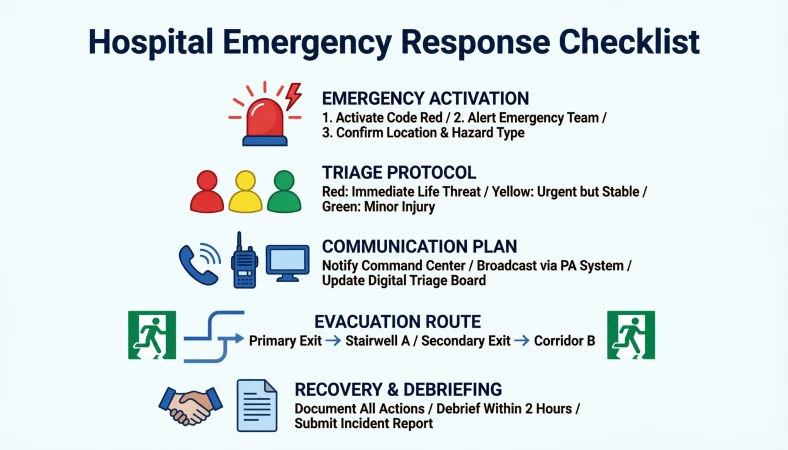
Quick Answer: A hospital emergency checklist response is a structured set of actions, communication steps, and safety checks that help hospital staff respond effectively during emergencies. It supports patient safety, staff coordination, rapid decision-making, and continuity of essential healthcare services.
When a hospital emergency happens, every second matters. Whether it’s a sudden patient surge, fire alarm, power failure, medical crisis, or natural disaster, healthcare teams need clear instructions and a coordinated response.
That’s where a hospital emergency checklist response becomes essential. It helps doctors, nurses, administrators, and support staff understand what to do, who to contact, and how to protect patients when pressure is high. Think of it as a practical roadmap for situations where nobody has time to guess the next step.
From emergency communication and patient assessment to evacuation and recovery, the right checklist can reduce confusion and support safer decisions. In this guide, you’ll find more than 150 practical checklist statements organized by emergency situation, making hospital preparedness easier to understand, review, and adapt.
A practical guide for hospital administrators, emergency managers, clinical teams, and healthcare support staff.
Important: These statements are adaptable examples, not a substitute for clinical protocols, local emergency procedures, or instructions from the hospital incident commander. The World Health Organization (WHO) recommends an all-hazards approach that supports coordinated operations, communication, essential services, and healthcare worker safety.
Hospital Emergency Activation Checklist Responses
1. Activate the hospital emergency response plan immediately. Example: When an incident exceeds routine department response capacity. Meaning: Initiates the hospital’s established emergency procedures.
2. Notify the designated emergency response coordinator. Example: When an emergency requires coordination across multiple departments. Meaning: Ensures the appropriate leadership team receives notification.
3. Confirm the nature and location of the emergency. Example: When receiving the first report of a hospital incident. Meaning: Helps establish what has happened and where assistance is required.
4. Activate the hospital incident command structure. Example: When a major incident requires coordinated decision-making. Meaning: Establishes clear leadership and operational responsibilities.
5. Notify all designated emergency response departments. Example: When several hospital units need to prepare simultaneously. Meaning: Ensures relevant departments receive timely instructions.
6. Assess the immediate impact on hospital operations. Example: When an incident affects buildings, equipment, or patient services. Meaning: Identifies operational problems that require attention.
7. Confirm the availability of emergency response personnel. Example: When additional clinical and support staff may be needed. Meaning: Establishes which trained personnel are available.
8. Record the time of emergency activation. Example: When documenting the start of an emergency response. Meaning: Creates an accurate incident timeline.
9. Assign responsibilities to designated response teams. Example: When multiple departments are participating in the response. Meaning: Reduces confusion about individual duties.
10. Establish an emergency operations coordination point. Example: When the incident requires centralized communication. Meaning: Provides an organized location for response coordination.
11. Confirm the emergency escalation procedure. Example: When the situation becomes more serious than initially reported. Meaning: Ensures additional response resources can be requested.
12. Maintain a record of all emergency activation decisions. Example: When preparing an incident report after activation. Meaning: Supports accountability and later review.
Emergency Communication Checklist Responses
1. Notify staff using the approved emergency communication system. Example: When a facility-wide announcement is required. Meaning: Delivers consistent information to relevant employees.
2. Confirm that emergency messages have been received. Example: When contacting department supervisors during an incident. Meaning: Checks whether important instructions reached their recipients.
3. Establish a designated communication contact. Example: When external agencies need hospital updates. Meaning: Prevents conflicting or uncoordinated information.
4. Share verified information with department leaders. Example: When operational changes affect several hospital units. Meaning: Helps teams work from accurate information.
5. Maintain communication with local emergency services. Example: When fire, ambulance, or other response agencies are involved. Meaning: Supports coordination with outside responders.
6. Activate backup communication arrangements when necessary. Example: When normal telephone or internet services become unavailable. Meaning: Helps maintain contact during communication failures.
7. Provide clear instructions about emergency responsibilities. Example: When staff members are assigned new response duties. Meaning: Reduces uncertainty about required actions.
8. Communicate patient service disruptions promptly. Example: When a department temporarily stops accepting patients. Meaning: Helps coordinate alternative care arrangements.
9. Document important emergency communications. Example: When recording instructions received from response leadership. Meaning: Creates a reliable communication record.
10. Share regular situation updates with authorized personnel. Example: When an emergency continues over several hours. Meaning: Keeps relevant decision-makers informed.
11. Protect confidential patient information during communication. Example: When sharing patient-related information with authorized teams. Meaning: Supports patient privacy and applicable confidentiality requirements.
12. Confirm when normal communication procedures can resume. Example: When emergency communication arrangements are no longer required. Meaning: Supports an organized return to routine operations.
Patient Triage and Assessment Checklist Responses
1. Activate the designated emergency triage process. Example: When multiple patients arrive following a major incident. Meaning: Initiates the hospital’s approved patient prioritization system.
2. Ensure patients receive an initial clinical assessment. Example: When patients enter the emergency department. Meaning: Helps identify immediate healthcare needs.
3. Identify patients requiring urgent medical attention. Example: When several patients need assessment simultaneously. Meaning: Supports prioritization according to clinical urgency.
4. Follow the hospital’s approved triage guidelines. Example: When assigning patient priority during an emergency. Meaning: Promotes consistent and appropriate assessment.
5. Reassess patients according to clinical protocols. Example: When patients are waiting for further evaluation. Meaning: Helps identify changes in their condition.
6. Maintain accurate patient identification records. Example: When registering patients during a sudden influx. Meaning: Reduces identification and documentation errors.
7. Identify patients requiring additional assistance. Example: When assessing children, older adults, or patients with disabilities. Meaning: Helps address individual support requirements.
8. Coordinate patient movement with clinical teams. Example: When transferring patients to appropriate treatment areas. Meaning: Supports organized patient flow.
9. Record relevant assessment findings. Example: When documenting initial emergency evaluations. Meaning: Maintains essential clinical information.
10. Identify patients whose care may be affected by service interruptions. Example: When a department loses access to essential equipment. Meaning: Helps prioritize continuity arrangements.
11. Coordinate referrals according to clinical needs and available capacity. Example: When another facility may be required to provide treatment. Meaning: Supports appropriate patient placement.
12. Review patient tracking information throughout the response. Example: When patients move between emergency treatment areas. Meaning: Helps maintain awareness of patient locations and status.
Hospital Staff Accountability Checklist Responses
1. Confirm the presence of assigned emergency response staff. Example: When the emergency response plan is activated. Meaning: Establishes which team members are available.
2. Maintain an updated staff attendance record. Example: When employees report to their emergency assignments. Meaning: Supports workforce accountability.
3. Identify department staffing shortages. Example: When staff members cannot reach the hospital. Meaning: Helps leadership assess staffing gaps.
4. Assign qualified personnel to designated duties. Example: When additional support is required in emergency areas. Meaning: Helps ensure responsibilities match staff qualifications.
5. Establish a process for requesting additional personnel. Example: When existing teams cannot meet operational demands. Meaning: Supports appropriate staffing escalation.
6. Confirm staff awareness of emergency procedures. Example: During emergency briefings and preparedness exercises. Meaning: Helps personnel understand their expected roles.
7. Provide appropriate protective equipment to assigned personnel. Example: When staff are entering an identified hazardous environment. Meaning: Supports worker safety according to the relevant hazard assessment.
8. Monitor staff welfare during prolonged emergencies. Example: When response activities continue through multiple shifts. Meaning: Helps identify fatigue and welfare concerns.
9. Maintain records of staff reassignment. Example: When employees are moved between departments. Meaning: Creates a record of operational staffing changes.
10. Establish a process for staff shift handovers. Example: When one response team replaces another. Meaning: Preserves important operational information.
11. Confirm emergency contact details for key personnel. Example: When department leaders need to be contacted quickly. Meaning: Supports timely staff communication.
12. Document staff injuries or emergency-related incidents. Example: When an employee is affected during response operations. Meaning: Supports reporting and appropriate follow-up.
Hospital Evacuation Checklist Responses
1. Activate the approved hospital evacuation procedure when required. Example: When an authorized decision-maker determines evacuation is necessary. Meaning: Initiates the facility’s established evacuation arrangements.
2. Identify the affected areas and evacuation requirements. Example: When smoke, structural damage, or another hazard affects a department. Meaning: Helps determine which areas require action.
3. Follow instructions from the designated evacuation coordinator. Example: When staff receive an official evacuation announcement. Meaning: Supports coordinated movement.
4. Prioritize patients according to clinical needs and evacuation plans. Example: When patients require different levels of assistance. Meaning: Supports safe patient movement.
5. Confirm designated evacuation routes are usable. Example: When preparing to move patients away from an affected area. Meaning: Helps identify suitable routes according to facility procedures.
6. Arrange appropriate assistance for patients with limited mobility. Example: When patients cannot independently leave their rooms. Meaning: Addresses additional evacuation support needs.
7. Coordinate patient transport with authorized personnel. Example: When patients require specialized transport arrangements. Meaning: Supports appropriate transfer procedures.
8. Maintain patient identification during evacuation. Example: When moving patients to temporary care locations. Meaning: Helps prevent identification and tracking problems.
9. Account for staff and patients at designated assembly locations. Example: When an evacuation has been completed. Meaning: Helps identify missing individuals.
10. Keep emergency access routes available for response teams. Example: When ambulances and emergency personnel are arriving. Meaning: Reduces unnecessary obstruction.
11. Document evacuation progress and outstanding concerns. Example: When reporting the status of an affected department. Meaning: Creates an operational record.
12. Obtain authorization before resuming access to evacuated areas. Example: When the original hazard appears to have been resolved. Meaning: Helps prevent premature re-entry.
Fire and Smoke Emergency Checklist Responses
1. Activate the hospital fire emergency procedure. Example: When a fire is discovered or a fire alarm is activated. Meaning: Initiates the facility’s approved fire response arrangements.
2. Immediately report the fire location through the approved system. Example: When staff identify smoke or flames. Meaning: Helps emergency responders locate the reported incident.
3. Contact the designated fire response service. Example: When an actual fire requires emergency assistance. Meaning: Ensures the appropriate fire service is notified.
4. Follow the facility’s fire compartmentation and evacuation procedures. Example: When smoke affects a patient care area. Meaning: Supports the hospital’s established fire safety arrangements.
5. Keep fire exits and emergency routes clear. Example: During an evacuation or fire response. Meaning: Helps maintain access for patients and responders.
6. Move patients away from immediate danger according to protocol. Example: When a patient area is affected by fire or smoke. Meaning: Prioritizes protection from the identified hazard.
7. Use firefighting equipment only if trained and safe to do so. Example: When staff encounter a small fire and local procedures permit intervention. Meaning: Avoids exposing untrained personnel to unnecessary danger.
8. Confirm that designated fire doors remain operational. Example: During a facility safety assessment. Meaning: Supports the hospital’s fire containment arrangements.
9. Report smoke-related hazards to emergency leadership. Example: When smoke is detected outside the original incident area. Meaning: Helps identify possible hazard spread.
10. Maintain communication with responding fire personnel. Example: When external responders arrive at the hospital. Meaning: Supports coordination between hospital staff and firefighters.
11. Record affected rooms and operational disruptions. Example: After a fire-related incident. Meaning: Supports damage assessment and recovery planning.
12. Resume affected services only after appropriate clearance. Example: When the fire response has concluded. Meaning: Helps ensure areas are safe before reopening.
Power Failure and Utility Emergency Checklist Responses
1. Activate the hospital power failure response procedure. Example: When the main electrical supply is interrupted. Meaning: Initiates the approved response to a power disruption.
2. Confirm the status of emergency backup power systems. Example: When the hospital experiences an electrical outage. Meaning: Checks whether backup power arrangements are functioning.
3. Identify critical departments affected by the outage. Example: When essential hospital services experience disruption. Meaning: Helps determine which areas require immediate attention.
4. Notify facilities management and engineering teams. Example: When an electrical or utility failure is reported. Meaning: Brings technical personnel into the response.
5. Assess the impact on essential patient care services. Example: When power loss affects clinical equipment or treatment areas. Meaning: Helps identify potential interruptions to patient care.
6. Follow approved procedures for protecting temperature-sensitive supplies. Example: When refrigeration systems lose normal power. Meaning: Helps protect medicines and other temperature-sensitive materials.
7. Confirm the availability of emergency lighting. Example: When normal lighting becomes unavailable. Meaning: Supports safe movement within the facility.
8. Monitor essential water and sanitation services. Example: When a utility interruption affects hospital operations. Meaning: Helps identify risks to hygiene and essential services.
9. Establish an alternative operating arrangement where necessary. Example: When a department cannot continue normal operations. Meaning: Supports continuity of essential services.
10. Report extended utility disruptions to hospital leadership. Example: When technical teams cannot restore services promptly. Meaning: Helps decision-makers assess further response requirements.
11. Document equipment and service interruptions. Example: When preparing a record of a facility-wide outage. Meaning: Creates information for technical assessment and review.
12. Confirm system stability before returning to normal operations. Example: When the main power supply has been restored. Meaning: Helps prevent premature resumption of affected services.
Medical Equipment and Facility Safety Checklist Responses
1. Check the operational status of essential medical equipment. Example: When preparing critical care areas for emergency operations. Meaning: Identifies equipment that is available for use.
2. Report malfunctioning medical devices immediately. Example: When equipment fails during patient care. Meaning: Ensures equipment concerns are escalated.
3. Arrange approved replacement equipment when necessary. Example: When a critical device becomes unavailable. Meaning: Helps maintain appropriate patient care arrangements.
4. Confirm that equipment checks are performed by qualified personnel. Example: When technical inspection is required after an incident. Meaning: Supports equipment safety and reliability.
5. Identify areas affected by structural damage. Example: When an earthquake or building incident occurs. Meaning: Helps establish whether parts of the facility require restriction.
6. Report unsafe rooms and restricted areas. Example: When staff identify damaged ceilings, walls, or flooring. Meaning: Helps prevent access to potentially dangerous locations.
7. Confirm the availability of essential medical gases. Example: When utility disruptions affect clinical services. Meaning: Helps identify possible interruptions to essential supplies.
8. Inspect relevant safety systems after an emergency. Example: When the facility begins its post-incident assessment. Meaning: Helps identify systems requiring technical clearance.
9. Coordinate maintenance requests with facilities management. Example: When emergency repairs are needed. Meaning: Establishes responsibility for technical follow-up.
10. Maintain an inventory of damaged equipment. Example: When preparing a post-emergency equipment report. Meaning: Supports replacement and maintenance planning.
11. Secure damaged equipment until it has been assessed. Example: When a device is suspected of being unsafe. Meaning: Helps prevent unintended reuse.
12. Document facility safety inspections and findings. Example: When recording the results of a post-incident inspection. Meaning: Provides evidence of completed safety assessments.
Emergency Supplies and Resource Management Checklist Responses
1. Check the availability of essential emergency supplies. Example: When preparing for an increased number of patients. Meaning: Establishes current resource availability.
2. Confirm the stock of approved personal protective equipment. Example: When staff need protection during emergency operations. Meaning: Helps identify shortages in protective supplies.
3. Monitor essential medicine inventory. Example: When an emergency increases demand for medicines. Meaning: Supports appropriate inventory management.
4. Identify critical supply shortages. Example: When a department reports insufficient emergency materials. Meaning: Helps leadership prioritize procurement and distribution.
5. Coordinate supply requests through the designated department. Example: When several hospital units request the same resources. Meaning: Reduces duplication and supports organized distribution.
6. Maintain an updated emergency supply inventory. Example: When recording available emergency stock. Meaning: Provides visibility into current resources.
7. Confirm alternative suppliers and delivery arrangements. Example: When normal supply routes are disrupted. Meaning: Supports contingency planning.
8. Monitor the storage conditions of essential supplies. Example: When a utility failure affects storage facilities. Meaning: Helps identify products that may require assessment.
9. Prioritize resources according to approved clinical and operational needs. Example: When supplies become limited during a major incident. Meaning: Supports consistent resource allocation.
10. Track the distribution of emergency supplies. Example: When equipment is transferred between departments. Meaning: Helps maintain accountability.
11. Report supply shortages to emergency leadership. Example: When essential materials may run out. Meaning: Allows decision-makers to coordinate additional resources.
12. Replenish emergency stock after the incident. Example: During the hospital recovery period. Meaning: Restores supplies for future emergencies.
Infection Prevention and Disease Outbreak Checklist Responses
1. Activate the hospital’s approved infection prevention response procedure. Example: When a suspected outbreak requires coordinated action. Meaning: Initiates the appropriate infection prevention arrangements.
2. Notify the infection prevention and control team. Example: When unusual infection patterns are identified. Meaning: Ensures the responsible specialists are informed.
3. Follow applicable isolation and infection control protocols. Example: When a patient requires infection-related precautions. Meaning: Supports appropriate precautions against transmission.
4. Identify potentially affected patient care areas. Example: When an outbreak is reported within a hospital unit. Meaning: Helps establish the scope of the incident.
5. Ensure staff follow appropriate hand hygiene procedures. Example: During routine and emergency patient care. Meaning: Supports infection prevention practices.
6. Confirm the availability of appropriate protective equipment. Example: When additional infection control precautions are required. Meaning: Helps staff access the protection specified by local protocols.
7. Report suspected healthcare-associated infection clusters. Example: When several related infections are identified. Meaning: Supports timely investigation and surveillance.
8. Coordinate environmental cleaning according to approved procedures. Example: When affected patient care areas require additional cleaning. Meaning: Supports environmental infection control.
9. Maintain accurate infection surveillance records. Example: When monitoring a developing hospital outbreak. Meaning: Supports monitoring and investigation.
10. Communicate relevant infection control updates to staff. Example: When procedures change during an outbreak. Meaning: Helps teams follow consistent instructions.
11. Coordinate appropriate patient transfers with receiving facilities. Example: When a patient requires transfer during an outbreak. Meaning: Supports continuity of care and infection prevention precautions.
12. Review outbreak response activities after the incident. Example: When the infection-related emergency has been controlled. Meaning: Identifies lessons and improvement opportunities.
Mass Casualty and Patient Surge Checklist Responses
1. Activate the hospital mass casualty incident plan. Example: When a major accident generates more patients than routine services can manage. Meaning: Initiates the designated response to a sudden increase in demand.
2. Notify the emergency department leadership team. Example: When advance notice of multiple incoming patients is received. Meaning: Supports early departmental preparation.
3. Establish the designated patient triage arrangements. Example: When large numbers of injured people arrive. Meaning: Supports organized clinical prioritization.
4. Assess available emergency department capacity. Example: When additional patients are expected. Meaning: Establishes current service capacity.
5. Coordinate additional clinical staffing. Example: When normal staffing levels are insufficient. Meaning: Supports an organized increase in workforce availability.
6. Prepare designated patient care areas according to the emergency plan. Example: When additional treatment capacity is required. Meaning: Helps the hospital manage increased demand.
7. Coordinate incoming patient information with emergency services. Example: When ambulance teams provide advance incident details. Meaning: Helps hospital teams prepare for patient arrivals.
8. Maintain accurate records of incoming and admitted patients. Example: When several patients arrive within a short period. Meaning: Supports patient tracking and accountability.
9. Identify available critical care capacity. Example: When emergency admissions may require intensive care. Meaning: Helps determine appropriate placement options.
10. Coordinate interfacility transfers when required. Example: When hospital capacity cannot meet all care requirements. Meaning: Supports access to additional healthcare resources.
11. Monitor patient flow throughout the incident. Example: When emergency department demand continues to increase. Meaning: Helps identify delays and capacity problems.
12. Conduct a post-incident mass casualty review. Example: When the hospital returns to routine patient operations. Meaning: Identifies lessons for future emergency preparedness.
Hospital Security and Hazardous Incident Checklist Responses
1. Activate the hospital security response procedure. Example: When a security threat is reported within the facility. Meaning: Initiates the approved security arrangements.
2. Notify the designated security supervisor. Example: When staff identify suspicious activity. Meaning: Ensures the responsible security personnel are informed.
3. Follow instructions from authorized emergency responders. Example: When police or other emergency services attend the facility. Meaning: Supports coordinated incident management.
4. Identify affected hospital locations. Example: When a security incident is reported in a specific department. Meaning: Helps establish the extent of the incident.
5. Restrict access to designated hazardous areas. Example: When an area is identified as unsafe by authorized personnel. Meaning: Helps prevent unnecessary exposure.
6. Maintain appropriate access control at hospital entrances. Example: When emergency operations require controlled entry. Meaning: Supports facility security and orderly movement.
7. Report suspicious packages or potential hazards without handling them. Example: When an unidentified object is discovered. Meaning: Helps ensure the hazard is assessed by qualified responders.
8. Follow established procedures for chemical or hazardous material incidents. Example: When a suspected hazardous substance affects hospital premises. Meaning: Supports specialist-led hazard management.
9. Coordinate with designated hazardous material response teams. Example: When an incident requires specialist assessment or decontamination. Meaning: Ensures appropriate technical assistance is involved.
10. Protect patients and staff from identified security risks. Example: When a threat affects normal hospital activities. Meaning: Prioritizes the safety of people within the facility.
11. Document security incidents through approved reporting channels. Example: When recording an incident for investigation. Meaning: Creates an appropriate security record.
12. Confirm authorization before removing emergency restrictions. Example: When security personnel determine the immediate threat has been addressed. Meaning: Supports controlled restoration of normal access.
External Agency Coordination Checklist Responses
1. Establish contact with relevant local emergency management authorities. Example: When a major incident requires support beyond hospital resources. Meaning: Connects hospital leadership with external emergency coordination.
2. Coordinate with ambulance services regarding patient arrivals. Example: When multiple ambulances are transporting patients. Meaning: Helps manage incoming patient information.
3. Notify relevant public health authorities when required. Example: When an incident meets applicable public health reporting criteria. Meaning: Supports appropriate public health coordination.
4. Establish communication with nearby healthcare facilities. Example: When additional treatment capacity may be needed. Meaning: Helps identify available regional healthcare support.
5. Share verified operational information with authorized agencies. Example: When external responders request hospital capacity information. Meaning: Supports informed emergency coordination.
6. Confirm the availability of external medical support. Example: When the hospital requires additional healthcare resources. Meaning: Helps identify assistance that may be available.
7. Coordinate patient transfers with receiving facilities. Example: When patients need treatment at another hospital. Meaning: Supports organized interfacility transfers.
8. Maintain a record of external assistance requests. Example: When requesting equipment, personnel, or transportation. Meaning: Tracks outstanding support requirements.
9. Assign a designated hospital contact for external agencies. Example: When several organizations are participating in the response. Meaning: Provides a consistent communication channel.
10. Confirm the responsibilities of partner organizations. Example: During a joint emergency planning meeting. Meaning: Clarifies coordination arrangements.
11. Share updated operational requirements with response partners. Example: When hospital capacity or service availability changes. Meaning: Helps external organizations adjust their support.
12. Document external agency coordination outcomes. Example: When preparing the final emergency management report. Meaning: Preserves records of interagency activities.
Essential Hospital Services Continuity Checklist Responses
1. Identify essential hospital services that must remain operational. Example: When an emergency disrupts routine hospital activities. Meaning: Establishes which services require continuity arrangements.
2. Activate the approved business continuity plan. Example: When an incident threatens normal hospital operations. Meaning: Initiates arrangements for maintaining essential services.
3. Assess the availability of critical patient care facilities. Example: When certain departments become temporarily unavailable. Meaning: Helps determine alternative care arrangements.
4. Establish alternative service delivery arrangements. Example: When routine patient services cannot continue normally. Meaning: Supports continued access to essential healthcare.
5. Prioritize essential patient care activities. Example: When staff and resources are limited. Meaning: Helps maintain necessary clinical services.
6. Coordinate alternative patient accommodation when required. Example: When inpatient areas become unavailable. Meaning: Supports continuity of patient care.
7. Maintain access to essential patient records. Example: When normal information systems are disrupted. Meaning: Supports access to relevant clinical information through approved backup arrangements.
8. Activate approved downtime procedures for information systems. Example: When the hospital electronic records system becomes unavailable. Meaning: Helps departments continue essential work using authorized alternatives.
9. Monitor the status of essential clinical departments. Example: During an extended hospital emergency. Meaning: Helps leadership identify service interruptions.
10. Coordinate alternative arrangements for essential supplies and services. Example: When normal deliveries are delayed. Meaning: Supports continuity despite supply disruptions.
11. Communicate temporary service changes to relevant stakeholders. Example: When outpatient appointments or routine procedures are affected. Meaning: Helps patients and partner organizations understand service changes.
12. Confirm service restoration before ending continuity arrangements. Example: When the emergency situation begins to stabilize. Meaning: Supports an organized return to routine operations.
Hospital Emergency Recovery and Reporting Checklist Responses
1. Initiate the hospital emergency recovery process. Example: When the immediate emergency response has been stabilized. Meaning: Begins the transition toward normal or revised operations.
2. Conduct an assessment of facility damage. Example: After a fire, flood, earthquake, or infrastructure incident. Meaning: Identifies repairs and safety assessments that may be required.
3. Review the condition of essential medical equipment. Example: Before reopening an affected clinical department. Meaning: Helps establish whether equipment is suitable for use.
4. Confirm the safety of affected patient care areas. Example: When an evacuated department is being considered for reopening. Meaning: Ensures appropriate inspections and clearance take place.
5. Restore essential services according to the approved recovery plan. Example: When departments are ready to resume operations. Meaning: Supports a controlled return to healthcare services.
6. Reconcile patient tracking and transfer records. Example: After patients have been moved between departments or facilities. Meaning: Helps maintain accurate patient information.
7. Prepare a documented emergency incident report. Example: When the immediate response has ended. Meaning: Records important incident details and response activities.
8. Review the effectiveness of emergency communication. Example: During the hospital’s post-incident evaluation. Meaning: Identifies communication strengths and gaps.
9. Identify resource shortages and outstanding recovery needs. Example: When preparing the hospital recovery plan. Meaning: Helps establish priorities for restoring readiness.
10. Conduct a staff debriefing after the incident. Example: When response teams have completed their emergency duties. Meaning: Provides an opportunity to discuss challenges and lessons.
11. Update emergency procedures based on documented findings. Example: When an incident review identifies areas for improvement. Meaning: Helps strengthen future emergency arrangements.
12. Submit the final recovery and incident documentation. Example: When all required reporting activities are completed. Meaning: Provides a formal record for hospital leadership and relevant authorities.
Hospital Emergency Training and Preparedness Checklist Responses
1. Conduct regular emergency preparedness training. Example: When introducing staff to their emergency responsibilities. Meaning: Helps personnel understand the hospital’s emergency arrangements.
2. Organize hospital-wide emergency response exercises. Example: When testing coordination between departments. Meaning: Helps assess how well the emergency plan works in practice.
3. Review emergency contact information regularly. Example: During scheduled preparedness checks. Meaning: Helps keep important contact details current.
4. Provide role-specific emergency instructions to staff. Example: When new employees join emergency response teams. Meaning: Clarifies responsibilities for different positions.
5. Test backup communication arrangements. Example: During a scheduled emergency exercise. Meaning: Checks whether alternative communication methods are usable.
6. Review the hospital’s hazard and risk assessment. Example: During an annual emergency preparedness review. Meaning: Helps ensure planning reflects relevant threats.
7. Inspect emergency exits and designated assembly areas. Example: During routine hospital safety inspections. Meaning: Helps identify potential evacuation problems.
8. Check the availability of emergency equipment. Example: During scheduled emergency readiness inspections. Meaning: Helps identify missing or unsuitable equipment.
9. Evaluate staff knowledge of emergency procedures. Example: After an emergency preparedness training session. Meaning: Helps determine whether staff understand their responsibilities.
10. Document emergency drill observations. Example: When evaluating a simulated hospital emergency. Meaning: Creates a record of exercise performance and findings.
11. Assign responsibility for corrective actions. Example: When a preparedness exercise identifies a problem. Meaning: Ensures improvement tasks have clear ownership.
12. Review and update the emergency response plan. Example: When hospital risks, services, or operational arrangements change. Meaning: Helps keep the plan relevant and usable.
FAQs
What Does Hospital Emergency Checklist Response Mean?
It refers to organized actions and procedures used to manage hospital emergencies safely and efficiently.
What Are the Main Priorities During a Hospital Emergency?
Patient safety, emergency activation, communication, staff coordination, resource management, and continuity of essential services.
What Is the Emotional or Urgent Meaning of an Emergency Response?
It reflects urgency, teamwork, responsibility, and the need to protect patients and healthcare workers.
How Is a Hospital Emergency Checklist Used Professionally?
Hospital teams use approved checklists to coordinate duties, document actions, and support consistent emergency procedures.
What Should Staff Say If They Cannot Confirm an Emergency Action?
Say, “I cannot confirm this action yet. Please verify its status with the responsible team.”
Is Humor Appropriate During a Hospital Emergency Response?
No. Clear, respectful, professional communication is more appropriate during active emergency operations.
Conclusion
A well-organized hospital emergency checklist response can make a meaningful difference when healthcare facilities face unexpected challenges. From patient triage and emergency communication to evacuation, resource management, and recovery, every responsibility deserves clear attention
The key is to prepare before an emergency happens, communicate effectively, and ensure every team member understands their role. Remember, a checklist is not just paperwork sitting in a hospital office.
It is a practical guide that supports coordinated action when circumstances become difficult. Adapt these examples to your facility’s approved procedures, review them regularly, and share them with your team. Save this guide, reuse the relevant statements, and keep building a safer, more prepared hospital.