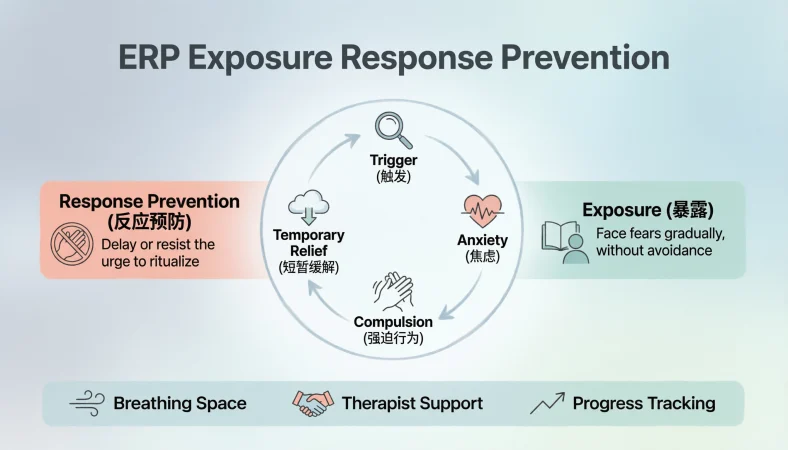
Quick Answer: ERP exposure response prevention usually refers to Exposure and Response Prevention (ERP), a form of CBT widely used for OCD. It involves gradually facing feared triggers while learning not to perform compulsions or avoidance behaviors.
5 Key Ideas: Gradual Exposure, Response Prevention, OCD Treatment, Exposure Hierarchy, Managing Uncertainty
Ever had your brain turn a tiny “what if?” into a full-blown emergency meeting? That is where understanding ERP exposure response prevention can become useful. Exposure and Response Prevention, usually shortened to ERP, is a structured form of cognitive behavioral therapy commonly used for obsessive-compulsive disorder. It combines planned exposure to situations, thoughts, images, or sensations that trigger obsessional fear with response prevention, meaning resisting compulsive behaviors and avoidance.
Whether you are researching ERP after a therapy appointment, reading about OCD online, texting a friend about treatment, or simply trying to understand the terminology, the phrase can sound more complicated than it really is. This guide breaks ERP into simple, relatable ideas while keeping the focus on what the treatment actually involves. ERP is challenging, but it is structured, collaborative, and normally guided by a trained clinician.
Simple ERP Exposure Response Prevention Explanations
- ERP means Exposure and Response Prevention.
Example: Use this when someone asks what the abbreviation means.
Meaning: ERP is the standard short name for Exposure and Response Prevention. - ERP is a CBT approach commonly used for OCD.
Example: Use this when explaining ERP in simple treatment terms.
Meaning: ERP is a specialized behavioral approach within cognitive behavioral therapy. - Exposure means facing a planned trigger.
Example: Use this when explaining the first half of ERP.
Meaning: Exposure involves deliberately approaching situations, thoughts, or stimuli that provoke obsessional fear. - Response prevention means resisting the compulsion.
Example: Use this when explaining the second half of ERP.
Meaning: The person practices not performing the usual compulsive response. - ERP teaches you to tolerate uncertainty.
Example: Use this when explaining why ERP can feel uncomfortable.
Meaning: ERP helps people practice living without repeatedly seeking certainty. - ERP is planned rather than random.
Example: Use this when someone thinks exposure means facing anything frightening without preparation.
Meaning: Exposure exercises are normally selected and planned with a therapist. - ERP focuses on changing the OCD cycle.
Example: Use this when describing the purpose of treatment.
Meaning: ERP targets the pattern of obsession, anxiety, compulsion, and temporary relief. - ERP does not require pretending anxiety feels good.
Example: Use this when someone worries they must enjoy exposure.
Meaning: The goal is learning to handle distress without relying on compulsions. - ERP can involve thoughts as well as situations.
Example: Use this when explaining less obvious forms of exposure.
Meaning: Exposure can involve thoughts, images, sensations, objects, or situations. - ERP usually becomes more manageable with practice.
Example: Use this when someone feels discouraged by early discomfort.
Meaning: Repeated practice can improve confidence in handling triggers. - ERP is not simply “forcing yourself to be brave.”
Example: Use this when correcting an oversimplified description of ERP.
Meaning: Effective ERP is structured, purposeful, and connected to treatment goals. - ERP helps people practice responding differently to fear.
Example: Use this when summarizing the treatment in one sentence.
Meaning: The focus is changing the response to obsessional fear rather than constantly neutralizing it.
Educational ERP Response Prevention Ideas
- Learn the OCD cycle before starting exercises.
Example: Use this as a simple educational takeaway.
Meaning: Understanding the cycle can make ERP principles easier to follow. - Identify triggers with a qualified therapist.
Example: Use this when discussing how ERP planning begins.
Meaning: Professional guidance helps identify relevant obsessional triggers. - Notice what your compulsions are trying to accomplish.
Example: Use this when reflecting on repetitive behaviors.
Meaning: Compulsions often function as attempts to reduce anxiety or uncertainty. - Pay attention to avoidance, not just visible rituals.
Example: Use this when someone thinks OCD only involves obvious compulsions.
Meaning: Avoidance can also maintain the fear cycle. - Mental rituals can matter too.
Example: Use this when discussing less visible compulsions.
Meaning: Reassurance, checking thoughts, analyzing, or mentally reviewing can sometimes function as compulsions. - ERP is about practice, not instant perfection.
Example: Use this when someone feels disappointed after a difficult exercise.
Meaning: Learning new responses takes repeated practice. - Anxiety during exposure does not automatically mean failure.
Example: Use this when someone becomes uncomfortable during an exercise.
Meaning: ERP intentionally involves approaching distress under a structured plan. - The goal is not always immediate anxiety relief.
Example: Use this when explaining why ERP differs from reassurance.
Meaning: ERP emphasizes learning new responses instead of making discomfort disappear instantly. - Progress can involve greater flexibility.
Example: Use this when measuring improvement beyond symptom intensity.
Meaning: Being able to continue daily activities despite uncertainty can be meaningful progress. - Therapy plans can be adjusted.
Example: Use this when someone assumes every ERP plan looks identical.
Meaning: ERP can vary according to individual needs and treatment settings. - Between-session practice can be part of ERP.
Example: Use this when explaining why therapy may continue outside appointments.
Meaning: ERP commonly includes planned practice between sessions. - Consistency matters more than dramatic gestures.
Example: Use this when someone thinks one huge exposure is the answer.
Meaning: ERP is generally built around structured, repeated practice rather than random intensity.
Calm And Reassuring ERP Responses
- Feeling anxious does not mean you are doing ERP wrong.
Example: Use this when early exposure feels uncomfortable.
Meaning: Anxiety can naturally increase when confronting an obsessional trigger. - You do not have to solve every uncertainty.
Example: Use this when reassurance-seeking becomes tempting.
Meaning: ERP encourages learning to tolerate uncertainty. - A thought is not automatically a command.
Example: Use this when discussing intrusive thoughts.
Meaning: Having an intrusive thought does not mean you must act on it. - Discomfort can be temporary.
Example: Use this when someone worries anxiety will last forever.
Meaning: ERP teaches that distress can change without compulsive action. - You can notice anxiety without immediately reacting.
Example: Use this when describing response prevention simply.
Meaning: Awareness and action do not have to happen at the same time. - You are allowed to learn at a steady pace.
Example: Use this when someone feels pressured by treatment.
Meaning: ERP should be appropriately planned and collaborative. - Progress does not have to look perfect.
Example: Use this after a difficult practice session.
Meaning: Treatment involves learning rather than performing perfectly. - Uncertainty is uncomfortable, not automatically dangerous.
Example: Use this when explaining a central ERP concept.
Meaning: ERP can help people practice responding differently to uncertainty. - You can feel fear and still continue your activity.
Example: Use this when discussing functioning during distress.
Meaning: ERP can involve learning that anxiety does not have to control behavior. - You do not need to win an argument with every thought.
Example: Use this when someone keeps analyzing intrusive thoughts.
Meaning: Constant mental debate can become part of the cycle. - Your brain can learn from repeated experiences.
Example: Use this when explaining why practice matters.
Meaning: Repeated ERP experiences can create new learning around feared situations. - Small steps can still count as meaningful practice.
Example: Use this when encouraging a gradual treatment approach.
Meaning: ERP can be organized around progressively challenging exercises.
Professional ERP Exposure Response Prevention Responses
- ERP is an evidence-based psychological treatment for OCD.
Example: Use this in a professional discussion about OCD treatment.
Meaning: ERP has substantial research support and is considered a first-line psychological treatment for OCD. - ERP is a specialized CBT strategy.
Example: Use this when distinguishing ERP from general talk therapy.
Meaning: ERP is a specific behavioral treatment approach within CBT. - Treatment typically begins with assessment and education.
Example: Use this when describing the early stages of ERP.
Meaning: Initial sessions commonly address OCD patterns and treatment planning. - A therapist can help develop an exposure hierarchy.
Example: Use this when explaining structured treatment planning.
Meaning: A hierarchy organizes potential exercises according to their difficulty. - ERP may include situational exposure.
Example: Use this when discussing exposure formats.
Meaning: Situational exposure involves approaching an actual feared situation. - ERP may include imaginal exposure.
Example: Use this when discussing fears that cannot easily be recreated.
Meaning: Imaginal exposure uses thoughts, images, or related exercises as planned treatment activities. - Response prevention targets compulsive behavior and avoidance.
Example: Use this when explaining the behavioral component.
Meaning: The treatment helps clients resist behaviors used to neutralize obsessional distress. - ERP can be delivered in several treatment settings.
Example: Use this when discussing therapy formats.
Meaning: ERP may occur individually, in groups, through intensive programs, or through teletherapy. - ERP should be individualized.
Example: Use this when comparing different people’s treatment plans.
Meaning: Exposure plans should reflect the person’s symptoms, goals, and clinical needs. - Qualified clinicians commonly guide ERP.
Example: Use this when discussing who provides the treatment.
Meaning: ERP is typically administered by mental health professionals with appropriate training. - ERP can be combined with other OCD treatments when appropriate.
Example: Use this when discussing treatment alongside medication.
Meaning: ERP may be used alongside medication or other therapy when clinically appropriate. - Treatment duration varies between individuals.
Example: Use this when someone asks how long ERP takes.
Meaning: The course and frequency of ERP can be adjusted according to individual needs.
Beginner-Friendly ERP Responses
- Start by learning what your OCD cycle looks like.
Example: Use this when beginning to understand ERP concepts.
Meaning: Recognizing obsessions, compulsions, and avoidance can clarify treatment targets. - Write down patterns rather than judging yourself.
Example: Use this when tracking recurring OCD behaviors.
Meaning: Observation can help identify patterns without adding shame. - Ask your therapist what response prevention means for you.
Example: Use this before attempting unfamiliar ERP exercises.
Meaning: Individual guidance can make the treatment plan clearer. - Notice the urge before automatically acting on it.
Example: Use this when becoming aware of a compulsive impulse.
Meaning: Pausing can help distinguish an urge from an action. - Expect some discomfort during planned exposure.
Example: Use this when preparing emotionally for ERP.
Meaning: Exposure can temporarily increase anxiety or uncertainty. - Do not turn every exercise into a test of certainty.
Example: Use this when someone keeps asking whether the feared outcome is impossible.
Meaning: ERP focuses on tolerating uncertainty rather than obtaining absolute reassurance. - Follow the treatment plan you developed with your clinician.
Example: Use this when deciding what exposure to practice.
Meaning: Professional guidance helps keep ERP structured and appropriate. - Track what you learn, not only how anxious you feel.
Example: Use this when reflecting after an ERP exercise.
Meaning: ERP can involve learning that feared situations are more manageable than expected. - Give yourself time to build confidence.
Example: Use this when early exercises feel difficult.
Meaning: New behavioral patterns develop through practice. - Remember that avoidance can maintain fear.
Example: Use this when explaining why avoiding every trigger can be unhelpful.
Meaning: Avoidance may prevent opportunities for new learning. - Practice skills consistently when your clinician recommends it.
Example: Use this when discussing homework between sessions.
Meaning: Regular practice can support treatment learning. - Ask questions when an ERP exercise is unclear.
Example: Use this when you are unsure about the purpose of an assignment.
Meaning: Understanding the rationale can make structured treatment easier to follow.
Smart ERP Response Prevention Ideas
- The goal is not to prove the feared thought false.
Example: Use this when someone keeps looking for certainty.
Meaning: ERP emphasizes changing the response to uncertainty rather than proving every fear wrong. - Reassurance can sometimes become part of the cycle.
Example: Use this when repeated questions temporarily reduce anxiety.
Meaning: Reassurance may function like a compulsion in some OCD patterns. - Avoidance and rituals can both reinforce fear.
Example: Use this when explaining why response prevention matters.
Meaning: Both behaviors can prevent new learning about feared situations. - ERP changes behavior before it changes everything else.
Example: Use this when someone expects thoughts to disappear immediately.
Meaning: The treatment focuses on practicing a different behavioral response. - You can have uncertainty without performing a ritual.
Example: Use this when explaining response prevention.
Meaning: ERP encourages allowing uncertainty without immediately neutralizing it. - An intrusive thought does not require a courtroom trial.
Example: Use this when someone repeatedly analyzes a thought.
Meaning: Endless analysis can become another way of responding compulsively. - The question is often “What will I do next?”
Example: Use this when shifting attention from the thought itself.
Meaning: ERP focuses heavily on behavior following an obsession. - Exposure is purposeful, not punishment.
Example: Use this when someone thinks ERP is about forcing discomfort.
Meaning: Planned exposure is designed to create therapeutic learning. - Response prevention is an active skill.
Example: Use this when someone thinks doing nothing means being passive.
Meaning: Resisting compulsive responses requires deliberate practice. - Confidence can grow from repeated practice.
Example: Use this when discussing long-term learning.
Meaning: Successfully handling uncertainty can strengthen self-trust. - ERP does not require certainty before moving forward.
Example: Use this when explaining why reassurance is not the main goal.
Meaning: The approach teaches people to function despite unanswered questions. - The learning matters beyond one therapy session.
Example: Use this when explaining why ERP skills can generalize.
Meaning: The aim is to apply new responses in everyday life.
Friendly ERP Exposure Response Prevention Ideas
- You are learning a new way to respond, not failing at being calm.
Example: Use this when someone feels discouraged by anxiety.
Meaning: ERP is about behavioral learning rather than perfect emotional control. - It is okay if ERP feels challenging.
Example: Use this when someone is surprised by treatment discomfort.
Meaning: Planned exposure can bring temporary distress. - You do not need to love uncertainty to tolerate it.
Example: Use this when discussing acceptance of uncomfortable feelings.
Meaning: Tolerance does not require enjoying uncertainty. - One difficult day does not erase your progress.
Example: Use this after a frustrating treatment experience.
Meaning: Progress can include setbacks and continued practice. - You can be kind to yourself while doing hard work.
Example: Use this when someone is overly self-critical.
Meaning: Self-compassion can coexist with challenging treatment goals. - Your feelings deserve attention without controlling every decision.
Example: Use this when discussing emotional reactions to OCD.
Meaning: Feelings can be acknowledged without automatically dictating behavior. - You can learn without rushing.
Example: Use this when someone compares their progress with others.
Meaning: Treatment experiences differ from person to person. - Asking for professional support is completely reasonable.
Example: Use this when someone feels overwhelmed by ERP concepts.
Meaning: Trained clinicians can help structure treatment safely. - You do not have to figure everything out today.
Example: Use this when uncertainty feels overwhelming.
Meaning: ERP can involve practicing tolerance one step at a time. - Progress can be quieter than you expect.
Example: Use this when improvements are not dramatic.
Meaning: Greater flexibility and reduced reliance on compulsions can matter. - Give yourself credit for noticing the pattern.
Example: Use this when someone first recognizes an OCD cycle.
Meaning: Awareness can be an important part of changing behavior. - Keep the focus on learning, not perfection.
Example: Use this when treatment feels like a performance test.
Meaning: ERP is a process of practicing new responses.
Practical ERP Responses For Everyday Life
- Notice the trigger without immediately escaping it.
Example: Use this as a simple description of an ERP principle.
Meaning: ERP can involve approaching planned triggers rather than automatically avoiding them. - Pause before checking again.
Example: Use this when discussing repetitive checking under professional guidance.
Meaning: The pause can create space between an urge and a compulsive response. - Notice the urge to ask for reassurance.
Example: Use this when repeated reassurance becomes part of the pattern.
Meaning: Awareness can help identify reassurance-seeking as a possible compulsion. - Return attention to your planned activity.
Example: Use this when an intrusive thought interrupts daily life.
Meaning: You can practice continuing meaningful activities without resolving every thought. - Let uncertainty remain unanswered when appropriate.
Example: Use this when certainty-seeking keeps restarting the cycle.
Meaning: ERP can teach tolerance for unanswered questions. - Resist turning every feeling into evidence.
Example: Use this when anxiety feels like proof that something is wrong.
Meaning: Emotional intensity does not automatically establish factual danger. - Keep your response aligned with your treatment plan.
Example: Use this when applying ERP skills outside therapy.
Meaning: Consistency with professional guidance can help maintain structured practice. - Notice the urge and choose your next action deliberately.
Example: Use this when a compulsion feels automatic.
Meaning: The aim is to create more choice around behavioral responses. - Allow the thought to exist without solving it immediately.
Example: Use this when rumination starts after an intrusive thought.
Meaning: Not every thought requires analysis or resolution. - Return to life instead of waiting for perfect certainty.
Example: Use this when OCD keeps delaying ordinary activities.
Meaning: ERP can support functioning while uncertainty remains. - Practice according to your clinician’s instructions.
Example: Use this when applying an ERP exercise at home.
Meaning: Personalized treatment guidance is more appropriate than copying random exercises. - Keep the bigger goal in sight.
Example: Use this when an individual exercise feels uncomfortable.
Meaning: ERP is intended to support broader functioning and reduce the impact of OCD.
Encouraging ERP Responses
- You can learn that anxiety does not have to run the show.
Example: Use this when encouraging someone beginning structured ERP.
Meaning: ERP aims to increase flexibility around anxiety and compulsive urges. - Courage can look like staying with uncertainty.
Example: Use this when describing the emotional challenge of response prevention.
Meaning: Facing uncertainty can require intentional effort. - Progress starts with practicing a different response.
Example: Use this when summarizing the behavioral side of ERP.
Meaning: Change involves repeatedly responding differently to triggers. - You are allowed to take treatment one step at a time.
Example: Use this when someone feels overwhelmed by the full ERP process.
Meaning: Structured treatment can be approached gradually. - Learning to tolerate discomfort can be powerful.
Example: Use this when explaining why response prevention matters.
Meaning: ERP builds practice around handling distress without compulsions. - You can notice an urge without obeying it.
Example: Use this when explaining the difference between an urge and an action.
Meaning: Compulsive urges do not have to determine behavior. - Your goal is flexibility, not flawless calm.
Example: Use this when someone expects anxiety to disappear completely.
Meaning: ERP focuses on healthier behavioral responses rather than perfect emotional control. - One exercise can teach more than one lesson.
Example: Use this when reflecting on an ERP practice.
Meaning: Exposure can create learning about uncertainty, anxiety, and compulsive urges. - Keep practicing the skills that your therapist recommends.
Example: Use this when encouraging consistent treatment participation.
Meaning: Professional guidance can help maintain appropriate ERP practice. - You can build confidence through experience.
Example: Use this when discussing why repeated practice matters.
Meaning: Successfully handling triggers can strengthen confidence. - You do not need to feel fearless to move forward.
Example: Use this when someone believes courage requires zero anxiety.
Meaning: ERP involves functioning while uncomfortable feelings may still be present. - Keep going with support when the process feels difficult.
Example: Use this when someone feels discouraged during treatment.
Meaning: Professional support can help people navigate challenging ERP work.
Clever And Memorable ERP Responses
- Anxiety can send an alert without getting the final vote.
Example: Use this as a memorable way to explain response prevention.
Meaning: Feeling anxious does not mean you must perform a compulsion. - Not every brain notification needs a reply.
Example: Use this when explaining intrusive thoughts casually.
Meaning: Thoughts can appear without requiring immediate action. - The goal is not to delete every uncomfortable thought.
Example: Use this when correcting misconceptions about ERP.
Meaning: ERP focuses on changing responses rather than eliminating every thought. - Uncertainty does not need a permanent investigation.
Example: Use this when discussing rumination and reassurance.
Meaning: Endless analysis can become part of the OCD cycle. - A loud alarm is not always proof of danger.
Example: Use this when explaining anxiety as an alarm system.
Meaning: Anxiety can produce intense signals even when the feared danger is unlikely. - The brain can learn from what you repeatedly practice.
Example: Use this when explaining why ERP uses repeated exposure.
Meaning: Repeated experiences can support new learning around feared situations. - ERP is less about winning against thoughts and more about changing your response.
Example: Use this when summarizing the treatment philosophy.
Meaning: The behavioral response is a central target of ERP. - You can leave some questions on read.
Example: Use this as a social-media-friendly explanation of uncertainty tolerance.
Meaning: Not every intrusive question needs reassurance or analysis. - Fear can be present without being in charge.
Example: Use this when describing functioning during anxiety.
Meaning: You can experience fear while choosing a different behavior. - Compulsions promise relief but can keep the cycle going.
Example: Use this when explaining why response prevention matters.
Meaning: Compulsions may temporarily reduce distress while reinforcing the pattern. - ERP turns practice into a new kind of learning.
Example: Use this when explaining the purpose of repeated exercises.
Meaning: Exposure and response prevention create opportunities for new experiences with uncertainty. - The plot twist is learning you can handle uncertainty.
Example: Use this as a light, memorable summary.
Meaning: ERP can help people discover they can function without complete certainty.
Motivational ERP Exposure Response Prevention Responses
- Keep practicing the response you want to strengthen.
Example: Use this when encouraging consistency in treatment.
Meaning: Repetition can help establish new behavioral patterns. - You can make room for discomfort without letting it decide everything.
Example: Use this when someone feels controlled by anxiety.
Meaning: ERP encourages functioning despite uncomfortable internal experiences. - Every planned practice is a chance to learn.
Example: Use this after an ERP exercise.
Meaning: Exposure can provide information that challenges old behavioral expectations. - You are building skills, not chasing perfection.
Example: Use this when someone feels discouraged by imperfect progress.
Meaning: ERP is a learning process rather than a performance test. - The urge can be strong without becoming an instruction.
Example: Use this when discussing compulsive urges.
Meaning: An urge can be experienced without automatically acting on it. - You can choose your next step even when anxiety is loud.
Example: Use this when discussing difficult moments during treatment.
Meaning: Anxiety does not have to dictate every behavior. - Let practice teach what reassurance cannot.
Example: Use this when explaining why repeated reassurance may not solve OCD.
Meaning: Direct experience can create learning without requiring constant certainty. - Progress often grows through repetition.
Example: Use this when encouraging consistent ERP practice.
Meaning: Repeated exercises can reinforce new responses. - You do not have to predict every possible outcome.
Example: Use this when discussing uncertainty-based OCD fears.
Meaning: ERP can support functioning without endless prediction. - You can face a trigger and still choose your values.
Example: Use this when connecting ERP to meaningful daily activities.
Meaning: Treatment can help people act according to their goals rather than compulsions. - Let your treatment plan guide you through the uncomfortable parts.
Example: Use this when an ERP exercise feels difficult.
Meaning: Structured professional guidance can provide direction during challenging work. - One thoughtful response can change the pattern.
Example: Use this when describing the value of resisting a compulsive reaction.
Meaning: Repeated choices not to engage in compulsions can support new learning.
FAQs
What Does ERP Exposure Response Prevention Mean?
ERP means Exposure and Response Prevention, a CBT approach commonly used to treat OCD.
What Is The Exposure Part Of ERP?
Exposure means gradually approaching planned thoughts, situations, objects, or sensations that trigger obsessional fear.
What Is Response Prevention?
Response prevention means resisting compulsive behaviors or avoidance after an OCD trigger appears.
Is ERP Used For OCD?
Yes. ERP is widely recognized as a first-line psychological treatment for OCD.
Does ERP Mean Making Yourself Feel Terrified?
No. ERP is planned and gradual, and you should not be forced or deceived into exposure.
Can ERP Feel Uncomfortable?
Yes. Anxiety and uncertainty can increase during exposure, which is an expected part of the process.
Is ERP A Professional Treatment?
Yes. ERP is commonly guided by trained mental health professionals who understand OCD and exposure methods.
Can ERP Be Done Without A Therapist?
ERP is best planned with appropriate professional guidance, especially when you are new to treatment.
Does ERP Make Intrusive Thoughts Disappear?
The goal is not simply to eliminate thoughts, but to change how you respond to them.
Can ERP Include Mental Compulsions?
Yes. ERP can address mental compulsions, reassurance-seeking, rumination, and avoidance when clinically relevant.
Is Humor Appropriate When Talking About ERP?
Gentle humor can make education feel approachable, but OCD symptoms and treatment should still be treated respectfully.
What If I Do Not Want To Try ERP?
Discuss your concerns with a qualified clinician so you can understand your options and make an informed treatment decision.
Conclusion
Understanding ERP exposure response prevention can make a complicated therapy term feel much less intimidating. At its core, ERP combines planned exposure with response prevention to help people practice facing obsessional triggers without automatically relying on compulsions or avoidance.
The process can feel uncomfortable, but discomfort does not mean you are doing something wrong. What matters is learning, practicing, and working with appropriate professional guidance. Everyone’s experience with OCD and treatment is different, so avoid comparing your progress with someone else’s timeline. Save this guide for later, share it with someone who is learning about ERP, and keep exploring reliable information one step at a time.