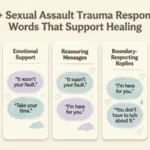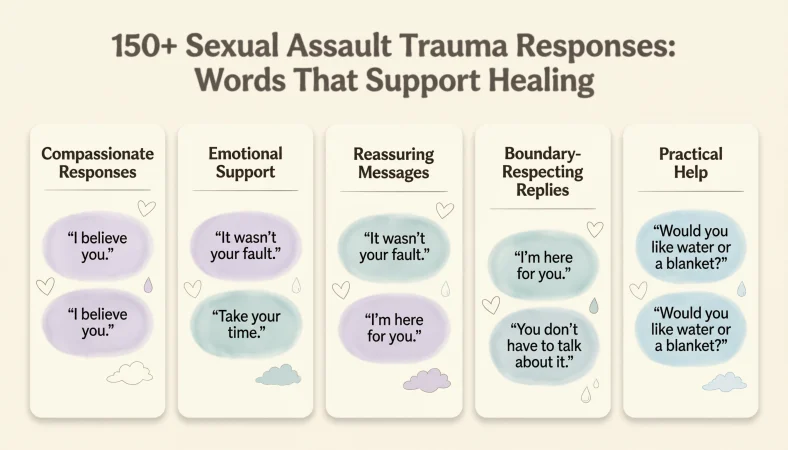
Sexual assault trauma responses are the emotional, physical, and behavioral reactions someone may experience after sexual violence. The most helpful replies offer compassion, patience, and reassurance without judgment or pressure. Five supportive alternatives are “I believe you,” “It wasn’t your fault,” “You’re not alone,” “Take your time,” and “I’m here for you.”
Sometimes, the right words can make someone feel less alone, especially when they are struggling with something deeply painful. When discussing sexual assault trauma responses, knowing what to say matters far more than finding a perfect sentence. Whether someone opens up in a private text, shares their feelings with a trusted friend, or seeks support from a colleague, a compassionate response can help them feel heard and respected.
Trauma can affect people differently. Some may feel anxious, withdrawn, angry, numb, or overwhelmed, while others may struggle to explain what they are experiencing. There is no single correct way to react, and healing does not follow a universal timeline. If someone trusts you enough to share their experience, you do not need a dramatic speech or a magical fix. You need empathy, patience, and respect for their boundaries. These supportive responses can help you communicate care without minimizing their feelings or putting pressure on them to recover quickly.
1. Compassionate Sexual Assault Trauma Responses
1. “I believe you.” Example: Use this when someone fears they will not be believed after sharing their experience. Meaning: It communicates trust and validates their willingness to speak.
2. “I’m so sorry this happened to you.” Example: Use this when a friend shares a painful memory. Meaning: It expresses genuine sympathy without demanding an explanation.
3. “You didn’t deserve this.” Example: Use this when someone blames themselves for another person’s actions. Meaning: It reinforces that they deserved safety and respect.
4. “I’m here to listen.” Example: Use this when someone wants to talk but struggles to find the words. Meaning: It offers a supportive space without pressure.
5. “You don’t have to explain everything.” Example: Use this when someone seems overwhelmed while sharing their story. Meaning: It respects their privacy and emotional limits.
6. “Your feelings are valid.” Example: Use this when someone questions whether their emotional reaction makes sense. Meaning: It reassures them that their emotions deserve acknowledgment.
7. “You matter, and your comfort matters.” Example: Use this when a loved one feels overlooked or unimportant. Meaning: It reminds them that their well-being deserves care.
8. “I’m listening, and I’m not judging you.” Example: Use this when someone worries about being misunderstood. Meaning: It offers acceptance without criticism.
9. “You deserve kindness right now.” Example: Use this when someone is being harsh toward themselves. Meaning: It encourages self-compassion during a difficult period.
10. “You can take your time with me.” Example: Use this when a friend needs pauses while discussing something painful. Meaning: It removes pressure to speak quickly or share everything.
11. “You don’t have to go through this alone.” Example: Use this when someone feels isolated after trauma. Meaning: It reminds them that support is available.
12. “Thank you for trusting me with this.” Example: Use this when someone shares a deeply personal experience. Meaning: It acknowledges the trust involved in opening up.
2. Gentle and Reassuring Responses
1. “You’re safe to tell me how you’re feeling.” Example: Use this when someone worries that their emotions will upset you. Meaning: It encourages honest communication while respecting their comfort.
2. “There is no right way to feel.” Example: Use this when someone feels confused by changing emotions. Meaning: It normalizes individual differences in trauma reactions.
3. “You don’t need to be strong every minute.” Example: Use this when someone feels exhausted from appearing okay. Meaning: It gives permission to acknowledge vulnerability.
4. “One moment at a time is enough.” Example: Use this when the future feels overwhelming to someone. Meaning: It encourages manageable steps instead of demanding quick progress.
5. “You deserve patience, including from yourself.” Example: Use this when someone becomes frustrated with their healing process. Meaning: It promotes a kinder attitude toward personal recovery.
6. “It’s okay if you don’t know what you need yet.” Example: Use this when someone cannot decide what kind of support would help. Meaning: It removes the expectation of having all the answers.
7. “We can sit quietly if talking feels difficult.” Example: Use this when a friend seems too overwhelmed to speak. Meaning: It offers companionship without requiring conversation.
8. “You can change your mind at any time.” Example: Use this when discussing plans or support options. Meaning: It reinforces personal choice and autonomy.
9. “You deserve to feel respected.” Example: Use this when someone doubts whether their boundaries matter. Meaning: It affirms their right to dignity and respect.
10. “There’s no deadline for feeling better.” Example: Use this when someone feels behind in their recovery. Meaning: It challenges unrealistic expectations about healing.
11. “You can tell me what feels comfortable.” Example: Use this when offering help to someone who seems hesitant. Meaning: It lets them guide the conversation.
12. “I’m not going anywhere just because you’re struggling.” Example: Use this when a loved one fears becoming a burden. Meaning: It offers reassurance without requiring them to hide their feelings.
3. Responses That Validate Their Feelings
1. “Your reaction makes sense in the context of what you’ve experienced.” Example: Use this when someone feels confused by their emotions. Meaning: It acknowledges their experience without diagnosing them.
2. “You don’t have to justify your feelings.” Example: Use this when someone keeps explaining why they feel upset. Meaning: It reminds them that emotions do not require a defense.
3. “Feeling numb doesn’t mean you don’t care.” Example: Use this when someone worries about feeling emotionally disconnected. Meaning: It recognizes that numbness can occur after overwhelming experiences.
4. “You can feel several things at once.” Example: Use this when someone describes conflicting emotions. Meaning: It makes room for complicated feelings without judgment.
5. “Being upset doesn’t make you weak.” Example: Use this when someone criticizes themselves for crying. Meaning: It separates emotional distress from personal weakness.
6. “You don’t have to react the way anyone expects.” Example: Use this when someone compares their response with another survivor’s. Meaning: It affirms that trauma reactions differ from person to person.
7. “It’s okay to have difficult days.” Example: Use this when someone feels discouraged by a setback. Meaning: It acknowledges that recovery can involve ups and downs.
8. “You can be doing better and still have hard moments.” Example: Use this when distress returns after a more comfortable period. Meaning: It reassures them that difficult moments do not erase progress.
9. “Your boundaries are worth respecting.” Example: Use this when someone worries about asking for personal space. Meaning: It affirms their right to decide what feels acceptable.
10. “You don’t have to prove how much this affected you.” Example: Use this when someone feels pressure to demonstrate their pain. Meaning: It rejects the idea that suffering must look a certain way.
11. “It’s okay to need support more than once.” Example: Use this when someone apologizes for bringing up the subject again. Meaning: It reassures them that support does not have to be a one-time offer.
12. “Your experience deserves to be taken seriously.” Example: Use this when someone worries their experience will be dismissed. Meaning: It emphasizes respect without requiring personal details.
4. Responses That Remove Self-Blame
1. “What happened was not your fault.” Example: Use this when someone blames themselves for being assaulted. Meaning: It places responsibility on the person who chose to cause harm.
2. “You are not responsible for someone else’s decision to hurt you.” Example: Use this when someone focuses on what they could have done differently. Meaning: It challenges misplaced responsibility.
3. “Your clothing did not make this your fault.” Example: Use this when someone worries their appearance contributed to the assault. Meaning: It rejects victim-blaming.
4. “Freezing or going quiet doesn’t mean you agreed.” Example: Use this when someone blames themselves for not reacting physically. Meaning: It explains that an involuntary response is not consent.
5. “You didn’t have to fight back to deserve protection.” Example: Use this when someone questions why they did not resist. Meaning: It affirms that resistance is not a requirement for being believed or supported.
6. “You can regret a decision without taking responsibility for someone else’s harm.” Example: Use this when someone repeatedly replays events and blames themselves. Meaning: It separates personal reflection from responsibility for assault.
7. “Trusting someone doesn’t make you responsible for their actions.” Example: Use this when someone feels ashamed for trusting the person who harmed them. Meaning: It recognizes that trust is not permission to violate boundaries.
8. “You deserved respect in that situation.” Example: Use this when someone minimizes what happened. Meaning: It reinforces their right to respectful treatment.
9. “You don’t owe anyone an explanation for what you wore or where you went.” Example: Use this when someone fears being judged for ordinary choices. Meaning: It rejects unfair scrutiny of a survivor’s behavior.
10. “Not knowing what to do in the moment is understandable.” Example: Use this when someone feels ashamed of their reaction. Meaning: It recognizes that overwhelming situations can make decisions difficult.
11. “You can learn from an experience without blaming yourself for it.” Example: Use this when someone is struggling with regret. Meaning: It supports reflection without assigning fault for the assault.
12. “You deserved safety, regardless of the circumstances.” Example: Use this when someone questions whether they deserved better treatment. Meaning: It affirms that safety is not something a person must earn.
5. Emotional and Heartfelt Responses
1. “I wish you hadn’t had to experience this.” Example: Use this when a loved one shares the impact of their trauma. Meaning: It expresses heartfelt sadness about what they endured.
2. “My heart hurts knowing you’ve been carrying this.” Example: Use this when someone reveals how long they have struggled privately. Meaning: It communicates care for their emotional burden.
3. “You deserve moments of peace again.” Example: Use this when someone feels consumed by painful memories. Meaning: It offers hope without promising an easy recovery.
4. “I see how hard you’re trying.” Example: Use this when someone feels discouraged by their progress. Meaning: It recognizes their effort without demanding more.
5. “You are more than what happened to you.” Example: Use this when someone feels defined by their experience. Meaning: It reminds them that their identity extends beyond the trauma.
6. “You deserve tenderness, not judgment.” Example: Use this when someone fears being criticized. Meaning: It emphasizes compassionate treatment.
7. “You don’t have to hide your sadness around me.” Example: Use this when a friend pretends to be fine. Meaning: It makes room for honest emotional expression.
8. “I care about you beyond what you can explain.” Example: Use this when someone struggles to put their feelings into words. Meaning: It communicates that understanding every detail is unnecessary for caring.
9. “You deserve to be treated with dignity.” Example: Use this when someone feels devalued after their experience. Meaning: It reinforces their worth and humanity.
10. “I’m sorry you’ve had to carry so much pain.” Example: Use this when someone describes a long period of distress. Meaning: It acknowledges their suffering with compassion.
11. “You can be vulnerable without apologizing to me.” Example: Use this when someone says sorry for crying. Meaning: It encourages emotional honesty without shame.
12. “I hope you find more gentle moments ahead.” Example: Use this when offering encouragement during a difficult day. Meaning: It expresses realistic hope for greater comfort.
6. Responses That Offer Practical Support
1. “Would you like me to listen or help you think through options?” Example: Use this when someone seems unsure what kind of help they need. Meaning: It lets them choose between emotional support and problem-solving.
2. “Can I bring you something to eat?” Example: Use this when a friend is struggling with everyday tasks. Meaning: It offers concrete help without asking for personal details.
3. “Would company help today?” Example: Use this when someone seems isolated. Meaning: It offers companionship while leaving the decision to them.
4. “We can make a plan together if you want.” Example: Use this when someone asks what their next step could be. Meaning: It offers collaboration rather than taking control.
5. “Would you like help finding a trauma-informed counselor?” Example: Use this when someone expresses interest in professional support. Meaning: It offers a practical option without insisting on therapy.
6. “I can help with errands if things feel overwhelming.” Example: Use this when someone is finding daily responsibilities difficult. Meaning: It provides specific, manageable assistance.
7. “Would you prefer a call or a text?” Example: Use this when checking in with a friend. Meaning: It lets them choose a comfortable way to communicate.
8. “You can tell me if you need some space.” Example: Use this when someone becomes quieter than usual. Meaning: It respects their need for distance.
9. “Would it help if I came with you?” Example: Use this when someone wants company at an appointment. Meaning: It offers support while preserving their choice.
10. “We can take this one decision at a time.” Example: Use this when someone feels overwhelmed by several choices. Meaning: It helps break down a difficult situation into manageable steps.
11. “You don’t need to decide everything today.” Example: Use this when someone feels pressured to make immediate decisions. Meaning: It encourages a slower pace when circumstances allow.
12. “Tell me one small thing that would make today easier.” Example: Use this when someone welcomes help but does not know where to begin. Meaning: It turns a broad offer into practical, person-led support.
7. Responses That Respect Boundaries
1. “You never have to share more than you want.” Example: Use this when someone hesitates to continue a conversation. Meaning: It reinforces their control over personal information.
2. “I won’t ask for details you’re uncomfortable sharing.” Example: Use this when someone fears being questioned. Meaning: It promises respect for their privacy.
3. “It’s okay to say no to anything that doesn’t feel right.” Example: Use this when someone is practicing setting boundaries. Meaning: It supports their right to refuse.
4. “You decide what happens next.” Example: Use this when someone feels others are making choices for them. Meaning: It restores a sense of personal agency.
5. “Would you like a little space?” Example: Use this when someone seems uncomfortable with closeness. Meaning: It checks their preference rather than assuming.
6. “I won’t touch you without asking.” Example: Use this when physical contact might feel uncomfortable. Meaning: It makes consent and bodily autonomy explicit.
7. “You can stop this conversation whenever you want.” Example: Use this before discussing a sensitive topic. Meaning: It gives them control over when to pause or stop.
8. “Your privacy matters to me.” Example: Use this when someone worries their story will be shared. Meaning: It reassures them that their personal information deserves care.
9. “You don’t owe me an answer right now.” Example: Use this when asking whether someone wants support. Meaning: It removes pressure to respond immediately.
10. “I will respect the limits you set.” Example: Use this when someone explains what they are comfortable discussing. Meaning: It communicates a commitment to honoring boundaries.
11. “We can change the subject if you need to.” Example: Use this when a conversation becomes emotionally tiring. Meaning: It gives them permission to redirect the discussion.
12. “You are allowed to protect your peace.” Example: Use this when someone wants distance from stressful situations. Meaning: It affirms their right to choose what feels manageable.
8. Responses for Text Messages and DMs
1. “I’m here for you, no pressure to reply.” Example: Send this when a friend is struggling and may need time offline. Meaning: It offers support without creating an obligation.
2. “Thinking of you today. Sending you care.” Example: Send this as a gentle check-in after a difficult conversation. Meaning: It communicates warmth without demanding a response.
3. “You don’t need to pretend you’re okay with me.” Example: Send this when someone keeps saying they’re fine despite sounding upset. Meaning: It encourages honesty without forcing disclosure.
4. “Would a quiet check-in tomorrow feel okay?” Example: Send this when someone wants support but needs breathing room. Meaning: It asks permission for future contact.
5. “No need to find the perfect words. I’m listening.” Example: Send this when a friend says they do not know how to explain things. Meaning: It removes pressure to communicate perfectly.
6. “I’m sorry today feels heavy.” Example: Send this when someone tells you they are having a difficult day. Meaning: It acknowledges distress simply and warmly.
7. “You can message me whenever you’re comfortable.” Example: Send this when someone is unsure whether to reach out again. Meaning: It leaves the door open without setting expectations.
8. “Would a funny meme or a quiet chat help more?” Example: Send this when a friend enjoys light distractions but may need support. Meaning: It lets them choose between humor and conversation.
9. “You don’t have to respond to this. Just sending love.” Example: Send this when someone needs reassurance without more notifications. Meaning: It offers affection without asking for emotional labor.
10. “I’m proud of you for reaching out.” Example: Send this when someone contacts you during a difficult moment. Meaning: It acknowledges the effort involved in asking for support.
11. “Want me to check in later, or would you prefer space?” Example: Send this when you want to respect a friend’s communication needs. Meaning: It lets them choose the timing of further contact.
12. “You’re important to me, even on the hard days.” Example: Send this when someone worries their struggles are pushing people away. Meaning: It reassures them that your care is not conditional on their mood.
9. Responses for Friends and Family
1. “You don’t have to protect me from your feelings.” Example: Use this when a family member hides their distress to avoid worrying you. Meaning: It invites openness without demanding it.
2. “I’ll follow your lead on what feels helpful.” Example: Use this when supporting a friend who prefers to make their own choices. Meaning: It keeps their needs at the center.
3. “Would you like me to stay for a while?” Example: Use this when a loved one seems lonely or unsettled. Meaning: It offers companionship with consent.
4. “I care about you, not just the version of you who feels okay.” Example: Use this when someone worries their distress makes them difficult to love. Meaning: It communicates steady affection.
5. “We can spend time together without talking about it.” Example: Use this when a friend wants company but not a serious conversation. Meaning: It offers connection without pressure to disclose.
6. “I won’t turn your experience into gossip.” Example: Use this when someone fears their private story will spread. Meaning: It communicates respect for confidentiality.
7. “You can tell me when I get something wrong.” Example: Use this when learning how to support a loved one. Meaning: It encourages honest feedback and respectful communication.
8. “I won’t compare your experience with anyone else’s.” Example: Use this when someone fears being measured against another survivor. Meaning: It recognizes that each person’s experience is individual.
9. “Let’s do something gentle together, if you’d like.” Example: Use this when offering a low-pressure activity. Meaning: It creates an opportunity for connection without demanding conversation.
10. “You can ask me for help without apologizing.” Example: Use this when someone feels guilty about needing assistance. Meaning: It makes support feel more accessible.
11. “I’ll respect what you want to keep private.” Example: Use this when a loved one shares sensitive information. Meaning: It affirms their control over their story.
12. “Our relationship doesn’t require you to pretend.” Example: Use this when a friend hides difficult emotions around you. Meaning: It encourages authenticity within the relationship.
10. Professional and Workplace Responses
1. “Thank you for letting me know. Your privacy matters.” Example: Use this when a colleague shares a personal difficulty at work. Meaning: It acknowledges their disclosure respectfully.
2. “You don’t need to share personal details to request support.” Example: Use this when a colleague worries about explaining an absence. Meaning: It respects privacy while recognizing their needs.
3. “Let’s discuss what workplace adjustments might help.” Example: Use this when someone asks about practical work accommodations. Meaning: It focuses on support rather than personal details.
4. “We can take this conversation at your pace.” Example: Use this when discussing a sensitive concern in a professional setting. Meaning: It encourages respectful communication without rushing.
5. “Would you prefer to continue this privately?” Example: Use this when someone raises a personal issue in a group setting. Meaning: It protects their comfort and confidentiality.
6. “You can let me know what support you feel comfortable requesting.” Example: Use this when a team member needs flexibility. Meaning: It leaves the decision about support with the individual.
7. “I appreciate you communicating your needs.” Example: Use this when a colleague explains a boundary or scheduling concern. Meaning: It reinforces respectful workplace communication.
8. “We can focus on what you need for work right now.” Example: Use this when a colleague wants to discuss practical arrangements. Meaning: It keeps the conversation relevant without asking intrusive questions.
9. “You deserve to be treated respectfully here.” Example: Use this when someone reports feeling uncomfortable at work. Meaning: It affirms their right to dignity in the workplace.
10. “Let’s identify the appropriate support options available to you.” Example: Use this when someone asks about workplace resources. Meaning: It offers practical next steps without making promises.
11. “You can choose what information you’re comfortable sharing.” Example: Use this when someone worries about disclosing personal circumstances. Meaning: It reinforces appropriate privacy boundaries.
12. “Thank you for trusting me. I’ll handle this sensitively.” Example: Use this when a colleague shares something deeply personal. Meaning: It acknowledges their trust and signals discretion.
11. Calm Responses During Emotional Overwhelm
1. “Let’s pause for a moment.” Example: Use this when someone appears overwhelmed during a conversation. Meaning: It offers a break without judging their reaction.
2. “We don’t have to solve anything right now.” Example: Use this when someone feels pressured to make decisions. Meaning: It reduces the immediate demand to act.
3. “Would you like to sit somewhere quieter?” Example: Use this when a noisy environment seems uncomfortable for someone. Meaning: It offers a practical change while preserving their choice.
4. “You can look around and take in your surroundings if that helps.” Example: Use this when someone wants help feeling more present. Meaning: It gently suggests grounding without insisting on a technique.
5. “Would you like me to stay with you?” Example: Use this when someone appears distressed and might appreciate company. Meaning: It offers presence without assuming what they need.
6. “Let’s slow the conversation down.” Example: Use this when someone struggles to process several questions. Meaning: It reduces conversational pressure.
7. “You can take a break whenever you need one.” Example: Use this during a difficult discussion. Meaning: It gives permission to pause or stop.
8. “Would some water or fresh air help?” Example: Use this when someone wants a simple practical comfort. Meaning: It offers an easy choice rather than demanding an explanation.
9. “You don’t have to make sense of everything this minute.” Example: Use this when someone is struggling to understand their feelings. Meaning: It makes room for uncertainty.
10. “We can focus on what feels manageable right now.” Example: Use this when the situation feels too big to process. Meaning: It redirects attention toward a smaller, immediate need.
11. “Would you like me to speak less and just sit with you?” Example: Use this when reassurance seems to be overwhelming someone. Meaning: It recognizes that quiet presence may be more helpful than words.
12. “You can tell me if this isn’t helping.” Example: Use this when suggesting a coping strategy. Meaning: It lets the person remain in control of the support they receive.
12. Encouraging and Hopeful Responses
1. “You deserve a future that feels safe and fulfilling.” Example: Use this when someone feels uncertain about life after trauma. Meaning: It offers hope without promising a specific outcome.
2. “You can move forward at your own pace.” Example: Use this when someone compares their recovery with others. Meaning: It respects their individual timeline.
3. “Small steps still count.” Example: Use this when someone feels discouraged by slow progress. Meaning: It recognizes meaningful effort in everyday actions.
4. “You deserve good things without having to earn them.” Example: Use this when someone feels unworthy of happiness. Meaning: It affirms their inherent worth.
5. “A difficult day doesn’t define your whole journey.” Example: Use this when someone feels discouraged after a setback. Meaning: It places one hard moment in a wider perspective.
6. “You are allowed to look forward to things again.” Example: Use this when someone feels guilty about enjoying life. Meaning: It makes room for happiness alongside painful memories.
7. “Your progress doesn’t have to look like anyone else’s.” Example: Use this when someone feels behind other survivors. Meaning: It encourages an individual approach to recovery.
8. “You deserve relationships built on respect and trust.” Example: Use this when someone worries about future relationships. Meaning: It reinforces healthy relationship expectations.
9. “You can ask for help and still be independent.” Example: Use this when someone fears that needing support means weakness. Meaning: It frames help-seeking as compatible with autonomy.
10. “There is room for joy alongside difficult feelings.” Example: Use this when someone feels guilty about having a good day. Meaning: It acknowledges that positive and painful emotions can coexist.
11. “You don’t need to have everything figured out to take one step.” Example: Use this when someone feels stuck about the future. Meaning: It encourages manageable progress without pressure.
12. “You deserve support that meets you where you are.” Example: Use this when someone feels misunderstood by others. Meaning: It reinforces the importance of individualized care.
13. Responses About Seeking Professional Support
1. “You deserve support from someone who understands trauma.” Example: Use this when someone is interested in professional help. Meaning: It encourages access to informed, compassionate care.
2. “Would you like help exploring counseling options?” Example: Use this when someone asks where to begin. Meaning: It offers practical assistance without making therapy compulsory.
3. “You can ask a therapist questions before deciding.” Example: Use this when someone feels uncertain about counseling. Meaning: It reinforces informed choice and personal comfort.
4. “It’s okay to look for someone you feel comfortable with.” Example: Use this when someone is choosing a mental health professional. Meaning: It recognizes that trust matters in care.
5. “You can tell a professional what feels difficult to discuss.” Example: Use this when someone fears being pressured to share details. Meaning: It supports communication about boundaries during treatment.
6. “Getting support is your choice, and you deserve options.” Example: Use this when someone feels unsure about seeking help. Meaning: It encourages autonomy and access to choices.
7. “You can ask about confidentiality before sharing personal information.” Example: Use this when someone worries about privacy in counseling. Meaning: It encourages them to understand the professional’s privacy obligations and limits.
8. “You don’t have to know exactly what’s wrong to ask for help.” Example: Use this when someone struggles to describe their symptoms. Meaning: It reassures them that uncertainty need not prevent support.
9. “We can write down your questions before an appointment.” Example: Use this when someone feels nervous about speaking to a professional. Meaning: It offers a practical way to prepare.
10. “You can ask for a different approach if something isn’t working.” Example: Use this when someone feels uncomfortable with a support strategy. Meaning: It encourages open communication about their care.
11. “You deserve care without being blamed or shamed.” Example: Use this when someone fears judgment from a professional. Meaning: It reinforces the importance of respectful treatment.
12. “You can choose the next step that feels right for you.” Example: Use this when discussing possible support options. Meaning: It keeps decisions in the person’s hands.
14. Responses When Someone Is Triggered by Reminders
1. “Would you like to move away from what’s upsetting you?” Example: Use this when a reminder seems to be causing distress. Meaning: It offers a change of environment without assuming what is wrong.
2. “You don’t have to explain why this feels difficult.” Example: Use this when someone struggles to explain a sudden emotional reaction. Meaning: It respects their experience without demanding details.
3. “Let’s find out what would help you feel more comfortable.” Example: Use this when someone asks for help during a difficult moment. Meaning: It encourages practical, person-led support.
4. “Would you like to focus on something happening around us right now?” Example: Use this when someone wants help reconnecting with the present. Meaning: It gently offers a grounding option.
5. “You can step outside if that feels better.” Example: Use this when a busy setting feels overwhelming. Meaning: It provides an option to change the environment.
6. “I won’t make you talk about what brought this up.” Example: Use this when someone becomes distressed by a reminder. Meaning: It reassures them that disclosure is not required.
7. “Would you like some quiet, or would talking help?” Example: Use this when you are unsure what kind of support to offer. Meaning: It lets them choose their preferred response.
8. “We can leave this situation whenever you’re ready.” Example: Use this when someone wants to leave an uncomfortable social setting. Meaning: It offers flexibility and respects their choice.
9. “You don’t need to apologize for being overwhelmed.” Example: Use this when someone apologizes for becoming upset. Meaning: It reduces shame around emotional distress.
10. “Would it help to take a few slow, comfortable breaths together?” Example: Use this when someone welcomes a calming exercise. Meaning: It offers a gentle option without forcing a particular technique.
11. “You can tell me what feels okay and what doesn’t.” Example: Use this when trying to support someone through an uncomfortable moment. Meaning: It encourages clear boundaries.
12. “I’m here, and we can take this moment slowly.” Example: Use this when someone needs calm companionship. Meaning: It provides reassurance without promising to eliminate their distress.
15. Short, Simple, and Respectful Responses
1. “I believe you.” Example: Use this when someone needs a clear, supportive acknowledgment. Meaning: It communicates belief without asking for proof.
2. “I’m listening.” Example: Use this when someone begins sharing a difficult experience. Meaning: It shows attention and willingness to hear them.
3. “It wasn’t your fault.” Example: Use this when someone expresses self-blame. Meaning: It rejects the idea that they caused the assault.
4. “You matter.” Example: Use this when someone feels worthless or forgotten. Meaning: It offers a direct reminder of their value.
5. “Take your time.” Example: Use this when someone needs a pause before continuing. Meaning: It removes pressure to respond quickly.
6. “I’m here for you.” Example: Use this when a loved one needs reassurance. Meaning: It communicates care and availability.
7. “You deserve respect.” Example: Use this when someone doubts their right to set boundaries. Meaning: It affirms their dignity.
8. “No pressure to talk.” Example: Use this when someone needs space. Meaning: It makes clear that conversation is optional.
9. “Your feelings are valid.” Example: Use this when someone questions their emotional response. Meaning: It acknowledges their feelings without judgment.
10. “You aren’t alone.” Example: Use this when someone feels isolated. Meaning: It reminds them that support can be available.
11. “I’m glad you told me.” Example: Use this when someone shares something difficult. Meaning: It acknowledges their trust and openness.
12. “You get to choose what happens next.” Example: Use this when someone feels uncertain about their next step. Meaning: It reinforces their autonomy and control over personal decisions.
FAQs
What Does Sexual Assault Trauma Responses Mean?
Sexual assault trauma responses are emotional, physical, or behavioral reactions that may follow sexual violence.
What Are Emotional or Flirty Interpretations of Trauma Responses?
Trauma responses are not signs of romantic interest. Respect boundaries and never interpret distress as consent.
How Should You Discuss Sexual Assault Trauma Responses Professionally?
Use respectful language, protect privacy, avoid intrusive questions, and focus on the person’s support needs.
What Should You Say If You Don’t Actually Mean It?
Keep your words honest. A simple offer to listen is better than a promise you cannot keep.
Is Humor Appropriate When Discussing Sexual Assault Trauma Responses?
Only when the survivor welcomes it. Avoid jokes about assault, blame, consent, or their emotional reactions.
Conclusion
Finding the right words when someone experiences sexual assault trauma responses can feel difficult, but kindness matters more than having a perfect script. A simple “I believe you,” a patient listening ear, or an offer of practical support can help someone feel respected and understood. Remember that every survivor is different, and no single response works for everyone.
Listen without judgment, respect boundaries, and let the person decide what support feels right. You don’t need to fix everything to make a meaningful difference. Save these responses for moments when someone needs compassion, share them thoughtfully, and choose words that communicate genuine care. A little empathy can go a long way.