Quick Answer: Catty remarks are short, pointed comments that express annoyance, sarcasm, jealousy, disapproval, or playful attitude without being completely direct. The best catty remarks examples are clever enough to make a point while keeping the delivery light.
Top alternatives: “Interesting choice,” “Good for you,” “Noted,” “That’s one opinion,” “Bless your heart”
You know that moment when someone says something slightly annoying, and your brain immediately produces the perfect comeback three hours later? Yep, that is where catty remarks enter the chat. Whether you are texting a friend, replying to a DM, dealing with a nosy coworker, or joking around with your crush, a well-timed remark can say a lot without turning the situation into full-blown drama.
The best catty remarks examples are short, witty, and just sharp enough to make someone pause. They can be playful between friends, sarcastic when someone is being irritating, or polished enough for situations where you want to keep your composure. The trick is knowing your audience and choosing the right level of attitude. Here are plenty of clever options for every mood, from subtle shade to unmistakable sass.
Funny Catty Remarks
“That’s certainly a choice.”
Use this when someone makes a questionable decision and you want to tease them.
Meaning: You are humorously suggesting their choice is questionable.
“Well, confidence is free.”
Use this when someone is extremely confident about something questionable.
Meaning: You are joking that their confidence exceeds the evidence.
“I admire your commitment to being wrong.”
Use this with a friend who refuses to admit defeat.
Meaning: You are playfully calling out their stubbornness.
“You really said that out loud.”
Use this when someone makes an unexpectedly bold comment.
Meaning: You are amused that they actually voiced their thought.
“The audacity is impressive.”
Use this when someone has made an especially bold move.
Meaning: You are sarcastically impressed by their nerve.
“And somehow, you made that about you.”
Use this when someone redirects attention toward themselves.
Meaning: You are teasing them for making everything personal.
“I’d explain it, but I brought crayons for nothing.”
Use this with someone who is jokingly missing the obvious.
Meaning: You are playfully questioning their understanding.
“You’re very brave for saying that.”
Use this when someone makes a risky opinion known.
Meaning: You are joking that their comment may not go over well.
“That took confidence and absolutely no research.”
Use this when someone confidently states something inaccurate.
Meaning: You are poking fun at their certainty.
“I’m impressed by the imagination.”
Use this when someone tells an unbelievable story.
Meaning: You are humorously suggesting they invented it.
“Okay, comedian, take a bow.”
Use this after someone delivers a weak joke with confidence.
Meaning: You are playfully exaggerating their comedic achievement.
“Your timing is almost as questionable as your opinion.”
Use this when someone chooses the worst possible moment to comment.
Meaning: You are combining humor with a little attitude.
Sharp Catty Remarks
“I heard you. I just don’t agree.”
Use this when someone expects you to accept their opinion.
Meaning: You are calmly making it clear that disagreement is not disrespect.
“You seem very invested in my life.”
Use this when someone is unusually interested in your business.
Meaning: You are calling out their curiosity without overexplaining.
“That sounded better in your head, didn’t it?”
Use this when someone makes an awkward or rude remark.
Meaning: You are pointing out that their comment did not land well.
“Interesting confidence for such a weak argument.”
Use this when someone speaks with certainty but little substance.
Meaning: You are challenging their reasoning.
“You’re entitled to your opinion, fortunately.”
Use this when you want a polished but pointed response.
Meaning: You acknowledge their opinion without validating it.
“I’ll pretend that was worth responding to.”
Use this when someone sends an unnecessarily provocative message.
Meaning: You are dismissing their comment with dry humor.
“You make subtlety look difficult.”
Use this when someone is being painfully obvious.
Meaning: You are teasing them for lacking finesse.
“That was almost convincing.”
Use this when someone tries to justify questionable behavior.
Meaning: You are making it clear that their explanation did not work.
“You have a fascinating way of missing the point.”
Use this when someone repeatedly misunderstands you.
Meaning: You are pointing out their failure to understand.
“I expected more from you.”
Use this when someone disappoints you in a minor situation.
Meaning: You are expressing playful or genuine disappointment.
“That’s quite the interpretation.”
Use this when someone twists what you said.
Meaning: You are subtly correcting their version of events.
“You really thought that was the winning argument?”
Use this when someone confidently delivers a weak comeback.
Meaning: You are questioning their judgment.
Flirty Catty Remarks
“Are you always this annoying, or am I special?”
Use this when playful teasing is already part of your chemistry.
Meaning: You are turning irritation into flirtatious attention.
“You’re lucky you’re cute.”
Use this when someone is teasing you relentlessly.
Meaning: You are pretending their charm excuses their behavior.
“Keep talking. I’m enjoying the attention.”
Use this when someone is clearly trying to get a reaction.
Meaning: You are confidently acknowledging their interest.
“That attitude is almost attractive.”
Use this when you want to tease someone with romantic energy.
Meaning: You are giving them a playful compliment disguised as criticism.
“Were you trying to impress me?”
Use this when someone makes an obvious effort around you.
Meaning: You are playfully suggesting they want your approval.
“You’re getting dangerously good at annoying me.”
Use this with someone you have obvious chemistry with.
Meaning: You are turning playful irritation into flirtation.
“Careful, that confidence might work on me.”
Use this when someone is being charmingly bold.
Meaning: You are admitting their confidence is attractive.
“I’d roll my eyes, but you’d probably enjoy it.”
Use this when teasing a flirtatious person.
Meaning: You are playfully suggesting they enjoy getting reactions from you.
“You really enjoy having my attention, huh?”
Use this when someone keeps finding excuses to interact.
Meaning: You are teasing them about their apparent interest.
“That was almost charming. Don’t get excited.”
Use this when someone says something unexpectedly sweet.
Meaning: You liked the comment but want to keep the playful upper hand.
“You’re becoming my favorite inconvenience.”
Use this when someone regularly annoys you in an adorable way.
Meaning: You are admitting affection beneath the teasing.
“I could ignore you, but where’s the fun in that?”
Use this when you want a confident flirty comeback.
Meaning: You are admitting that you enjoy their attention.
Polite Catty Remarks
“I appreciate your perspective.”
Use this when you want to acknowledge someone without agreeing.
Meaning: You are staying courteous while keeping emotional distance.
“That’s an interesting way to look at it.”
Use this when someone shares an opinion you strongly question.
Meaning: You are politely signaling disagreement.
“I’ll keep that in mind.”
Use this when you want to end unwanted advice gracefully.
Meaning: You are acknowledging the comment without promising anything.
“Thanks for sharing.”
Use this when someone gives an opinion you did not request.
Meaning: You are politely closing the discussion.
“I’m sure that works for you.”
Use this when someone recommends something that does not suit you.
Meaning: You are making it clear their preference is not yours.
“That’s certainly one perspective.”
Use this when someone presents a questionable viewpoint.
Meaning: You are recognizing their perspective without endorsing it.
“I’ll respectfully disagree.”
Use this when you want a mature but firm response.
Meaning: You are disagreeing without escalating the situation.
“Good to know.”
Use this when someone shares unnecessary information.
Meaning: You are acknowledging them while keeping the response minimal.
“Noted.”
Use this when you want to sound calm and detached.
Meaning: You have heard them and do not feel the need to debate.
“I understand what you mean.”
Use this when you want to remain composed during disagreement.
Meaning: You recognize their point without necessarily accepting it.
“That’s something to think about.”
Use this when you want to avoid an immediate argument.
Meaning: You are politely leaving the matter open.
“I’ll take your comment under consideration.”
Use this when you want an unusually formal, slightly playful response.
Meaning: You are acknowledging the remark without giving it much weight.
Professional Catty Remarks
“Thank you for the feedback.”
Use this when someone offers unnecessary criticism at work.
Meaning: You are maintaining professionalism while ending the exchange.
“I’ll keep your suggestion in mind.”
Use this when a coworker gives unsolicited advice.
Meaning: You acknowledge their input without committing to it.
“That’s one approach.”
Use this when discussing a work decision you disagree with.
Meaning: You recognize the idea without calling it the best option.
“Let’s focus on the actual issue.”
Use this when someone is distracting from the main topic.
Meaning: You are redirecting the conversation professionally.
“I believe the facts speak for themselves.”
Use this when someone is arguing without evidence.
Meaning: You are confidently relying on objective information.
“I appreciate your enthusiasm.”
Use this when someone is being overly confident or intrusive.
Meaning: You acknowledge their energy without endorsing their behavior.
“That’s worth discussing with the relevant team.”
Use this when someone tries to pull you into unnecessary workplace drama.
Meaning: You are redirecting the issue to the appropriate people.
“Let’s keep this constructive.”
Use this when a discussion starts becoming personal.
Meaning: You are setting a calm boundary.
“I think we have different priorities here.”
Use this when someone disagrees with your approach.
Meaning: You are identifying the disagreement without becoming hostile.
“Thanks, I’ve got it from here.”
Use this when someone is unnecessarily interfering.
Meaning: You are politely asking them to step back.
“Let’s revisit that once we have all the information.”
Use this when someone jumps to conclusions.
Meaning: You are calmly challenging their premature judgment.
“I’m confident we can keep this professional.”
Use this when workplace tension starts rising.
Meaning: You are establishing a clear boundary while remaining composed.
Creative Catty Remarks
“Your opinion has been received by the imaginary committee.”
Use this when you want to dismiss a comment playfully.
Meaning: You are joking that their opinion is being considered by nobody important.
“Adding that to the folder labeled ‘Interesting.’”
Use this when someone says something questionable.
Meaning: You are pretending to archive their comment without taking it seriously.
“And that concludes today’s episode of Unsolicited Opinions.”
Use this when someone gives unwanted advice.
Meaning: You are humorously announcing the end of their commentary.
“Your confidence deserves its own award.”
Use this when someone is boldly incorrect.
Meaning: You are joking about how impressive their confidence is.
“The plot thickens, and so does the attitude.”
Use this when a conversation becomes increasingly dramatic.
Meaning: You are humorously acknowledging the rising tension.
“Filed under: Things I Didn’t Ask For.”
Use this when someone offers unsolicited information.
Meaning: You are playfully dismissing their input.
“That comment just took a scenic route to nowhere.”
Use this when someone rambles without making a point.
Meaning: You are teasing them for being unclear.
“I’ll frame that opinion for future entertainment.”
Use this when someone makes an especially memorable comment.
Meaning: You are suggesting their statement is amusing rather than convincing.
“A bold sentence from a bold little character.”
Use this when someone says something cheeky.
Meaning: You are teasing them affectionately while acknowledging their attitude.
“That belongs in the museum of questionable decisions.”
Use this when someone makes a poor choice.
Meaning: You are humorously exaggerating how questionable it was.
“The confidence is giving premium subscription.”
Use this when someone is exceptionally self-assured.
Meaning: You are joking that their confidence is operating at an expensive level.
“And somehow, we have reached a new level of nonsense.”
Use this when a discussion becomes ridiculous.
Meaning: You are playfully pointing out how far the situation has gone.
Sarcastic Catty Remarks
“Oh, what a surprise.”
Use this when someone behaves exactly as expected.
Meaning: You are pretending to be shocked by predictable behavior.
“How wonderfully convenient.”
Use this when circumstances suspiciously benefit someone.
Meaning: You are implying that their good fortune is a little too convenient.
“I’m absolutely stunned.”
Use this when something is completely unsurprising.
Meaning: You are using exaggerated sarcasm to express the opposite.
“Groundbreaking information.”
Use this when someone states something obvious.
Meaning: You are pretending their obvious statement is revolutionary.
“What would we do without your commentary?”
Use this when someone gives unwanted opinions.
Meaning: You are sarcastically suggesting their input was unnecessary.
“Thank goodness you explained that.”
Use this when someone explains something obvious.
Meaning: You are teasing them for stating what everyone already knows.
“You have truly enlightened us all.”
Use this when someone makes an obvious observation.
Meaning: You are exaggerating the importance of their comment.
“Well, that changes absolutely nothing.”
Use this when someone shares irrelevant information.
Meaning: You are pointing out that their statement had little impact.
“What a contribution to the conversation.”
Use this when someone makes an unhelpful remark.
Meaning: You are sarcastically questioning the value of their comment.
“I’ll alert the newspapers.”
Use this when someone shares supposedly major news.
Meaning: You are humorously exaggerating its importance.
“Truly the moment we’ve all been waiting for.”
Use this when someone makes a dramatic announcement.
Meaning: You are teasing them for acting as though it is a major event.
“Please, continue. This is fascinating.”
Use this when someone is making excuses or rambling.
Meaning: You are using sarcasm to signal disbelief or amusement.
Cute Catty Remarks
“Aww, you tried.”
Use this when a friend makes a weak attempt at teasing you.
Meaning: You are gently teasing them without being harsh.
“You’re lucky I like you.”
Use this when someone mildly annoys you.
Meaning: Your affection is keeping the criticism playful.
“Cute opinion.”
Use this when a friend says something you disagree with.
Meaning: You are dismissing their opinion in a playful way.
“That little attitude is adorable.”
Use this when someone is being cheeky.
Meaning: You find their attitude amusing rather than genuinely irritating.
“Look at you being confidently incorrect.”
Use this when someone gets something hilariously wrong.
Meaning: You are teasing them affectionately about their mistake.
“You’re such a tiny menace.”
Use this when a close friend keeps causing harmless trouble.
Meaning: You are affectionately calling them mischievous.
“I expected nonsense, and you delivered.”
Use this when a friend says something ridiculous.
Meaning: You are playfully praising their consistency.
“You really woke up and chose mischief.”
Use this when someone is clearly looking for playful trouble.
Meaning: You are teasing them for their mischievous mood.
“Okay, little troublemaker.”
Use this when someone is being playfully difficult.
Meaning: You are calling them out in an affectionate way.
“That was rude, but almost impressive.”
Use this when someone delivers a clever tease.
Meaning: You disliked the comment but secretly admired the delivery.
“I can’t even be mad at that.”
Use this when someone makes a clever remark.
Meaning: Their comment was too funny to take personally.
“You’re lucky your face is charming.”
Use this when a close friend or romantic interest is annoying you.
Meaning: You are disguising affection as playful criticism.
Dramatic Catty Remarks
“I shall remember this betrayal forever.”
Use this when someone commits a tiny offense.
Meaning: You are dramatically exaggerating your disappointment.
“This is how friendships end, apparently.”
Use this when a friend chooses something you dislike.
Meaning: You are jokingly treating a minor disagreement as serious.
“I need a moment to process this disrespect.”
Use this when someone teases you.
Meaning: You are pretending their joke deeply wounded your dignity.
“My patience has officially left the building.”
Use this when someone keeps pushing your buttons.
Meaning: You are dramatically announcing that you are done tolerating the behavior.
“I did not survive all that just for this.”
Use this when someone creates an unnecessary problem.
Meaning: You are exaggerating your frustration for comedic effect.
“The audacity has reached a new chapter.”
Use this when someone does something unexpectedly bold.
Meaning: You are dramatically highlighting their nerve.
“I’m adding this to my list of personal grievances.”
Use this when someone commits a tiny offense.
Meaning: You are jokingly treating the event as historically important.
“Someone call the drama department.”
Use this when a situation becomes unnecessarily theatrical.
Meaning: You are teasing everyone involved for overreacting.
“I cannot believe I have to witness this.”
Use this when someone makes a questionable choice.
Meaning: You are humorously acting horrified.
“My peace has been officially disturbed.”
Use this when someone interrupts your calm.
Meaning: You are exaggerating the inconvenience.
“This month has already tested me.”
Use this when someone annoys you early in the day or month.
Meaning: You are joking that their behavior is already exhausting.
“I’m going to need several business days to recover.”
Use this when something mildly embarrassing or annoying happens.
Meaning: You are using exaggerated workplace language for comedic effect.
Chill And Casual Catty Remarks
“Lol, okay.”
Use this when you do not want to take someone’s comment seriously.
Meaning: You are casually dismissing the remark.
“Sure, why not.”
Use this when someone makes an odd suggestion.
Meaning: You are responding casually without showing strong approval.
“If you say so.”
Use this when you disagree but do not want an argument.
Meaning: You are leaving their opinion to them.
“That’s nice.”
Use this when someone is being slightly boastful.
Meaning: You are acknowledging them without feeding the bragging.
“Good for you.”
Use this when someone shares something you do not find impressive.
Meaning: You are politely keeping your distance.
“Interesting.”
Use this when someone says something questionable.
Meaning: You are signaling curiosity or skepticism without explaining yourself.
“Noted, bestie.”
Use this when teasing a close friend.
Meaning: You are acknowledging their comment with playful detachment.
“Okay, I’ll let you have that one.”
Use this when you want to end a minor disagreement.
Meaning: You are choosing not to argue over something small.
“We’ll agree to disagree.”
Use this when a casual debate is going nowhere.
Meaning: You are ending the disagreement peacefully.
“You do you.”
Use this when someone makes a choice you would not make.
Meaning: You are letting them make their own decision.
“That’s between you and your conscience.”
Use this when a friend makes a questionable choice.
Meaning: You are playfully distancing yourself from their decision.
“Anyway, moving on.”
Use this when you want to shut down unnecessary commentary.
Meaning: You are signaling that the topic is not worth more attention.
Confident Catty Remarks
“I know exactly who I am.”
Use this when someone tries to make you doubt yourself.
Meaning: You are showing strong self-confidence.
“You don’t have to understand my choices.”
Use this when someone criticizes your decisions.
Meaning: You are confidently reminding them that approval is optional.
“I’m comfortable being misunderstood.”
Use this when someone misinterprets your behavior.
Meaning: You are refusing to change yourself for their approval.
“Your opinion doesn’t define me.”
Use this when criticism becomes personal.
Meaning: You are protecting your confidence from outside judgment.
“I don’t compete for attention.”
Use this when someone tries to turn a situation into a competition.
Meaning: You are showing that you do not need validation.
“I said what I said.”
Use this when someone keeps challenging your statement.
Meaning: You are standing firmly behind your words.
“I’m not taking that personally.”
Use this when someone tries to provoke you.
Meaning: You are showing emotional control.
“I’m good with my decision.”
Use this when someone questions a choice you have already made.
Meaning: You are confidently ending the debate.
“You can disagree and still keep scrolling.”
Use this when someone criticizes you unnecessarily online.
Meaning: You are reminding them that engagement is optional.
“I don’t need permission to be myself.”
Use this when someone tries to control your choices.
Meaning: You are reinforcing your independence.
“I’m not here to win your approval.”
Use this when someone makes their approval conditional.
Meaning: You are refusing to seek validation.
“Stay curious. I’ll stay unbothered.”
Use this when someone is overly interested in your life.
Meaning: You are confidently refusing to let their curiosity affect you.
Emotional Catty Remarks
“That actually hurt more than you probably realize.”
Use this when someone’s remark crosses from teasing into genuine hurt.
Meaning: You are honestly communicating the emotional impact.
“I expected better from someone I trusted.”
Use this when someone close disappoints you.
Meaning: You are expressing disappointment rooted in trust.
“You can make a point without making it personal.”
Use this when criticism becomes unnecessarily hurtful.
Meaning: You are asking for respectful communication.
“I’m not angry, just disappointed.”
Use this when someone’s behavior genuinely bothers you.
Meaning: You are expressing disappointment rather than escalating into anger.
“That comment stayed with me.”
Use this when someone’s words continue bothering you later.
Meaning: You are admitting that their remark had an emotional impact.
“I wish you had chosen kindness.”
Use this when someone could have handled a situation more gently.
Meaning: You are expressing hurt while keeping your response composed.
“There was no need to say it that way.”
Use this when the message itself may have been valid but poorly delivered.
Meaning: You are criticizing the delivery rather than the entire person.
“I can handle honesty, but not unnecessary cruelty.”
Use this when someone disguises a hurtful comment as honesty.
Meaning: You are drawing a clear emotional boundary.
“That told me more than you probably intended.”
Use this when someone’s remark reveals their attitude.
Meaning: You believe their words exposed something meaningful about them.
“I’ll remember how this felt.”
Use this when a situation changes your feelings toward someone.
Meaning: You are acknowledging that their behavior affected your trust.
“Some words are harder to forget than others.”
Use this when a comment has genuinely affected you.
Meaning: You are emphasizing the lasting impact of hurtful words.
“I’m choosing peace, but I’m not pretending it was okay.”
Use this when you want to move forward without ignoring what happened.
Meaning: You are forgiving your own peace without excusing the behavior.
Sweet Catty Remarks
“Bless your heart.”
Use this when you want a famously gentle-sounding but pointed response.
Meaning: Depending on context, you may be expressing affectionate disbelief.
“I hope your day gets better.”
Use this when someone seems unnecessarily negative.
Meaning: You are responding kindly while subtly highlighting their mood.
“I’m sure you meant that kindly.”
Use this when someone’s comment sounds passive-aggressive.
Meaning: You are politely calling attention to the questionable tone.
“You must have had a long day.”
Use this when someone is unusually irritable.
Meaning: You are suggesting their attitude may come from their mood.
“I’ll give you the benefit of the doubt.”
Use this when someone’s comment could have been misunderstood.
Meaning: You are choosing a charitable interpretation while staying cautious.
“No worries, we all have moments.”
Use this when someone makes an embarrassing mistake.
Meaning: You are gently acknowledging their mistake without attacking them.
“I know you’re trying your best.”
Use this when someone makes a weak attempt at something.
Meaning: You are offering encouragement with a tiny hint of sass.
“That’s okay, not everyone gets it.”
Use this when someone does not understand your perspective.
Meaning: You are confidently accepting that they may never understand.
“I hope you find the answer you’re looking for.”
Use this when someone is being nosy.
Meaning: You are politely declining to provide personal details.
“Wishing you peace with that opinion.”
Use this when someone insists on criticizing your choices.
Meaning: You are ending the disagreement with graceful distance.
“Take care of yourself, seriously.”
Use this when someone is acting unusually bitter.
Meaning: You are suggesting their negativity may come from their own struggles.
“Keep shining, even if we disagree.”
Use this when you want to end a disagreement warmly.
Meaning: You are choosing kindness without pretending to agree.
Clever Catty Remarks
“Confidence without context is quite a combination.”
Use this when someone speaks with certainty without understanding the situation.
Meaning: You are cleverly questioning their confidence.
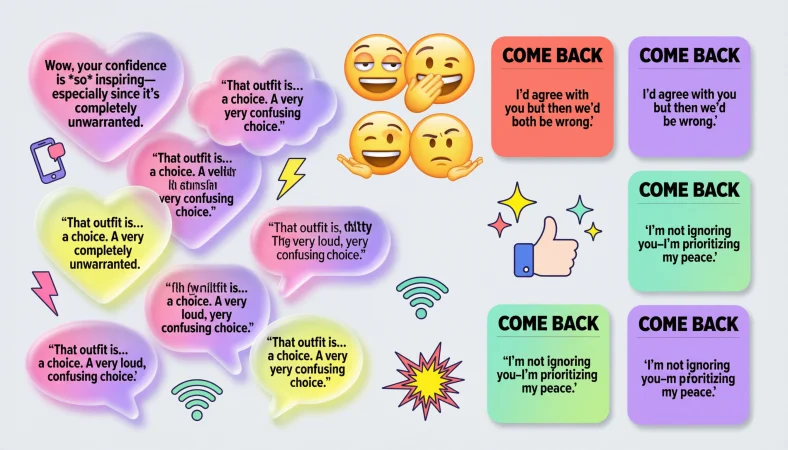
“I’d agree, but then we’d both be wrong.”
Use this when joking with someone who makes a questionable claim.
Meaning: You are using classic witty disagreement.
“That’s an interesting hill to stand on.”
Use this when someone strongly defends an unusual opinion.
Meaning: You are questioning whether their position is worth defending.
“You have mistaken volume for being correct.”
Use this when someone gets louder during an argument.
Meaning: You are pointing out that loudness does not equal truth.
“Being loud and being right are different hobbies.”
Use this when someone dominates a disagreement.
Meaning: You are cleverly separating confidence from correctness.
“Your logic took a fascinating detour.”
Use this when someone’s reasoning becomes difficult to follow.
Meaning: You are suggesting their argument stopped making sense.
“That argument needs a little more seasoning.”
Use this when someone’s point feels incomplete.
Meaning: You are playfully suggesting their argument needs improvement.
“You brought an opinion; I brought context.”
Use this when someone judges a situation without knowing the details.
Meaning: You are emphasizing the importance of information.
“I admire how confidently you skipped the facts.”
Use this when someone makes an unsupported claim.
Meaning: You are sarcastically highlighting their lack of evidence.
“That was a very creative interpretation of reality.”
Use this when someone exaggerates what happened.
Meaning: You are suggesting their version is imaginative rather than accurate.
“Some conclusions need a longer journey.”
Use this when someone jumps to conclusions.
Meaning: You are encouraging them to think before deciding.
“You made a strong point right up until the ending.”
Use this when someone’s argument starts well but falls apart.
Meaning: You are acknowledging part of their argument while rejecting the conclusion.
Subtle Catty Remarks
“Interesting timing.”
Use this when someone’s comment arrives suspiciously late or conveniently.
Meaning: You are hinting that their timing seems intentional.
“That explains a lot.”
Use this when someone’s behavior suddenly makes sense.
Meaning: You are implying that you have learned something revealing.
“Good to know where you stand.”
Use this when someone reveals an opinion or attitude.
Meaning: You are acknowledging that their words clarified their position.
“I’ll remember that.”
Use this when someone’s comment changes how you view them.
Meaning: You are quietly signaling that their words mattered.
“Noted for future reference.”
Use this when someone behaves in a way you find revealing.
Meaning: You are saying you will keep their behavior in mind.
“That tells me enough.”
Use this when someone’s actions or words reveal their intentions.
Meaning: You do not need further explanation.
“I see how this works now.”
Use this when you realize someone’s pattern of behavior.
Meaning: You are signaling that their intentions have become clearer.
“No explanation needed.”
Use this when someone’s behavior speaks for itself.
Meaning: You believe their actions already provided the answer.
“Message received.”
Use this when someone makes their position clear.
Meaning: You understand what they meant and do not need further discussion.
“That’s useful information.”
Use this when someone accidentally reveals something important.
Meaning: You are calmly acknowledging what you learned.
“I’ll let that speak for itself.”
Use this when someone’s behavior is difficult to defend.
Meaning: You are choosing not to argue because their actions are obvious.
“Well, now I know.”
Use this when someone reveals something that changes your perspective.
Meaning: You are acknowledging the new information without creating drama.
Bold And Witty Catty Remarks
“I’m not being difficult; I’m being accurate.”
Use this when someone calls you difficult for correcting them.
Meaning: You are confidently standing behind your position.
“If subtlety was the goal, we missed it.”
Use this when someone’s intentions are painfully obvious.
Meaning: You are teasing them for being too transparent.
“You wanted a reaction, and unfortunately, you got a review.”
Use this when someone deliberately tries to provoke you.
Meaning: You are confidently analyzing their behavior instead of reacting emotionally.
“That attitude needs a software update.”
Use this when someone is stuck in a negative mindset.
Meaning: You are humorously suggesting their behavior needs improvement.
“I’m impressed you managed to make that complicated.”
Use this when someone turns a simple situation into a problem.
Meaning: You are teasing them for unnecessary complexity.
“You brought the drama; I brought popcorn.”
Use this when someone starts unnecessary drama.
Meaning: You are refusing to take the situation too seriously.
“I’d take you seriously, but you keep making it difficult.”
Use this when someone behaves inconsistently.
Meaning: You are questioning their credibility with humor.
“That was bold, unnecessary, and strangely entertaining.”
Use this when someone makes an outrageous remark.
Meaning: You found their comment inappropriate but amusing.
“You’re making a strong case for silence.”
Use this when someone keeps talking without adding value.
Meaning: You are sharply suggesting they should stop.
“I have notes, but I’ll spare you.”
Use this when someone asks what you think about their behavior.
Meaning: You have plenty to say but are choosing restraint.
“Your confidence continues to surprise me.”
Use this when someone remains extremely self-assured.
Meaning: You are playfully questioning whether their confidence is justified.
“I could respond, but the facts already did.”
Use this when reality clearly contradicts someone’s claim.
Meaning: You are letting evidence make the argument for you.
FAQs
What Are Catty Remarks?
Catty remarks are pointed, often sarcastic comments that express criticism, annoyance, jealousy, or playful attitude. They can range from harmless teasing to sharper social commentary.
Can Catty Remarks Be Flirty?
Yes. Between people who already enjoy playful teasing, a catty remark can create chemistry and banter. The key is keeping it light enough that the other person knows it is playful.
Are Catty Remarks Always Mean?
No. Context matters. A remark between close friends can be funny and affectionate, while the same words directed at a stranger or coworker could sound rude.
Can You Use Catty Remarks At Work?
Use them carefully. Subtle, professional phrases such as “That’s one approach” or “Let’s focus on the actual issue” are safer than personal jokes or insults.
What If You Do Not Actually Mean The Remark?
Choose a softer response instead of forcing sarcasm. “I’m just teasing,” “No hard feelings,” or a straightforward explanation can prevent unnecessary tension.
Is Humor Appropriate For Catty Remarks?
Yes, especially when everyone involved understands the joke. Avoid humor when someone is genuinely upset, during serious conflicts, or in situations where the remark could embarrass someone publicly.
What Makes A Catty Remark Effective?
Timing, tone, and brevity. The strongest remarks usually make their point without requiring a long explanation.
How Can I Make A Catty Remark Less Harsh?
Add humor, use playful wording, or aim the joke at the situation rather than someone’s personal traits. A little wit can turn a sharp comment into friendly banter.
Conclusion
The right catty remark can add personality to a conversation, but delivery is everything. A clever one-liner can make friends laugh, shut down unwanted commentary, add playful tension with a crush, or help you stay composed when someone is testing your patience.
The goal is not to win every interaction. It is to choose words that match the moment and leave you feeling confident afterward. Try a funny response when the mood is light, a subtle remark when you want to stay composed, or a polished comeback when the situation calls for maturity. Save your favorites, share them with your funniest friend, and keep a few ready for those moments when your brain suddenly goes completely blank. After all, the best comeback is usually the one delivered with perfect timing.