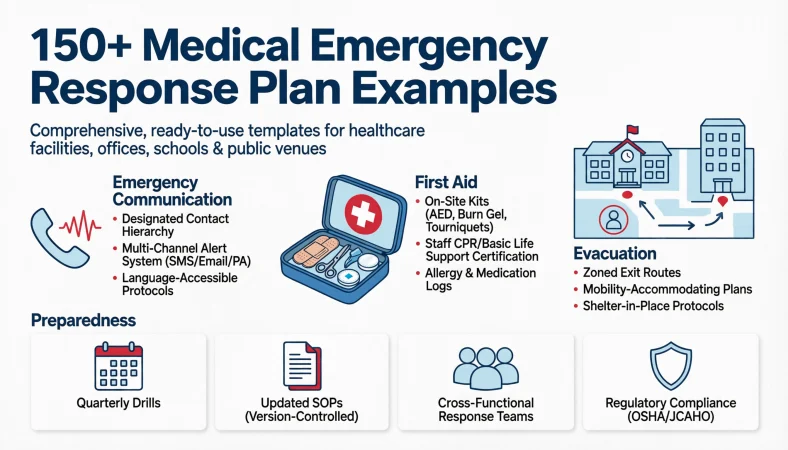
Quick Answer: A medical emergency response plan is a clear set of instructions explaining what to do when someone experiences a medical emergency at work, school, home, or a public place. It identifies emergency contacts, first-aid responsibilities, communication procedures, evacuation steps, and access to medical assistance.
Top alternatives: Emergency Action Plan, Medical Emergency Procedure, First Aid Response Plan, Workplace Emergency Protocol, Medical Crisis Management Plan.
Medical emergencies never arrive with a calendar invitation. One minute, everything is running smoothly at work, school, or home, and the next, someone needs immediate medical attention. Knowing what to say and do can make a stressful situation easier to manage. Whether you’re preparing workplace documents, organizing school safety procedures, communicating with employees, or creating an emergency checklist for your family, having a clear medical emergency response plan matters.
It helps people understand their responsibilities, recognize emergencies, contact emergency services, and follow appropriate safety procedures. Think of it as a game plan for moments when nobody has time to guess what happens next. From professional announcements to practical checklists, these ready-to-use examples will help you communicate emergency procedures with clarity, confidence, and care.
1. Professional Medical Emergency Response Plan Examples
1. Our priority is to protect lives and provide immediate assistance. Example: When introducing an emergency policy during a workplace safety meeting. Meaning: Establishes safety as the organization’s primary responsibility.
2. All medical emergencies must be reported immediately. Example: When explaining reporting requirements to employees. Meaning: Encourages prompt communication when someone needs medical assistance.
3. Contact emergency services whenever urgent medical attention is required. Example: When preparing official workplace emergency instructions. Meaning: Reminds staff to seek qualified medical assistance.
4. Designated personnel will coordinate the initial emergency response. Example: When assigning responsibilities to workplace safety officers. Meaning: Establishes clear leadership during an emergency.
5. Emergency contact information must remain accessible at all times. Example: When updating an employee safety handbook. Meaning: Ensures important contact details are easy to locate.
6. Employees should follow established emergency communication procedures. Example: When distributing a new emergency policy. Meaning: Promotes organized communication during incidents.
7. All incidents must be documented according to organizational procedures. Example: When explaining post-incident reporting requirements. Meaning: Highlights the importance of accurate emergency records.
8. First-aid supplies must be regularly inspected and maintained. Example: When assigning responsibilities to facility managers. Meaning: Encourages preparedness through properly maintained supplies.
9. Emergency response responsibilities must be clearly communicated. Example: When introducing a new safety management policy. Meaning: Helps prevent confusion about individual duties.
10. Staff members must receive appropriate emergency preparedness training. Example: When announcing mandatory workplace safety training. Meaning: Emphasizes the importance of practical preparation.
11. Medical information must be handled confidentially. Example: When explaining employee privacy requirements. Meaning: Protects sensitive personal information.
12. The emergency response plan will be reviewed periodically. Example: When presenting an annual workplace safety policy. Meaning: Demonstrates an ongoing commitment to preparedness.
2. Workplace Medical Emergency Response Plan Examples
1. Know your emergency exits before an incident occurs. Example: When introducing workplace evacuation procedures. Meaning: Encourages employees to understand their surroundings.
2. Report any sudden medical emergency to the designated response team. Example: When explaining office emergency responsibilities. Meaning: Ensures the appropriate people are informed quickly.
3. Keep emergency access routes clear at all times. Example: When reminding employees about office safety. Meaning: Prevents unnecessary obstacles for responders.
4. Never leave an emergency situation without notifying the responsible personnel. Example: When discussing employee responsibilities. Meaning: Encourages accountability during an incident.
5. Follow the instructions provided by trained emergency responders. Example: When preparing staff for a safety drill. Meaning: Promotes coordinated emergency management.
6. Make sure emergency numbers are displayed in visible locations. Example: When organizing an office safety board. Meaning: Makes essential contact information accessible.
7. Identify the nearest available first-aid resources. Example: During a new employee orientation session. Meaning: Helps staff locate basic emergency supplies.
8. Keep workplace emergency procedures simple and accessible. Example: When creating a staff safety guide. Meaning: Makes instructions easier to understand under pressure.
9. Notify management after an emergency has been addressed. Example: When explaining internal incident reporting. Meaning: Keeps organizational leadership informed.
10. Ensure emergency responders can access the affected area. Example: When assigning responsibilities to reception staff. Meaning: Reduces avoidable delays in reaching the person affected.
11. Participate in scheduled workplace emergency drills. Example: When announcing an upcoming safety exercise. Meaning: Encourages employees to practice established procedures.
12. Review emergency responsibilities whenever workplace conditions change. Example: When a company moves to a new office. Meaning: Keeps the response plan relevant to the workplace.
3. School Medical Emergency Response Plan Examples
1. Every student deserves a safe and supportive learning environment. Example: When introducing a school health and safety policy. Meaning: Places student well-being at the center of school preparedness.
2. Teachers must know whom to contact during a medical emergency. Example: When preparing staff orientation materials. Meaning: Clarifies emergency communication responsibilities.
3. Parents and guardians should keep emergency contact details updated. Example: When sending annual school registration reminders. Meaning: Helps schools reach families when necessary.
4. Students should immediately report serious injuries or sudden illness. Example: When explaining classroom safety expectations. Meaning: Encourages students to seek help rather than ignore symptoms.
5. Designated staff members will coordinate emergency notifications. Example: When preparing a school emergency handbook. Meaning: Establishes an organized communication structure.
6. Emergency medical information must be securely maintained. Example: When updating student health records. Meaning: Supports appropriate care while protecting privacy.
7. School staff should understand their assigned emergency duties. Example: During a teacher training session. Meaning: Helps prevent confusion during medical incidents.
8. First-aid resources should be accessible to authorized personnel. Example: When organizing school medical supplies. Meaning: Supports timely access to appropriate resources.
9. Emergency procedures should be explained in age-appropriate language. Example: When preparing student safety lessons. Meaning: Makes safety information understandable to different age groups.
10. School emergency drills should include relevant medical scenarios. Example: When developing an annual safety calendar. Meaning: Encourages practical preparedness.
11. Parents should be informed according to established notification procedures. Example: When creating a school communication policy. Meaning: Provides families with an organized notification process.
12. School medical emergency procedures must be reviewed regularly. Example: During an annual administrative safety review. Meaning: Keeps emergency arrangements current.
4. Home Medical Emergency Response Plan Examples
1. Keep important emergency numbers somewhere everyone can find them. Example: When creating a family emergency checklist. Meaning: Makes essential contact information accessible.
2. Make sure every family member knows the home address. Example: When teaching children basic emergency preparedness. Meaning: Helps them communicate their location when requesting assistance.
3. Identify the nearest available medical facility. Example: When preparing a household emergency plan. Meaning: Helps families understand where medical assistance may be available.
4. Keep a properly stocked first-aid kit at home. Example: When organizing household safety supplies. Meaning: Encourages basic first-aid preparedness.
5. Share important medical information with trusted family members. Example: When preparing an emergency contact sheet. Meaning: Helps responsible relatives understand relevant medical needs.
6. Know who will contact emergency services if something happens. Example: When discussing family emergency responsibilities. Meaning: Reduces uncertainty about who should make the call.
7. Keep essential medications organized and accessible. Example: When preparing a household medical information folder. Meaning: Helps families maintain awareness of prescribed medications.
8. Make emergency arrangements for children and older family members. Example: When preparing a multigenerational household safety plan. Meaning: Recognizes that different family members may need different support.
9. Teach children how to recognize an emergency. Example: When discussing household safety rules. Meaning: Encourages children to seek adult help when something is wrong.
10. Keep emergency pathways clear throughout the home. Example: When reviewing household accessibility. Meaning: Reduces obstacles during an emergency.
11. Make sure trusted neighbors know how to reach your family. Example: When preparing a neighborhood support arrangement. Meaning: Establishes an additional communication option.
12. Practice your family emergency plan together. Example: During a monthly family safety discussion. Meaning: Helps everyone understand their responsibilities.
5. Funny and Lighthearted Emergency Preparedness Responses
These examples are suitable for informal safety reminders and social posts, not for communicating during an active medical emergency.
1. Preparedness is always cooler than panic mode. Example: When sharing a workplace safety reminder. Meaning: Encourages people to prepare before problems occur.
2. Know the plan before life starts improvising. Example: When introducing an emergency preparedness presentation. Meaning: Highlights the value of preparation.
3. Your emergency contact list deserves a permanent VIP spot. Example: When reminding employees to update their contacts. Meaning: Makes emergency contact preparation memorable.
4. Safety first, confusion never. Example: When creating a safety campaign slogan. Meaning: Encourages organized responses.
5. A little preparation goes a long way. Example: When sharing a family safety checklist. Meaning: Reminds people that small preparations matter.
6. Don’t wait for a plot twist to learn the emergency plan. Example: When encouraging staff to attend safety training. Meaning: Makes preparedness feel relevant and approachable.
7. Know your role before the unexpected takes the lead. Example: During an office safety presentation. Meaning: Encourages people to understand their responsibilities.
8. Emergency supplies are not just decorative office accessories. Example: When reminding staff to maintain first-aid kits. Meaning: Encourages practical use and maintenance of safety resources.
9. Prepared people have fewer what-now moments. Example: When promoting emergency preparedness training. Meaning: Highlights the value of knowing what to do.
10. Make safety planning part of your everyday routine. Example: When creating a monthly safety newsletter. Meaning: Encourages consistent preparation.
11. A checklist today can prevent confusion tomorrow. Example: When introducing a safety checklist. Meaning: Emphasizes planning ahead.
12. Because guessing is not an emergency strategy. Example: When closing a workplace safety presentation. Meaning: Reminds everyone to follow established procedures.
6. Clear and Simple Medical Emergency Response Plan Examples
1. Call emergency services when someone needs urgent medical help. Example: When preparing a basic emergency instruction sheet. Meaning: Communicates an essential emergency action.
2. Stay with the person if it is safe to do so. Example: When explaining basic emergency support responsibilities. Meaning: Encourages appropriate assistance while waiting for responders.
3. Follow the instructions provided by emergency dispatchers. Example: When preparing a family safety guide. Meaning: Directs people toward professional emergency guidance.
4. Tell responders exactly where the emergency is happening. Example: When preparing emergency communication instructions. Meaning: Helps responders locate the incident.
5. Provide accurate information about what happened. Example: When explaining emergency reporting procedures. Meaning: Helps medical professionals understand the situation.
6. Do not move an injured person unless there is immediate danger. Example: When creating general first-aid awareness materials. Meaning: Encourages caution around possible injuries.
7. Assign someone to meet arriving emergency responders. Example: When planning emergency responsibilities in a large building. Meaning: Helps responders reach the affected location.
8. Keep other people away from the emergency area. Example: When preparing public facility safety instructions. Meaning: Helps protect privacy and maintain access.
9. Use first-aid equipment only within your level of training. Example: When explaining employee safety responsibilities. Meaning: Encourages safe and appropriate assistance.
10. Record important details after the incident. Example: When preparing an incident report form. Meaning: Supports accurate documentation.
11. Notify the appropriate responsible person. Example: When writing a school emergency checklist. Meaning: Ensures the correct people are informed.
12. Review the incident to identify improvements. Example: During a post-emergency safety meeting. Meaning: Supports continuous improvement.
7. Emergency Communication Response Examples
1. A medical emergency has been reported in the designated area. Example: When sending an internal workplace notification. Meaning: Communicates the existence and location of an incident.
2. Please contact the designated emergency coordinator immediately. Example: When informing employees about an unfolding incident. Meaning: Directs communication to the responsible person.
3. Emergency services have been contacted. Example: When updating authorized workplace personnel. Meaning: Confirms that professional assistance has been requested.
4. Please keep the emergency access route clear. Example: When informing building occupants. Meaning: Helps maintain access for responders.
5. The affected area is temporarily restricted. Example: When notifying staff about an incident location. Meaning: Communicates temporary access restrictions.
6. Please follow instructions from designated response personnel. Example: When sharing an emergency announcement. Meaning: Encourages coordinated action.
7. The emergency coordinator will provide further updates. Example: When communicating with employees. Meaning: Establishes an appropriate information source.
8. Please avoid sharing unconfirmed information. Example: When addressing workplace communication during an incident. Meaning: Discourages rumors and misinformation.
9. The situation is being handled by the designated emergency team. Example: When updating relevant staff members. Meaning: Provides a factual organizational update.
10. Please respect the privacy of the affected individual. Example: When reminding employees about confidentiality. Meaning: Protects personal dignity and sensitive information.
11. Additional instructions will be shared through official channels. Example: When communicating with a large organization. Meaning: Directs employees toward reliable updates.
12. Thank you for following the established emergency procedures. Example: When concluding an internal safety announcement. Meaning: Acknowledges cooperation and responsible behavior.
8. First Aid and Emergency Support Plan Examples
1. Identify trained first-aid personnel in advance. Example: When preparing a workplace emergency handbook. Meaning: Establishes who can provide appropriate first-aid support.
2. Inspect first-aid kits according to a regular schedule. Example: When assigning facility maintenance duties. Meaning: Helps ensure supplies remain usable.
3. Maintain clear instructions for accessing first-aid resources. Example: When preparing an office safety notice. Meaning: Makes emergency equipment easier to locate.
4. Provide first aid within the responder’s level of training. Example: When explaining responsibilities to designated staff. Meaning: Encourages appropriate and safe assistance.
5. Keep emergency equipment in designated locations. Example: When organizing a school first-aid room. Meaning: Supports predictable access to equipment.
6. Arrange additional training when responsibilities change. Example: When updating the workplace safety program. Meaning: Helps ensure personnel understand their assigned duties.
7. Maintain a record of first-aid supply inspections. Example: When creating a monthly inspection checklist. Meaning: Supports accountability and inventory management.
8. Provide appropriate support until emergency professionals arrive. Example: When preparing first-aid awareness materials. Meaning: Recognizes the role of trained responders while awaiting professional care.
9. Ensure first-aid personnel understand emergency reporting procedures. Example: During a workplace training session. Meaning: Connects first-aid responsibilities with organizational communication.
10. Replace expired or damaged first-aid supplies promptly. Example: When reviewing a medical supply cabinet. Meaning: Helps maintain the quality of emergency resources.
11. Display first-aid instructions in accessible locations. Example: When designing a facility safety notice. Meaning: Makes relevant information easier to find.
12. Review first-aid arrangements after every significant incident. Example: During a post-incident evaluation. Meaning: Identifies opportunities to improve preparedness.
9. Emergency Preparedness Training Responses
1. Preparation starts with knowing what to do. Example: When introducing an employee training program. Meaning: Connects knowledge with emergency readiness.
2. Everyone has a role in maintaining a safe environment. Example: During a school safety presentation. Meaning: Encourages shared responsibility.
3. Training helps reduce uncertainty during emergencies. Example: When explaining the purpose of safety workshops. Meaning: Highlights the practical value of learning procedures.
4. Practice makes emergency procedures more familiar. Example: When announcing an upcoming safety drill. Meaning: Encourages repeated preparation.
5. Know your responsibilities before an incident occurs. Example: During employee onboarding. Meaning: Emphasizes role awareness.
6. Emergency training should include clear communication exercises. Example: When developing a training schedule. Meaning: Recognizes communication as an important emergency skill.
7. Review emergency instructions regularly. Example: When distributing an annual safety reminder. Meaning: Encourages continued familiarity with procedures.
8. Ask questions whenever an emergency procedure is unclear. Example: When closing a staff training session. Meaning: Promotes understanding rather than assumptions.
9. Every safety drill is an opportunity to improve. Example: When discussing drill evaluations. Meaning: Encourages learning from practice.
10. Make emergency preparedness part of workplace culture. Example: During a company safety campaign. Meaning: Promotes consistent attention to safety.
11. Understand the communication chain during an emergency. Example: When explaining emergency reporting responsibilities. Meaning: Helps employees understand who should be notified.
12. Preparedness is a shared responsibility, not a one-person job. Example: When concluding a safety workshop. Meaning: Encourages cooperation across an organization.
10. Emergency Evacuation and Coordination Responses
1. Follow the designated evacuation route when instructed. Example: When explaining building evacuation procedures. Meaning: Directs occupants toward the established route.
2. Keep emergency exits free from obstructions. Example: When conducting a building safety inspection. Meaning: Helps preserve safe access and movement.
3. Report any person who may need evacuation assistance. Example: During a workplace emergency drill. Meaning: Helps coordinators identify individuals who may require support.
4. Proceed to the designated assembly point. Example: When preparing an evacuation notice. Meaning: Establishes where occupants should gather.
5. Wait for instructions from authorized emergency personnel. Example: When explaining evacuation responsibilities. Meaning: Encourages coordinated decision-making.
6. Keep emergency vehicle access areas clear. Example: When preparing facility management guidelines. Meaning: Supports emergency vehicle access.
7. Account for occupants according to established procedures. Example: When conducting a workplace evacuation drill. Meaning: Helps determine whether everyone has reached safety.
8. Do not re-enter the affected area without authorization. Example: When creating an evacuation safety notice. Meaning: Discourages unsafe re-entry.
9. Assign clear communication responsibilities to designated personnel. Example: When developing a building emergency plan. Meaning: Prevents confusion about emergency updates.
10. Provide responders with relevant access information. Example: When assigning a reception employee to meet emergency crews. Meaning: Helps responders reach the correct location.
11. Review evacuation arrangements for people with additional support needs. Example: When updating an accessible workplace safety plan. Meaning: Encourages inclusive emergency preparation.
12. Document evacuation issues for future improvements. Example: After completing an emergency exercise. Meaning: Helps organizations improve their procedures.
11. Emergency Incident Reporting Responses
1. Report the incident as soon as possible. Example: When explaining internal reporting requirements. Meaning: Encourages timely documentation.
2. Include the date, time, and location of the incident. Example: When completing a workplace incident form. Meaning: Records essential incident information.
3. Describe what happened using clear and factual language. Example: When writing an emergency report. Meaning: Encourages objective documentation.
4. Record the names of relevant witnesses when appropriate. Example: When completing an authorized incident investigation. Meaning: Helps preserve useful information.
5. Document the actions taken by designated responders. Example: When preparing a post-incident report. Meaning: Creates a record of the response process.
6. Protect confidential medical information. Example: When submitting an internal medical incident report. Meaning: Maintains individual privacy.
7. Avoid assumptions when describing the incident. Example: When training employees to complete safety forms. Meaning: Keeps reporting accurate and factual.
8. Submit the completed report through the approved process. Example: When explaining organizational reporting procedures. Meaning: Ensures documentation reaches the correct department.
9. Include relevant follow-up actions in the report. Example: When documenting a workplace medical incident. Meaning: Records what happened after the initial response.
10. Notify the responsible supervisor when required. Example: When explaining reporting responsibilities. Meaning: Keeps the appropriate management personnel informed.
11. Maintain incident records according to organizational requirements. Example: When preparing a safety management policy. Meaning: Supports consistent recordkeeping.
12. Use incident findings to improve future emergency procedures. Example: During a safety review meeting. Meaning: Turns documented experience into practical improvements.
12. Compassionate and Supportive Emergency Responses
1. Your safety and well-being are our priority. Example: When communicating with an employee after a medical incident. Meaning: Expresses care and concern.
2. Please take the time you need to receive appropriate medical attention. Example: When speaking with someone who has experienced a health emergency. Meaning: Shows understanding and encourages proper care.
3. We are here to provide support during this difficult situation. Example: When communicating with affected families. Meaning: Offers reassurance and assistance.
4. Your privacy will be respected throughout the process. Example: When explaining medical information procedures. Meaning: Reassures people about confidentiality.
5. Please let us know if additional assistance is needed. Example: When following up with an affected employee. Meaning: Communicates willingness to help.
6. We appreciate your cooperation during this emergency. Example: When addressing people involved in an incident. Meaning: Recognizes patience and cooperation.
7. We understand that emergencies can be stressful. Example: When communicating with students or employees. Meaning: Acknowledges the emotional impact of an incident.
8. Our team will follow the established support procedures. Example: When updating an affected family. Meaning: Provides reassurance about organizational assistance.
9. Please reach out if you have concerns about the next steps. Example: When providing post-incident support information. Meaning: Encourages open communication.
10. We are committed to treating everyone with dignity and respect. Example: When introducing a medical emergency policy. Meaning: Emphasizes compassionate treatment.
11. Your concerns will be handled with care and attention. Example: When responding to an employee’s questions. Meaning: Demonstrates empathy and attentiveness.
12. Thank you for allowing us to support you. Example: When concluding a follow-up conversation. Meaning: Expresses appreciation and kindness.
13. Confident and Direct Emergency Response Statements
1. Follow the established emergency procedure immediately. Example: When communicating instructions during a safety incident. Meaning: Gives a clear direction without unnecessary wording.
2. The designated emergency coordinator is responsible for organizing the response. Example: When clarifying emergency leadership roles. Meaning: Establishes accountability.
3. Emergency services must be contacted when urgent medical assistance is required. Example: When explaining emergency escalation procedures. Meaning: Reinforces the importance of professional medical support.
4. All employees must understand their assigned responsibilities. Example: When introducing a mandatory workplace policy. Meaning: Establishes clear expectations.
5. Keep communication accurate, brief, and relevant. Example: When training staff in emergency communication. Meaning: Encourages clear information sharing.
6. Do not delay emergency reporting because of uncertainty. Example: When explaining how to report suspected emergencies. Meaning: Encourages timely escalation.
7. Follow instructions from qualified medical professionals. Example: When explaining the limits of workplace first aid. Meaning: Prioritizes appropriate medical guidance.
8. Maintain access to all designated emergency equipment. Example: When reviewing facility safety responsibilities. Meaning: Establishes a practical maintenance expectation.
9. Document every reportable incident accurately. Example: When explaining company reporting standards. Meaning: Reinforces documentation responsibilities.
10. Review the response process after the incident. Example: When organizing a post-incident evaluation. Meaning: Establishes the need for follow-up.
11. Ensure every emergency instruction is communicated clearly. Example: When preparing a staff safety announcement. Meaning: Promotes consistent understanding.
12. Preparedness requires action, practice, and accountability. Example: When concluding an emergency preparedness presentation. Meaning: Summarizes the importance of active preparation.
14. Creative Medical Emergency Response Plan Ideas
1. Ready Today, Safer Tomorrow. Example: When creating a workplace emergency preparedness campaign. Meaning: Connects preparation with future safety.
2. Every Second Matters, Every Role Counts. Example: When designing an emergency awareness poster. Meaning: Highlights the importance of timely action and teamwork.
3. Plan Ahead, Respond With Confidence. Example: When introducing a company emergency plan. Meaning: Encourages confidence through preparation.
4. Safety Starts With Knowing the Next Step. Example: When creating a school safety presentation. Meaning: Makes emergency awareness feel practical.
5. Prepared Teams Make Clearer Decisions. Example: When promoting staff emergency training. Meaning: Emphasizes teamwork and preparation.
6. A Safer Workplace Begins With a Clear Plan. Example: When designing an employee safety campaign. Meaning: Connects organizational safety with clear procedures.
7. Know the Plan, Protect the People. Example: When creating a medical emergency awareness banner. Meaning: Highlights the human purpose of preparedness.
8. Preparedness Is Everyone’s Business. Example: When launching a company-wide safety initiative. Meaning: Encourages shared responsibility.
9. Clear Instructions, Coordinated Action. Example: When creating an emergency procedure infographic. Meaning: Promotes effective communication.
10. Practice Today for a More Organized Response Tomorrow. Example: When advertising a safety drill. Meaning: Encourages practical training.
11. Small Preparations, Meaningful Protection. Example: When sharing a family emergency checklist. Meaning: Demonstrates how simple actions contribute to safety.
12. Safety Is a Plan Worth Practicing. Example: When closing a safety awareness campaign. Meaning: Encourages consistent preparedness.
15. Short and Ready-to-Use Medical Emergency Response Plan Statements
1. Stay Prepared. Stay Informed. Example: When creating a short workplace safety poster. Meaning: Encourages awareness and preparation.
2. Know Your Emergency Contacts. Example: When sharing a staff reminder. Meaning: Highlights the importance of accessible contact information.
3. Report Emergencies Promptly. Example: When preparing a school safety notice. Meaning: Encourages timely reporting.
4. Safety Begins With Preparation. Example: When designing a family safety checklist. Meaning: Connects preparedness with protection.
5. Keep Emergency Routes Clear. Example: When displaying building safety instructions. Meaning: Promotes unobstructed access.
6. Know Your Role. Follow the Plan. Example: When introducing an emergency training program. Meaning: Encourages responsibility and consistency.
7. Communicate Clearly During Emergencies. Example: When preparing a safety handbook. Meaning: Emphasizes accurate communication.
8. Keep First-Aid Supplies Ready. Example: When creating a monthly safety reminder. Meaning: Encourages regular equipment checks.
9. Practice Emergency Procedures Regularly. Example: When announcing a safety drill. Meaning: Reinforces the value of preparation.
10. Protect Privacy and Respect Everyone. Example: When explaining medical incident procedures. Meaning: Promotes respectful emergency communication.
11. Follow Professional Medical Guidance. Example: When preparing first-aid awareness materials. Meaning: Encourages appropriate professional assistance.
12. Review, Improve, and Stay Prepared. Example: When concluding an annual safety review. Meaning: Encourages continuous improvement.
Important Elements of a Medical Emergency Response Plan
A medical emergency response plan should be more than a collection of attractive statements. It needs practical instructions that people can understand and follow.
Here are the essential elements to include:
| Plan Element | What It Should Include |
| Emergency contacts | Local emergency numbers and relevant internal contacts |
| Emergency roles | Designated coordinators and trained first-aid personnel |
| Medical information | Relevant medical information handled confidentially |
| First-aid resources | Locations, inspection schedules, and maintenance responsibilities |
| Communication | Reporting, notification, and escalation procedures |
| Emergency access | Building entrances, access routes, and responder directions |
| Evacuation | Procedures and arrangements for people requiring assistance |
| Staff training | Appropriate first-aid awareness and emergency drills |
| Incident documentation | Reporting forms and recordkeeping procedures |
| Post-incident support | Follow-up, privacy, and plan evaluation |
Important: Emergency procedures should reflect local laws, workplace requirements, available emergency services, and the specific needs of the people involved. A written plan does not replace professional medical care or practical training.
FAQs
What Does Medical Emergency Response Plan Mean?
A medical emergency response plan is a written procedure explaining how people should respond when someone experiences a medical emergency.
What Are the Emotional or Personal Interpretations of a Medical Emergency Response Plan?
The phrase is not normally emotional or flirty. However, having a plan can communicate care, responsibility, reassurance, and concern for the safety of employees, students, family members, and visitors.
How Is Medical Emergency Response Plan Used in Professional or Formal Settings?
Organizations use medical emergency response plans in workplaces, schools, hospitals, public facilities, and other environments.
What Should You Say If You Do Not Actually Have a Medical Emergency Response Plan?
Be honest and explain the current situation. You could say, “We are currently developing our medical emergency procedures and identifying the necessary responsibilities.
Is Humor Appropriate When Discussing a Medical Emergency Response Plan?
Light humor can make general safety awareness campaigns more engaging. However, avoid jokes during actual emergencies.
Conclusion
A well-prepared medical emergency response plan can make a meaningful difference when unexpected situations occur. Whether you’re creating workplace guidelines, school safety procedures, family checklists, or professional emergency documents, clear communication helps everyone understand what to do.
The examples above offer practical ways to explain responsibilities, share instructions, encourage training, and promote a culture of preparedness. Remember, the goal isn’t to create a complicated document that nobody reads. It’s to build a plan that people can understand, remember, and follow. Save these examples, share them with your team, and adapt the statements to your environment. Stay informed, stay prepared, and make safety everyone’s priority.