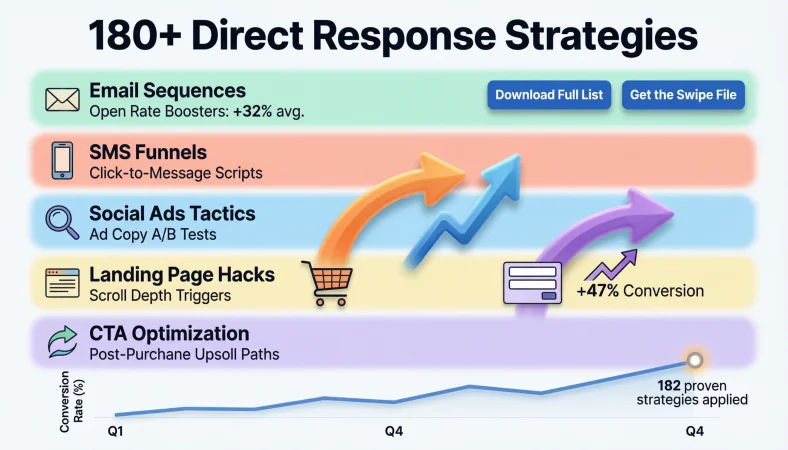
Quick Answer: Direct response strategies are marketing tactics designed to encourage a specific, measurable action such as clicking, signing up, buying, booking, downloading, or replying. Strong campaigns usually combine targeted messaging, a clear value proposition, a compelling offer, and an obvious call to action.
Conversion strategies, response marketing tactics, direct response marketing ideas, performance marketing strategies, customer action strategies
If you have ever seen an ad that made you instantly think, “Okay, where do I click?”, you have already experienced direct response strategies in action. From Instagram ads and email campaigns to landing pages, search ads, DMs, and promotional offers, these strategies are built around one simple goal: getting people to take action. Unlike campaigns focused mainly on awareness, direct response marketing gives the audience a clear next step and makes the result easier to measure.
Whether you are trying to generate leads, increase sales, grow an email list, book appointments, or get more signups, the right message can make a huge difference. The trick is keeping the offer relevant, the CTA obvious, and the experience easy. Basically, if your audience needs a detective badge to figure out what you want them to do, the strategy probably needs a little work.
Funny Direct Response Strategies
Make the CTA impossible to misunderstand. Use this when your audience needs an obvious next step without decoding marketing jargon.
Meaning: Clear language removes confusion and makes action easier.
Give them a reason to click before they scroll. Use this when attention spans are doing their disappearing act.
Meaning: A strong opening creates immediate curiosity.
Offer value before asking for the sale. Use this when building trust with a skeptical audience.
Meaning: Helpful content can make the eventual offer feel more natural.
Write like a human, not a corporate refrigerator. Use this when your copy feels stiff or overly formal.
Meaning: Conversational language can make marketing feel more approachable.
Put the good stuff above the fold. Use this when visitors may leave before reaching your offer.
Meaning: Important value should appear early.
Make your CTA do some heavy lifting. Use this when “Click Here” feels painfully bland.
Meaning: Action-oriented CTAs can communicate both the action and benefit.
Stop making customers hunt for the button. Use this when your conversion path feels complicated.
Meaning: Easy navigation reduces unnecessary friction.
Turn boring benefits into reasons to care. Use this when product features are getting ignored.
Meaning: Benefits connect features to real customer needs.
Test the headline before blaming the audience. Use this when a campaign is getting weak engagement.
Meaning: Copy can be a major variable worth testing.
Give people one obvious job. Use this when a page contains too many competing actions.
Meaning: A focused objective can reduce decision overload.
Make the offer feel like an actual offer. Use this when your promotion sounds exactly like every competitor.
Meaning: Distinct value gives people a reason to respond.
Track the clicks, not the vibes. Use this when marketing decisions are being based mostly on opinions.
Meaning: Measurable results provide stronger evidence for optimization.
Bold Direct Response Strategies
Lead with the problem they already want solved. Use this when your audience has a clear pain point.
Meaning: Relevance can capture attention quickly.
Ask for the action directly. Use this when your campaign needs immediate responses.
Meaning: Direct language tells people exactly what to do.
Make your offer specific. Use this when vague promotions are failing to create interest.
Meaning: Specific benefits are easier to understand and evaluate.
Show the outcome, not just the product. Use this when your messaging focuses too heavily on features.
Meaning: Outcomes help customers understand practical value.
Create urgency without manufacturing panic. Use this when an offer genuinely has a deadline.
Meaning: Real deadlines can encourage timely decisions.
Give prospects a simple path forward. Use this when your funnel contains unnecessary steps.
Meaning: Fewer obstacles can make responding easier.
Put your strongest proof near the offer. Use this when prospects need reassurance before acting.
Meaning: Relevant proof can reduce uncertainty.
Use customer language instead of industry language. Use this when your copy sounds overly technical.
Meaning: Familiar wording makes the message easier to process.
Make the first step feel easy. Use this when asking for a major commitment.
Meaning: Lower friction can encourage initial engagement.
Give one campaign one primary goal. Use this when multiple CTAs compete for attention.
Meaning: Focus helps customers understand the intended action.
Tell people exactly what happens next. Use this when visitors hesitate after clicking.
Meaning: Predictability can make the conversion process feel safer.
Measure every meaningful response. Use this when you need to improve campaign performance.
Meaning: Tracking helps reveal which tactics deserve more attention.
Flirty Direct Response Strategies
Make your offer as tempting as your favorite DM. Use this when creating playful promotional copy.
Meaning: Personality can make a commercial message more memorable.
Give them a reason to say yes. Use this when your CTA feels too generic.
Meaning: A compelling benefit gives the audience motivation to act.
Tease the benefit without hiding the point. Use this when creating curiosity-driven ads.
Meaning: Curiosity works best when the eventual value remains clear.
Make the first line do the flirting with attention. Use this when your ad needs a stronger hook.
Meaning: An engaging opening can encourage people to keep reading.
Offer something worth coming back for. Use this when building repeat engagement.
Meaning: Ongoing value can encourage future responses.
Turn curiosity into a click. Use this when promoting content or a product.
Meaning: Curiosity can become measurable engagement when paired with a clear CTA.
Make the benefit feel personal. Use this when your audience responds to customized messaging.
Meaning: Personal relevance can make an offer feel more useful.
Use a little charm, then get to the point. Use this when your brand voice is playful.
Meaning: Personality works best when it supports clarity.
Give them a reason to slide into your signup form. Use this when collecting leads.
Meaning: A fun voice can make lead generation feel less transactional.
Make your offer the main character. Use this when your campaign is drowning in unnecessary details.
Meaning: Strong positioning keeps attention on the desired outcome.
Keep the CTA short and irresistible. Use this when your audience is scanning quickly.
Meaning: Concise CTAs are easier to notice and understand.
Make clicking feel like the obvious next move. Use this when removing hesitation.
Meaning: Clear value and low friction can support action.
Polite Direct Response Strategies
Please consider trying our free guide. Use this when addressing a professional audience respectfully.
Meaning: The wording invites action without sounding pushy.
Discover what our solution can do for you. Use this when introducing a product gently.
Meaning: It encourages exploration rather than forcing a decision.
Take a look and see whether it fits your needs. Use this when the audience needs flexibility.
Meaning: The message respects the customer’s decision-making process.
Get the details before you decide. Use this when prospects need more information.
Meaning: It encourages an informed next step.
Explore the offer at your convenience. Use this when urgency is not essential.
Meaning: The CTA creates a low-pressure experience.
Request more information today. Use this when generating qualified inquiries.
Meaning: It provides a straightforward action without aggressive sales language.
See how it could simplify your workflow. Use this when promoting a business solution.
Meaning: The CTA focuses on practical value.
Start with the free option. Use this when reducing commitment concerns.
Meaning: A smaller first step can feel more approachable.
Learn more about what is included. Use this when prospects need clarity.
Meaning: It directs attention toward useful details.
Book a time that works for you. Use this when promoting consultations.
Meaning: The customer retains control over scheduling.
Feel free to explore the available options. Use this when several relevant choices exist.
Meaning: The language invites discovery without pressure.
See whether this is the right fit. Use this when building trust with cautious prospects.
Meaning: It acknowledges that suitability matters.
Professional Direct Response Strategies
Request a Demo Today. Use this when promoting software to business decision-makers.
Meaning: The CTA invites a concrete sales step.
Book a Consultation. Use this when selling expertise or professional services.
Meaning: It creates a direct path toward a conversation.
Download the Business Guide. Use this when generating qualified leads through useful content.
Meaning: The offer exchanges valuable information for engagement.
Request Your Free Quote. Use this when pricing depends on individual requirements.
Meaning: The CTA creates a measurable inquiry.
Schedule a Strategy Call. Use this when prospects need personalized recommendations.
Meaning: It moves interested prospects toward direct contact.
Start Your Free Trial. Use this when the product supports trial-based acquisition.
Meaning: The CTA lowers the barrier to initial product experience.
Get the Complete Details. Use this when buyers need more information before deciding.
Meaning: It gives prospects a clear information-gathering step.
Submit Your Request. Use this when collecting formal inquiries.
Meaning: The language is concise and business appropriate.
Explore Our Services. Use this when introducing a professional service portfolio.
Meaning: It encourages prospects to evaluate available solutions.
Request Pricing Information. Use this when price is an important buying factor.
Meaning: The CTA addresses a practical customer question.
Register for the Webinar. Use this when promoting educational events.
Meaning: It turns interest into a measurable registration.
Contact Our Team Today. Use this when personal assistance is part of the buying process.
Meaning: It provides a direct route to human support.
Creative Direct Response Strategies
Turn your CTA into a tiny adventure. Use this when standard calls to action feel forgettable.
Meaning: Creative wording can make the next step more memorable.
Sell the transformation, not the shopping cart. Use this when the product has a strong outcome.
Meaning: People often care more about results than the transaction itself.
Make your headline answer the “Why should I care?” question. Use this when your campaign lacks relevance.
Meaning: Strong relevance can improve attention.
Build a mini story around the offer. Use this when storytelling fits your brand.
Meaning: Narrative can make commercial messaging more engaging.
Turn one benefit into a memorable hook. Use this when your campaign has too many selling points.
Meaning: A single strong idea can be easier to remember.
Give your audience a reason to lean in. Use this when curiosity is central to the campaign.
Meaning: Intrigue can encourage continued attention.
Make your offer feel like a discovery. Use this when introducing something new.
Meaning: Discovery language can create excitement without hiding the value.
Use unexpected wording with a clear purpose. Use this when competing for crowded social attention.
Meaning: Novel phrasing can help a message stand out.
Make the customer the hero of the message. Use this when writing customer-focused copy.
Meaning: Customer-centered storytelling keeps attention on their goals.
Turn boring instructions into an invitation. Use this when the CTA sounds mechanical.
Meaning: Inviting language can make action feel more appealing.
Give the benefit a personality. Use this when your brand voice is playful.
Meaning: Personality can make otherwise ordinary messaging more distinctive.
Make the final line worth remembering. Use this when ending a promotional message.
Meaning: A memorable closing can reinforce the intended action.
Sarcastic Direct Response Strategies
Yes, the button really is that easy to find. Use this for playful campaigns with an audience that understands your humor.
Meaning: Humor can highlight the simplicity of the action.
No treasure map required. Just click. Use this when emphasizing a straightforward CTA.
Meaning: The joke reinforces ease of use.
Your future self may appreciate this click. Use this when promoting a useful product or resource.
Meaning: The message connects action with future benefit.
Breaking news: the offer actually has a deadline. Use this when communicating a genuine time limit.
Meaning: Humor can make urgency more noticeable.
Your inbox called. It wants better marketing. Use this when promoting an email resource.
Meaning: Playful copy creates personality around the offer.
Because apparently we all needed another reason to save money. Use this when promoting a legitimate discount.
Meaning: The line frames the promotion in a relatable way.
Yes, you can stop scrolling now. Use this when introducing a strong offer.
Meaning: The copy attempts to interrupt passive browsing.
Plot twist: the free guide is actually useful. Use this when offering educational content.
Meaning: The humor creates curiosity while emphasizing value.
Congratulations, you found the CTA. Use this when your brand voice is cheeky.
Meaning: It celebrates the audience reaching the action point.
Your abandoned cart would like a word. Use this when following up with shoppers.
Meaning: The message playfully reminds customers about unfinished purchases.
One click. No dramatic subplot required. Use this when simplifying a conversion step.
Meaning: It reinforces the ease of taking action.
Go ahead, give your curiosity something to do. Use this when promoting an intriguing offer.
Meaning: The CTA connects curiosity with measurable engagement.
Cute Direct Response Strategies
Give your goals a little love today. Use this when promoting self-improvement products or services.
Meaning: The message connects action with personal growth.
Your free guide is waiting for you. Use this when offering downloadable content.
Meaning: It makes the resource feel accessible and inviting.
A tiny click for a potentially useful result. Use this when encouraging low-friction action.
Meaning: The wording makes the commitment feel small.
Come see what we made for you. Use this when launching new content or products.
Meaning: The invitation creates warmth and curiosity.
Treat yourself to something useful. Use this when promoting a practical purchase.
Meaning: It combines usefulness with a friendly emotional appeal.
Your next good idea could start here. Use this when promoting educational content.
Meaning: The CTA connects the resource with inspiration.
Let’s make your next step easier. Use this when offering a helpful service.
Meaning: The message focuses on reducing customer effort.
A little value, delivered right this way. Use this when directing users toward a resource.
Meaning: It presents the offer as a friendly gift.
Go on, your curiosity deserves this. Use this when creating a playful CTA.
Meaning: It encourages exploration in a lighthearted way.
Make room for a better option. Use this when introducing an alternative product.
Meaning: The message invites customers to consider a new solution.
Your shortcut starts here. Use this when promoting a tool or resource.
Meaning: The CTA suggests an easier path to a desired result.
Click, explore, and see what happens. Use this when the campaign is discovery focused.
Meaning: It makes the next step feel simple and inviting.
Dramatic Direct Response Strategies
This is the moment your marketing gets interesting. Use this when launching a major promotion.
Meaning: The statement creates anticipation around the offer.
Your next big opportunity could be one click away. Use this when promoting a valuable resource.
Meaning: It connects action with potential opportunity.
The offer has arrived, and the clock is moving. Use this when a genuine deadline exists.
Meaning: The wording adds urgency without hiding the deadline.
Everything leads to this one simple step. Use this when your funnel has a clear conversion point.
Meaning: It emphasizes the importance of the CTA.
The scroll ends here. The action starts now. Use this when creating a bold social ad.
Meaning: The message attempts to shift passive browsing into action.
Your problem has met its potential solution. Use this when presenting a product or service.
Meaning: It positions the offer as an answer to a known need.
One offer. One opportunity. One clear next step. Use this when simplifying campaign messaging.
Meaning: The structure reinforces focus.
The next chapter starts with your decision. Use this when promoting a transformation-oriented service.
Meaning: It connects action with progress.
Your search for a better option may end here. Use this when presenting an alternative solution.
Meaning: The line creates curiosity around the product.
The opportunity is real. The choice is yours. Use this when keeping the decision customer-led.
Meaning: It combines confidence with customer autonomy.
This could be the click that changes your workflow. Use this when promoting productivity tools.
Meaning: It emphasizes a potentially meaningful outcome.
The offer is clear. The next move is yours. Use this when ending a persuasive campaign.
Meaning: It gives the customer control while clearly presenting the action.
Chill And Casual Direct Response Strategies
Take a look when you get a minute. Use this when your audience dislikes aggressive marketing.
Meaning: The CTA feels relaxed and low pressure.
Want to check it out? Use this when promoting something to a familiar audience.
Meaning: The wording sounds conversational and approachable.
Here’s something you might like. Use this when sharing a relevant offer.
Meaning: It introduces the offer naturally.
Give it a quick look. Use this when the action requires little time.
Meaning: It reduces the perceived effort.
See what you think. Use this when encouraging product exploration.
Meaning: The audience is invited to make its own judgment.
Worth a peek if you’re curious. Use this when promoting interesting content.
Meaning: It uses curiosity without heavy sales language.
You might want to save this one. Use this when sharing useful information.
Meaning: It encourages retention and future engagement.
Have a look and let me know. Use this when feedback is valuable.
Meaning: It invites both consumption and response.
No pressure, just something useful. Use this when building trust.
Meaning: The wording lowers perceived sales pressure.
This could save you some time. Use this when promoting a convenience-focused solution.
Meaning: It highlights a practical benefit.
If it helps, it’s right here. Use this when offering a resource.
Meaning: The message presents value without forcing action.
Whenever you’re ready, start here. Use this when the audience needs flexibility.
Meaning: It gives people control over timing.
Confident Direct Response Strategies
Get Started Today. Use this when your offer is ready for immediate action.
Meaning: The CTA communicates confidence and momentum.
Claim Your Offer. Use this when promoting a specific incentive.
Meaning: It clearly tells prospects what they can receive.
See What You’ve Been Missing. Use this when highlighting an overlooked solution.
Meaning: It creates curiosity around potential value.
Turn interest into action. Use this when prospects are already engaged.
Meaning: The message encourages the next logical step.
Make your next move count. Use this when promoting a meaningful decision.
Meaning: It frames action as purposeful.
Get the result you came for. Use this when the product has a clear outcome.
Meaning: It focuses attention on customer goals.
Start building better results today. Use this when promoting business services.
Meaning: It connects immediate action with improvement.
Take the next step with confidence. Use this when prospects need reassurance.
Meaning: The wording reinforces decisive action.
Put the strategy into motion. Use this when promoting consulting or marketing services.
Meaning: It moves the audience from planning toward implementation.
Make the decision easier. Start here. Use this when prospects feel overwhelmed.
Meaning: The CTA simplifies the first step.
Turn your opportunity into action. Use this when targeting motivated prospects.
Meaning: It emphasizes execution.
Your next result starts with one action. Use this when encouraging immediate engagement.
Meaning: It connects action with measurable progress.
Emotional Direct Response Strategies
Show them why the offer matters to their real life. Use this when your product solves an emotional problem.
Meaning: Emotional relevance can make a message more meaningful.
Lead with the feeling behind the purchase. Use this when customers buy for lifestyle reasons.
Meaning: It connects the product with personal motivation.
Make the customer feel understood. Use this when addressing a common frustration.
Meaning: Empathy can strengthen message relevance.
Talk about the moment they want to reach. Use this when selling transformation.
Meaning: Future-focused messaging connects action with aspiration.
Turn frustration into a clear next step. Use this when solving a recurring problem.
Meaning: The CTA gives direction after identifying pain.
Show the human side of the offer. Use this when your campaign feels overly transactional.
Meaning: Human-centered messaging can build connection.
Remind them what they are working toward. Use this when promoting goals or education.
Meaning: The message reconnects action with motivation.
Make the benefit feel personal. Use this when your audience has different motivations.
Meaning: Personal relevance can improve resonance.
Give their problem a little context. Use this when customers need to recognize themselves in the message.
Meaning: Familiar situations can make copy feel more relevant.
Help them picture the outcome. Use this when selling an experience or transformation.
Meaning: Visualization can make an abstract benefit easier to understand.
Make the CTA feel like progress, not pressure. Use this when the audience is cautious.
Meaning: Progress-oriented language can reduce resistance.
Give people a reason to believe the next step is worth it. Use this when trust is important.
Meaning: Emotional reassurance can support decision-making.
Sweet Direct Response Strategies
A better experience starts here. Use this when promoting customer-focused services.
Meaning: The CTA connects the action with improvement.
We saved something useful for you. Use this when offering exclusive content.
Meaning: It makes the resource feel personal.
Here’s a little something to make things easier. Use this when promoting a convenience-based offer.
Meaning: The message focuses on helpfulness.
Your next win could start today. Use this when encouraging progress.
Meaning: It gives the action an optimistic tone.
Take the first step when you’re ready. Use this when the audience needs flexibility.
Meaning: It encourages action without pressure.
Let’s make this simpler. Use this when promoting a solution to a complicated problem.
Meaning: Simplicity becomes part of the value proposition.
You deserve an easier way to do this. Use this when solving a frustrating task.
Meaning: The message validates the customer’s experience.
A helpful little shortcut is waiting. Use this when promoting a productivity resource.
Meaning: It presents the offer as convenient and approachable.
Start with something that works for you. Use this when offering customizable solutions.
Meaning: It emphasizes customer fit.
Find your easier next step. Use this when the customer has multiple options.
Meaning: It encourages practical decision-making.
Good things can start with one simple action. Use this when encouraging signups or downloads.
Meaning: It frames the CTA positively.
Whenever you’re ready, we’re here. Use this when emphasizing customer support.
Meaning: The message communicates availability without pressure.
Clever Direct Response Strategies
Attention is nice. Action pays the bills. Use this when explaining the purpose of response-focused marketing.
Meaning: It distinguishes engagement from measurable business outcomes.
A CTA without value is just a button wearing a costume. Use this when reviewing weak campaign copy.
Meaning: The CTA needs meaningful context to work well.
If the customer has to guess, the copy has already lost. Use this when improving unclear messaging.
Meaning: Clarity should be a priority.
Make the value obvious before asking for commitment. Use this when prospects need persuasion.
Meaning: People need a reason to act before being asked to act.
The shortest path often starts with the clearest message. Use this when simplifying funnels.
Meaning: Clear communication can reduce unnecessary friction.
Test assumptions instead of defending them. Use this when optimizing campaigns.
Meaning: Testing can reveal what audiences actually respond to.
Your audience is not a mind reader. Use this when a CTA lacks instructions.
Meaning: Customers need explicit next steps.
Benefits speak louder than feature lists. Use this when rewriting product descriptions.
Meaning: Benefits explain why features matter.
Urgency works better when it is believable. Use this when using deadlines or limited offers.
Meaning: Authentic urgency is more credible than artificial pressure.
One clear offer beats a buffet of confusing choices. Use this when a campaign has too many options.
Meaning: Focus can make decisions easier.
Track what matters, then improve what you can control. Use this when analyzing campaign results.
Meaning: Measurement should guide practical optimization.
Good copy gets attention. Great copy gives attention somewhere to go. Use this when explaining CTA strategy.
Meaning: Engagement becomes more useful when connected to a clear action.
Smart Direct Response Strategies
Know exactly who you are talking to. Use this before writing campaign copy.
Meaning: Audience understanding helps make messaging relevant.
Match the offer to the audience’s current need. Use this when segmenting campaigns.
Meaning: Relevance can increase the usefulness of the offer.
Give every CTA a measurable purpose. Use this when planning campaigns.
Meaning: Tracking allows results to be evaluated.
Test headlines, offers, and CTAs separately. Use this when optimizing performance.
Meaning: Isolating variables can help identify what influences results.
Keep the landing page focused. Use this when improving conversion pages.
Meaning: A focused page keeps attention on the intended action.
Remove unnecessary form fields. Use this when lead forms feel burdensome.
Meaning: Less effort can make completion easier.
Use proof where hesitation happens. Use this when prospects need reassurance.
Meaning: Relevant evidence can address uncertainty near the decision point.
Retarget people who already showed interest. Use this when building follow-up campaigns.
Meaning: Previous engagement can provide useful context for future messaging.
Personalize based on meaningful behavior. Use this when different customers have different needs.
Meaning: Behavioral relevance can make messages more useful.
Connect the ad promise to the landing page. Use this when improving campaign consistency.
Meaning: Matching expectations can reduce confusion.
Measure response rate and conversion rate together. Use this when evaluating campaign effectiveness.
Meaning: Both engagement and completed actions matter.
Optimize the whole customer journey, not just the ad. Use this when clicks are strong but conversions are weak.
Meaning: Performance can depend on every stage after the initial response.
Social Media Direct Response Strategies
Turn comments into conversations. Use this when your social audience is already engaging.
Meaning: Interaction can create additional opportunities for response.
Give followers one simple action. Use this when posting promotional content.
Meaning: A single CTA reduces confusion.
Use a hook that stops the scroll. Use this when competing for attention on social platforms.
Meaning: Strong openings can encourage people to continue viewing.
Make the benefit obvious in the first few seconds. Use this for short-form video.
Meaning: Early clarity can improve audience retention.
Turn a useful post into a lead magnet. Use this when educational content has strong value.
Meaning: Helpful content can encourage deeper engagement.
Ask a question with a purpose. Use this when encouraging comments.
Meaning: Specific questions can generate more meaningful responses.
Give people something worth saving. Use this when creating educational posts.
Meaning: Useful content can encourage repeat engagement.
Create urgency around real events. Use this when promoting launches or registration deadlines.
Meaning: Relevant timing can encourage faster action.
Use social proof naturally. Use this when customers need reassurance.
Meaning: Genuine customer experiences can support credibility.
Make the CTA sound native to the platform. Use this when adapting campaigns across social channels.
Meaning: Platform-appropriate language can feel more natural.
Turn FAQs into response-focused posts. Use this when customers repeatedly ask the same questions.
Meaning: Answering objections publicly can support future decisions.
Give followers a reason to share. Use this when creating highly relatable content.
Meaning: Shareable value can extend organic reach.
Email Direct Response Strategies
Write a subject line that earns the open. Use this when improving promotional emails.
Meaning: The subject line needs to create relevant interest.
Give the email one main job. Use this when an email contains too many competing CTAs.
Meaning: One primary goal keeps the message focused.
Put the benefit near the top. Use this when readers skim emails.
Meaning: Early value can improve comprehension.
Use a CTA that describes the payoff. Use this when “Click Here” feels weak.
Meaning: Benefit-focused CTAs tell readers what they gain.
Follow up without sounding desperate. Use this when prospects have not responded.
Meaning: Helpful reminders can maintain interest without unnecessary pressure.
Personalize where it actually matters. Use this when segmenting email campaigns.
Meaning: Relevant personalization can improve the usefulness of messages.
Keep promotional emails easy to scan. Use this when sending offers to busy readers.
Meaning: Short sections and clear CTAs support quick comprehension.
Give abandoned carts a useful reminder. Use this when following up with shoppers.
Meaning: The reminder brings unfinished purchases back into attention.
Use a real reason to act now. Use this when an offer genuinely expires.
Meaning: Authentic urgency gives the reader a legitimate reason to respond.
Make the first sentence count. Use this when email engagement is weak.
Meaning: A strong opening can encourage continued reading.
Match the email with the landing page. Use this when running promotional campaigns.
Meaning: Consistency helps maintain expectations after the click.
End with a clear next step. Use this when an email feels informative but inactive.
Meaning: The reader should know exactly what to do next.
FAQs
What Does Direct Response Strategies Mean?
Direct response strategies are marketing approaches designed to encourage a specific and measurable customer action, such as buying, signing up, clicking, downloading, calling, or booking. The goal is to make the desired response clear and trackable.
What Are Some Emotional Or Flirty Interpretations Of Direct Response Strategies?
In marketing, the term is not inherently emotional or flirty. A playful interpretation simply means using personality, curiosity, humor, or emotional appeal to make an offer more engaging while still directing people toward a clear action.
How Are Direct Response Strategies Used Professionally?
Professionally, they can be used in email campaigns, paid advertising, landing pages, social media, lead-generation campaigns, direct mail, and sales funnels. Common elements include targeted messaging, a clear offer, a strong CTA, and measurable results.
What If You Do Not Actually Mean The Offer?
Do not create a misleading promise simply to generate clicks. Make sure discounts, deadlines, availability, benefits, and other claims accurately reflect what customers will receive.
Is Humor Appropriate In Direct Response Strategies?
Yes, humor can work when it fits the audience, brand voice, and context. The key is making sure the joke supports the message instead of hiding the offer or confusing the CTA.
Conclusion
The best direct response strategies do not need to feel pushy, complicated, or overly sales-focused. They simply make the value clear and give people an easy next step. Whether you are writing an email, launching a social ad, building a landing page, promoting a product, or collecting leads, small changes in wording can completely change how your message feels.
Try different hooks, offers, CTAs, tones, and formats, then pay attention to what your audience actually responds to. Marketing gets much easier when you stop guessing and start learning from real behavior. Save this list, share it with your marketing crew, and reuse your favorite ideas whenever your next campaign needs a response.