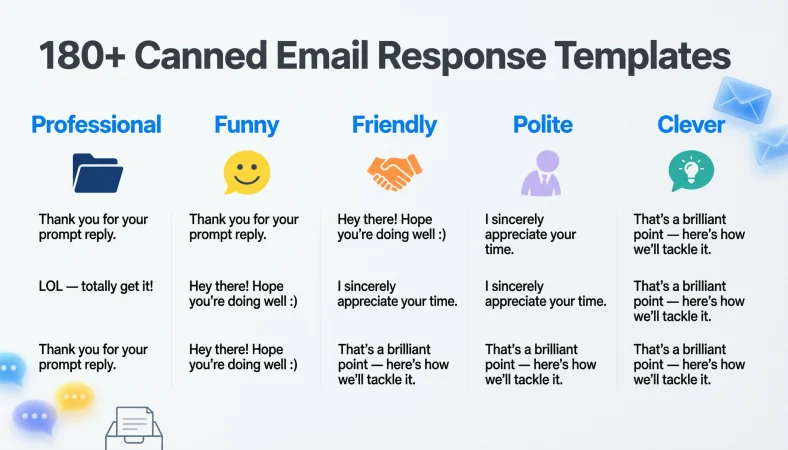
Quick Answer: Canned email response templates are ready-to-use replies that help you answer common emails faster while still sounding natural, helpful, and professional. They are perfect for customer questions, work updates, follow-ups, thank-you messages, and everyday inbox chaos.
Top alternatives: Thanks for reaching out, I’ll get back to you shortly, Thanks for the update, I appreciate your message, Let me look into this
Canned email response templates are basically the adult version of having the perfect comeback ready before anyone asks the question.
When your inbox is overflowing, the last thing you want is to stare at a blank screen wondering how to respond to a simple “Just following up” email. Maybe you are replying to a client, answering a coworker, confirming a meeting, responding to a customer, or sending a quick message to someone you actually like. The words matter because the same message can sound helpful, cold, confident, or awkward depending on how you phrase it.
That is where canned email response templates come in handy. They give you a starting point without making every message sound like it came from a corporate robot. The trick is choosing the right tone for the situation and adding a little personality when appropriate.
Below are ready-to-use responses organized by mood, personality, and purpose, so you can find the right words without spending 20 minutes writing three sentences.
Funny Responses
- I’ll get back to you before my inbox stages a rebellion.
Use this when you want to keep a lighthearted tone during a busy workday.
Meaning: You are acknowledging the message while joking about being busy. - Consider this email officially received and emotionally processed.
Use this when someone sends you a simple update and you want a playful acknowledgment.
Meaning: You have seen the message and understood it. - Thanks, adding this to my extremely glamorous to-do list.
Use this when responding to another routine task at work.
Meaning: You appreciate the information while joking about your workload. - Message received loud and clear. No carrier pigeon required.
Use this when confirming that an email arrived successfully.
Meaning: You received and understood the message. - I’m on it, because apparently emails do not answer themselves.
Use this when accepting a request with playful humor.
Meaning: You are taking responsibility for handling the task. - Thanks for the reminder. My inbox and I needed that reality check.
Use this when someone follows up politely.
Meaning: You appreciate the reminder without sounding defensive. - Noted, bookmarked, mentally filed, and probably overthought.
Use this when you want to acknowledge useful information casually.
Meaning: You have taken the message seriously. - Absolutely. Adding it to today’s episode of Inbox Adventures.
Use this when accepting another small task.
Meaning: You will handle the request while keeping things upbeat. - Thanks for reaching out. My inbox approves this message.
Use this for a friendly response to a casual professional email.
Meaning: You are happy to receive and respond to the message. - Got it. Let the email magic begin.
Use this when you want a cheerful confirmation.
Meaning: You understand the request and are ready to act. - Received with approximately zero confusion.
Use this after someone gives clear instructions.
Meaning: Their instructions were easy to understand. - Thanks, I’ll put this on my very official list of things to handle.
Use this when acknowledging a request without sounding overly formal.
Meaning: You intend to take care of it.
Professional Responses
- Thank you for reaching out. I’ll review this and get back to you shortly.
Use this when you need time to consider a request.
Meaning: You are acknowledging the email and promising a follow-up. - Thank you for the update. I appreciate you keeping me informed.
Use this when someone provides important progress information.
Meaning: You value their communication. - I’ve received your message and will review the details carefully.
Use this when responding to a detailed professional request.
Meaning: You have received the information and will consider it properly. - Thank you for bringing this to my attention.
Use this when someone reports an issue or important matter.
Meaning: You recognize the importance of what they shared. - I appreciate your patience while I look into this.
Use this when a response requires additional investigation.
Meaning: You are asking for understanding while you work on the matter. - Thanks for confirming. I’ll proceed accordingly.
Use this after receiving approval or confirmation.
Meaning: You will take the next appropriate step. - I appreciate the clarification. That helps provide the necessary context.
Use this when someone explains something that was previously unclear.
Meaning: Their explanation helped resolve uncertainty. - Thank you for your detailed response. I’ll take the next steps from here.
Use this when someone has supplied the information you needed.
Meaning: You now have enough information to move forward. - Thank you for your time and consideration.
Use this when closing a formal exchange.
Meaning: You respectfully acknowledge their effort. - I’ll review this and follow up once I have an update.
Use this when you cannot provide an immediate answer.
Meaning: You will respond again when you have more information. - Thank you for your prompt response.
Use this when someone replies quickly.
Meaning: You appreciate their timely communication. - I appreciate your assistance with this matter.
Use this when someone has helped you complete a professional task.
Meaning: You are expressing professional gratitude.
Polite Responses
- Thank you for your message. I truly appreciate you reaching out.
Use this when you want a warm but respectful opening.
Meaning: You are acknowledging their effort to contact you. - Thanks for letting me know. I appreciate the update.
Use this when someone shares new information.
Meaning: You are grateful for being informed. - Thank you for your understanding.
Use this when a situation requires patience.
Meaning: You appreciate their cooperation. - I appreciate you taking the time to explain this.
Use this when someone provides additional context.
Meaning: You value the effort they made to clarify things. - Thanks for checking in. I’ll keep you posted.
Use this when someone asks about progress.
Meaning: You will provide updates as things develop. - Thank you for bringing this to my attention.
Use this when someone points out an issue.
Meaning: You recognize their concern and appreciate the notice. - I completely understand. Thank you for explaining.
Use this when someone gives a reason for a decision.
Meaning: You accept their explanation respectfully. - Thanks again for your help with this.
Use this when someone has assisted you.
Meaning: You want to reinforce your appreciation. - I appreciate your patience and understanding.
Use this when there has been a delay.
Meaning: You recognize their patience while waiting. - Thank you for following up with me.
Use this when someone sends a reminder.
Meaning: You appreciate their effort to reconnect. - That sounds good to me. Thank you for confirming.
Use this when you agree with a proposed arrangement.
Meaning: You accept the plan. - Thank you for keeping me updated.
Use this when someone regularly shares progress.
Meaning: You value their communication.
Concise Responses
- Received, thank you.
Use this when a simple acknowledgment is enough.
Meaning: You received the message successfully. - Got it, thanks.
Use this for quick internal communication.
Meaning: You understand and acknowledge the information. - Thanks for the update.
Use this when someone shares new information.
Meaning: You appreciate being informed. - Understood. I’ll take care of it.
Use this when accepting a task.
Meaning: You understand what needs to happen and will handle it. - Thanks for confirming.
Use this after receiving confirmation.
Meaning: You appreciate the clarification. - I’ll look into it.
Use this when you need to investigate something.
Meaning: You intend to review the matter. - Absolutely, will do.
Use this when you readily agree to a request.
Meaning: You are willing to complete the task. - Thanks, noted.
Use this for a brief professional acknowledgment.
Meaning: You have recorded the information. - I’ll follow up soon.
Use this when you need additional time.
Meaning: You intend to respond again shortly. - Sounds good. Thank you.
Use this when agreeing to a suggestion.
Meaning: You accept the proposed plan. - Confirmed, thank you.
Use this when finalizing details.
Meaning: You confirm that the information is correct. - Much appreciated.
Use this when you want a short expression of gratitude.
Meaning: You genuinely appreciate their help or message.
Friendly Responses
- Thanks so much for reaching out.
Use this when you want your email to feel warm and welcoming.
Meaning: You appreciate their effort to contact you. - Happy to help with this.
Use this when someone asks for assistance.
Meaning: You are willing to help. - Thanks for keeping me in the loop.
Use this when someone shares an update.
Meaning: You appreciate being included. - Great, thanks for the update!
Use this when the news is positive or useful.
Meaning: You are pleased to receive the information. - No worries at all. Thanks for letting me know.
Use this when someone apologizes or explains a delay.
Meaning: You are not upset and appreciate the explanation. - Absolutely, happy to take a look.
Use this when someone asks you to review something.
Meaning: You are willing to help. - Thanks for checking in!
Use this when someone follows up with you.
Meaning: You appreciate their continued communication. - Sounds great on my end.
Use this when you agree with a plan.
Meaning: Everything works for you. - Appreciate the heads-up!
Use this when someone gives you advance notice.
Meaning: You are grateful for the warning or update. - Thanks for sending this over!
Use this when someone shares a file or resource.
Meaning: You appreciate receiving it. - Perfect, that works for me.
Use this when confirming an arrangement.
Meaning: You are comfortable with the proposed plan. - Thanks again, really appreciate it.
Use this when you want your gratitude to feel personal.
Meaning: You genuinely value their assistance.
Creative Responses
- Your message has officially landed in my inbox and on my radar.
Use this when you want a memorable acknowledgment.
Meaning: You received the message and are paying attention. - Consider this my official digital nod of approval.
Use this when agreeing to something over email.
Meaning: You approve the proposed idea. - Inbox mission accepted.
Use this when taking ownership of a task.
Meaning: You are ready to handle the request. - Adding this to the priority playlist.
Use this when something deserves attention.
Meaning: You intend to prioritize the request. - Thanks for sending this my way. I’m on it.
Use this when accepting responsibility for a task.
Meaning: You will handle it. - Message received, brain switched on.
Use this for a playful but useful acknowledgment.
Meaning: You are ready to think through the request. - This has officially entered my follow-up universe.
Use this when you need to revisit something later.
Meaning: You will return to the matter. - Consider it added to the agenda of things getting done.
Use this when confirming a task.
Meaning: You intend to complete it. - Thanks for the nudge. I’ve got it from here.
Use this after a reminder.
Meaning: You appreciate the reminder and will take over. - Received and ready for the next chapter.
Use this when a project is moving forward.
Meaning: You are prepared for the next step. - Inbox checked, message understood, mission underway.
Use this when acknowledging instructions.
Meaning: You understand the request and are acting on it. - Thanks for passing the digital baton.
Use this when someone hands a task over to you.
Meaning: You accept responsibility for the next step.
Sarcastic Responses
- Ah yes, another thrilling adventure in the inbox.
Use this with coworkers who appreciate dry humor.
Meaning: You are joking about another routine email task. - Because apparently my inbox was getting too peaceful.
Use this when another request arrives during a busy day.
Meaning: You are playfully acknowledging additional work. - Wonderful, exactly what my to-do list ordered.
Use this when receiving another task.
Meaning: You are joking about having more work. - Excellent timing, my inbox was almost under control.
Use this when another email arrives during a hectic period.
Meaning: You are humorously acknowledging your workload. - Naturally, this arrives right when I thought I was finished.
Use this with someone who knows your workload.
Meaning: The timing is inconvenient but you are keeping things light. - My inbox thanks you for the additional character development.
Use this when responding to a funny work situation.
Meaning: You are joking about the challenges of email. - Perfect, because clearly I needed one more tab open.
Use this when someone sends another task involving research.
Meaning: You already have a lot going on. - Another email, another opportunity to practice patience.
Use this when joking with a familiar coworker.
Meaning: You are playfully acknowledging the workload. - Fantastic, my keyboard was starting to feel neglected.
Use this when accepting another email-related task.
Meaning: You are joking about having to type more. - Nothing says productivity like another email thread.
Use this when joining a long workplace conversation.
Meaning: You are humorously commenting on email overload. - Right on schedule to keep the inbox interesting.
Use this when another message appears unexpectedly.
Meaning: You are joking about the timing. - And here I was thinking today might be quiet.
Use this when a new request arrives unexpectedly.
Meaning: You are amused by the sudden activity.
Cute Responses
- Thanks a bunch for reaching out!
Use this when you want your email to feel warm and cheerful.
Meaning: You are genuinely happy they contacted you. - You just made my inbox a little happier.
Use this when receiving pleasant news.
Meaning: Their message brightened your day. - Thanks for the lovely update!
Use this when someone shares positive information.
Meaning: You appreciate their cheerful message. - Happy email received!
Use this for a playful acknowledgment of good news.
Meaning: You are pleased with what they shared. - Thanks for thinking of me!
Use this when someone includes you in an opportunity or conversation.
Meaning: You appreciate being remembered. - That’s wonderfully helpful, thank you!
Use this when someone provides useful information.
Meaning: Their help made things easier. - A little thank-you coming your way!
Use this when you want to sound especially warm.
Meaning: You are expressing sincere gratitude. - You’re officially appreciated.
Use this with someone you have a friendly relationship with.
Meaning: You want them to know their help matters. - Thanks for making this so easy!
Use this when someone simplifies a process.
Meaning: You appreciate their helpfulness. - You’re a star for sending this over!
Use this when someone provides something you needed.
Meaning: You are warmly thanking them. - Thanks, you made my day a little smoother.
Use this when someone’s message solves a small problem.
Meaning: Their help improved your day. - Sending a big digital thank-you!
Use this when you want gratitude to feel playful.
Meaning: You are expressing enthusiastic appreciation.
Confident Responses
- Absolutely. I’ll take care of it.
Use this when you want to show clear ownership.
Meaning: You are confident that you can handle the task. - Consider it handled.
Use this when you have accepted responsibility.
Meaning: You are assuring the sender that the task is under control. - I’ve got this from here.
Use this when someone hands you a responsibility.
Meaning: You are ready to take over. - Understood. I know the next step.
Use this when instructions are clear.
Meaning: You have enough information to proceed. - Thanks for confirming. I’ll move forward.
Use this after receiving approval.
Meaning: You are ready to act. - I’ll make sure this gets taken care of.
Use this when reassurance is important.
Meaning: You are committing to completing the task. - Got it. I’ll keep things moving.
Use this when a project needs momentum.
Meaning: You intend to continue making progress. - I’ll handle the details and keep you updated.
Use this when managing a task independently.
Meaning: You will take ownership while maintaining communication. - Thanks, I have everything I need.
Use this when the sender has supplied sufficient information.
Meaning: You are ready to proceed without further clarification. - Clear on my end. I’ll proceed accordingly.
Use this after receiving instructions.
Meaning: You understand what is expected. - I’ll take it from here and follow up with the results.
Use this when you are responsible for the next stage.
Meaning: You will complete the work and report back. - All set. I’ll keep you posted.
Use this when a task is ready to move forward.
Meaning: You are confident and will provide updates.
Warm And Personal Responses
- Thanks for reaching out. It genuinely means a lot.
Use this when someone sends a thoughtful personal or professional message.
Meaning: You appreciate their effort on a deeper level. - I really appreciate you taking the time to write.
Use this when someone sends a thoughtful email.
Meaning: You value the effort behind their message. - It was lovely hearing from you.
Use this when reconnecting with someone.
Meaning: You are happy they reached out. - Thanks for checking in. I really appreciate it.
Use this when someone shows concern or support.
Meaning: Their thoughtfulness matters to you. - Your message was a welcome surprise.
Use this when someone contacts you unexpectedly.
Meaning: You were pleasantly surprised to hear from them. - I’m glad you reached out.
Use this when someone shares something important.
Meaning: You appreciate the opportunity to connect. - Thanks for keeping me updated. It means a lot.
Use this when communication feels especially thoughtful.
Meaning: You value their effort to stay connected. - I’m grateful you took the time to explain everything.
Use this when someone provides thoughtful clarification.
Meaning: You recognize the effort they made. - It’s always nice hearing from you.
Use this when responding to someone you know well.
Meaning: You enjoy communicating with them. - Thanks for being so thoughtful.
Use this when someone goes out of their way to help.
Meaning: You appreciate their consideration. - I truly appreciate the kindness behind your message.
Use this when an email carries emotional warmth.
Meaning: You value both the words and the intention. - Thanks for making the time to reach out.
Use this when someone deliberately contacts you despite being busy.
Meaning: You recognize their effort.
Chill And Casual Responses
- Yep, got it!
Use this when responding to a friend or relaxed coworker.
Meaning: You understand the message. - Sounds good to me!
Use this when agreeing to a plan.
Meaning: You are comfortable with the suggestion. - No problem, I’ve got it.
Use this when accepting a simple request.
Meaning: You are willing to handle it. - Gotcha, thanks!
Use this for relaxed internal communication.
Meaning: You understand and appreciate the information. - Yep, that works.
Use this when confirming an arrangement.
Meaning: The proposed option suits you. - All good on my end.
Use this when confirming there is no issue.
Meaning: Everything is fine from your perspective. - Cool, thanks for the heads-up.
Use this when someone gives you advance notice.
Meaning: You appreciate being informed. - Sure thing!
Use this when agreeing to help.
Meaning: You are happy to do it. - Thanks, I’ll keep an eye on it.
Use this when monitoring a situation.
Meaning: You will pay attention and follow up if needed. - Perfect, we’re good to go.
Use this when everything is ready.
Meaning: You believe the plan can proceed. - Got it, no worries.
Use this when someone apologizes or explains something.
Meaning: You are not concerned. - Sounds like a plan!
Use this when agreeing to a proposed arrangement.
Meaning: You are happy to move forward.
Helpful Responses
- Thanks for reaching out. I’d be happy to help.
Use this when responding to a request for assistance.
Meaning: You are willing to provide support. - Let me take a look and see what I can find.
Use this when you need to investigate something.
Meaning: You are willing to research the issue. - I can certainly help with that.
Use this when responding to a straightforward request.
Meaning: You are available to assist. - Thanks for explaining the situation. Let’s see what we can do.
Use this when someone describes a problem.
Meaning: You are ready to work toward a solution. - I’ll review the details and get back to you.
Use this when you need time before answering.
Meaning: You will investigate before responding. - Here’s what I can do for you.
Use this when explaining the support you can provide.
Meaning: You are offering a practical solution. - I’m happy to point you in the right direction.
Use this when you cannot directly solve the issue.
Meaning: You can still help them find the right resource or person. - Thanks for bringing this up. I’ll look into it.
Use this when someone reports a concern.
Meaning: You are taking their concern seriously. - I’ll check the details and keep you posted.
Use this when information needs verification.
Meaning: You will investigate and provide updates. - Let me see how I can make this easier for you.
Use this when someone needs assistance with a process.
Meaning: You want to reduce their effort. - I appreciate the context. That helps me figure out the best next step.
Use this when someone provides additional information.
Meaning: Their explanation helps you determine a solution. - Happy to help whenever you’re ready.
Use this when the timing is flexible.
Meaning: You are available without creating pressure.
Clever Responses
- Thanks for the context. Now the puzzle makes sense.
Use this when an explanation finally clarifies a confusing situation.
Meaning: You now understand the bigger picture. - That fills in the missing piece.
Use this when someone provides information you needed.
Meaning: Their message completes your understanding. - Perfect, now we’re working with the same information.
Use this when clarification resolves confusion.
Meaning: You and the sender now share the same understanding. - That gives me exactly what I needed.
Use this when receiving useful details.
Meaning: The message provides sufficient information. - Good catch. I’ll adjust accordingly.
Use this when someone identifies an issue.
Meaning: You recognize their observation and will make changes. - That makes much more sense now.
Use this after receiving clarification.
Meaning: The new information resolved confusion. - Thanks, that connects the dots.
Use this when several pieces of information finally align.
Meaning: You now understand how the details relate. - Helpful distinction. I’ll keep that in mind.
Use this when someone highlights an important difference.
Meaning: You appreciate the clarification. - That’s exactly the detail I was missing.
Use this when receiving a crucial piece of information.
Meaning: Their message answered an important question. - Perfect, we’ve officially eliminated one mystery.
Use this when resolving a minor workplace confusion.
Meaning: You now have greater clarity. - Thanks, that gives us a much clearer path forward.
Use this when information helps determine the next step.
Meaning: The situation is easier to navigate now. - Crystal clear from here.
Use this when everything has been explained.
Meaning: You fully understand what needs to happen.
Grateful Responses
- Thank you so much for your help.
Use this when someone provides meaningful assistance.
Meaning: You sincerely appreciate their support. - I really appreciate everything you’ve done.
Use this after someone makes a significant effort.
Meaning: You recognize and value their contribution. - Thanks for going the extra mile.
Use this when someone does more than expected.
Meaning: You appreciate their additional effort. - Your help made a real difference. Thank you.
Use this when someone’s support improves an outcome.
Meaning: Their assistance had a meaningful impact. - I’m genuinely grateful for your support.
Use this when someone helps during an important situation.
Meaning: You feel sincere appreciation. - Thank you for making this process easier.
Use this when someone simplifies a complicated task.
Meaning: Their assistance reduced difficulty. - I couldn’t have asked for a more helpful response.
Use this when someone provides excellent assistance.
Meaning: Their reply was especially useful. - Thanks for taking care of this so quickly.
Use this when someone handles something promptly.
Meaning: You appreciate their speed and efficiency. - I’m very grateful for the time you put into this.
Use this when someone invests significant effort.
Meaning: You recognize the time they spent helping. - Thank you for being so responsive.
Use this when someone replies quickly and consistently.
Meaning: You value their communication. - Your help is greatly appreciated.
Use this for a polished professional thank-you.
Meaning: You sincerely value their assistance. - Thank you again. I truly appreciate it.
Use this as a warm closing after receiving help.
Meaning: You want to emphasize genuine gratitude.
Direct Responses
- I received your email and will respond after reviewing the details.
Use this when a thoughtful answer requires more time.
Meaning: You acknowledge receipt without giving a premature answer. - I can confirm that we received your request.
Use this when confirming receipt of a formal inquiry.
Meaning: The request has successfully reached you. - I’ll review this and provide an update.
Use this when you need to investigate before responding.
Meaning: You will return with more information. - We can move forward with the proposed plan.
Use this when approving a next step.
Meaning: You agree that the plan can proceed. - I need a little more information before proceeding.
Use this when details are missing.
Meaning: You cannot confidently act yet. - Please send the additional details when available.
Use this when requesting missing information.
Meaning: You need more information to continue. - I’ve reviewed the information and have no further questions.
Use this when confirming that everything is clear.
Meaning: You understand the information sufficiently. - I’ll handle this and follow up when it’s complete.
Use this when taking responsibility for a task.
Meaning: You will complete the work and report back. - That works for me. Let’s proceed.
Use this when agreeing to a plan.
Meaning: You approve moving forward. - I’m unable to confirm that at this time.
Use this when information is not yet available.
Meaning: You cannot provide certainty yet. - I’ll need to verify that before confirming.
Use this when accuracy matters.
Meaning: You want to check the facts first. - Thanks for the information. I’ll take the next step.
Use this when you have everything required to proceed.
Meaning: You are ready to act.
FAQs
What Does “Canned Email Response Templates” Mean?
Canned email response templates are prewritten email replies designed for common situations. They save time while giving you a consistent starting point for professional, customer service, workplace, and everyday messages.
Can Canned Email Responses Sound Friendly Or Personal?
Absolutely. A template does not have to sound stiff. Add the person’s name, mention a specific detail, or adjust a sentence to match your normal voice.
Are Canned Email Response Templates Appropriate For Professional Emails?
Yes. They are especially useful for acknowledgments, follow-ups, confirmations, scheduling, customer questions, thank-you emails, and routine workplace communication. Just make sure the wording fits the situation.
What If I Don’t Actually Mean The Response?
Choose simple wording that is honest without being unnecessarily harsh. For example, instead of saying “I’d love to help” when you cannot, say “I appreciate you reaching out, but I’m unable to assist with this.”
Is Humor Appropriate In Canned Email Responses?
Humor can work well with familiar coworkers, friends, and relaxed professional relationships. For customers, formal situations, complaints, or sensitive topics, keep the tone warm and straightforward instead.
Conclusion
The right email response can turn a basic message into a conversation that feels clear, confident, and genuinely human. Whether you need a professional acknowledgment, a friendly thank-you, a clever reply, or a quick response when your inbox is doing the absolute most, having the right words ready makes everything easier.
Use these canned email response templates as your starting point, then personalize them whenever the situation calls for it. A small change can make a template sound completely natural.
Save this list for your next inbox emergency, share it with the coworker who always asks, “How do I reply to this?”, and come back whenever your brain decides email wording is suddenly a major life decision.