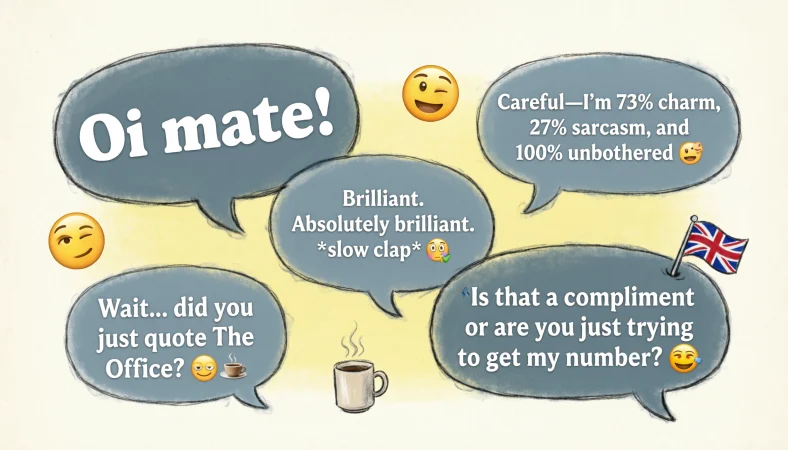
Quick Answer: “Oi mate” is a casual, friendly greeting commonly used to get someone’s attention or start a relaxed conversation. Your response can be funny, cheeky, warm, flirty, or simply casual depending on who said it and the vibe.
Top alternatives: “Oi oi!”, “Alright mate?”, “What’s happening?”, “Hello there!”, “Oi, what’s good?”
There are few greetings as effortlessly casual as “oi mate.” It can show up in a text, DM, group chat, pub conversation, workplace message, or even from a friend who suddenly appears with absolutely no context. Sometimes it is simply a friendly hello. Other times, it is an invitation to chat, a playful attention-grabber, or the opening line before someone asks you for a favour. That is exactly why having a few good responses to oi mate can make the conversation feel more natural. You could keep it simple with “Oi oi,” fire back with a funny comeback, or match the energy with some cheeky banter. The right response depends on your relationship, the setting, and what you want the conversation to become. When in doubt, match the vibe and keep it easy.
Funny Responses
“Oi yourself, troublemaker.”
Use this when a friend greets you with playful energy.
Meaning: You are returning the greeting with friendly teasing.
“Well, well, well… look who’s arrived.”
Use this when someone suddenly appears in your messages.
Meaning: You are humorously acting surprised by their arrival.
“Oi oi, what’s the emergency?”
Use this when you expect they have appeared with some dramatic news.
Meaning: You are jokingly assuming they need something.
“Mate? We’ve only just met.”
Use this when you want to jokingly exaggerate the greeting.
Meaning: You are playfully pretending the word “mate” is too familiar.
“Oi, is this customer service?”
Use this when you want an absurd response to a casual greeting.
Meaning: You are turning the simple hello into a silly scenario.
“The legend has spoken.”
Use this when a close friend sends an unexpected “oi mate.”
Meaning: You are playfully giving the greeting unnecessary importance.
“Oi oi, calm down 😂.”
Use this when you want a lighthearted response.
Meaning: You are jokingly treating their greeting as overly energetic.
“Mate detected. Conversation loading…”
Use this when you want a modern meme-style reply.
Meaning: You are joking that their message has activated chat mode.
“And what exactly do you want?”
Use this when a friend often greets you before asking for something.
Meaning: You are playfully suspicious of their intentions.
“Oi, fancy seeing you here.”
Use this when someone messages you unexpectedly.
Meaning: You are joking about their sudden appearance.
“The audacity of greeting me so casually.”
Use this when you want exaggerated humour.
Meaning: You are pretending their ordinary greeting is somehow outrageous.
“Oi mate, you’ve summoned me.”
Use this when you want to make their greeting sound dramatic.
Meaning: You are jokingly acting as though they called you into action.
Friendly Responses
“Oi mate! How are you?”
Use this when you want to return the greeting warmly.
Meaning: You are keeping the conversation friendly and open.
“Oi oi! How’s it going?”
Use this when you want an upbeat response.
Meaning: You are matching their casual friendliness.
“Alright mate?”
Use this when you want a natural British-style reply.
Meaning: You are casually asking how they are doing.
“Hey mate, good to hear from you.”
Use this when someone you know messages after a while.
Meaning: You are showing genuine pleasure at hearing from them.
“Oi! What’s happening?”
Use this when you want to encourage them to continue talking.
Meaning: You are casually asking what they are up to.
“Hello mate, what’s up?”
Use this when you want something relaxed and familiar.
Meaning: You are returning the greeting while opening the conversation.
“Oi mate, all good?”
Use this when you want to check in casually.
Meaning: You are asking whether everything is okay.
“Good to see you, mate.”
Use this when greeting someone in person or online.
Meaning: You are expressing friendly warmth.
“Oi mate, been a while!”
Use this when someone you have not heard from recently appears.
Meaning: You are acknowledging the time since you last connected.
“Alright, mate! What have you been up to?”
Use this when you want to turn the greeting into a proper catch-up.
Meaning: You are showing interest in their life.
“Oi oi, hope you’re doing well.”
Use this when you want a friendly but considerate tone.
Meaning: You are responding warmly while checking in.
“Hey mate, nice to hear from you.”
Use this when you want to sound welcoming without overdoing it.
Meaning: You are glad they reached out.
Sarcastic Responses
“Oh, so formal.”
Use this when a friend sends an especially casual greeting.
Meaning: You are joking about how informal “oi mate” sounds.
“Please, address me by my full title.”
Use this when you want mock-serious humour.
Meaning: You are pretending to demand a more official greeting.
“Wow, such elegance.”
Use this when you want dry sarcasm.
Meaning: You are joking that their greeting is anything but elegant.
“What a sophisticated opening.”
Use this when someone starts with a blunt “oi mate.”
Meaning: You are playfully exaggerating the sophistication of the greeting.
“I was expecting a handwritten letter.”
Use this when you want exaggerated sarcasm.
Meaning: You are pretending their casual message is surprisingly informal.
“Five stars for that greeting.”
Use this when you want playful sarcasm.
Meaning: You are jokingly rating their choice of words.
“Well, aren’t we polite today?”
Use this when you want cheeky sarcasm.
Meaning: You are pretending “oi mate” is an exceptionally courteous greeting.
“Your manners are truly inspiring.”
Use this when the relationship allows playful teasing.
Meaning: You are sarcastically praising their casual approach.
“Straight to business, I see.”
Use this when you suspect they are about to ask for something.
Meaning: You are teasing them about getting straight to the point.
“Such poetry. I’m moved.”
Use this when you want dramatic sarcasm.
Meaning: You are humorously exaggerating the emotional impact of their greeting.
“And they said romance was dead.”
Use this when you want a deliberately ridiculous response.
Meaning: You are pretending the greeting is deeply romantic.
“Truly a greeting for the history books.”
Use this when you want theatrical sarcasm.
Meaning: You are humorously exaggerating the importance of “oi mate.”
Clever Responses
“Oi received loud and clear.”
Use this when you want a concise, witty response.
Meaning: You are acknowledging their greeting with playful confidence.
“Mate status: confirmed.”
Use this when you want a modern text-friendly comeback.
Meaning: You are playfully accepting the familiar greeting.
“I see we’re keeping things wonderfully informal.”
Use this when you want dry, clever humour.
Meaning: You are pointing out the casual nature of the greeting.
“Greeting accepted. What’s next?”
Use this when you want to keep the conversation moving.
Meaning: You are inviting them to explain why they messaged.
“Oi detected. Responding accordingly.”
Use this when you want a playful digital-style reply.
Meaning: You are making the interaction sound like a system notification.
“That sounds like the beginning of a story.”
Use this when you suspect they have something to tell you.
Meaning: You are encouraging them to continue.
“An intriguing choice of opening words.”
Use this when you want to sound playfully analytical.
Meaning: You are teasing them about their casual greeting.
“I assume there’s a reason you’ve summoned me.”
Use this when friends usually message you when they need something.
Meaning: You are humorously questioning their intentions.
“I’m listening, mate.”
Use this when you want to sound attentive and relaxed.
Meaning: You are inviting them to say what they need.
“Proceed with the important announcement.”
Use this when you want playful drama.
Meaning: You are encouraging them to reveal the reason for the message.
“Interesting. You have my attention.”
Use this when their greeting seems like an introduction to something bigger.
Meaning: You are signalling that you are ready to hear more.
“And so the conversation begins.”
Use this when you want a slightly theatrical reply.
Meaning: You are playfully treating their greeting as the start of an event.
Chill And Casual Responses
“Oi mate 😎”
Use this when you want to match their relaxed energy.
Meaning: You are returning the greeting without making it complicated.
“Alright mate.”
Use this when you want a simple everyday response.
Meaning: You are casually acknowledging them.
“Oi oi.”
Use this when you want a short and friendly reply.
Meaning: You are matching their greeting directly.
“What’s good?”
Use this when you want a modern casual response.
Meaning: You are asking what is happening.
“How’s things?”
Use this when you want to check in naturally.
Meaning: You are inviting a casual update.
“What’s up, mate?”
Use this when you want to keep the conversation relaxed.
Meaning: You are returning the greeting and asking what they need.
“All good here, you?”
Use this when you want to answer and keep things moving.
Meaning: You are giving a quick update and returning the question.
“Hey mate, what’s happening?”
Use this when you want an easy conversation starter.
Meaning: You are asking what they are up to.
“Yo mate 😂.”
Use this when you want a playful casual variation.
Meaning: You are matching their informal tone.
“What’s the word?”
Use this when you want a relaxed alternative to “what’s up?”
Meaning: You are casually asking what is going on.
“Hey you, what’s going on?”
Use this when you know the person well.
Meaning: You are making the greeting slightly warmer and more personal.
“Oi mate, you alright?”
Use this when you want a natural check-in.
Meaning: You are casually asking how they are.
Flirty Responses
“Oi mate? I was hoping you’d message.”
Use this when you want to subtly reveal that you were waiting for them.
Meaning: You are showing interest without being too intense.
“Well hello, you 😏.”
Use this when you want to turn a casual greeting into playful flirting.
Meaning: You are adding a teasing romantic undertone.
“Oi, handsome.”
Use this when you are comfortable giving the person a compliment.
Meaning: You are returning the greeting with flirtatious warmth.
“That’s a cute way to get my attention.”
Use this when you want to acknowledge the greeting playfully.
Meaning: You are suggesting you enjoy their attention.
“Oi mate, trying to make me smile?”
Use this when their message arrives at a good moment.
Meaning: You are teasing them about the positive effect they have on you.
“I like it when you pop up in my messages.”
Use this when you want to make your interest clear.
Meaning: You enjoy hearing from them.
“Oi you, I was wondering where you were.”
Use this when you have been waiting for their message.
Meaning: You are playfully admitting you noticed their absence.
“Is that your way of saying you missed me?”
Use this when there is already obvious chemistry.
Meaning: You are turning the greeting into a flirtatious tease.
“Oi mate, looking for an excuse to talk to me?”
Use this when you want playful confidence.
Meaning: You are teasing them about wanting your attention.
“That greeting would be cuter coming with a kiss.”
Use this only when the relationship already supports that level of flirting.
Meaning: You are openly escalating the playful energy.
“Well, now I’m interested.”
Use this when their message catches your attention.
Meaning: You are inviting them to continue the flirtation.
“Oi, trouble. What are you up to?”
Use this when you have a playful connection.
Meaning: You are combining affection with teasing curiosity.
Cute Responses
“Oi oi, you 😊.”
Use this when you want something simple and sweet.
Meaning: You are warmly returning their greeting.
“Hey mate, that made me smile.”
Use this when their message arrives unexpectedly.
Meaning: You are letting them know you enjoyed hearing from them.
“Hello, lovely.”
Use this when the relationship allows affectionate language.
Meaning: You are returning the greeting with warmth.
“Oi, you’re early 😂.”
Use this when someone normally messages later.
Meaning: You are playfully noticing their timing.
“Aww, hello you.”
Use this when you want a soft and affectionate response.
Meaning: You are happy they reached out.
“Oi mate, sending good vibes your way.”
Use this when you want a wholesome reply.
Meaning: You are responding with positive energy.
“Hey you, nice surprise.”
Use this when someone messages unexpectedly.
Meaning: You are genuinely pleased to hear from them.
“Oi oi, hope you’re having a good one.”
Use this when you want to be thoughtful but casual.
Meaning: You are wishing them well.
“Well hello there, stranger.”
Use this when you have not spoken recently.
Meaning: You are playfully acknowledging the gap in communication.
“Oi mate, you’re adorable.”
Use this when you want a cute compliment.
Meaning: You are affectionately returning their energy.
“Hey, glad you’re here.”
Use this when you want something warm and simple.
Meaning: You are happy to have their attention.
“Oi oi, sending a virtual high-five.”
Use this when you want wholesome internet energy.
Meaning: You are greeting them in a cheerful way.
Confident Responses
“Oi mate, what took you so long?”
Use this when you want playful confidence.
Meaning: You are teasing them for taking their time to message.
“I knew you’d come around.”
Use this when you want a cheeky, self-assured reply.
Meaning: You are jokingly acting as though their message was inevitable.
“There you are.”
Use this when someone has been quiet for a while.
Meaning: You are confidently acknowledging their return.
“I was expecting you.”
Use this when you want a slightly mysterious response.
Meaning: You are playfully suggesting their message was predictable.
“Right on time.”
Use this when you want a short confident comeback.
Meaning: You are teasingly acting as though their arrival was scheduled.
“You’ve got my attention.”
Use this when you want to sound confident but welcoming.
Meaning: You are inviting them to continue.
“I’m here. What’s the plan?”
Use this when you want to sound direct and relaxed.
Meaning: You are ready to hear what they want.
“Go on then, mate.”
Use this when you want to encourage them to speak.
Meaning: You are confidently giving them the floor.
“You rang?”
Use this when you want a playful, confident response.
Meaning: You are jokingly treating their message like a summons.
“Talk to me.”
Use this when you want a direct but friendly answer.
Meaning: You are openly inviting conversation.
“You have my full attention.”
Use this when their greeting seems important.
Meaning: You are showing confidence and interest.
“Alright, let’s hear it.”
Use this when you expect a story, request, or piece of gossip.
Meaning: You are confidently inviting them to continue.
Cheeky Responses
“Oi yourself, cheeky.”
Use this when you want friendly teasing.
Meaning: You are playfully calling out their energy.
“That’s a lot of confidence for two words.”
Use this when you want a witty tease.
Meaning: You are joking about how bold their greeting sounds.
“Someone’s feeling brave today.”
Use this when you want to tease them affectionately.
Meaning: You are pretending their greeting was unusually bold.
“Oi, what are you plotting?”
Use this when you suspect they have an idea or request.
Meaning: You are playfully questioning their intentions.
“I know that greeting means trouble.”
Use this when the person often brings entertaining chaos.
Meaning: You are joking that their arrival usually leads to something interesting.
“Don’t ‘oi mate’ me like that.”
Use this when you want exaggerated teasing.
Meaning: You are pretending their casual greeting has caught you off guard.
“That sounded suspiciously friendly.”
Use this when you want playful banter.
Meaning: You are jokingly questioning their unusually warm greeting.
“What have you done now?”
Use this when a friend often messages after getting into funny situations.
Meaning: You are teasing them as though they have caused trouble.
“You’ve got some explaining to do.”
Use this when you want to create playful mystery.
Meaning: You are pretending their greeting requires an explanation.
“I recognise that tone.”
Use this when you know the person well.
Meaning: You are joking that their greeting signals something is coming.
“Oi mate, behave yourself.”
Use this when you want playful mock-seriousness.
Meaning: You are teasing them without genuine criticism.
“I’m listening, but I’m suspicious.”
Use this when you want humorous banter.
Meaning: You are playfully questioning why they have appeared.
Warm And Heartfelt Responses
“Oi mate, good to hear from you.”
Use this when you genuinely enjoy hearing from them.
Meaning: You are expressing sincere warmth.
“Hey mate, hope everything’s good with you.”
Use this when you want to check in thoughtfully.
Meaning: You care about how they are doing.
“Always good hearing from you.”
Use this when the person is someone you value.
Meaning: Their messages are genuinely welcome.
“Oi oi, hope life’s treating you well.”
Use this when you want something warm but still casual.
Meaning: You are wishing them well.
“Good to see your name pop up.”
Use this when someone messages after some time away.
Meaning: Their message made you happy.
“Hey mate, I’ve missed our chats.”
Use this when you have not spoken for a while.
Meaning: You value the connection and noticed its absence.
“Always here, mate.”
Use this when someone may need support.
Meaning: You are offering dependable friendship.
“Oi mate, hope you’re doing okay.”
Use this when their message seems quieter than usual.
Meaning: You are gently checking on them.
“It’s genuinely nice hearing from you.”
Use this when you want to sound sincere.
Meaning: Their message has emotional value to you.
“You know you can always message me.”
Use this when you want to reassure someone.
Meaning: You are letting them know they are welcome to reach out.
“Glad you popped up.”
Use this when their message brightens your day.
Meaning: You are expressing genuine happiness about hearing from them.
“Oi mate, sending you nothing but good energy.”
Use this when you want a supportive response.
Meaning: You are wishing them positivity and encouragement.
Dramatic Responses
“OI MATE! THE TIME HAS COME.”
Use this when you want to make a simple greeting hilariously dramatic.
Meaning: You are pretending their message marks a major event.
“At last, the messenger has arrived.”
Use this when someone appears after being quiet.
Meaning: You are exaggerating their return for comedic effect.
“The kingdom has been awaiting your arrival.”
Use this when you want playful royal drama.
Meaning: You are joking that their arrival was long anticipated.
“Speak, mysterious traveller.”
Use this when you want theatrical humour.
Meaning: You are pretending they have arrived from an epic journey.
“I have been summoned.”
Use this when you want to play up the seriousness of the greeting.
Meaning: You are humorously treating “oi mate” as a formal call.
“The council is ready to hear your case.”
Use this when you expect them to tell you something.
Meaning: You are turning an ordinary conversation into a mock trial.
“What news from the outside world?”
Use this when you have not spoken for a while.
Meaning: You are jokingly asking for their latest updates.
“The prophecy has been fulfilled.”
Use this when you want absurd drama.
Meaning: You are pretending their message was destined to happen.
“I knew this day would come.”
Use this when you want theatrical humour.
Meaning: You are exaggerating the significance of their greeting.
“The moment we’ve all been waiting for.”
Use this when someone finally responds after a long silence.
Meaning: You are joking about their delayed appearance.
“Make way, the conversation has begun.”
Use this when you want playful dramatic energy.
Meaning: You are announcing the start of the chat as though it were an event.
“Your arrival has been documented.”
Use this when you want mock-official drama.
Meaning: You are humorously pretending their greeting is historically significant.
Professional And Polished Responses
“Hi, hope you’re well.”
Use this when you want to make a casual greeting slightly more professional.
Meaning: You are responding politely and keeping the conversation appropriate.
“Hello, how can I help?”
Use this when you suspect they are contacting you about something work-related.
Meaning: You are inviting them to explain their request.
“Hi there, hope you’re having a good day.”
Use this when you want friendly professionalism.
Meaning: You are acknowledging them warmly without excessive familiarity.
“Hello, good to hear from you.”
Use this when someone contacts you after some time.
Meaning: You are responding courteously and positively.
“Hi, what can I do for you?”
Use this when you want to move directly to the purpose of the message.
Meaning: You are offering assistance in a professional way.
“Hello, how are things?”
Use this when the workplace relationship is friendly.
Meaning: You are keeping the exchange polite and conversational.
“Hi, thanks for reaching out.”
Use this when you want a polished response to a casual message.
Meaning: You are acknowledging their contact respectfully.
“Hello, hope everything is going well.”
Use this when you want a warm professional tone.
Meaning: You are politely checking in.
“Hi, please let me know what you need.”
Use this when you expect a work-related request.
Meaning: You are encouraging them to get to the point.
“Hello, happy to hear from you.”
Use this when you want to remain approachable.
Meaning: You are responding positively without becoming overly casual.
“Hi, how may I assist?”
Use this when the setting requires more formal language.
Meaning: You are offering help politely.
“Hello, good to connect with you.”
Use this when you are responding to someone professionally for the first time.
Meaning: You are establishing a courteous tone.
Playful Comebacks
“Oi mate, you’ve entered the danger zone 😂.”
Use this when your friendship is built around playful banter.
Meaning: You are joking that their arrival means fun is about to begin.
“Wrong number, mate. This is the royal palace.”
Use this when you want ridiculous humour.
Meaning: You are pretending they have contacted a royal residence.
“Oi mate, state your business.”
Use this when you want mock-serious energy.
Meaning: You are jokingly asking why they contacted you.
“Permission to speak granted.”
Use this when you want to exaggerate the greeting.
Meaning: You are humorously acting like you are in charge.
“You rang the right mate.”
Use this when you want a confident pun-style response.
Meaning: You are joking that they contacted exactly the right person.
“Oi mate, what’s the gossip?”
Use this when you expect some entertaining news.
Meaning: You are inviting them to share the latest story.
“I’ve been expecting this message.”
Use this when you want playful mystery.
Meaning: You are pretending their greeting was predictable.
“Go on then, entertain me.”
Use this when you have a close, teasing friendship.
Meaning: You are playfully inviting them to start the conversation.
“Oi mate, I’m ready for the plot twist.”
Use this when the person usually brings unexpected news.
Meaning: You are anticipating something entertaining.
“You have successfully summoned me.”
Use this when you want playful exaggeration.
Meaning: You are treating the greeting like a magical command.
“The floor is yours, mate.”
Use this when you want them to explain what is happening.
Meaning: You are giving them the opportunity to speak.
“Okay, what’s the story?”
Use this when you want a casual but engaging response.
Meaning: You are encouraging them to explain why they messaged.
Flirty And Cheeky Responses
“Oi mate? That’s all I get? 😏”
Use this when you want to tease someone you are flirting with.
Meaning: You are playfully asking for a more affectionate greeting.
“You could’ve just said you wanted my attention.”
Use this when the chemistry is already obvious.
Meaning: You are teasing them about wanting to talk to you.
“Oi, pretty thing.”
Use this when compliments fit naturally into your relationship.
Meaning: You are turning the casual greeting into affectionate flirting.
“I was hoping that was you.”
Use this when you want to show subtle interest.
Meaning: You are admitting that you were pleased to see their message.
“That ‘oi mate’ sounded cute coming from you.”
Use this when you want to compliment their communication style.
Meaning: You are adding a gentle romantic tone.
“You always know how to get my attention.”
Use this when you want to acknowledge their effect on you.
Meaning: You enjoy their attention and presence.
“What’s up, favourite distraction?”
Use this when you want playful affection.
Meaning: You are teasingly calling them someone who easily captures your attention.
“Oi mate, flirting already?”
Use this when the conversation already has romantic energy.
Meaning: You are playfully accusing them of flirting.
“You popped up at the perfect time.”
Use this when you are genuinely happy to hear from them.
Meaning: Their message arrived at a welcome moment.
“Is ‘oi mate’ code for ‘I missed you’?”
Use this when you want to tease someone about their intentions.
Meaning: You are playfully suggesting they reached out because they missed you.
“Careful, that greeting might make me like you more.”
Use this when mutual flirting is already established.
Meaning: You are jokingly admitting their attention is attractive.
“Oi, you. Come here and explain yourself.”
Use this when you want playful romantic banter.
Meaning: You are inviting more interaction while teasing them.
Smart And Witty Responses
“Oi mate, concise as ever.”
Use this when someone is known for short messages.
Meaning: You are joking about their efficient greeting style.
“Three letters and suddenly we’re best friends.”
Use this when you want playful commentary.
Meaning: You are exaggerating how quickly their casual greeting creates familiarity.
“An economical use of vocabulary.”
Use this when you want dry, clever humour.
Meaning: You are joking about the simplicity of the greeting.
“Straight to the point. I respect it.”
Use this when you appreciate their direct style.
Meaning: You are acknowledging their casual confidence.
“A greeting with absolutely no unnecessary decoration.”
Use this when you want witty sarcasm.
Meaning: You are humorously praising the minimalism of “oi mate.”
“Short message, strong energy.”
Use this when you want a punchy response.
Meaning: You are saying the greeting has personality despite being brief.
“I see we’re keeping the opening statement efficient.”
Use this when you want polished humour.
Meaning: You are teasing the simplicity of their greeting.
“The conversation has officially entered casual mode.”
Use this when you want a modern response.
Meaning: You are acknowledging the relaxed tone.
“Noted. Informal greeting successfully delivered.”
Use this when you want mock-official humour.
Meaning: You are playfully confirming receipt of the greeting.
“Bold opener. Continue.”
Use this when you want a concise witty comeback.
Meaning: You are inviting them to keep talking.
“A powerful beginning to what I assume is an important message.”
Use this when you expect a story or request.
Meaning: You are humorously exaggerating the significance of their greeting.
“Your opening argument has been accepted.”
Use this when you want playful cleverness.
Meaning: You are pretending their greeting was part of a formal debate.
FAQs
What Does “Oi Mate” Mean?
“Oi mate” is a casual greeting or attention-getter, especially associated with British and Australian English. Depending on tone, it can simply mean “hello,” “hey,” or “excuse me.”
Is “Oi Mate” Friendly?
Usually, yes. Among friends, it often sounds relaxed and familiar. Tone and context matter because “oi” can also be used more sharply when someone is trying to get attention.
Is “Oi Mate” Flirty?
Not by itself. It is generally casual rather than romantic, although the person’s tone, relationship with you, emojis, and surrounding messages can give it a flirtier meaning.
What Should I Reply to “Oi Mate”?
Simple replies such as “Oi oi!”, “Alright mate?”, or “What’s up?” work well. You can also use a funny or cheeky response if that matches your relationship.
Can I Say “Oi Mate” Back?
Absolutely. Repeating “oi mate” or switching it to “oi oi” is a natural way to match the casual energy.
What If I Don’t Want to Sound Too Casual?
Try “Hi, hope you’re well”, “Hello, how are you?”, or “Hi, what can I help you with?” These responses make the interaction more polished.
What If I Don’t Actually Mean “Mate”?
You do not have to mirror the word. You can simply reply with “Hey!”, “Hi there”, or use the person’s name instead.
Is Humor Appropriate?
Yes, when you know the person and the conversation is relaxed. A funny reply works particularly well among friends, but a straightforward response is safer in formal settings.
What Is a Funny Reply to “Oi Mate”?
Try “Oi oi, what’s the emergency?” or “Mate detected. Conversation loading…” for playful text-message humour.
What Is a Flirty Reply to “Oi Mate”?
Try “Well hello, you 😏” or “You could’ve just said you wanted my attention.” These add flirtation while keeping the casual tone.
What Is a Good Reply From a Friend?
“Oi oi! How’s it going?” is easy, friendly, and natural. You can follow it with a question to keep the conversation going.
Can “Oi Mate” Be Used at Work?
It depends on the workplace culture and your relationship with the person. In a formal setting, “Hi, hope you’re well” or “Hello, how can I help?” is more appropriate.
Conclusion
“Oi mate” may only be two casual words, but your response can completely shape what happens next. You can keep things relaxed with “oi oi,” make your friend laugh with a ridiculous comeback, or add a little flirtation when the chemistry is already there. The key is to match the person’s energy and choose words that sound natural coming from you. A simple greeting does not need an overcomplicated response. Sometimes the best reply is short, funny, and perfectly timed. Save this list of responses to oi mate for your next text, DM, group chat, or random “oi” that lands out of nowhere. Pick your favourite, send it confidently, and keep the banter going.