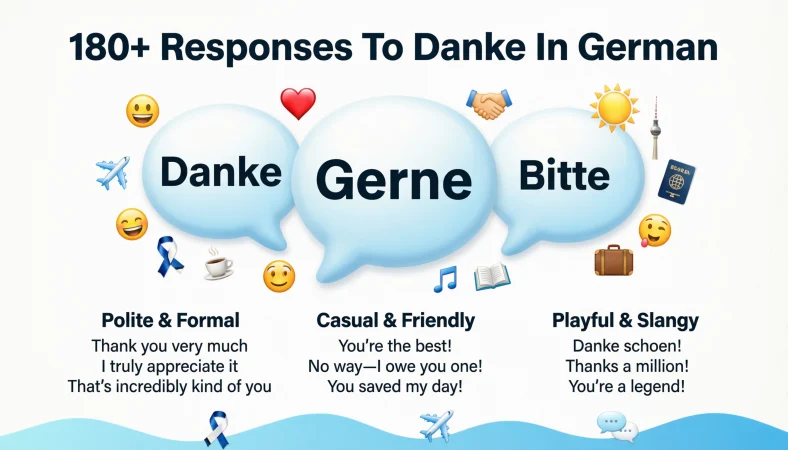
Quick Answer: The most natural response to “Danke” in German is “Bitte”, meaning “You’re welcome.” Depending on the situation, you can also say “Gerne,” “Kein Problem,” “Sehr gerne,” “Nichts zu danken,” or “Immer gerne.”
Top alternatives: Bitte, Gerne, Sehr gerne, Kein Problem, Nichts zu danken
When someone says “Danke” in German, knowing what to say next can suddenly feel like a tiny language exam you did not study for. Whether you are texting a German friend, replying to a DM, chatting with a coworker, talking to someone you like, or simply trying to sound natural while traveling, the right response can make the interaction feel much smoother.
“Danke” means “thank you,” but German offers several ways to respond depending on how formal, casual, warm, funny, or flirty you want to be. “Bitte” is the classic choice, while “Gerne” sounds friendly and natural, and “Kein Problem” keeps things relaxed. This guide gives you plenty of ready-to-use response to danke in German ideas, from everyday replies to playful messages, so you can stop overthinking that tiny moment and answer with confidence.
Standard Responses
“Bitte!”
Use this when someone thanks you in almost any ordinary situation.
Meaning: It is the classic German way to say “You’re welcome.”
“Gerne!”
Use this when you want to sound friendly and natural.
Meaning: It means “Gladly” or “You’re welcome.”
“Sehr gerne!”
Use this when you want to sound especially warm and helpful.
Meaning: It expresses that you were happy to help.
“Kein Problem!”
Use this with friends, coworkers, or people you know casually.
Meaning: It means “No problem.”
“Nichts zu danken!”
Use this when someone thanks you for something you consider minor.
Meaning: It means “Don’t mention it.”
“Gern geschehen!”
Use this when you want a traditional and courteous response.
Meaning: It means “You’re welcome” or “My pleasure.”
“Immer gerne!”
Use this when you would happily help the person again.
Meaning: It means “Anytime” or “Always gladly.”
“Bitte schön!”
Use this in a friendly everyday setting.
Meaning: It is a warm version of “You’re welcome.”
“Bitte sehr!”
Use this when you want a slightly more polished response.
Meaning: It is a courteous way to say “You’re welcome.”
“Aber gerne!”
Use this when you want to emphasize that helping was no trouble.
Meaning: It means “But of course” or “Gladly.”
“Gern!”
Use this when you prefer a short and simple reply.
Meaning: It is a concise form of “Gerne.”
“Kein Ding!”
Use this with close friends in a very casual situation.
Meaning: It means “No big deal.”
Casual Responses
“Gerne 😊”
Use this in a relaxed text message with a friend.
Meaning: It keeps the reply friendly and effortless.
“Kein Problem!”
Use this when you want a laid-back answer.
Meaning: You are saying that helping was easy.
“Alles gut!”
Use this when the situation is informal.
Meaning: It communicates that there is nothing to worry about.
“Na klar!”
Use this with someone you know well.
Meaning: It means “Of course” in a casual way.
“Klar doch!”
Use this when you want a cheerful informal response.
Meaning: It shows that helping was completely natural to you.
“Immer wieder!”
Use this when you want to say you would do it again.
Meaning: You are expressing willingness to help in the future.
“Passt schon!”
Use this when talking casually with someone familiar.
Meaning: It means everything is fine and there is no need for thanks.
“Alles easy!”
Use this with friends who enjoy relaxed slang.
Meaning: You are saying there is absolutely no issue.
“Kein Ding 😄”
Use this for a friendly text or social-media message.
Meaning: It means “No big deal.”
“Logo!”
Use this when you want a playful, very casual tone.
Meaning: It is a light way of saying “Of course.”
“Immer gern!”
Use this when you want to sound helpful without being formal.
Meaning: It means you are happy to help anytime.
“Sehr gern 😊”
Use this when you want a casual reply with a little extra warmth.
Meaning: You are emphasizing that you were happy to help.
Polite Responses
“Sehr gerne.”
Use this when responding respectfully to someone you do not know well.
Meaning: It expresses warm willingness to help.
“Gern geschehen.”
Use this in a courteous everyday interaction.
Meaning: It is a polite equivalent of “You’re welcome.”
“Bitte sehr.”
Use this when you want a polished and respectful response.
Meaning: It is a courteous way to acknowledge thanks.
“Bitte schön.”
Use this when you want to sound pleasant and welcoming.
Meaning: It conveys “You’re welcome” warmly.
“Nichts zu danken.”
Use this when someone thanks you for a small favor.
Meaning: You are politely saying that thanks are unnecessary.
“Sehr gern geschehen.”
Use this when you want a particularly warm and courteous reply.
Meaning: You are emphasizing that you were pleased to help.
“Aber sehr gerne.”
Use this when you want to sound enthusiastic but respectful.
Meaning: It shows genuine willingness to help.
“Es war mir ein Vergnügen.”
Use this in a formal or ceremonious situation.
Meaning: It means “It was my pleasure.”
“Gerne doch.”
Use this when you want a polite response with a friendly touch.
Meaning: It communicates that helping was gladly done.
“Das mache ich gerne.”
Use this when responding to thanks for something you did willingly.
Meaning: You are saying you were happy to do it.
“Immer wieder gerne.”
Use this when you want to express continued willingness to help.
Meaning: You would gladly assist again.
“Keine Ursache.”
Use this when you want a traditional polite response.
Meaning: It means “No need to thank me.”
Professional Responses
“Gerne.”
Use this in a workplace email or professional chat.
Meaning: It is concise, polite, and appropriate for many business situations.
“Sehr gerne.”
Use this when responding warmly to a client or colleague.
Meaning: It communicates professional helpfulness.
“Gern geschehen.”
Use this after assisting someone professionally.
Meaning: It provides a courteous acknowledgment of their thanks.
“Bitte sehr.”
Use this in a professional face-to-face interaction.
Meaning: It is a respectful way to say “You’re welcome.”
“Sehr gerne, jederzeit.”
Use this when you want to emphasize future availability.
Meaning: You are happy to help again.
“Kein Problem.”
Use this with a coworker in a relaxed professional environment.
Meaning: It reassures them that their request was not an inconvenience.
“Nichts zu danken.”
Use this when the help you provided was routine.
Meaning: You are politely minimizing the need for thanks.
“Gerne wieder.”
Use this after completing a helpful task for a colleague or customer.
Meaning: You would be happy to assist again.
“Es war mir gerne möglich.”
Use this when you want a more formal professional tone.
Meaning: You are indicating that assisting was no difficulty.
“Sehr gerne, freut mich.”
Use this when you want to sound professional and personable.
Meaning: You are pleased that your help was useful.
“Immer gerne.”
Use this in friendly workplace communication.
Meaning: You remain open to helping in the future.
“Dafür nicht.”
Use this when you want a modest response to praise or thanks.
Meaning: You are suggesting that gratitude is not necessary.
Funny Responses
“Bitte, bitte, ich nehme Applaus auch.”
Use this with a friend who enjoys joking around.
Meaning: You are humorously pretending that a thank-you deserves a bigger celebration.
“Keine Ursache, die Rechnung kommt später.”
Use this when joking about doing someone a favor.
Meaning: You are playfully pretending the favor has a hidden cost.
“Bitte sehr, der Service war heute kostenlos.”
Use this in a playful text message.
Meaning: You are turning a simple favor into a pretend customer-service moment.
“Gerne, fünf Sterne bitte.”
Use this after helping a friend.
Meaning: You are jokingly asking for a positive review.
“Bitte, ich bin heute großzügig.”
Use this when you want a playful response.
Meaning: You are pretending that your kindness is an unusually generous event.
“Kein Problem, ich nehme Kekse als Dank.”
Use this when joking with someone who owes you a snack.
Meaning: You are playfully requesting a treat instead of formal gratitude.
“Gerne, mein Dienst ist hiermit beendet.”
Use this after doing a small favor.
Meaning: You humorously act like the favor was a professional assignment.
“Bitte, bitte, wo ist meine Medaille?”
Use this after helping with something simple.
Meaning: You jokingly exaggerate your achievement.
“Nichts zu danken, ich war sowieso hier.”
Use this when the favor was very easy.
Meaning: You are humorously saying the help required little effort.
“Gerne, das war mein heroic moment.”
Use this in a playful bilingual text.
Meaning: You are exaggerating a small favor for comedic effect.
“Bitte, Autogramme gibt es später.”
Use this when joking with a close friend.
Meaning: You are pretending your helpfulness made you famous.
“Kein Ding, ich bin heute im Premium-Service.”
Use this for a funny casual message.
Meaning: You are jokingly presenting yourself as an upgraded service.
Cute Responses
“Gerne 😊”
Use this when replying warmly to someone you care about.
Meaning: It communicates simple happiness about helping.
“Immer gerne 🤍”
Use this in a sweet message to a friend or loved one.
Meaning: You are saying you are always happy to help.
“Sehr gerne 🥰”
Use this when you want your gratitude exchange to feel affectionate.
Meaning: It adds warmth and sweetness to the reply.
“Für dich doch immer.”
Use this with someone special in your life.
Meaning: You are saying you are especially willing to help them.
“Natürlich gern.”
Use this when you want a gentle and reassuring tone.
Meaning: You are making it clear that helping was easy and welcome.
“Jederzeit für dich.”
Use this with a close friend or romantic interest.
Meaning: You are expressing continued availability.
“Sehr gerne, freut mich. 😊”
Use this when you want to sound genuinely pleased.
Meaning: You are happy that your help mattered.
“Nichts zu danken, wirklich.”
Use this when someone seems overly grateful.
Meaning: You want them to feel comfortable rather than indebted.
“Gerne, das mache ich doch.”
Use this for a warm everyday exchange.
Meaning: You see the favor as something natural.
“Immer wieder gerne.”
Use this after helping someone you care about.
Meaning: You would happily repeat the gesture.
“Für dich mache ich das gern.”
Use this when you want to make the reply personal.
Meaning: You are emphasizing special willingness toward that person.
“Gern geschehen 😊”
Use this when you want a classic but sweet response.
Meaning: It keeps the interaction polite and affectionate.
Flirty Responses
“Für dich immer gerne 😉”
Use this when replying to someone you are interested in.
Meaning: You are adding a subtle romantic hint.
“Alles für dich.”
Use this when you want a confident romantic tone.
Meaning: You are playfully suggesting that you would go out of your way for them.
“Gerne, aber du schuldest mir jetzt ein Date.”
Use this after doing a favor for your crush.
Meaning: You are turning the thank-you into a playful invitation.
“Für ein Danke von dir mache ich das doch gerne.”
Use this when you want a charming reply.
Meaning: You are implying that their appreciation makes helping more enjoyable.
“Sehr gerne, besonders für dich.”
Use this when you want your interest to be obvious but sweet.
Meaning: You are showing that this person gets special treatment.
“Kein Problem, du kannst dich später revanchieren 😉”
Use this when flirting through text.
Meaning: You are playfully suggesting they can return the favor.
“Immer gerne, wenn du so nett fragst.”
Use this when you want light romantic teasing.
Meaning: Their personality makes you more willing to help.
“Gerne, ein Lächeln reicht als Dank.”
Use this when you want a soft romantic line.
Meaning: You are saying their happiness is enough.
“Bitte, aber nur weil du es bist.”
Use this when teasing someone you like.
Meaning: You are playfully making your favor feel exclusive.
“Für dich gibt’s den VIP-Service.”
Use this in a playful romantic DM.
Meaning: You are joking that the person receives special treatment.
“Sehr gerne, ich mag es, dir zu helfen.”
Use this when you want a sincere flirtatious tone.
Meaning: You are expressing genuine enjoyment in helping them.
“Immer wieder, wenn du mich so lieb bittest.”
Use this when flirting with someone you already know well.
Meaning: You are combining affection with playful teasing.
Romantic Responses
“Für dich immer.”
Use this with a romantic partner or serious crush.
Meaning: You are expressing dependable affection.
“Sehr gerne, mein Schatz.”
Use this when speaking affectionately to a partner.
Meaning: It adds romantic warmth to the response.
“Alles, was dich glücklich macht.”
Use this when responding to someone close to you.
Meaning: You are emphasizing their happiness.
“Gerne, jederzeit.”
Use this when you want a simple romantic response.
Meaning: You are saying you are always willing to help.
“Für dich mache ich das von Herzen gern.”
Use this when expressing genuine affection.
Meaning: You are saying the favor came from sincere care.
“Dein Danke ist schon genug.”
Use this when someone keeps thanking you.
Meaning: Their appreciation is all you need.
“Sehr gerne, Liebling.”
Use this when texting a romantic partner.
Meaning: It combines a standard reply with an affectionate term.
“Immer gern, wenn es dir hilft.”
Use this when you want to focus on caring.
Meaning: You are glad your action made their situation easier.
“Gerne, für dich besonders.”
Use this when you want a romantic undertone.
Meaning: You are suggesting that this person is special to you.
“Du musst dich nicht bedanken.”
Use this when offering reassurance to someone close.
Meaning: You want them to know your kindness is genuine.
“Ich mache das doch gerne für dich.”
Use this after helping your partner.
Meaning: You are saying the favor was motivated by affection.
“Immer wieder gerne, mein Lieblingsmensch.”
Use this when you want an especially affectionate response.
Meaning: You are emphasizing emotional closeness.
Warm And Friendly Responses
“Gerne!”
Use this when responding to a friend or acquaintance.
Meaning: It is friendly, natural, and uncomplicated.
“Sehr gerne!”
Use this when you want extra warmth.
Meaning: You are genuinely happy to have helped.
“Immer gerne!”
Use this when you would gladly help again.
Meaning: You are keeping the door open for future favors.
“Nichts zu danken!”
Use this when you want to reassure someone.
Meaning: You consider their thanks unnecessary.
“Kein Problem!”
Use this after a small favor.
Meaning: You are saying it was no trouble.
“Gern geschehen!”
Use this for a classic friendly response.
Meaning: It means “You’re welcome.”
“Natürlich!”
Use this when the favor felt completely natural.
Meaning: You are saying there was no reason to hesitate.
“Aber gerne!”
Use this when you want a cheerful response.
Meaning: You are enthusiastically accepting their thanks.
“Sehr gern, freut mich.”
Use this when you want to sound sincere.
Meaning: You are happy that your help was useful.
“Jederzeit!”
Use this when you want a short supportive response.
Meaning: You are offering future help.
“Immer wieder.”
Use this after helping a friend.
Meaning: You would gladly repeat the favor.
“Gerne doch!”
Use this when you want to keep things light and warm.
Meaning: You are saying the help was gladly given.
Short Text Responses
“Bitte 😊”
Use this when you want a simple friendly text.
Meaning: It means “You’re welcome.”
“Gerne!”
Use this when you want a natural one-word reply.
Meaning: It means “Gladly.”
“Sehr gerne!”
Use this when you want slightly more warmth.
Meaning: You were happy to help.
“Kein Problem!”
Use this when you want a casual response.
Meaning: It means there was no trouble.
“Nichts zu danken!”
Use this when you want to dismiss the need for thanks.
Meaning: You are saying the favor was not a big deal.
“Immer gerne!”
Use this when you want to offer future help.
Meaning: You are always willing to assist.
“Jederzeit!”
Use this when you want a very short supportive answer.
Meaning: You are available to help again.
“Gern!”
Use this when you want the shortest natural option.
Meaning: It is a compact form of “Gerne.”
“Natürlich!”
Use this when helping someone feels obvious.
Meaning: You are saying “Of course.”
“Bitte sehr!”
Use this when you want a slightly more courteous tone.
Meaning: It is a polite “You’re welcome.”
“Gern geschehen!”
Use this when you want a traditional phrase.
Meaning: It means “You’re welcome.”
“Alles gut!”
Use this when you want a relaxed message.
Meaning: You are reassuring the person that everything is fine.
Confident Responses
“Gerne, jederzeit.”
Use this when you want to sound dependable.
Meaning: You are confident that you can help again.
“Natürlich.”
Use this when you want a direct response.
Meaning: You are showing that the favor was no big deal.
“Immer gerne.”
Use this when you want to communicate reliability.
Meaning: You remain willing to help.
“Kein Problem, erledigt.”
Use this after completing a task for someone.
Meaning: You are confidently confirming that everything is handled.
“Sehr gerne, dafür bin ich da.”
Use this when your role involves helping others.
Meaning: You are confidently describing assistance as part of your role.
“Gerne, das gehört dazu.”
Use this in a professional or service context.
Meaning: You consider the help part of what you do.
“Kein Thema.”
Use this in casual German conversation.
Meaning: You are saying the issue was insignificant.
“Alles erledigt.”
Use this after completing a favor or task.
Meaning: You are confidently confirming completion.
“Gern gemacht.”
Use this when you want a compact friendly reply.
Meaning: You are saying the task was willingly done.
“Natürlich gerne.”
Use this when you want to sound assured and warm.
Meaning: You are comfortable helping.
“Immer wieder.”
Use this when you want to signal that you would repeat the favor.
Meaning: You have no hesitation about helping again.
“Sehr gerne, kein Thema.”
Use this when you want to combine warmth and confidence.
Meaning: You are making the situation feel completely easy.
Playful Responses
“Bitte, der deutsche Höflichkeitskurs ist eröffnet.”
Use this when joking with someone learning German.
Meaning: You are playfully turning the exchange into a language lesson.
“Gerne, Deutsch-Level freigeschaltet.”
Use this with a friend who enjoys internet-style humor.
Meaning: You are joking that they just learned another German phrase.
“Bitte, ich erfülle heute meine sozialen Pflichten.”
Use this when joking about being helpful.
Meaning: You are exaggerating a normal act of kindness.
“Kein Problem, Teamwork macht’s möglich.”
Use this after completing something together.
Meaning: You are highlighting cooperation in a playful way.
“Gerne, heute bin ich besonders hilfsbereit.”
Use this when teasing a friend.
Meaning: You are joking that your helpfulness is temporary.
“Bitte, bitte, ich warte auf meine Dankesrede.”
Use this when someone gives you an enthusiastic thank-you.
Meaning: You are humorously exaggerating the moment.
“Gerne, das war doch ein Kinderspiel.”
Use this after an easy favor.
Meaning: You are saying the task was very simple.
“Kein Ding, Mission erfüllt.”
Use this after completing a small task.
Meaning: You are giving an ordinary favor a playful mission theme.
“Bitte, mein guter Ruf bleibt bestehen.”
Use this when joking about helping someone.
Meaning: You are playfully pretending the favor protects your reputation.
“Gerne, dafür gibt’s heute Bonuspunkte.”
Use this with a friend in a silly mood.
Meaning: You are inventing a humorous reward system.
“Bitte, Service mit einem Lächeln.”
Use this in a playful message.
Meaning: You are pretending to be a cheerful service worker.
“Immer gerne, der Support ist online.”
Use this when joking through text.
Meaning: You are humorously presenting yourself as customer support.
Sweet And Heartfelt Responses
“Sehr gerne, wirklich.”
Use this when you want to show genuine sincerity.
Meaning: You want the person to know you truly meant the help.
“Für dich immer.”
Use this with someone emotionally important to you.
Meaning: You are expressing lasting willingness to be there.
“Es hat mich gefreut.”
Use this after helping someone with something meaningful.
Meaning: Their appreciation made you happy.
“Gerne von Herzen.”
Use this when you want a heartfelt response.
Meaning: You are emphasizing sincere kindness.
“Du musst dich wirklich nicht bedanken.”
Use this when someone feels overly indebted.
Meaning: You want to reassure them that your help was genuine.
“Ich habe das gerne für dich gemacht.”
Use this after doing something thoughtful.
Meaning: You want them to know there was no resentment behind the favor.
“Immer gerne, wenn ich helfen kann.”
Use this when offering emotional support.
Meaning: You are happy to be useful when needed.
“Dein Danke bedeutet mir viel.”
Use this when someone’s appreciation genuinely matters to you.
Meaning: You value their gratitude emotionally.
“Sehr gerne, pass gut auf dich auf.”
Use this after helping someone who is having a difficult day.
Meaning: You combine the reply with caring concern.
“Gerne, ich bin froh, dass ich helfen konnte.”
Use this when your help solved a meaningful problem.
Meaning: You are pleased that your effort made a difference.
“Für mich war es selbstverständlich.”
Use this when helping someone close to you.
Meaning: You see caring for them as natural.
“Immer wieder gerne, von Herzen.”
Use this when you want a deeply warm response.
Meaning: You are expressing sincere and continued kindness.
Clever And Natural Responses
“Gerne” is often the easiest choice.
Use this when someone wants a natural everyday answer.
Meaning: “Gerne” is a simple and friendly way to say “You’re welcome.”
“Bitte” works almost everywhere.
Use this when you need a reliable response quickly.
Meaning: “Bitte” is the classic German response to “Danke.”
“Sehr gerne” adds warmth.
Use this when you want to sound especially willing.
Meaning: It communicates that you were happy to help.
“Kein Problem” keeps things casual.
Use this with friends, acquaintances, or relaxed coworkers.
Meaning: It reassures the person that their request caused no trouble.
“Nichts zu danken” sounds reassuring.
Use this when the favor was small.
Meaning: You are telling the person their gratitude is not necessary.
“Gern geschehen” feels traditional and courteous.
Use this when you want a classic expression.
Meaning: It directly communicates “You’re welcome.”
“Immer gerne” suggests future availability.
Use this when you would happily help again.
Meaning: You are signaling continued willingness.
“Bitte schön” feels friendly and polite.
Use this in everyday social interactions.
Meaning: It adds a pleasant touch to the standard response.
“Bitte sehr” works well when you want courtesy.
Use this when the setting is a little more formal.
Meaning: It is a respectful way to respond to thanks.
“Kein Ding” is best for relaxed conversations.
Use this with close friends and informal contacts.
Meaning: It means the favor was no big deal.
“Gern” is short and natural.
Use this when you want to keep your message concise.
Meaning: It is a compact version of “Gerne.”
“Jederzeit” is perfect when offering future help.
Use this after helping someone who may need assistance again.
Meaning: It communicates that you are available whenever needed.
Responses For Different Situations
“Bitte!”
Use this when a stranger thanks you for a simple courtesy.
Meaning: It is the safest everyday response.
“Gerne!”
Use this when a friend thanks you for a favor.
Meaning: It sounds relaxed and friendly.
“Sehr gerne.”
Use this when a customer thanks you professionally.
Meaning: It communicates courteous willingness.
“Kein Problem.”
Use this when a coworker thanks you for something small.
Meaning: It tells them their request was not inconvenient.
“Nichts zu danken.”
Use this when someone thanks you for a minor gesture.
Meaning: You are saying they did not need to thank you.
“Immer gerne.”
Use this when someone may need your help again.
Meaning: You are offering continued support.
“Für dich immer.”
Use this when someone you like thanks you.
Meaning: It adds a personal and affectionate touch.
“Gerne geschehen.”
Use this when you want a traditional courteous expression.
Meaning: You are politely acknowledging their thanks.
“Jederzeit.”
Use this when you want to keep your answer extremely short.
Meaning: You are saying you are available again.
“Natürlich.”
Use this when helping someone feels completely natural.
Meaning: You are saying the favor required no hesitation.
“Aber gerne.”
Use this when you want to sound enthusiastic.
Meaning: You are emphasizing that helping was welcome.
“Sehr gerne, freut mich.”
Use this when you want a warm and sincere answer.
Meaning: You are pleased that your help was appreciated.
FAQs
What Does “Danke” Mean In German?
“Danke” means “thank you” in German. It is one of the most common ways to express gratitude.
What Is The Best Response To “Danke” In German?
The classic response is “Bitte.” “Gerne” is also very natural and friendly, especially in casual everyday situations.
Is “Kein Problem” A Good Response To “Danke”?
Yes. “Kein Problem” means “No problem” and works especially well in casual conversations.
Is “Gern Geschehen” Formal?
“Gern geschehen” is a traditional and courteous way to respond to thanks. It can work in polite everyday situations.
What Is A Flirty Response To “Danke” In German?
Try “Für dich immer 😉,” which means “Always for you.” It has a warm, playful romantic tone.
What Is A Cute Response To “Danke” In German?
“Sehr gerne 😊” is an easy cute option. “Immer gerne 🤍” also sounds warm in a text message.
What Should I Say If I Do Not Actually Want To Sound Warm?
Use “Bitte” for a neutral, straightforward response. It is polite without adding a strong emotional tone.
What Should I Say To “Danke” At Work?
“Gerne,” “Sehr gerne,” “Bitte,” and “Gern geschehen” are useful professional choices. “Kein Ding” is more casual.
What Should I Say To A German Friend Who Says “Danke”?
“Gerne,” “Kein Problem,” “Immer gerne,” or “Kein Ding” can sound natural depending on how casual your friendship is.
What Is The Most Casual Response To “Danke”?
“Kein Ding,” “Kein Problem,” and “Alles gut” are casual options. Use them with people and situations where informal German feels appropriate.
What Is The Most Polite Response To “Danke”?
“Bitte sehr,” “Bitte schön,” “Sehr gerne,” and “Gern geschehen” are courteous choices.
Can “Bitte” Be Used In Text Messages?
Absolutely. “Bitte” is short, natural, and completely normal in texting.
Conclusion
Knowing how to respond to “Danke” can make your German conversations feel much more natural. You do not need a complicated phrase when a simple “Bitte” works perfectly, but having options like “Gerne,” “Sehr gerne,” “Kein Problem,” and “Immer gerne” lets you match your response to the mood.
A funny line can make a friend laugh, a warm phrase can make someone feel appreciated, and a professional response can keep workplace communication polished. The key is confidence and context. Try different replies until you find the ones that feel natural in your own style. Save this list, share it with someone learning German, and keep your favorite responses ready for your next “Danke.” Viel Spaß beim Deutschsprechen.