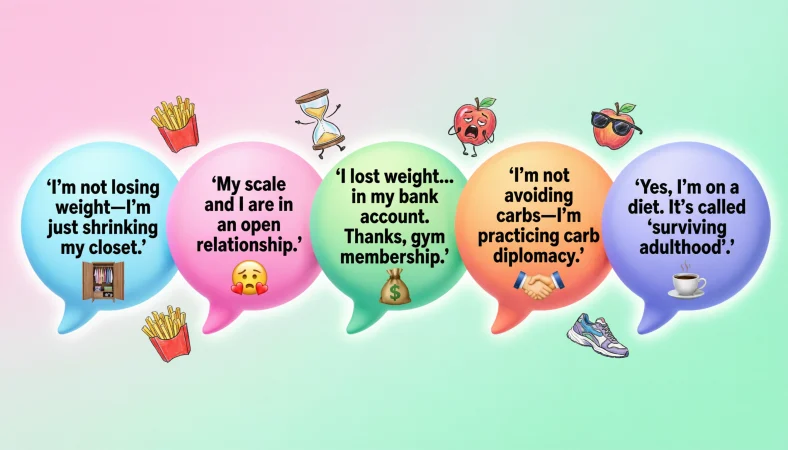
Quick Answer: Thanks, my snacks are filing a complaint”, “I’m just becoming harder to recognize”, “Plot twist: I’m still thinking about pizza”, “The gym and I are finally on speaking terms”, “Apparently my jeans had other plans.The best funny replies to weight loss comments are playful without putting yourself or anyone else down. Pick a response that matches the situation, your relationship, and your mood.
Someone comments on your weight, and suddenly you are expected to produce a perfect response while your brain is buffering. Whether it happens during a family dinner, in a group chat, at work, in the gym, or underneath an Instagram post, weight loss comments can feel awkward fast. Sometimes the person means well and sometimes they are being nosy and sometimes they genuinely think they are giving you a compliment. That is exactly why having a few funny replies to weight loss comments ready can save the moment.
A clever response can keep things light, set a boundary, or simply turn an awkward comment into a laugh. You do not have to explain your body, your habits, or your goals to anyone. From playful one-liners to confident comebacks, these responses give you plenty of ways to handle the moment while keeping your personality front and center.
Funny Responses
“Thanks, my snacks are filing a complaint.”
Use this when someone notices your weight loss and you want to keep the mood playful.
Meaning: You are jokingly saying that your favorite snacks are not happy about the change.
“Apparently my jeans had other plans.”
Use this when someone compliments how your clothes fit.
Meaning: You are playfully crediting your wardrobe for noticing the difference.
“The gym and I finally reached an agreement.”
Use this after someone mentions your new fitness routine.
Meaning: You are joking about finally becoming consistent with exercise.
“I’m just becoming harder to recognize.”
Use this when someone dramatically reacts to your appearance.
Meaning: You are playfully acknowledging a noticeable change.
“My old wardrobe is taking this personally.”
Use this when your clothes have started fitting differently.
Meaning: You are joking about needing a wardrobe update.
“Turns out my mirror has been keeping secrets.”
Use this when someone points out a change you had not noticed.
Meaning: You are making the compliment feel unexpected and funny.
“I blame the disappearing-cookie department.”
Use this when someone asks how you changed your habits.
Meaning: You are jokingly pretending there is an imaginary department responsible.
“My belt is currently celebrating.”
Use this when someone notices that your clothes fit differently.
Meaning: You are making the physical change sound like a tiny victory party.
“I’m giving my old jeans early retirement.”
Use this when talking about clothes that no longer fit.
Meaning: You are treating your old jeans like employees finishing their careers.
“My clothes noticed before I did.”
Use this when someone says you look different.
Meaning: You are responding with a simple joke about changing measurements.
“The plot has officially thickened, then unthickened.”
Use this with friends who appreciate absurd humor.
Meaning: You are turning the change into a playful story.
“Please hold all applause until after dessert.”
Use this when someone makes a weight loss comment around food.
Meaning: You are jokingly reminding everyone that dessert is still part of the plan.
Playful Responses
“I’ve been busy upgrading the character.”
Use this when a friend notices a change in your appearance.
Meaning: You are framing your progress as a fun personal upgrade.
“New season, slightly different wardrobe.”
Use this for a casual social media comment.
Meaning: You are treating your change like the next chapter of a TV series.
“Character development looks different on everyone.”
Use this when someone makes a positive observation.
Meaning: You are celebrating personal change without taking it too seriously.
“My jeans finally stopped negotiating.”
Use this when your clothes fit more comfortably.
Meaning: You are joking that your jeans have finally agreed to cooperate.
“Apparently consistency had entered the chat.”
Use this when someone asks what changed.
Meaning: You are giving consistency a humorous personality.
“I accidentally became the person who meal-preps.”
Use this when friends know you used to avoid planning meals.
Meaning: You are poking fun at a new habit.
“My old routine has been respectfully retired.”
Use this when someone asks about lifestyle changes.
Meaning: You are joking about leaving some habits behind.
“I’m accepting compliments in snack-sized portions.”
Use this when someone gives you a compliment.
Meaning: You are playfully combining compliments with your love of food.
“The glow-up committee approved it.”
Use this when friends hype up your appearance.
Meaning: You are joking that your friends have officially signed off on the change.
“I call it the unexpected sequel.”
Use this when someone says you look different.
Meaning: You are comparing your transformation to a surprise movie sequel.
“My closet has entered its rebranding era.”
Use this when you are buying new clothes.
Meaning: You are humorously describing a wardrobe refresh.
“Apparently my lifestyle got a software update.”
Use this when someone asks how your habits changed.
Meaning: You are comparing your new routine to a funny technology upgrade.
Witty Responses
“I prefer the term limited-edition me.”
Use this when someone makes a dramatic observation.
Meaning: You are confidently turning the comment into a playful compliment.
“Same person, different packaging.”
Use this when someone focuses heavily on your appearance.
Meaning: You are reminding them that your identity has not changed.
“The outside got a little plot twist.”
Use this when you want a clever answer without getting serious.
Meaning: You are acknowledging the physical change while keeping things light.
“My metabolism finally read the instructions.”
Use this with friends who enjoy dry humor.
Meaning: You are joking about your body suddenly cooperating.
“I would like to thank my calendar for the consistency.”
Use this when someone asks how you stayed on track.
Meaning: You are humorously crediting routine and time.
“Turns out tiny habits were doing overtime.”
Use this when someone compliments your progress.
Meaning: You are highlighting small consistent actions in a witty way.
“The results department has finally reopened.”
Use this when someone asks whether your routine is working.
Meaning: You are joking that progress took its time.
“My trousers have become surprisingly opinionated.”
Use this when talking about changing clothes sizes.
Meaning: You are making your clothing the star of the joke.
“I’m just giving my wardrobe trust issues.”
Use this when old clothes no longer fit.
Meaning: You are joking about your changing clothing situation.
“The before-and-after committee is still reviewing evidence.”
Use this when someone asks about your transformation.
Meaning: You are playfully exaggerating the process.
“I’m keeping the same personality, thankfully.”
Use this when someone talks mainly about your appearance.
Meaning: You are gently redirecting attention toward who you are.
“My mirror has officially become a commentator.”
Use this when people keep noticing changes.
Meaning: You are joking that even your reflection seems to have opinions.
Sarcastic Responses
“Yes, apparently my body has become public news.”
Use this when someone is being overly curious.
Meaning: You are lightly calling out their unnecessary attention.
“Thanks for the breaking update.”
Use this when someone points out an obvious change.
Meaning: You are sarcastically pretending their observation is headline-worthy.
“Glad we held this important meeting.”
Use this when a conversation about your body becomes unnecessarily serious.
Meaning: You are poking fun at the importance being given to the topic.
“I’ll alert the newspapers.”
Use this when someone reacts dramatically to your appearance.
Meaning: You are humorously exaggerating their reaction.
“Please submit all comments in triplicate.”
Use this when someone will not stop commenting.
Meaning: You are jokingly making the conversation sound like official paperwork.
“My wardrobe has already issued a statement.”
Use this when someone comments on your clothes fitting differently.
Meaning: You are sarcastically treating your wardrobe like a celebrity.
“Thank you for attending today’s body update.”
Use this when several people are discussing your appearance.
Meaning: You are humorously highlighting how unnecessary the discussion feels.
“I’ll add that to today’s important announcements.”
Use this when someone makes an obvious observation.
Meaning: You are using dry humor to show that the comment is not especially significant.
“Excellent detective work.”
Use this when someone notices something obvious.
Meaning: You are playfully teasing them for discovering something noticeable.
“Your investigative skills are unmatched.”
Use this with a close friend who knows your humor.
Meaning: You are sarcastically praising their observation.
“Thank you for your quarterly report.”
Use this when someone gives you an unsolicited update about your body.
Meaning: You are turning their comment into an absurd business report.
“I’ll take that under advisement.”
Use this when you want sarcasm without sounding aggressive.
Meaning: You are politely joking that their opinion is being filed away.
Confident Responses
“Yep, I’m feeling good.”
Use this when someone compliments your progress.
Meaning: You are confidently focusing on how you feel rather than appearance alone.
“I’m proud of the work I’ve put in.”
Use this when someone genuinely asks about your progress.
Meaning: You are acknowledging your effort without overexplaining.
“I feel stronger, and that’s what matters to me.”
Use this when someone asks about your goals.
Meaning: You are confidently emphasizing personal wellbeing.
“I’m happy with where I am.”
Use this when you want a simple, self-assured answer.
Meaning: You are showing contentment with your current situation.
“I’m enjoying the progress.”
Use this when someone gives you a positive comment.
Meaning: You are accepting the compliment while keeping the focus on your experience.
“Feeling good looks good on me.”
Use this when you want a confident, playful comeback.
Meaning: You are celebrating confidence rather than numbers.
“I’m doing what works for me.”
Use this when someone asks for details you do not want to share.
Meaning: You are setting a calm boundary around personal choices.
“Healthy confidence is my favorite accessory.”
Use this when someone compliments your appearance.
Meaning: You are making confidence the real highlight.
“I’m not chasing perfection, just feeling better.”
Use this when someone assumes you are pursuing a certain look.
Meaning: You are emphasizing realistic personal goals.
“I like the direction I’m heading.”
Use this when someone asks how you feel about your progress.
Meaning: You are expressing satisfaction without inviting judgment.
“Progress is progress, and I’ll take it.”
Use this when your changes have taken time.
Meaning: You are celebrating gradual improvement.
“I’m comfortable celebrating my own wins.”
Use this when someone makes your progress sound like a competition.
Meaning: You are confidently keeping the achievement personal.
Friendly Responses
“Haha, thank you for noticing.”
Use this when a friend gives you a kind compliment.
Meaning: You are accepting their observation warmly.
“That’s sweet of you to say.”
Use this when someone means well.
Meaning: You are responding graciously without making the conversation deeper.
“You noticed! I’ve been working on some changes.”
Use this with someone you trust.
Meaning: You are acknowledging the change while keeping the details private.
“Thanks, I’m feeling pretty good lately.”
Use this when you want to shift the focus toward wellbeing.
Meaning: You are accepting the compliment while emphasizing how you feel.
“I appreciate that.”
Use this when you want something simple and sincere.
Meaning: You are politely accepting their comment.
“That made me smile.”
Use this when a compliment genuinely makes your day.
Meaning: You are showing gratitude without discussing your body.
“Thanks for the kind words.”
Use this when the comment is clearly supportive.
Meaning: You are recognizing the positive intention.
“You’re too kind.”
Use this for a warm, classic response.
Meaning: You are accepting the compliment with friendly humility.
“I’ll happily take that compliment.”
Use this when you want to sound playful and confident.
Meaning: You are openly enjoying the positive attention.
“Aww, thank you.”
Use this with friends and family.
Meaning: You are giving a warm and affectionate response.
“That’s a lovely thing to hear.”
Use this when you want to keep the interaction gracious.
Meaning: You are acknowledging their kindness.
“You just earned bonus friend points.”
Use this when a friend gives you an especially nice compliment.
Meaning: You are playfully rewarding their kindness.
Short And Simple Responses
“Haha, thank you!”
Use this when you want to acknowledge a compliment quickly.
Meaning: You are keeping the response light and friendly.
“I appreciate it!”
Use this when someone makes a supportive comment.
Meaning: You are showing gratitude without inviting more discussion.
“Feeling good!”
Use this when you want to keep the focus on your mood.
Meaning: You are saying that you feel positive about yourself.
“Thanks, I’m happy!”
Use this when the comment is genuinely kind.
Meaning: You are responding with simple positivity.
“I’ve noticed too!”
Use this when you are comfortable acknowledging the change.
Meaning: You are agreeing without providing personal details.
“That’s kind of you.”
Use this when you prefer a polite answer.
Meaning: You are recognizing the compliment respectfully.
“One step at a time.”
Use this when someone asks about your progress.
Meaning: You are emphasizing gradual change.
“Just doing my thing.”
Use this when you want to stay casual.
Meaning: You are signaling that your choices are personal.
“All good over here.”
Use this when someone checks in about your appearance.
Meaning: You are reassuring them without opening a long conversation.
“I’m enjoying the journey.”
Use this when you want a positive but relaxed answer.
Meaning: You are focusing on the overall experience.
“Doing what feels right for me.”
Use this when someone asks about your routine.
Meaning: You are quietly establishing personal boundaries.
“Thanks for the love.”
Use this when several people are being supportive.
Meaning: You are acknowledging their encouragement warmly.
Cute Responses
“Aww, my tiny progress is getting noticed.”
Use this when a close friend gives you a sweet compliment.
Meaning: You are making the moment feel wholesome and playful.
“My jeans are finally smiling.”
Use this when clothes fit more comfortably.
Meaning: You are giving your jeans a cute personality.
“Little wins deserve little celebrations.”
Use this when someone compliments your progress.
Meaning: You are celebrating gradual achievements.
“I’m blushing now.”
Use this when someone gives you an unexpected compliment.
Meaning: You are showing that their kindness made you feel shy and happy.
“Stop, you’re making me smile.”
Use this when someone is being especially complimentary.
Meaning: You are warmly acknowledging their kindness.
“The confidence fairy has visited.”
Use this when you are feeling particularly good.
Meaning: You are playfully describing a boost in confidence.
“My wardrobe is having a happy little moment.”
Use this when clothes fit differently.
Meaning: You are turning the clothing change into a cute joke.
“Tiny changes, big smiles.”
Use this when celebrating personal progress.
Meaning: You are emphasizing happiness rather than numbers.
“I’m collecting compliments today.”
Use this when several people say nice things.
Meaning: You are jokingly treating compliments like collectibles.
“Okay, now I’m officially feeling fancy.”
Use this when someone gives you a flattering compliment.
Meaning: You are responding with playful confidence.
“My mirror and I are getting along again.”
Use this when your confidence has improved.
Meaning: You are joking about feeling more comfortable with your reflection.
“A little progress looks cute on me.”
Use this when you want a cheerful response.
Meaning: You are confidently celebrating your progress.
Clever Boundary Responses
“I’m happy with how I feel, but let’s talk about something more fun.”
Use this when you want to redirect a personal conversation.
Meaning: You are setting a boundary without making the moment uncomfortable.
“Thanks, but my body is not today’s discussion topic.”
Use this when someone keeps commenting on your appearance.
Meaning: You are clearly asking them to move on.
“I appreciate the kindness, but I’d rather not discuss weight.”
Use this when someone means well but crosses your comfort zone.
Meaning: You are politely declining the topic.
“I’m good, thanks. How have you been?”
Use this when you want to redirect immediately.
Meaning: You are shifting attention toward the other person.
“Let’s keep the conversation above the waistline.”
Use this with friends who understand playful boundaries.
Meaning: You are jokingly asking them to discuss something else.
“My body is doing its thing, and I’m doing mine.”
Use this when someone gets overly curious.
Meaning: You are calmly separating your identity from their opinion.
“I promise there are more interesting things about me.”
Use this when someone focuses too heavily on your appearance.
Meaning: You are inviting them to see you beyond physical changes.
“I’m keeping the details private, but thank you.”
Use this when you want to remain polite but firm.
Meaning: You are accepting the goodwill while protecting your privacy.
“Appreciate you, but let’s retire the body commentary.”
Use this when a friend repeatedly comments on your weight.
Meaning: You are setting a direct but friendly boundary.
“Compliment accepted, interrogation declined.”
Use this when someone follows praise with lots of personal questions.
Meaning: You are distinguishing between appreciating a compliment and sharing details.
“I’m comfortable with my progress, and that’s enough for me.”
Use this when someone pressures you to explain yourself.
Meaning: You are confidently ending the discussion.
“Thanks for caring, but I’ve got this.”
Use this when someone is concerned about your choices.
Meaning: You are acknowledging their intention while maintaining independence.
Work-Friendly Responses
“Thanks, I’ve been focusing on feeling my best.”
Use this when a coworker makes a polite compliment.
Meaning: You are keeping the response positive and professional.
“That’s kind of you to notice.”
Use this when you want a neutral workplace response.
Meaning: You are accepting the comment without discussing personal details.
“I appreciate that, thank you.”
Use this when you want to end the topic quickly.
Meaning: You are responding courteously without encouraging more questions.
“Thank you! I’m doing well.”
Use this when someone comments positively in the office.
Meaning: You are acknowledging the comment and moving the conversation along.
“Thanks, I’m feeling good these days.”
Use this when the comment is friendly and respectful.
Meaning: You are focusing on general wellbeing.
“I appreciate it. How is your week going?”
Use this when you want to redirect the conversation.
Meaning: You are politely moving away from personal topics.
“Thank you, but I try to keep health topics personal.”
Use this when a coworker asks for details.
Meaning: You are setting a professional boundary.
“Thanks for the compliment. Anyway, how is that project going?”
Use this when you want to return to work.
Meaning: You are keeping the interaction professional.
“That’s nice of you to say.”
Use this when you want a short workplace-friendly answer.
Meaning: You are acknowledging kindness without discussing your body.
“Thank you. I’m just taking things one day at a time.”
Use this when someone asks about lifestyle changes.
Meaning: You are giving a safe, general response.
“I appreciate the thought.”
Use this when you want to remain formal and brief.
Meaning: You are responding respectfully without elaborating.
“Thanks! Let’s get back to the important stuff.”
Use this when you want to steer the conversation toward work.
Meaning: You are lightly redirecting the discussion.
Flirty Responses
“Careful, compliments like that might go to my head.”
Use this when someone you like compliments your appearance.
Meaning: You are accepting the compliment with playful flirtation.
“Are you always this observant?”
Use this when a crush notices your change.
Meaning: You are teasing them while encouraging the attention.
“I see someone has been paying attention.”
Use this when you want a confident flirty response.
Meaning: You are playfully acknowledging their interest.
“Keep talking like that and I might blush.”
Use this when the compliment feels sweet and flirtatious.
Meaning: You are signaling that you enjoy their attention.
“Well, look who noticed.”
Use this when you want a teasing response.
Meaning: You are playfully calling attention to their interest.
“I was wondering when you’d notice.”
Use this when you have a crush on the person.
Meaning: You are teasing them and adding a little romantic tension.
“That compliment deserves a coffee.”
Use this when you want to turn the compliment into an invitation.
Meaning: You are playfully suggesting spending time together.
“You’re making this compliment dangerously charming.”
Use this when someone is being especially sweet.
Meaning: You are showing that their attention is working.
“I’ll accept that from you.”
Use this when you want a confident flirtatious reply.
Meaning: You are making their compliment feel special.
“Now I’m curious what else you’ve noticed.”
Use this only when the relationship already has a playful dynamic.
Meaning: You are inviting more flirtatious attention.
“Okay, that was smooth.”
Use this when someone gives you a clever compliment.
Meaning: You are complimenting their flirting in return.
“You’re making it very difficult to act normal.”
Use this when the interaction is clearly playful.
Meaning: You are admitting that their attention is affecting you.
Dry Humor Responses
“Noted for the official records.”
Use this when someone makes an obvious observation.
Meaning: You are humorously treating the comment as paperwork.
“Interesting development.”
Use this when someone points out a visible change.
Meaning: You are deliberately underreacting for comic effect.
“Fascinating. Tell me more about my own body.”
Use this when someone is being overly curious.
Meaning: You are using dry humor to signal that the discussion is unnecessary.
“What a time to be alive.”
Use this when someone reacts dramatically.
Meaning: You are humorously exaggerating the importance of the moment.
“We have reached a historic milestone.”
Use this when someone notices a small change.
Meaning: You are making the situation sound hilariously significant.
“I’ll inform the committee.”
Use this when someone gives you unsolicited commentary.
Meaning: You are playfully pretending their opinion requires official approval.
“The council will review this shortly.”
Use this when you want a deadpan response.
Meaning: You are creating absurd seriousness around an ordinary comment.
“Thank you for your field report.”
Use this when someone gives you a detailed observation.
Meaning: You are poking fun at their unnecessary analysis.
“We shall investigate further.”
Use this when you want to keep the humor subtle.
Meaning: You are pretending the change is a mystery requiring investigation.
“I was unaware this was a press conference.”
Use this when multiple people start asking questions.
Meaning: You are humorously calling out the attention.
“That concludes today’s briefing.”
Use this when you want to end the topic.
Meaning: You are signaling that the discussion is officially over.
“Thank you for your ongoing coverage.”
Use this when someone repeatedly comments on your appearance.
Meaning: You are teasing them for monitoring the change.
Social Media Responses
“The algorithm finally noticed me.”
Use this under a playful Instagram comment.
Meaning: You are joking about getting attention online.
“My jeans have entered the comments too.”
Use this when someone mentions your appearance.
Meaning: You are humorously bringing your clothes into the conversation.
“Plot twist unlocked.”
Use this for a short, trendy-style response.
Meaning: You are treating your change like an unexpected storyline.
“New update, same account.”
Use this under a social media compliment.
Meaning: You are comparing personal change to a profile update.
“Character development is showing.”
Use this when followers notice a difference between older and newer photos.
Meaning: You are framing your progress as part of your story.
“The glow-up department is working overtime.”
Use this when people hype your appearance.
Meaning: You are joking about your improvement getting extra attention.
“Apparently the before photo had a sequel.”
Use this when someone compares old and new pictures.
Meaning: You are turning the comparison into a playful story.
“Still me, just with different jeans.”
Use this when you want to keep the focus light.
Meaning: You are reminding people that appearance does not define identity.
“I came for the comments and stayed for the compliments.”
Use this when your post receives lots of positive reactions.
Meaning: You are playfully enjoying the attention.
“The timeline has spoken.”
Use this when friends leave lots of compliments.
Meaning: You are humorously treating social media reactions like a public verdict.
“Please direct all compliments to my wardrobe.”
Use this when your outfit gets attention.
Meaning: You are shifting credit toward your clothes.
“Same energy, refreshed packaging.”
Use this as a clever caption-style response.
Meaning: You are emphasizing that your personality remains the same.
Dramatic Responses
“I shall now walk into the sunset wearing smaller jeans.”
Use this when friends are dramatically celebrating your progress.
Meaning: You are exaggerating the moment for comic effect.
“Tell my old trousers I loved them.”
Use this when your clothes no longer fit.
Meaning: You are pretending your old wardrobe is part of an emotional farewell.
“This is the moment the movie soundtrack begins.”
Use this when someone makes a big deal about your change.
Meaning: You are turning an ordinary moment into a cinematic scene.
“My wardrobe will never recover.”
Use this when you need new clothes.
Meaning: You are playfully exaggerating the effect on your closet.
“A chapter has closed, and the jeans have been retired.”
Use this when talking about clothes that no longer fit.
Meaning: You are giving your wardrobe change an overly dramatic storyline.
“Gather the villagers. I have news.”
Use this when someone reacts dramatically to your progress.
Meaning: You are jokingly presenting the update as major community news.
“Someone cue the inspirational montage.”
Use this when celebrating your efforts.
Meaning: You are comparing your journey to a movie training sequence.
“This deserves at least three dramatic pauses.”
Use this when someone makes a big observation.
Meaning: You are playfully exaggerating the significance.
“I would like everyone to remain calm.”
Use this when friends start getting excited about your progress.
Meaning: You are adding theatrical humor to the moment.
“The transformation department has issued a statement.”
Use this when people are asking questions.
Meaning: You are turning your progress into fictional breaking news.
“My old wardrobe is entering its emotional era.”
Use this when clothes need replacing.
Meaning: You are humorously giving your old clothes feelings.
“And thus, the jeans saga continues.”
Use this when discussing your changing wardrobe.
Meaning: You are treating clothing changes like an ongoing epic story.
Wholesome Responses
“Thank you. I’m genuinely feeling better.”
Use this when someone gives a sincere compliment.
Meaning: You are emphasizing wellbeing and gratitude.
“That means a lot.”
Use this when the comment comes from someone close to you.
Meaning: You are showing that their support matters.
“I’m proud of myself for staying consistent.”
Use this when someone asks about your progress.
Meaning: You are recognizing your own effort.
“It has been a journey, but I’m happy.”
Use this when someone wants to know how you feel.
Meaning: You are acknowledging that progress can take time.
“Thanks for celebrating with me.”
Use this when someone is genuinely supportive.
Meaning: You are welcoming their encouragement.
“I’m learning to celebrate small wins.”
Use this when discussing gradual progress.
Meaning: You are focusing on sustainable personal victories.
“Feeling stronger has been the best part.”
Use this when someone asks what you have noticed.
Meaning: You are highlighting function and wellbeing.
“I’m just happy to feel comfortable in my own skin.”
Use this when you want a warm and confident answer.
Meaning: You are emphasizing self-acceptance.
“It feels good to recognize my own progress.”
Use this when reflecting on your journey.
Meaning: You are valuing your personal perspective.
“Thanks for being supportive.”
Use this when someone has encouraged you over time.
Meaning: You are directly appreciating their support.
“I’m taking the wins where I find them.”
Use this when progress has been gradual.
Meaning: You are celebrating improvement without demanding perfection.
“I’m proud of the person I’m becoming.”
Use this when you want a meaningful response.
Meaning: You are focusing on personal growth beyond appearance.
Sassy Responses
“Compliment accepted. Questions are closed.”
Use this when someone gives praise and immediately asks for details.
Meaning: You are accepting the compliment while setting a boundary.
“My body, my business department.”
Use this when someone gets too curious.
Meaning: You are firmly reminding them that your body is your private business.
“I’m accepting compliments, not applications for manager.”
Use this when someone starts giving unsolicited advice.
Meaning: You are humorously rejecting their attempt to manage your choices.
“Thanks, but I already have a personal trainer: me.”
Use this when someone gives unwanted instructions.
Meaning: You are confidently saying you can manage your own choices.
“The comment section is not my medical chart.”
Use this when strangers ask personal questions online.
Meaning: You are making it clear that private details are not public information.
“Cute observation. Moving on.”
Use this when you want to shut down unnecessary commentary.
Meaning: You are acknowledging the comment without inviting further discussion.
“Compliment me gently, I’m fragile.”
Use this with friends who enjoy playful sarcasm.
Meaning: You are exaggerating your reaction for humor.
“Thank you for your concern, CEO of My Business.”
Use this when someone becomes overly invested in your choices.
Meaning: You are teasing them for acting like they are in charge.
“My wardrobe knows more than you do.”
Use this when someone asks how much weight you lost.
Meaning: You are playfully refusing to share numbers.
“I’ll keep the statistics classified.”
Use this when someone asks for exact details.
Meaning: You are using humor to protect your privacy.
“That information is available to premium members only.”
Use this when someone is being nosy.
Meaning: You are joking that personal details require special access.
“Thanks for the observation. Your subscription has been canceled.”
Use this when someone repeatedly comments on your body.
Meaning: You are humorously telling them to stop.
Clever And Funny Responses
“I’m not shrinking, I’m becoming more aerodynamic.”
Use this when a friend notices a physical change.
Meaning: You are turning the observation into absurd humor.
“The snack-to-jeans ratio has shifted.”
Use this when talking about your changing clothes.
Meaning: You are joking about the relationship between food and wardrobe size.
“My wardrobe has entered a period of administrative confusion.”
Use this when old clothes no longer fit.
Meaning: You are making your closet sound like a chaotic office.
“I have officially become a plot twist in my own timeline.”
Use this when looking at old and new photos.
Meaning: You are treating your progress as an unexpected storyline.
“The evidence suggests I should go shopping.”
Use this when your clothes have become loose.
Meaning: You are humorously presenting new clothes as the obvious conclusion.
“My belt has been promoted to senior management.”
Use this when your belt needs a different setting.
Meaning: You are turning an ordinary wardrobe change into office humor.
“I’m currently accepting compliments and rejecting spreadsheets.”
Use this when someone asks for numbers.
Meaning: You are happy to receive kindness but not interested in tracking details publicly.
“The jeans are confused, but I remain calm.”
Use this when your clothing fit has changed.
Meaning: You are making a normal wardrobe issue sound dramatically mysterious.
“Apparently consistency finally stopped ghosting me.”
Use this when your routine has become more regular.
Meaning: You are using dating slang to joke about staying consistent.
“My old clothes are looking for closure.”
Use this when you are cleaning out your wardrobe.
Meaning: You are giving your old clothes an imaginary emotional storyline.
“I’m just keeping the same personality in a slightly updated package.”
Use this when someone focuses heavily on your appearance.
Meaning: You are cleverly reminding them that you are still the same person.
“The real flex is feeling comfortable and laughing about it.”
Use this when you want a confident closing line.
Meaning: You are celebrating comfort, confidence, and humor together.
FAQs
What Do Weight Loss Comments Usually Mean?
They can be compliments, genuine observations, questions, or unsolicited opinions. Context and tone matter more than the words alone.
Can A Weight Loss Comment Be Flirty?
Yes. If it comes from someone you like and the tone is playful, it may carry a little extra interest. Your relationship matters more than the exact wording.
What If I Feel Uncomfortable With Weight Comments?
You can redirect the conversation or say, “I’d rather not talk about my weight.” You never owe anyone personal details.
What Is A Professional Response To A Weight Loss Comment?
Keep it brief with something like, “Thank you, I appreciate that,” then return to the work topic if needed.
What If I Do Not Actually Want To Discuss My Weight?
Try, “Thanks, but I keep health topics private.” It is polite, clear, and does not invite a debate.
Is Humor Appropriate For Weight Loss Comments?
Absolutely, when you feel comfortable and the situation is friendly. Humor works best when it does not put you or someone else down.
What If The Comment Is Mean?
You do not have to make a joke. A calm response such as “That’s not something I want to discuss” can be much more effective.
Should I Mention How Much Weight I Lost?
Only if you genuinely want to. There is no requirement to share numbers, methods, meals, workouts, or personal goals.
What Is A Good Reply To A Compliment About Looking Different?
Try, “Thanks, I’m feeling good!” It accepts the compliment while keeping the focus on your experience.
Can I Use These Replies Online?
Yes. Short, witty responses work especially well for Instagram comments, TikTok replies, group chats, and casual DMs.
Conclusion
Weight loss comments can be funny, flattering, awkward, or completely unsolicited, so having the right response ready makes a huge difference. You can laugh it off, accept a compliment, flirt a little, redirect the conversation, or set a firm boundary. The best reply is not necessarily the cleverest one. It is the one that sounds like you and leaves you feeling comfortable afterward.
Use these funny replies to weight loss comments as your personal response menu. Save the lines that match your personality, share your favorites with a friend, and keep a few handy for those unexpected moments. Whether you want playful, confident, dry, or wholesome, there is always a line for the moment. Pick your favorite and have fun with it!