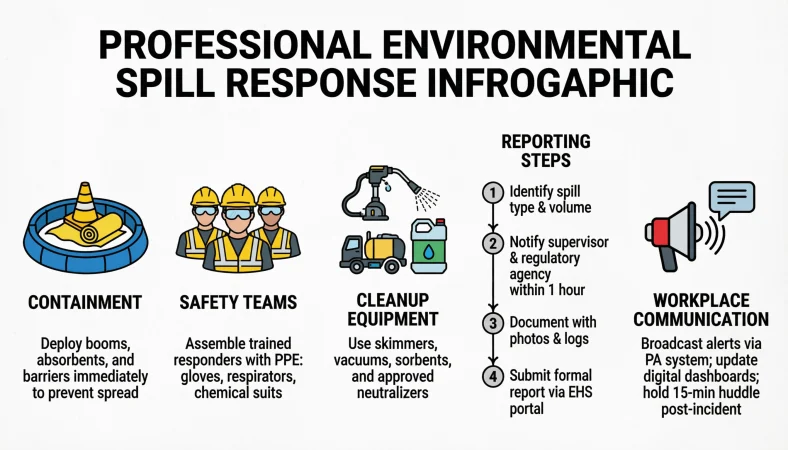
Quick Answer: Environmental spill response is about communicating quickly, clearly, and responsibly when a hazardous or polluting substance is released. The right message should focus on safety, containment, reporting, and coordinated action without creating confusion.
“Spill reported and response initiated”, “Area secured pending assessment”, “Containment measures are now in place”, “Environmental impact assessment is underway”, “Cleanup and monitoring procedures have begun”
Environmental incidents rarely give anyone time to write the perfect message. One minute everything is normal, and the next there is a fuel leak, chemical release, oil spill, or contaminated runoff that needs attention immediately. Whether you are texting a coworker, updating a supervisor, posting an internal notice, or documenting an incident, the words you choose matter.
Good environmental spill response communication should be calm, clear, and action-focused. It needs to tell people what happened without unnecessary drama, explain what is being done, and make safety the priority. A vague message can create confusion faster than a group chat full of “What happened?” replies.
These ready-to-use environmental spill response phrases cover professional, practical, concise, reassuring, serious, and situation-specific wording so you can communicate confidently when an environmental incident needs a quick and responsible response.
Professional Environmental Spill Response Messages
“An environmental spill has been identified and response procedures are underway.”
Use this for an initial workplace notification when a spill has been discovered.
Meaning: It communicates that the incident is known and being actively managed.
“The affected area has been secured while the spill is assessed.”
Use this when informing staff that access to the incident area is restricted.
Meaning: It emphasizes safety and controlled assessment.
“Spill containment measures have been initiated.”
Use this in a professional incident update after immediate controls begin.
Meaning: It confirms that action has started to prevent further spread.
“The incident has been reported to the appropriate response team.”
Use this when notifying colleagues that responsible personnel have been contacted.
Meaning: It reassures readers that the incident has been escalated appropriately.
“Initial environmental controls are currently in place.”
Use this for a concise operational update during an ongoing response.
Meaning: It indicates that measures are being used to reduce environmental impact.
“The source of the release is being investigated.”
Use this when the cause or origin of the spill has not yet been confirmed.
Meaning: It avoids speculation while acknowledging that investigation is underway.
“Further updates will be provided as the assessment progresses.”
Use this when more information is expected later.
Meaning: It keeps communication open without making unsupported claims.
“The spill response team is coordinating containment and cleanup activities.”
Use this for an internal operational announcement.
Meaning: It explains that response activities are being organized.
“Environmental protection measures remain a priority throughout the response.”
Use this when communicating the main objective of the incident response.
Meaning: It reinforces environmental responsibility.
“The situation remains under active review.”
Use this when an incident has not yet been fully resolved.
Meaning: It communicates ongoing oversight without exaggeration.
Funny Environmental Spill Response Messages
“Well, that definitely wasn’t on today’s to-do list.”
Use this for appropriate internal humor after the immediate safety response is established.
Meaning: It adds lightness to an otherwise stressful situation.
“The spill has officially entered the group project.”
Use this when several people suddenly have response responsibilities.
Meaning: It humorously describes a shared emergency task.
“Today’s forecast: 100% chance of containment.”
Use this for a light internal message once response measures are underway.
Meaning: It jokes about confidently managing the situation.
“Nobody ordered an environmental plot twist.”
Use this for a casual workplace message when a spill unexpectedly interrupts the day.
Meaning: It highlights the unexpected nature of the incident.
“The cleanup crew has entered the chat.”
Use this when the response team arrives or begins cleanup activities.
Meaning: It gives a playful spin to the start of response operations.
“That escalated faster than the office group chat.”
Use this when an unexpected spill quickly becomes a coordinated response.
Meaning: It uses familiar internet humor to describe rapid escalation.
“Containment first, panic never.”
Use this as a light reminder to stay focused during response activities.
Meaning: It encourages calm action instead of unnecessary alarm.
“Nature has requested a refund.”
Use this for playful internal content when environmental protection is the focus.
Meaning: It humorously frames the incident as something that needs correcting.
“Plot twist: today’s task list had a spill.”
Use this in a casual internal update about an unexpected incident.
Meaning: It acknowledges an unplanned problem with humor.
“Apparently, the environment wanted our attention today.”
Use this only when humor is suitable and the incident is being safely managed.
Meaning: It makes a playful observation about an unexpected environmental issue.
Polite Environmental Spill Response Messages
“Thank you for reporting the spill promptly.”
Use this when acknowledging someone who identified and reported an incident.
Meaning: It recognizes responsible behavior.
“Please remain clear of the affected area while the response is underway.”
Use this when politely directing people away from a spill.
Meaning: It communicates a safety instruction respectfully.
“We appreciate your cooperation while the incident is being assessed.”
Use this when temporary restrictions affect employees or visitors.
Meaning: It encourages patience and cooperation.
“Please follow the instructions provided by the response team.”
Use this when coordinated action is important.
Meaning: It asks people to follow established guidance.
“Thank you for your assistance with the response.”
Use this after someone contributes appropriately to spill management.
Meaning: It expresses professional appreciation.
“Please avoid entering the affected area until clearance is provided.”
Use this when access must remain restricted.
Meaning: It politely reinforces an important boundary.
“We appreciate your patience while the necessary checks are completed.”
Use this when an assessment is taking time.
Meaning: It keeps communication calm and courteous.
“Please report any additional concerns to the designated contact.”
Use this when employees may notice further environmental issues.
Meaning: It creates a clear reporting route.
“Your cooperation helps us manage the situation safely.”
Use this when asking people to follow temporary procedures.
Meaning: It connects cooperation with effective response.
“Thank you for helping us protect the affected area.”
Use this when acknowledging responsible participation.
Meaning: It reinforces environmental responsibility.
“Please continue to follow site safety procedures.”
Use this during an active workplace response.
Meaning: It reminds everyone to maintain normal safety discipline.
“We will provide further information when it is available.”
Use this when you want to avoid giving incomplete details.
Meaning: It promises communication without speculating.
Urgent Environmental Spill Response Messages
“Urgent: an environmental spill has been identified in the affected area.”
Use this when immediate awareness is necessary.
Meaning: It clearly signals that the incident requires attention.
“Please keep clear of the spill area immediately.”
Use this when people need to move away from the affected location.
Meaning: It delivers a direct safety instruction.
“Containment measures are being implemented now.”
Use this when immediate response actions have begun.
Meaning: It confirms active containment efforts.
“Access to the affected area is temporarily restricted.”
Use this when a site needs to be isolated.
Meaning: It communicates a temporary safety control.
“Immediate assessment of the spill is underway.”
Use this when responders are determining the extent of the incident.
Meaning: It signals that the situation is being evaluated promptly.
“Please follow all instructions from authorized response personnel.”
Use this during a coordinated emergency response.
Meaning: It directs people toward official guidance.
“The release has been identified and response actions are in progress.”
Use this as an urgent internal notification.
Meaning: It confirms recognition and active management.
“Prevent unnecessary access to the affected location.”
Use this when staff need a clear instruction during an incident.
Meaning: It helps reduce avoidable exposure or disruption.
“Report any additional signs of contamination immediately.”
Use this when further spread could be possible.
Meaning: It encourages rapid reporting of new concerns.
“Further instructions will follow as the situation develops.”
Use this when responders are still assessing conditions.
Meaning: It keeps people informed without making premature claims.
Calm Environmental Spill Response Messages
“The situation is being assessed and managed systematically.”
Use this when people are becoming concerned about an incident.
Meaning: It communicates organized action.
“Response measures are currently in place.”
Use this for a calm and concise update.
Meaning: It confirms that controls have already begun.
“The affected area remains under observation.”
Use this when monitoring is continuing.
Meaning: It indicates ongoing attention.
“The response team is working through the established procedures.”
Use this when reassuring staff about the process.
Meaning: It emphasizes a structured response.
“The immediate area has been secured.”
Use this after access controls have been implemented.
Meaning: It communicates an important safety measure.
“Assessment and containment activities are progressing.”
Use this when the response is moving forward.
Meaning: It gives a measured progress update.
“There is no need for unnecessary concern while the response is underway.”
Use this only when the available information supports a reassuring message.
Meaning: It discourages panic while keeping attention on the response.
“We are focusing on containment, assessment, and safe cleanup.”
Use this when explaining response priorities.
Meaning: It summarizes the main stages of responsible action.
“The situation remains under active monitoring.”
Use this during an unresolved incident.
Meaning: It confirms continued oversight.
“The response is being coordinated by the appropriate personnel.”
Use this when people want to know who is managing the incident.
Meaning: It reinforces organized responsibility.
“Updates will be shared as verified information becomes available.”
Use this when details are still developing.
Meaning: It prioritizes accurate communication.
“For now, the focus remains on safety and environmental protection.”
Use this when communicating during an active response.
Meaning: It keeps attention on the most important priorities.
Short Environmental Spill Response Messages
“Spill reported. Response initiated.”
Use this for a quick operational notification.
Meaning: It communicates the two essential facts immediately.
“Area secured.”
Use this when access restrictions have been established.
Meaning: It confirms that the location is controlled.
“Containment underway.”
Use this when responders are actively preventing further spread.
Meaning: It gives a concise response update.
“Response team notified.”
Use this after the relevant personnel have been contacted.
Meaning: It confirms escalation.
“Assessment in progress.”
Use this when the extent or cause of the spill is still being determined.
Meaning: It communicates that investigation is ongoing.
“Cleanup has commenced.”
Use this once approved cleanup activities begin.
Meaning: It confirms movement into the cleanup stage.
“Monitoring continues.”
Use this when the affected area is still being observed.
Meaning: It indicates ongoing environmental attention.
“Access remains restricted.”
Use this when people must stay away from the affected area.
Meaning: It reinforces temporary controls.
“Environmental controls are active.”
Use this when protective measures have been implemented.
Meaning: It confirms that safeguards are operating.
“Incident under review.”
Use this for a concise management update.
Meaning: It indicates ongoing assessment.
“Further updates to follow.”
Use this when additional information is expected.
Meaning: It keeps communication open.
“Response actions ongoing.”
Use this when the incident has not yet been fully resolved.
Meaning: It clearly communicates that work continues.
Creative Environmental Spill Response Messages
“Containment is the first chapter, cleanup is the next.”
Use this for a memorable internal awareness message.
Meaning: It presents the response as a clear sequence of actions.
“Protect first, assess carefully, clean responsibly.”
Use this for an environmental safety reminder.
Meaning: It summarizes responsible response priorities.
“Small message, big responsibility: report spills quickly.”
Use this for workplace awareness content.
Meaning: It encourages prompt reporting.
“When the unexpected spills over, good preparation matters.”
Use this for environmental response awareness campaigns.
Meaning: It highlights the value of preparedness.
“A quick report can stop a bigger problem.”
Use this as a reminder about early incident reporting.
Meaning: It connects fast reporting with prevention.
“Contain the problem before it becomes the headline.”
Use this for internal environmental awareness content.
Meaning: It encourages early action before an incident grows.
“Clean response, clear communication, better outcomes.”
Use this as a short environmental safety slogan.
Meaning: It connects organized communication with effective response.
“Every spill deserves a responsible response.”
Use this for workplace posters or awareness messages.
Meaning: It reinforces consistent environmental responsibility.
“See it, report it, respond responsibly.”
Use this as a memorable reporting reminder.
Meaning: It encourages people to take appropriate action quickly.
“The fastest response starts with the first report.”
Use this for environmental incident awareness.
Meaning: It emphasizes the importance of initial notification.
“Keep the response focused and the environment protected.”
Use this for a team communication message.
Meaning: It combines operational focus with environmental care.
“Prepared teams turn environmental problems into managed incidents.”
Use this for training or awareness material.
Meaning: It highlights the value of preparation and coordination.
Sarcastic Environmental Spill Response Messages
“Because apparently the floor needed a new liquid feature.”
Use this only for light internal humor after safety concerns are under control.
Meaning: It jokingly comments on an unwanted spill.
“Excellent, another item for the incident report.”
Use this for mild workplace sarcasm when the situation is already being managed.
Meaning: It humorously acknowledges extra paperwork.
“Just what everyone needed today: an environmental incident.”
Use this when appropriate workplace humor can relieve tension.
Meaning: It points out the inconvenient timing.
“Nothing says productive day like unexpected containment work.”
Use this after the immediate response is safely underway.
Meaning: It jokes about an unplanned task.
“The schedule definitely forgot to mention this part.”
Use this for a casual internal message.
Meaning: It highlights how unexpected the incident was.
“Our to-do list has developed a personality.”
Use this when a spill suddenly creates several response tasks.
Meaning: It uses humor to describe an expanding workload.
“Apparently, today’s challenge comes with cleanup instructions.”
Use this for a lighthearted internal update.
Meaning: It acknowledges an unexpected operational problem.
“Well, that was not the kind of spillover we wanted.”
Use this as a mild wordplay response after a contained incident.
Meaning: It makes a playful observation about the situation.
“Today’s productivity report has entered unexpected territory.”
Use this for casual team communication.
Meaning: It humorously describes an unplanned interruption.
“At least the incident report is getting some attention today.”
Use this when joking about documentation after the response is stable.
Meaning: It adds light sarcasm without minimizing safety.
Formal Environmental Spill Response Messages
“An environmental release has been identified and is currently undergoing assessment.”
Use this in formal incident documentation.
Meaning: It states the situation objectively.
“The affected area has been isolated pending further evaluation.”
Use this when formal communication requires clear access information.
Meaning: It documents a temporary control.
“Appropriate containment procedures have been initiated.”
Use this in formal operational reporting.
Meaning: It confirms that containment has started.
“The incident has been escalated to the designated response personnel.”
Use this when documenting notification procedures.
Meaning: It confirms that responsibility has been transferred appropriately.
“An assessment of potential environmental impacts is underway.”
Use this when impact evaluation has started.
Meaning: It communicates that environmental consequences are being considered.
“Corrective measures are being implemented in accordance with applicable procedures.”
Use this for formal workplace documentation.
Meaning: It indicates that corrective action follows established processes.
“Monitoring activities will continue throughout the response period.”
Use this when ongoing observation is required.
Meaning: It confirms continued oversight.
“The source and extent of the release remain under investigation.”
Use this when details have not yet been established.
Meaning: It clearly separates known facts from ongoing investigation.
“Cleanup activities will proceed following appropriate assessment and controls.”
Use this when describing planned response stages.
Meaning: It communicates a controlled approach.
“Relevant personnel have been notified of the incident.”
Use this when recording notification steps.
Meaning: It documents communication with responsible parties.
“The incident remains subject to ongoing environmental review.”
Use this when assessment is continuing.
Meaning: It confirms that the incident has not been closed.
“A further report will be prepared following completion of the initial assessment.”
Use this when formal documentation will follow.
Meaning: It indicates that more detailed information will be recorded later.
Reassuring Environmental Spill Response Messages
“The response team is actively managing the situation.”
Use this when colleagues need reassurance that action is happening.
Meaning: It communicates active oversight.
“The affected area has been secured while the situation is assessed.”
Use this when access controls are already in place.
Meaning: It reassures people that the area is being managed.
“Appropriate response measures are underway.”
Use this for a calm operational update.
Meaning: It confirms that established actions are being taken.
“We are monitoring the situation closely.”
Use this when continued observation is necessary.
Meaning: It reassures readers that conditions are not being ignored.
“The incident is receiving the appropriate level of attention.”
Use this when people are concerned about whether enough action is being taken.
Meaning: It emphasizes active management.
“Safety remains the priority throughout the response.”
Use this during a developing environmental incident.
Meaning: It puts safety at the center of communication.
“The area will remain controlled while necessary checks are completed.”
Use this when access restrictions are temporary.
Meaning: It explains why controls remain in place.
“The response process is progressing as planned.”
Use this when the available information supports that statement.
Meaning: It provides a measured progress update.
“The situation remains under control while response activities continue.”
Use this when conditions support a controlled-status update.
Meaning: It reassures without claiming the incident is fully resolved.
“Thank you for remaining calm and following the response guidance.”
Use this when staff need encouragement during an active incident.
Meaning: It reinforces cooperation and calm behavior.
Environmental Spill Response Messages for Employees
“Please report any spill immediately to your designated supervisor or response contact.”
Use this in workplace instructions about incident reporting.
Meaning: It encourages prompt escalation.
“Do not attempt to clean an unknown substance unless you are authorized and trained to do so.”
Use this as an employee safety reminder.
Meaning: It discourages inappropriate handling.
“Keep unauthorized personnel away from the affected area.”
Use this when employees are helping maintain an incident boundary.
Meaning: It supports controlled access.
“Follow site procedures when responding to any environmental release.”
Use this in staff guidance or training material.
Meaning: It reminds employees to use established procedures.
“Do not allow spilled material to enter drains or waterways where it can be prevented safely.”
Use this in environmental awareness guidance where appropriate.
Meaning: It highlights prevention of further environmental spread.
“Record the relevant details once the immediate response is secure.”
Use this when employees are responsible for incident documentation.
Meaning: It separates urgent response from later reporting.
“Keep the incident area clear until authorized personnel provide further instructions.”
Use this during an active response.
Meaning: It reinforces temporary access controls.
“Report unusual odors, visible contamination, or unexpected releases promptly.”
Use this in employee environmental awareness messaging.
Meaning: It encourages early identification of potential incidents.
“Never assume someone else has already reported the spill.”
Use this as a practical workplace reminder.
Meaning: It encourages employees to communicate concerns directly.
“When in doubt, report the issue and let the appropriate team assess it.”
Use this for general employee guidance.
Meaning: It promotes responsible escalation instead of guesswork.
Environmental Spill Response Messages for Managers
“The incident has been logged and response responsibilities have been assigned.”
Use this when updating management teams.
Meaning: It confirms that the response has been organized.
“The priority is to protect people, control the release, and assess environmental impact.”
Use this when communicating management priorities.
Meaning: It establishes a clear order of response objectives.
“Relevant response personnel have been mobilized.”
Use this when the appropriate team has been activated.
Meaning: It confirms that resources are being coordinated.
“The situation is being monitored while containment activities continue.”
Use this for management updates during an ongoing incident.
Meaning: It describes two parallel response activities.
“Initial findings will be reviewed before further corrective actions are determined.”
Use this when assessment must precede additional decisions.
Meaning: It avoids premature conclusions.
“The incident remains open pending completion of the required assessments.”
Use this for formal management tracking.
Meaning: It confirms that the incident has not yet been closed.
“Documentation is being maintained throughout the response.”
Use this when incident records are being updated.
Meaning: It emphasizes accurate recordkeeping.
“Response activities are being coordinated across the relevant teams.”
Use this when multiple departments are involved.
Meaning: It communicates cross-team coordination.
“The environmental implications are being evaluated as part of the response.”
Use this when discussing impact assessment.
Meaning: It confirms that environmental considerations are included.
“Further action will be based on verified incident information.”
Use this when details are still being established.
Meaning: It supports evidence-based decision-making.
“The response status will be reviewed at the next operational update.”
Use this when setting a formal communication checkpoint.
Meaning: It establishes when progress will be reassessed.
“The incident will remain subject to monitoring until the response objectives are completed.”
Use this for management communication.
Meaning: It explains why oversight continues after initial containment.
Environmental Spill Response Messages for Reports
“The incident was identified and reported promptly.”
Use this in a written incident summary.
Meaning: It records the initial reporting stage.
“The affected area was secured following identification of the spill.”
Use this when documenting immediate controls.
Meaning: It records the isolation of the area.
“Initial containment measures were implemented.”
Use this in a response timeline.
Meaning: It documents the beginning of containment.
“The source of the release was assessed as part of the initial investigation.”
Use this when documenting investigative activity.
Meaning: It records that the origin was examined.
“Potential environmental impacts were considered during the assessment.”
Use this in an environmental incident report.
Meaning: It documents consideration of environmental consequences.
“Cleanup activities were initiated following appropriate controls.”
Use this when documenting the transition into cleanup.
Meaning: It records the progression of the response.
“The affected location remained under observation during the response.”
Use this when monitoring formed part of the incident management.
Meaning: It documents continued oversight.
“Relevant personnel were notified in accordance with established procedures.”
Use this when recording communications.
Meaning: It documents appropriate escalation.
“The incident response was coordinated between relevant personnel.”
Use this when multiple people or teams participated.
Meaning: It records coordinated action.
“Further assessment was undertaken to determine the extent of the incident.”
Use this when documenting follow-up investigation.
Meaning: It explains why additional assessment occurred.
“Corrective actions were identified following the initial assessment.”
Use this when documenting lessons or follow-up measures.
Meaning: It records actions developed from the assessment.
“The incident was reviewed following completion of the immediate response.”
Use this in a closing incident summary.
Meaning: It confirms that follow-up review took place.
Clever Environmental Spill Response Messages
“The best spill response starts before the spill happens.”
Use this for environmental preparedness messaging.
Meaning: It emphasizes prevention and planning.
“Fast reporting creates more room for effective response.”
Use this in workplace environmental awareness content.
Meaning: It connects early notification with better response opportunities.
“Containment is easier when communication is clear.”
Use this for team training or safety messaging.
Meaning: It highlights the relationship between communication and response.
“A clear report is one less mystery for the response team.”
Use this when encouraging accurate incident reporting.
Meaning: It shows why useful information matters.
“Do not let a small spill become a bigger story.”
Use this for prevention-focused awareness material.
Meaning: It encourages early reporting and action.
“Good response begins with good information.”
Use this in incident reporting guidance.
Meaning: It emphasizes accurate initial details.
“Report early, communicate clearly, respond responsibly.”
Use this as a memorable environmental response slogan.
Meaning: It summarizes the core communication principles.
“Containment needs action, but action needs information.”
Use this during training or response planning.
Meaning: It emphasizes the importance of accurate reporting.
“The right message can move the right team at the right time.”
Use this for environmental communication training.
Meaning: It highlights the value of timely communication.
“When every minute matters, clarity beats clutter.”
Use this for emergency communication guidance.
Meaning: It encourages concise and understandable messages.
“Do not guess the facts when you can report what you know.”
Use this when teaching responsible incident communication.
Meaning: It discourages speculation.
“A responsible response begins with taking the incident seriously.”
Use this for environmental awareness campaigns.
Meaning: It reinforces accountability and attention.
Environmental Spill Response Messages for Follow-Up
“The initial response has been completed and follow-up monitoring continues.”
Use this after immediate spill activities are finished.
Meaning: It confirms that oversight continues beyond cleanup.
“The affected area remains subject to follow-up assessment.”
Use this when additional evaluation is required.
Meaning: It communicates that the incident is not yet fully closed.
“Cleanup activities have been completed, with monitoring continuing as required.”
Use this when cleanup is finished but observation remains necessary.
Meaning: It distinguishes cleanup from follow-up monitoring.
“The incident response has moved into the review stage.”
Use this after immediate actions have concluded.
Meaning: It indicates a transition toward evaluation.
“Response records are being finalized.”
Use this when documentation is nearing completion.
Meaning: It communicates that reporting work continues.
“Lessons from the incident will be reviewed with the relevant team.”
Use this for post-incident learning.
Meaning: It shows that the organization intends to learn from the event.
“Follow-up actions have been identified and assigned.”
Use this when corrective tasks have been established.
Meaning: It confirms accountability for next steps.
“Environmental monitoring remains part of the ongoing review.”
Use this when continued observation is necessary.
Meaning: It communicates sustained environmental attention.
“The response status will continue to be reviewed until closure.”
Use this when an incident remains open.
Meaning: It confirms continued oversight.
“The incident documentation will reflect the actions taken and findings identified.”
Use this for formal follow-up communication.
Meaning: It explains what the final record will contain.
“Further corrective measures will be considered based on the review findings.”
Use this when follow-up decisions depend on assessment results.
Meaning: It avoids making premature commitments.
“The response team will communicate any significant follow-up developments.”
Use this when future updates may be required.
Meaning: It keeps stakeholders informed without unnecessary messaging.
FAQs
What Does Environmental Spill Response Mean?
Environmental spill response refers to the actions and communication used to manage a release of a substance that could affect people, property, soil, water, wildlife, or other parts of the environment. It commonly involves reporting, assessment, containment, cleanup, monitoring, documentation, and follow-up.
Is Environmental Spill Response Only About Cleaning Up a Spill?
No. Cleanup is only one part of the process. A complete response can also involve identifying the release, protecting people, stopping or limiting further spread, assessing environmental impacts, notifying appropriate personnel, documenting the incident, and monitoring the affected area.
What Is a Good First Message About an Environmental Spill?
A good first message should be short, factual, and action-focused. Something like “An environmental spill has been identified, the area has been secured, and the response team has been notified” communicates the essential information without unnecessary speculation.
Can Environmental Spill Response Messages Be Funny?
Humor can work in casual internal communication when the immediate safety concerns have been addressed and the situation is under control. For emergencies, official reports, serious incidents, or external communication, clear and professional wording is usually more appropriate.
How Do I Respond When Someone Reports a Spill?
A simple response could be “Thank you for reporting this promptly. Please remain clear of the affected area while the appropriate response team assesses the situation.” It acknowledges the report while reinforcing safe behavior.
Conclusion
Good environmental spill response is not just about what happens on the ground. It is also about how clearly people communicate when something goes wrong. The right message can reduce confusion, direct attention where it belongs, and help teams stay focused on safety, containment, assessment, and environmental protection.
Whether you need a professional workplace update, a short text, a formal report phrase, or a lighter internal message, having the right words ready makes communication much easier. Save this list for those unexpected moments when your brain suddenly forgets how sentences work. Try different tones depending on the situation, share it with your team, and keep these useful environmental spill response phrases within easy reach.