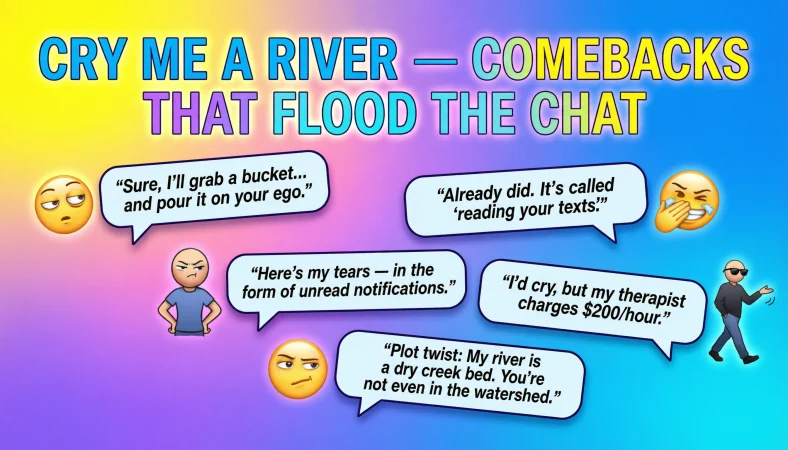
Quick Answer: The best Cry me a river replies depend on your mood. You can clap back with humor, sarcasm, confidence, or simply keep things chill without turning the moment into unnecessary drama.
Top alternatives: “Should I bring a tissue?”, “Tiny violin incoming,” “I’ll alert the sympathy department,” “That sounds tragic”, “Do you need a canoe?”
Someone says “Cry me a river,” and suddenly the conversation feels like it needs its own soundtrack. Whether it happens in a group chat, during playful texting, in a DM, at work, or between two people who are flirting, your response can completely change the vibe. You could fire back with a clever one-liner, turn it into a joke, or answer calmly and leave the drama at the door. The trick is knowing which energy fits the moment. That is exactly why having a collection of Cry me a river replies is useful. Instead of staring at your screen wondering what to type, you can pick a response that matches your personality. From hilarious comebacks to clever burns and surprisingly sweet answers, there is something here for every kind of conversation.
Funny Responses
Should I bring a tissue?
Use it when someone is being dramatically whiny about something minor.
Meaning: You are playfully exaggerating their need for sympathy.
Do you need a canoe?
Use it when you want to turn their dramatic comment into a silly joke.
Meaning: You are teasing them about supposedly creating a river of tears.
Tiny violin incoming.
Use it when a friend is complaining in an obviously playful way.
Meaning: You are jokingly offering the world’s smallest amount of sympathy.
Let me call the sympathy department.
Use it when someone expects you to feel sorry for them.
Meaning: You are humorously pretending that sympathy requires official assistance.
One river, coming right up.
Use it when you want a goofy response instead of a serious argument.
Meaning: You are playing along with their dramatic wording.
Should I start building an ark?
Use it when someone is pretending their problems are absolutely catastrophic.
Meaning: You are joking that their tears are reaching biblical proportions.
Hold on, I forgot my raincoat.
Use it when you want a lighthearted comeback.
Meaning: You are treating their supposed tears like actual weather.
Netflix called. They want their drama back.
Use it when someone is being unnecessarily dramatic.
Meaning: You are teasing them for turning the moment into entertainment.
I brought popcorn for this.
Use it when their complaint is becoming entertaining.
Meaning: You are joking that their drama deserves a front-row seat.
Waterproof your feelings first.
Use it when someone is acting overly sensitive.
Meaning: You are playfully warning them about their imaginary emotional flood.
Do I get credit for the water bill?
Use it when someone keeps exaggerating their tears.
Meaning: You are joking that their emotional drama is becoming expensive.
Sorry, my sympathy subscription expired.
Use it when you want a playful but slightly sassy reply.
Meaning: You are joking that your supply of sympathy has run out.
Brutal Responses
You first.
Use it when someone is being hypocritical.
Meaning: You are turning their own dramatic remark back on them.
Keep crying, maybe the river will reach you.
Use it when someone is confidently being annoying.
Meaning: You are delivering a sharp comeback without overexplaining.
That was supposed to hurt my feelings?
Use it when their comment fails to bother you.
Meaning: You are showing that their attempt at a comeback did not land.
Your drama needs its own zip code.
Use it when someone is making a huge deal out of something small.
Meaning: You are calling out their excessive drama.
You talk like your tears pay rent.
Use it when someone keeps complaining.
Meaning: You are sarcastically suggesting their crying has become a full-time job.
Save the performance for someone impressed.
Use it when someone is obviously trying to provoke you.
Meaning: You are refusing to entertain their act.
That comeback needed a comeback.
Use it when their insult is weak.
Meaning: You are pointing out that their attempt was unimpressive.
I would care, but I have standards.
Use it when you want a confident, clever response.
Meaning: You are making it clear that their complaint does not deserve your attention.
Try harder.
Use it when someone expects their comment to shock you.
Meaning: You are showing complete confidence and indifference.
You brought drama to an empty theater.
Use it when someone is creating conflict unnecessarily.
Meaning: You are saying their drama has no audience.
That attitude deserves a refund.
Use it when someone is being unnecessarily rude.
Meaning: You are humorously rejecting their behavior.
I would join the pity party, but I wasn’t invited.
Use it when someone is demanding sympathy.
Meaning: You are refusing to participate in their emotional drama.
Flirty Responses
Only if you promise to swim over to me.
Use it when someone you like is teasing you.
Meaning: You are turning their dramatic comment into playful flirting.
Careful, I might dry those tears myself.
Use it when the conversation already has romantic chemistry.
Meaning: You are offering affection with a flirty twist.
A river? I was thinking more of a hot tub.
Use it when you want a cheeky flirt.
Meaning: You are transforming the dramatic phrase into playful innuendo.
Come here, drama queen.
Use it with someone you have a comfortable flirtatious relationship with.
Meaning: You are teasing them affectionately.
I’ll bring snacks for your emotional journey.
Use it when flirting through playful banter.
Meaning: You are showing attention while keeping the mood light.
Only if I get to be your lifeguard.
Use it when you want a cute flirty comeback.
Meaning: You are playfully offering to rescue them.
You’re cute when you’re dramatic.
Use it when their complaint is more adorable than serious.
Meaning: You are turning their attitude into a compliment.
Keep talking, you’re making yourself more adorable.
Use it when playful chemistry is already obvious.
Meaning: You are teasing them while showing attraction.
If you’re going to cry, at least do it somewhere cute.
Use it when you want cheeky flirting.
Meaning: You are joking while keeping the attention on them.
Need a shoulder or just my attention?
Use it when someone is clearly fishing for your attention.
Meaning: You are playfully suggesting that they want you specifically.
Your drama is dangerously charming.
Use it when their attitude is entertaining you.
Meaning: You are framing their dramatic personality as attractive.
Fine, I’ll be your emotional lifeguard.
Use it when you want a warm flirt with a humorous edge.
Meaning: You are offering playful support while flirting.
Polite Responses
I think we can skip the drama.
Use it when you want to calm down a tense exchange.
Meaning: You are encouraging a more mature conversation.
Let’s keep things respectful.
Use it when someone becomes unnecessarily rude.
Meaning: You are setting a clear boundary without insulting them.
I understand you’re frustrated.
Use it when someone is upset but you do not want to argue.
Meaning: You are acknowledging their emotion without escalating things.
No need to make this bigger than it is.
Use it when a disagreement is becoming excessive.
Meaning: You are encouraging everyone to stay reasonable.
I hear you. Let’s move forward.
Use it when you want to end a minor disagreement gracefully.
Meaning: You acknowledge them while choosing peace.
Fair enough. Let’s leave it there.
Use it when continuing the argument would accomplish nothing.
Meaning: You are politely closing the conversation.
I don’t think arguing will help either of us.
Use it when someone is trying to pull you into conflict.
Meaning: You are choosing calm over confrontation.
Let’s talk about it without the sarcasm.
Use it when their tone becomes dismissive.
Meaning: You are asking for a more respectful exchange.
I respect your feelings, even if I disagree.
Use it when the disagreement is genuine.
Meaning: You are separating their emotions from your opinion.
We can disagree without being rude.
Use it when someone crosses a conversational boundary.
Meaning: You are calmly defending respectful communication.
I think we’ve made our points.
Use it when an argument is going nowhere.
Meaning: You are politely suggesting that the discussion should end.
Let’s not turn this into something it isn’t.
Use it when someone is exaggerating the situation.
Meaning: You are encouraging them to keep the issue in perspective.
Professional Responses
Let’s focus on the issue rather than the emotion.
Use it during a workplace disagreement.
Meaning: You are redirecting attention toward the actual problem.
I understand your concern. Let’s discuss a solution.
Use it when someone expresses frustration professionally.
Meaning: You acknowledge their concern while moving toward action.
I’d prefer to keep this constructive.
Use it when a professional conversation becomes tense.
Meaning: You are requesting productive communication.
Let’s stick to the facts.
Use it when emotions are distracting from the issue.
Meaning: You want the discussion grounded in evidence.
I appreciate the feedback. Let’s clarify the next step.
Use it when responding to criticism at work.
Meaning: You are keeping the conversation practical.
Let’s address the problem directly.
Use it when someone is avoiding the real issue.
Meaning: You want a straightforward professional discussion.
I don’t think sarcasm will resolve this.
Use it when someone uses “cry me a river” inappropriately at work.
Meaning: You are calmly rejecting an unproductive tone.
Let’s keep the conversation professional.
Use it when workplace communication becomes disrespectful.
Meaning: You are setting a clear professional boundary.
I’m happy to discuss the concern respectfully.
Use it when someone genuinely has an issue.
Meaning: You are open to communication without accepting hostility.
Let’s find a practical solution.
Use it when the conversation is becoming emotional.
Meaning: You are shifting attention from feelings to results.
I think a calmer discussion would be more productive.
Use it when tensions are rising.
Meaning: You are asking for a more constructive environment.
Let’s revisit this when we’re both calmer.
Use it when an argument is escalating.
Meaning: You are choosing to pause rather than make things worse.
Creative Responses
I’ll need a map for this emotional river.
Use it when you want a creative joke.
Meaning: You are exaggerating the metaphor for comedic effect.
Welcome aboard the SS Drama.
Use it when someone is being theatrical.
Meaning: You are turning their mood into an imaginary cruise.
The River of Regret is currently closed.
Use it when someone expects sympathy.
Meaning: You are giving their drama a ridiculous fictional destination.
Your tears have entered the group chat.
Use it with friends who love internet humor.
Meaning: You are making their emotional reaction sound like breaking news.
Emergency announcement: feelings detected.
Use it when someone suddenly becomes dramatic.
Meaning: You are humorously treating their emotions like an official emergency.
Attention passengers, the pity train is delayed.
Use it when someone is fishing for sympathy.
Meaning: You are jokingly refusing to board their drama.
Your emotional weather forecast says 100% chance of drama.
Use it when their mood is wildly dramatic.
Meaning: You are comparing their behavior to an exaggerated forecast.
I’m contacting the Department of Unnecessary Tears.
Use it when someone is overreacting.
Meaning: You are inventing a fake authority to mock the drama.
Congratulations, you’ve unlocked River Mode.
Use it in gaming-style banter.
Meaning: You are turning their complaint into a humorous achievement.
Plot twist: nobody ordered the river.
Use it when someone unexpectedly starts complaining.
Meaning: You are joking that their emotional performance was unsolicited.
Your audition for Drama of the Year is going well.
Use it when someone is acting theatrically.
Meaning: You are playfully comparing their behavior to a dramatic performance.
Welcome to Season Two of Overreacting.
Use it with a friend who constantly exaggerates.
Meaning: You are joking that their drama has become a series.
Sarcastic Responses
Oh no. Anyway…
Use it when someone expects sympathy for something trivial.
Meaning: You are sarcastically dismissing the complaint.
Thoughts and prayers, obviously.
Use it when a friend is dramatically complaining.
Meaning: You are giving exaggerated sympathy for comedic effect.
How will we ever recover?
Use it when someone treats a tiny inconvenience like a disaster.
Meaning: You are mocking the exaggerated seriousness.
Tragic. Absolutely devastating.
Use it when their problem is clearly minor.
Meaning: You are pretending to be dramatically affected.
Someone alert the newspapers.
Use it when someone shares an overly dramatic complaint.
Meaning: You are joking that their issue is breaking news.
This is truly a historic moment.
Use it when someone is making a huge deal out of something small.
Meaning: You are sarcastically exaggerating the situation.
I’ll notify the United Nations.
Use it when their complaint is hilariously overblown.
Meaning: You are pretending their issue requires international intervention.
Cancel everything. We have a crisis.
Use it with friends who enjoy sarcastic humor.
Meaning: You are exaggerating the situation to make fun of it.
Somebody get this person an award.
Use it when someone is performing their sadness dramatically.
Meaning: You are sarcastically praising their theatrical behavior.
Breaking news: someone is upset.
Use it when they are clearly overreacting.
Meaning: You are mocking the obviousness of their complaint.
I’ll alert the emotional support committee.
Use it when someone wants attention.
Meaning: You are humorously pretending their feelings need official management.
What a devastating plot twist.
Use it when a small inconvenience is being treated like a catastrophe.
Meaning: You are sarcastically making the problem sound epic.
Cute Responses
Aww, are we having a little feelings moment?
Use it when a close friend is being dramatic.
Meaning: You are teasing them affectionately.
Come here, you dramatic little human.
Use it when someone you care about is complaining playfully.
Meaning: You are combining affection with gentle teasing.
Okay, emotional baby.
Use it with someone who enjoys playful nicknames.
Meaning: You are teasing them without genuine hostility.
I’ll allow one tiny tantrum.
Use it when someone needs to vent briefly.
Meaning: You are giving them playful permission to complain.
Your drama is kinda adorable.
Use it when their reaction makes you smile.
Meaning: You are turning their dramatic behavior into a compliment.
Fine, I’ll pretend to feel sorry for you.
Use it with a close friend.
Meaning: You are playfully offering fake sympathy.
Sending one emergency hug.
Use it when someone is genuinely a little upset.
Meaning: You are offering affection while keeping things light.
Okay, I’ll bring emotional snacks.
Use it when someone needs cheering up.
Meaning: You are offering playful support.
You get one pity point.
Use it when someone is jokingly seeking sympathy.
Meaning: You are giving them a tiny amount of humorous validation.
Come on, don’t make that face.
Use it when someone is pretending to be devastated.
Meaning: You are gently encouraging them to stop being dramatic.
Fine, you win today’s drama award.
Use it when their behavior is amusing rather than serious.
Meaning: You are playfully recognizing their theatrics.
I’ll save you from your imaginary river.
Use it when someone is pretending to drown in their feelings.
Meaning: You are offering playful reassurance.
Dramatic Responses
Quick, someone call the lifeguard!
Use it when someone says “cry me a river” with maximum drama.
Meaning: You are matching their theatrical energy.
The emotional flood has officially begun.
Use it when the situation becomes ridiculously dramatic.
Meaning: You are joking that everyone’s feelings have overflowed.
Tell my story when the river takes me.
Use it when you want an absurdly dramatic comeback.
Meaning: You are intentionally exaggerating the situation.
I never thought we’d reach this level of tragedy.
Use it when a minor disagreement becomes dramatic.
Meaning: You are humorously treating it like an epic disaster.
This is the saddest chapter of my life.
Use it when joking with someone about a tiny problem.
Meaning: You are deliberately exaggerating your emotional reaction.
Someone dim the lights.
Use it when the conversation feels theatrically dramatic.
Meaning: You are pretending the moment deserves a stage.
Cue the sad music.
Use it when someone is overdoing the emotional act.
Meaning: You are turning their mood into a movie scene.
I fear this river may become an ocean.
Use it when the drama keeps escalating.
Meaning: You are humorously predicting even more exaggeration.
Tell everyone I fought bravely.
Use it when joking about being emotionally defeated.
Meaning: You are exaggerating the situation for comedy.
This tragedy deserves a three-part documentary.
Use it when a friend turns a tiny problem into a saga.
Meaning: You are teasing them about their storytelling.
The emotional soundtrack is playing as we speak.
Use it when someone is acting extremely dramatic.
Meaning: You are pretending the moment has become cinematic.
I shall retreat to my castle of feelings.
Use it when you want an intentionally ridiculous response.
Meaning: You are embracing the drama for comedic effect.
Chill And Casual Responses
Haha, okay.
Use it when you do not want to take the comment seriously.
Meaning: You are keeping the interaction relaxed.
Fair enough.
Use it when you want a neutral response.
Meaning: You are acknowledging them without escalating.
Lol, dramatic much?
Use it with friends during playful banter.
Meaning: You are lightly calling out their exaggeration.
Alright, alright.
Use it when someone is jokingly complaining.
Meaning: You are keeping things casual and easygoing.
You got me there.
Use it when their comment is actually funny.
Meaning: You are admitting that they landed a decent joke.
Okay, I’ll give you that one.
Use it when you respect their comeback.
Meaning: You are acknowledging their point without becoming defensive.
Haha, we’re really doing this?
Use it when the exchange becomes playful.
Meaning: You are joking about the escalating banter.
No worries.
Use it when you want to stay calm.
Meaning: You are showing that you are not bothered.
We’re good.
Use it when you want to move past the moment.
Meaning: You are signaling that there is no need for further drama.
It’s all good.
Use it when the situation is not worth arguing about.
Meaning: You are keeping the conversation relaxed.
Relax, I’m still here.
Use it when someone is jokingly acting upset.
Meaning: You are reassuring them without getting serious.
Haha, noted.
Use it when you want a quick, low-effort comeback.
Meaning: You are acknowledging their comment without giving it much weight.
Confident Responses
I don’t need your sympathy.
Use it when someone tries to make you feel small.
Meaning: You are showing emotional independence.
I’m perfectly fine, thanks.
Use it when someone assumes you are upset.
Meaning: You are confidently rejecting their assumption.
You can keep the pity.
Use it when someone offers unwanted sympathy.
Meaning: You are making it clear that you do not need validation.
I’m good over here.
Use it when someone expects you to react emotionally.
Meaning: You are showing calm self-assurance.
My feelings can handle themselves.
Use it when someone mocks you for being emotional.
Meaning: You are showing that you can manage your emotions.
You don’t have to worry about me.
Use it when someone is being condescending.
Meaning: You are asserting your independence.
I’m not offended, just entertained.
Use it when someone tries to provoke you.
Meaning: You are showing that their attempt had little effect.
That doesn’t bother me.
Use it when you want a direct response.
Meaning: You are refusing to give their comment emotional power.
I’m comfortable with my feelings.
Use it when someone mocks you for expressing yourself.
Meaning: You are confidently standing behind your emotions.
You can say what you want. I’m still good.
Use it when someone is trying to get under your skin.
Meaning: You are demonstrating emotional resilience.
I don’t compete for sympathy.
Use it when someone turns a situation into a pity contest.
Meaning: You are refusing to participate.
Nice attempt, but I’m unbothered.
Use it when someone is clearly trying to annoy you.
Meaning: You are confidently showing that their words did not work.
Emotional Responses
Sometimes people just need to be heard.
Use it when someone dismisses genuine feelings.
Meaning: You are explaining why emotional expression can matter.
I’m allowed to feel what I feel.
Use it when someone mocks your emotions.
Meaning: You are calmly defending your right to have feelings.
You don’t have to understand it to respect it.
Use it when someone dismisses your experience.
Meaning: You are asking for basic emotional respect.
I wasn’t asking for pity.
Use it when someone mistakes vulnerability for weakness.
Meaning: You are clarifying that sharing feelings does not mean seeking sympathy.
I just needed a moment.
Use it when someone mocks you for being emotional.
Meaning: You are explaining that your reaction was temporary and genuine.
Being honest about feelings isn’t weakness.
Use it when someone treats emotional openness negatively.
Meaning: You are confidently defending vulnerability.
I’d rather express it than pretend I’m fine.
Use it when someone tells you to stop being emotional.
Meaning: You value honesty over pretending.
Everyone handles difficult moments differently.
Use it when someone judges your reaction.
Meaning: You are reminding them that emotional responses vary.
I can laugh about it later. Right now, it matters to me.
Use it when someone makes fun of your current feelings.
Meaning: You are asking them to respect the timing of your emotions.
I’m not asking you to fix it. Just understand.
Use it when you want emotional support rather than advice.
Meaning: You are clearly communicating what you need.
It’s okay if you don’t know what to say.
Use it when someone seems uncomfortable with your emotions.
Meaning: You are making space for empathy without demanding a perfect response.
I appreciate being able to say how I feel.
Use it when you want to respond maturely.
Meaning: You are showing that emotional honesty matters to you.
Sweet Responses
It’s okay, we all have our moments.
Use it when someone is genuinely having a rough day.
Meaning: You are responding with patience and kindness.
No river needed. Just a little understanding.
Use it when you want to soften the phrase.
Meaning: You are asking for empathy instead of drama.
I’ll survive, promise.
Use it when you want to reassure someone without being overly serious.
Meaning: You are showing resilience while keeping things warm.
We’re okay. Don’t worry.
Use it when someone thinks their comment upset you.
Meaning: You are reassuring them that there is no lasting tension.
It’s all part of being human.
Use it when emotions are getting discussed seriously.
Meaning: You are normalizing emotional reactions.
I appreciate you listening.
Use it when someone eventually becomes supportive.
Meaning: You are showing gratitude for their attention.
No hard feelings.
Use it when you want to move beyond a disagreement.
Meaning: You are choosing forgiveness and peace.
We’re allowed to have bad days.
Use it when someone is embarrassed about being emotional.
Meaning: You are offering reassurance without judgment.
I know you didn’t mean it seriously.
Use it when their comment was clearly playful.
Meaning: You are showing emotional maturity.
Let’s laugh about this later.
Use it when a tense moment has started cooling down.
Meaning: You are suggesting that the situation does not need to stay heavy.
We’re good, genuinely.
Use it when you want to reassure someone after an argument.
Meaning: You are sincerely communicating that there is no resentment.
Take care of yourself too.
Use it when the conversation reveals that both people are stressed.
Meaning: You are responding with genuine kindness.
Clever Responses
Funny, I was just about to say the same thing.
Use it when you want to reverse the energy smoothly.
Meaning: You are showing that their comment does not intimidate you.
A river? That’s ambitious.
Use it when someone uses dramatic language.
Meaning: You are cleverly pointing out the exaggeration.
I’ll settle for a puddle.
Use it when you want a short, witty comeback.
Meaning: You are shrinking their dramatic metaphor into something ridiculous.
Interesting strategy. Sympathy might have worked.
Use it when someone tries to provoke you.
Meaning: You are calmly pointing out that their approach failed.
You really committed to the metaphor.
Use it when someone keeps talking about the river.
Meaning: You are cleverly teasing them for taking the phrase too far.
I respect the commitment to drama.
Use it when someone is being theatrical.
Meaning: You are acknowledging their dedication while lightly mocking it.
That’s one way to avoid an actual conversation.
Use it when someone dismisses your feelings instead of discussing them.
Meaning: You are calling out their avoidance.
The river metaphor is doing a lot of work today.
Use it when someone keeps using dramatic language.
Meaning: You are humorously commenting on their choice of words.
I expected empathy, but apparently we’re doing geography.
Use it when someone turns your feelings into a joke.
Meaning: You are cleverly highlighting the mismatch.
Noted. I’ll add “river” to the list of things you overestimate.
Use it when playful roasting is welcome.
Meaning: You are delivering a confident, witty tease.
That’s cute. Unfortunately, I’m still standing.
Use it when someone expects their words to crush you.
Meaning: You are showing resilience with a playful edge.
If that was meant to hurt, the delivery needs work.
Use it when their insult misses completely.
Meaning: You are confidently critiquing their failed comeback.
clever Responses
Save your breath. The river isn’t happening.
Use it when you want a direct, confident clapback.
Meaning: You are refusing to entertain their attitude.
You brought a spoon to a comeback fight.
Use it when their response is weak.
Meaning: You are humorously pointing out that they are outmatched.
That’s adorable. You thought that worked.
Use it when someone tries to provoke you.
Meaning: You are showing that their attempt had no effect.
Your sarcasm needs better material.
Use it when their comeback feels predictable.
Meaning: You are calling out the weakness of their insult.
I have heard better insults from autocorrect.
Use it when you want a humorous roast.
Meaning: You are saying their comeback was extremely weak.
You brought drama and forgot the plot.
Use it when someone makes no sense while arguing.
Meaning: You are mocking their chaotic behavior.
That’s a lot of confidence for such a weak comeback.
Use it when someone is overly proud of their response.
Meaning: You are contrasting their confidence with the quality of their insult.
If that was your best, we’re done here.
Use it when someone is trying to win an argument.
Meaning: You are confidently ending the exchange.
Your river needs a better source.
Use it when someone says “cry me a river.”
Meaning: You are turning their metaphor into a clever roast.
I’m not drowning in your opinion.
Use it when someone is being judgmental.
Meaning: You are making it clear that their opinion has no control over you.
Try again after your creativity loads.
Use it when their comeback feels recycled.
Meaning: You are joking that their insult lacks originality.
You said that like it was going to end me.
Use it when their words fail to bother you.
Meaning: You are confidently showing emotional strength.
Playful Comebacks
I’ll cry after I finish laughing.
Use it when someone says something that is more funny than hurtful.
Meaning: You are turning their comment into a joke.
Okay, Captain Drama.
Use it when a friend is exaggerating.
Meaning: You are giving them a playful nickname for their dramatic behavior.
River? I was expecting a swimming pool.
Use it when you want to exaggerate their exaggeration.
Meaning: You are playfully raising the level of absurdity.
Should I pack floaties?
Use it when someone is pretending to be emotionally overwhelmed.
Meaning: You are joking about their imaginary river.
I’ll cry on weekends only.
Use it when someone tells you to cry dramatically.
Meaning: You are playfully refusing to take the instruction seriously.
Drama detected. Proceeding with snacks.
Use it in a group chat full of jokes.
Meaning: You are treating the drama like entertainment.
Do tears come with free Wi-Fi?
Use it when you want a random, silly comeback.
Meaning: You are intentionally making the exchange absurd.
I’m fresh out of emotional swimming gear.
Use it when someone starts joking about tears.
Meaning: You are continuing the river theme humorously.
Please hold while I locate my violin.
Use it when someone expects sympathy.
Meaning: You are parodying exaggerated pity.
This river has terrible customer service.
Use it when you want a weird but funny comeback.
Meaning: You are turning the metaphor into a ridiculous business.
I’m taking the scenic route around your drama.
Use it when you want a playful dismissal.
Meaning: You are avoiding unnecessary conflict.
Plot twist: I’m laughing instead.
Use it when someone expects you to be upset.
Meaning: You are showing that you are enjoying the banter.
Short And Sharp Responses
Cute.
Use it when you want to dismiss the comment quickly.
Meaning: You are showing that you are not impressed.
Noted.
Use it when you want a calm response.
Meaning: You acknowledge what they said without engaging.
Anyway…
Use it when you want to move on immediately.
Meaning: You are refusing to give the comment attention.
Sure thing.
Use it when their remark does not deserve an argument.
Meaning: You are responding casually without taking the bait.
If you say so.
Use it when you disagree but do not want a debate.
Meaning: You are distancing yourself from their opinion.
Good one.
Use it when you want to acknowledge a joke.
Meaning: You are giving minimal credit while staying relaxed.
Nice try.
Use it when someone attempts to provoke you.
Meaning: You are showing that their attempt failed.
Whatever floats your boat.
Use it when you do not care about their opinion.
Meaning: You are expressing relaxed indifference.
We’re done here.
Use it when the exchange becomes unnecessarily hostile.
Meaning: You are ending the conversation confidently.
Cool story.
Use it when someone is exaggerating.
Meaning: You are playfully dismissing their dramatic statement.
That’s your opinion.
Use it when someone presents their judgment as fact.
Meaning: You are separating their opinion from reality.
Moving on.
Use it when you do not want to continue the argument.
Meaning: You are choosing to end the interaction cleanly.
FAQs
What does “Cry me a river” mean?
It usually means “I don’t feel sorry for you” or “stop complaining,” often said sarcastically.
Is “Cry me a river” rude?
It can be. Among friends it may be playful, but during a serious conversation it can sound dismissive or insensitive.
What is a funny reply to “Cry me a river”?
Try “Should I bring a canoe?” or “Tiny violin incoming.” Both turn the phrase into a joke.
What is a flirty reply to “Cry me a river”?
Try “Only if you promise to swim over to me.” It works best when playful flirting is already part of the conversation.
Can I use these replies at work?
Yes, but stick to calm and professional options such as “Let’s keep this constructive” rather than clever or sarcastic comebacks.
What if I do not want to be rude?
Use something simple like “Fair enough”, “No worries”, or “Let’s not make this a big deal.”
What if someone genuinely hurt my feelings?
You can be direct without becoming aggressive. Try “I’m allowed to feel what I feel” or “I wasn’t asking for pity.”
Is humor appropriate when someone says “Cry me a river”?
It depends on the relationship and situation. Humor works best when both people are already joking and nobody is genuinely upset.
Conclusion
The best Cry me a river replies are not always the harshest ones. Sometimes the funniest response wins, while other moments call for confidence, kindness, or simply walking away from unnecessary drama. The right comeback depends on who you are talking to, what happened, and whether the conversation is playful or serious. Use a sarcastic line with friends, a flirty one with someone special, or a calm response when emotions are genuinely involved. Most importantly, do not feel pressured to match someone’s attitude. A clever reply can make you memorable without making the situation messier. Save your favorites, share the list with your funniest friend, and keep a few comebacks ready for your next dramatic moment!