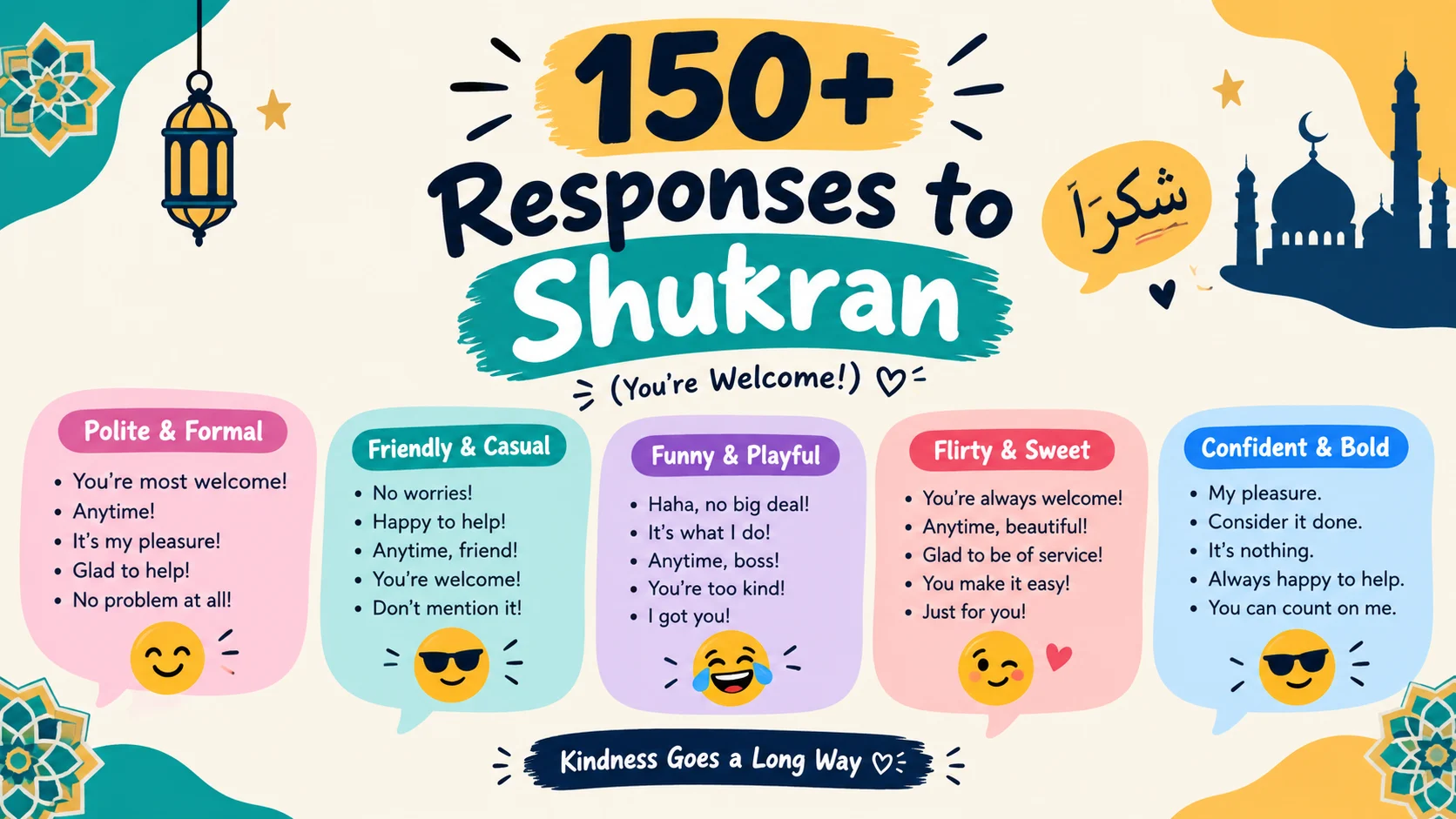
Quick Answer: “Shukran” means “thank you” in Arabic, and the best response depends on the mood and relationship. You can keep it simple, warm, funny, or even a little flirty.
You’re welcome, Afwan, Anytime, My pleasure, No worries
A simple “shukran” can be surprisingly flexible. Someone might say it after you help them, compliment them, send them something, or simply do them a favor. And suddenly you’re staring at your keyboard thinking, “Okay, what do I say now?” 😂
The good news is that responding to “shukran” does not have to feel formal or predictable. Whether you’re texting a friend, replying to a DM, chatting with a crush, responding at work, or talking with someone you’ve just met, the right response can make the interaction feel warmer and more natural.
Knowing a good response to shukran also helps you match the energy of the moment. Sometimes “you’re welcome” is perfect. Other times, “Anytime 😊” feels much more natural. If the conversation is playful, a clever response can keep the vibe going without making things awkward.
Here are plenty of ready-to-send options for almost every situation.
Funny Responses To Shukran
You’re welcome, your majesty.
Use this when you want to turn an ordinary thank-you into a playful moment.
Meaning: It humorously exaggerates your helpfulness.
No need to thank me, I accept snacks.
Use this when the person knows you have a soft spot for food.
Meaning: You are joking that snacks are better than gratitude.
Anytime, I’m basically customer service.
Use this with a friend when you want a goofy reply.
Meaning: You are playfully pretending to be available support staff.
You’re welcome, payment accepted in compliments.
Use this after doing someone a favor while keeping things light.
Meaning: You are jokingly asking for praise instead of money.
Don’t mention it, literally don’t.
Use this when you want an intentionally ridiculous response.
Meaning: You are turning a polite phrase into a small joke.
My pleasure, as always. Obviously.
Use this when you want playful confidence.
Meaning: You are jokingly acting like helping them is your specialty.
Shukran received. Mission accomplished.
Use this after completing a small favor.
Meaning: You are treating the interaction like a successful mission.
You’re welcome, applause is optional.
Use this when teasing a friend about thanking you.
Meaning: You are joking about receiving recognition.
No worries, I’ll invoice you later.
Use this after helping someone with something simple.
Meaning: You are pretending the favor comes with a humorous bill.
Anytime, I have a reputation to maintain.
Use this when you want a confident but funny reply.
Meaning: You are joking that being helpful is part of your brand.
Glad to be of service, citizen.
Use this with someone who enjoys silly humor.
Meaning: You are playfully adopting an exaggerated official tone.
You’re welcome, kindness unlocked.
Use this for a casual text or social-media-style reply.
Meaning: You are jokingly presenting your helpfulness as an achievement.
Polite Responses To Shukran
You’re very welcome.
Use this when you want a universally appropriate response.
Meaning: It communicates warmth and courtesy.
My pleasure.
Use this when you genuinely enjoyed helping someone.
Meaning: It shows that the favor was willingly given.
You’re most welcome.
Use this when you want to sound especially courteous.
Meaning: It expresses sincere hospitality.
It was my pleasure.
Use this after doing something meaningful for someone.
Meaning: It reassures them that helping was not a burden.
Anytime.
Use this when you want a warm but simple response.
Meaning: It suggests you would happily help again.
Not at all.
Use this in a polite and understated situation.
Meaning: It indicates that the favor was no trouble.
No problem at all.
Use this when someone seems concerned about inconveniencing you.
Meaning: It reassures them that everything is fine.
Glad I could help.
Use this after assisting someone with a task.
Meaning: It communicates genuine helpfulness.
Always happy to help.
Use this when you want to sound especially supportive.
Meaning: It shows willingness to assist again.
It’s nothing.
Use this when the favor was small and you do not want attention for it.
Meaning: It modestly minimizes the effort involved.
Of course.
Use this when the help felt natural or expected.
Meaning: It communicates easygoing kindness.
You’re welcome, and anytime you need help.
Use this when you want to leave the door open for future assistance.
Meaning: It combines courtesy with reassurance.
Flirty Responses To Shukran
Anything for you. 😉
Use this when you want to add a subtle romantic hint.
Meaning: It suggests that you are especially willing to help this person.
For you? Always.
Use this when the conversation already has a warm romantic vibe.
Meaning: It makes the person feel specially valued.
You’re welcome, cutie.
Use this when playful affection is already comfortable between you.
Meaning: It adds a sweet romantic touch.
Anytime, beautiful.
Use this when complimenting the person feels natural.
Meaning: It combines gratitude with affection.
No thanks needed, just keep smiling.
Use this when you want to sound charming without being too intense.
Meaning: It shows that their happiness matters to you.
You make helping you way too easy.
Use this when flirting through playful teasing.
Meaning: It suggests that you enjoy doing things for them.
I’ll accept a smile as payment.
Use this when you want a cute romantic line.
Meaning: It turns the thank-you into a playful exchange.
You’re welcome, but I prefer your attention.
Use this when the conversation is already flirtatious.
Meaning: It playfully asks for more connection.
Anything to earn another message from you.
Use this when texting someone you like.
Meaning: It hints that you enjoy hearing from them.
You’re welcome, troublemaker.
Use this with someone who enjoys playful nicknames.
Meaning: It adds teasing affection to a simple response.
My pleasure, especially when it’s you.
Use this when you want to make the compliment more personal.
Meaning: It signals that this person is special to you.
Keep saying thank you like that and I might get attached.
Use this when the conversation can handle playful romantic teasing.
Meaning: It jokingly suggests growing affection.
Professional Responses To Shukran
You’re very welcome.
Use this in professional messages when you want to remain warm and polished.
Meaning: It provides a courteous acknowledgment.
My pleasure.
Use this after assisting a colleague, client, or customer.
Meaning: It communicates professionalism and goodwill.
Happy to help.
Use this when responding to a workplace thank-you.
Meaning: It shows that supporting the other person was welcome.
Glad I could assist.
Use this when the interaction involves solving a problem.
Meaning: It confirms that you were pleased to provide assistance.
Of course.
Use this for routine workplace communication.
Meaning: It keeps the response concise and professional.
You’re welcome, and please let me know if you need anything else.
Use this after completing a work-related request.
Meaning: It offers continued support.
Always happy to assist.
Use this in customer service or professional correspondence.
Meaning: It presents a helpful and dependable attitude.
It was my pleasure assisting you.
Use this when a formal tone is appropriate.
Meaning: It expresses courteous satisfaction with helping.
No problem at all.
Use this when the workplace conversation is friendly and informal.
Meaning: It reassures the person that their request was not an inconvenience.
Certainly.
Use this when acknowledging thanks in a concise professional setting.
Meaning: It communicates polite confidence.
You’re most welcome, and I’m glad we could resolve it.
Use this after handling a workplace issue.
Meaning: It emphasizes a positive outcome.
Happy to support.
Use this with teammates or colleagues working toward a shared goal.
Meaning: It shows cooperation and team spirit.
Creative Responses To Shukran
Gratitude accepted. ✨
Use this when you want a short response with personality.
Meaning: It playfully acknowledges their thanks.
Consider it officially handled.
Use this after completing a favor.
Meaning: It signals confidence and completion.
Kindness delivered successfully.
Use this for a playful text or social message.
Meaning: It turns helping into a humorous accomplishment.
Your thank-you has been received loud and clear.
Use this when you want to be intentionally dramatic.
Meaning: It humorously confirms that you noticed their gratitude.
Favor completed, friendship points added.
Use this with close friends.
Meaning: It jokes about earning points through kindness.
The pleasure was entirely mine.
Use this when you want a polished but creative answer.
Meaning: It warmly emphasizes that you enjoyed helping.
Another good deed for the record.
Use this after doing something small but helpful.
Meaning: It playfully celebrates your kindness.
Task complete. Heart happy.
Use this when you want a cute creative response.
Meaning: It shows satisfaction from helping someone.
Your appreciation has been successfully processed.
Use this for a deliberately formal joke.
Meaning: It humorously treats gratitude like paperwork.
Kindness looks good on both of us.
Use this when the situation feels warm and friendly.
Meaning: It suggests that generosity strengthens the connection.
One favor down, many memories to go.
Use this with someone close to you.
Meaning: It frames the moment as part of a continuing relationship.
Filed under: happy to help.
Use this as a short, witty text response.
Meaning: It casually communicates that helping was no trouble.
Sarcastic Responses To Shukran
Finally, some recognition.
Use this when teasing someone who rarely says thank you.
Meaning: It playfully pretends their gratitude was long overdue.
I’ll frame this thank-you.
Use this when someone usually forgets to appreciate your help.
Meaning: It exaggerates how rare their gratitude feels.
Wow, manners. I’m impressed.
Use this with a friend who enjoys sarcasm.
Meaning: It jokingly praises them for being polite.
I was beginning to wonder if you noticed.
Use this after helping someone who took a while to respond.
Meaning: It lightly calls attention to delayed appreciation.
Write that down, I helped someone today.
Use this when joking about your good deed.
Meaning: It humorously exaggerates the importance of your favor.
I’ll try not to let the fame change me.
Use this after receiving an unusually enthusiastic thank-you.
Meaning: It pokes fun at the attention.
You’re welcome, I suppose.
Use this when teasing someone in a harmless way.
Meaning: It creates mock reluctance.
That’s what I like to hear.
Use this when you want a playful response with attitude.
Meaning: It humorously celebrates receiving gratitude.
Look at you being grateful.
Use this with a close friend.
Meaning: It jokingly praises their manners.
My good deed has been acknowledged. Excellent.
Use this after doing a small favor.
Meaning: It playfully treats gratitude like official recognition.
I accept your formal acknowledgment.
Use this when you want exaggerated sarcasm.
Meaning: It makes the simple thank-you sound official.
Well, this is unexpectedly wholesome.
Use this when someone thanks you sincerely.
Meaning: It lightly jokes about the sweetness of the moment.
Cute Responses To Shukran
Aww, anytime. 🥹
Use this when the person thanks you sweetly.
Meaning: It responds with warmth and affection.
Of course! 💕
Use this for friends, family, or someone you care about.
Meaning: It communicates genuine kindness.
Always, friend. 🤍
Use this when you want to reassure someone close to you.
Meaning: It emphasizes dependable friendship.
Anything for you. 🌸
Use this when you want to sound especially caring.
Meaning: It shows that helping them feels natural.
You’re welcome, sunshine. ☀️
Use this with someone who enjoys cute nicknames.
Meaning: It adds cheerful affection.
Happy to help you! 😊
Use this after assisting someone with something important.
Meaning: It expresses sincere happiness about being useful.
No thanks needed.
Use this when you want to make the person feel comfortable.
Meaning: It says their gratitude is appreciated but unnecessary.
Always got you. 🫶
Use this with someone you are close to.
Meaning: It promises support in a casual way.
You’re too sweet.
Use this when their thank-you feels especially heartfelt.
Meaning: It returns the warmth of their appreciation.
Anytime, lovely.
Use this when a gentle affectionate tone feels appropriate.
Meaning: It makes the response feel personal and kind.
Glad I could make things easier. 💛
Use this after helping someone through a difficult task.
Meaning: It shows genuine care for their experience.
That little thank-you made my day.
Use this when their appreciation genuinely made you happy.
Meaning: It tells them their gratitude had an emotional impact.
Chill And Casual Responses To Shukran
No worries!
Use this for almost any relaxed conversation.
Meaning: It says the favor was no big deal.
Anytime!
Use this when you want to sound friendly and easygoing.
Meaning: It suggests you are happy to help again.
All good.
Use this for a very casual exchange.
Meaning: It reassures the person that everything is fine.
No problem!
Use this when someone thanks you for something simple.
Meaning: It keeps the interaction relaxed.
You got it.
Use this after helping someone with a request.
Meaning: It communicates confidence and friendliness.
For sure!
Use this with friends or casual acquaintances.
Meaning: It confirms that helping was easy.
Of course!
Use this when you want a simple friendly answer.
Meaning: It shows that the favor felt natural.
Don’t mention it.
Use this when you want to downplay the favor.
Meaning: It says there is no need for extra gratitude.
No stress.
Use this when someone seems worried about bothering you.
Meaning: It reassures them that there is no issue.
You’re good!
Use this when you want to keep the conversation casual.
Meaning: It tells them everything is completely fine.
All yours.
Use this when you have given or shared something with them.
Meaning: It casually confirms that the favor is theirs.
Easy peasy.
Use this after completing something simple.
Meaning: It humorously suggests the task required little effort.
Confident Responses To Shukran
Always happy to help.
Use this when you want to sound confident without being arrogant.
Meaning: It communicates reliable generosity.
You can count on me.
Use this when you want to establish trust.
Meaning: It tells the person you are dependable.
Consider it done.
Use this after handling a request.
Meaning: It shows confidence and capability.
I’ve got you.
Use this when someone needs reassurance.
Meaning: It communicates dependable support.
That’s what I’m here for.
Use this when helping is part of your role or friendship.
Meaning: It frames your assistance as natural and intentional.
No need to ask twice.
Use this when you want to show willingness to help again.
Meaning: It signals enthusiasm and readiness.
Happy to make it happen.
Use this after solving a problem.
Meaning: It communicates positive confidence.
Anytime you need me.
Use this when you want to reassure someone about future support.
Meaning: It emphasizes availability.
Handled. You’re welcome.
Use this when you prefer a concise and confident tone.
Meaning: It confirms both completion and courtesy.
Always got your back.
Use this with someone you trust or care about.
Meaning: It communicates loyalty and support.
That’s an easy yes from me.
Use this when you want to show enthusiasm.
Meaning: It says helping them was an obvious choice.
Happy to step up.
Use this when you want to sound dependable in a group setting.
Meaning: It communicates confidence and willingness to contribute.
Emotional Responses To Shukran
You’re welcome, truly.
Use this when the person’s gratitude feels heartfelt.
Meaning: It responds with sincere warmth.
It means a lot that you appreciate it.
Use this when their thank-you genuinely touched you.
Meaning: It acknowledges the emotional value of their gratitude.
I’m really glad I could be there for you.
Use this after supporting someone during a meaningful moment.
Meaning: It expresses care and emotional support.
You never have to thank me for being there.
Use this with someone very close to you.
Meaning: It emphasizes that your support is unconditional.
I’m just happy I could help.
Use this when the favor had emotional importance.
Meaning: It focuses on their well-being rather than recognition.
You’re welcome from the heart.
Use this when you want a sincere and affectionate response.
Meaning: It conveys genuine kindness.
I’d do it again in a heartbeat.
Use this when the person worries they asked too much.
Meaning: It reassures them that helping was meaningful.
Your gratitude means more than you know.
Use this when their appreciation has touched you deeply.
Meaning: It communicates emotional significance.
I’m glad I could make things a little easier.
Use this after supporting someone through a difficult situation.
Meaning: It shows empathy and care.
You deserve support too.
Use this when someone seems surprised that you helped.
Meaning: It reminds them that accepting help is okay.
I’m always glad to be there for you.
Use this with a close friend or loved one.
Meaning: It expresses steady emotional support.
No thanks needed, just take care of yourself.
Use this when the person is going through a challenging time.
Meaning: It redirects attention toward their well-being.
Sweet Responses To Shukran
You’re welcome, always.
Use this when you want a gentle and reassuring reply.
Meaning: It suggests your kindness is consistent.
It was truly my pleasure.
Use this after doing something meaningful for someone.
Meaning: It expresses sincere happiness about helping.
Happy to do it for you.
Use this when you want to make the person feel valued.
Meaning: It shows that helping them felt special.
You deserve kindness.
Use this when someone seems genuinely grateful for your support.
Meaning: It reminds them that kindness is something they deserve.
I’m glad it helped.
Use this after solving a problem for someone.
Meaning: It focuses on the positive result.
Always with a smile. 😊
Use this when you want a cheerful response.
Meaning: It says you helped willingly and happily.
You’re worth the effort.
Use this with someone you care about.
Meaning: It makes the response personal and affirming.
Anything that makes your day better.
Use this when you want to sound thoughtful.
Meaning: It shows that their happiness matters.
Happy to make you smile.
Use this when your favor brightened their day.
Meaning: It expresses warmth and affection.
You’re welcome with all my heart.
Use this for a heartfelt interaction.
Meaning: It communicates sincere appreciation and care.
I’m just glad you’re happy.
Use this when their gratitude follows something that made them feel better.
Meaning: It puts their happiness first.
Keep that smile, that’s enough thanks.
Use this when you want a sweet, memorable reply.
Meaning: It says their happiness is the reward.
Clever Responses To Shukran
Gratitude noted. Favor completed.
Use this when you want a concise witty response.
Meaning: It playfully combines appreciation with completion.
You’re welcome is doing all the heavy lifting today.
Use this when you want a clever joke.
Meaning: It humorously highlights the classic response.
Thank you for thanking me. We’ve come full circle.
Use this when you want to make the exchange intentionally playful.
Meaning: It jokes about the repetition of gratitude.
Mutual appreciation looks good on us.
Use this when the interaction feels warm and positive.
Meaning: It suggests both people are contributing good energy.
Your gratitude has been officially accepted.
Use this for a playful formal tone.
Meaning: It turns a normal thank-you into a mock official transaction.
One thank-you successfully processed.
Use this when you enjoy dry internet-style humor.
Meaning: It treats gratitude like a digital process.
Kindness confirmed.
Use this as a short, confident response.
Meaning: It playfully confirms the positive interaction.
The gratitude department approves.
Use this when you want a quirky joke.
Meaning: It pretends there is an official department handling thank-yous.
You’re welcome, case closed.
Use this when you want a confident ending.
Meaning: It signals that the exchange is complete.
Appreciation accepted, friendship upgraded.
Use this with someone you are becoming closer to.
Meaning: It jokes that gratitude strengthens the relationship.
No receipt required.
Use this after giving someone something or helping them.
Meaning: It jokingly says there is no payment or repayment needed.
A simple thank-you? I’ll allow it.
Use this when playful confidence fits the relationship.
Meaning: It humorously pretends to approve their gratitude.
Dramatic Responses To Shukran
At last, my efforts are recognized!
Use this when you want an exaggerated theatrical response.
Meaning: It jokingly treats the thank-you like a historic event.
This moment will be remembered forever.
Use this when teasing a friend about their gratitude.
Meaning: It exaggerates the importance of the thank-you.
I shall treasure this gratitude always.
Use this for intentionally dramatic humor.
Meaning: It playfully makes a small interaction sound monumental.
The mission was worth it.
Use this after helping someone through a challenge.
Meaning: It turns the favor into an epic achievement.
My work here is complete.
Use this after solving a problem.
Meaning: It dramatically signals that your task is finished.
Tell the historians what happened today.
Use this when someone gives you an unusually sincere thank-you.
Meaning: It humorously exaggerates the significance of the moment.
A thank-you? From you? Incredible.
Use this with a friend who rarely expresses gratitude.
Meaning: It playfully highlights how unexpected it is.
I may never recover from this appreciation.
Use this for exaggerated online humor.
Meaning: It jokes that their gratitude was overwhelming.
The moment has finally arrived.
Use this when someone thanks you after a long interaction.
Meaning: It adds theatrical humor.
Cue the emotional soundtrack.
Use this when the thank-you feels overly sweet.
Meaning: It jokingly treats the moment like a movie scene.
My heart has been officially rewarded.
Use this after a heartfelt thank-you.
Meaning: It expresses that their gratitude genuinely feels good.
And thus, another good deed enters history.
Use this when you want a dramatic closing joke.
Meaning: It humorously celebrates your helpful action.
Respectful Responses To Shukran
Afwan.
Use this when you want a traditional Arabic response to “shukran.”
Meaning: It is commonly used to convey “you’re welcome” or “not at all.”
Al-afw.
Use this when you want another respectful Arabic response.
Meaning: It communicates a gracious “you’re welcome” sentiment.
Ahlan wa sahlan.
Use this when welcoming someone or responding warmly in an Arabic-speaking context.
Meaning: It conveys hospitality and friendliness.
La shukran ala wajib.
Use this when you want to express that the favor was simply part of what you should do.
Meaning: It communicates that thanks are not necessary for a duty or expected kindness.
Afwan, it was my pleasure.
Use this when combining an Arabic response with English.
Meaning: It keeps the exchange respectful while adding warmth.
You’re most welcome.
Use this when you want a respectful English response.
Meaning: It expresses sincere courtesy.
My pleasure, truly.
Use this when you want to sound gracious and sincere.
Meaning: It confirms that helping was genuinely appreciated.
Of course, anytime.
Use this when you want respectful warmth without sounding overly formal.
Meaning: It communicates easy willingness to help.
No need to thank me.
Use this when you want to minimize the favor respectfully.
Meaning: It indicates that your assistance was given freely.
Always happy to help.
Use this when responding to someone you respect.
Meaning: It shows continued goodwill.
You’re welcome, and I’m glad I could help.
Use this when you want to be both polite and sincere.
Meaning: It acknowledges their gratitude while emphasizing helpfulness.
With pleasure.
Use this when you want a concise, courteous answer.
Meaning: It communicates that the favor was willingly given.
Responses To Shukran In Text Messages
Anytime 😊
Use this when you want a friendly reply that keeps the conversation moving.
Meaning: It says you are happy to help again.
No worries!
Use this for casual texting with friends or acquaintances.
Meaning: It reassures them that everything is fine.
You got it 🙌
Use this when you want an energetic and friendly response.
Meaning: It communicates confidence and willingness.
Of course!
Use this when the favor was natural or easy.
Meaning: It shows that helping was no trouble.
Always 🤍
Use this when texting someone you genuinely care about.
Meaning: It communicates dependable affection.
My pleasure!
Use this when you want a warm but polished text.
Meaning: It shows sincere happiness about helping.
You’re welcome!
Use this when you want the classic answer without overthinking it.
Meaning: It directly acknowledges their thanks.
Got you!
Use this when the conversation is casual and upbeat.
Meaning: It tells them you are there to support them.
No biggie.
Use this when the favor was small.
Meaning: It minimizes the effort involved.
For sure!
Use this when you want a relaxed and positive response.
Meaning: It confirms that helping was easy.
Happy to help 😊
Use this when you want to sound friendly and sincere.
Meaning: It communicates genuine willingness.
Anytime you need me.
Use this when you want to make the relationship feel supportive.
Meaning: It offers future help and reassurance.
Responses To Shukran From A Crush
Anything for you. 😉
Use this when you want to make your interest noticeable without being intense.
Meaning: It suggests that you enjoy doing things for them.
Always happy to help you.
Use this when you want gentle romantic warmth.
Meaning: It shows special willingness toward the person.
You’re welcome, you. 😊
Use this when you want a cute and slightly teasing tone.
Meaning: It creates playful personal energy.
Anytime, especially for you.
Use this when you want to make the response feel more personal.
Meaning: It implies they receive special treatment.
You can thank me with a coffee. ☕
Use this when you want to create an opportunity to meet.
Meaning: It playfully turns gratitude into a possible date.
Your thank-you is cute.
Use this when their message feels charming.
Meaning: It lightly compliments their way of expressing appreciation.
I’d help you again in a heartbeat.
Use this when you want to sound caring and interested.
Meaning: It suggests genuine enthusiasm about them.
You make being helpful easy.
Use this when you want subtle flirtation.
Meaning: It hints that you enjoy their company.
For you, I can make an exception.
Use this when playful teasing fits your dynamic.
Meaning: It suggests they receive special attention.
No thanks needed, just keep texting me.
Use this when you want to keep the conversation going.
Meaning: It playfully shows that you enjoy hearing from them.
My pleasure, gorgeous.
Use this when the relationship already supports compliments.
Meaning: It combines courtesy with direct affection.
You’re welcome, but now you owe me a smile.
Use this when you want a cute, flirty exchange.
Meaning: It turns gratitude into playful romantic attention.
Short One-Word And Two-Word Responses To Shukran
Afwan.
Use this when you want a traditional and concise Arabic response.
Meaning: It means “you’re welcome” or “not at all.”
Anytime.
Use this when you want a relaxed one-word response.
Meaning: It communicates future willingness to help.
Welcome!
Use this when you need a quick and friendly reply.
Meaning: It acknowledges their gratitude.
Always.
Use this when you want a warm and personal answer.
Meaning: It suggests consistent support.
Of course.
Use this when you want a simple natural response.
Meaning: It says helping was an easy choice.
Certainly.
Use this in a polished or professional setting.
Meaning: It communicates polite confidence.
Absolutely.
Use this when you want enthusiastic reassurance.
Meaning: It shows positive willingness.
No worries.
Use this for casual conversations.
Meaning: It reassures them that the favor caused no trouble.
My pleasure.
Use this when you want a warm classic response.
Meaning: It says you were happy to help.
No problem.
Use this when the interaction is casual.
Meaning: It minimizes the effort involved.
You bet.
Use this with friends or relaxed acquaintances.
Meaning: It communicates friendly confidence.
Got you.
Use this when you want a modern casual response.
Meaning: It shows that you are available to support them.
FAQs
What Does “Shukran” Mean?
“Shukran” is an Arabic word meaning “thank you.” It is commonly used to express gratitude and appreciation.
What Is A Good Response To Shukran?
“Afwan,” “you’re welcome,” “my pleasure,” “anytime,” and “no worries” are all natural responses depending on the situation.
What Does “Afwan” Mean In Response To Shukran?
“Afwan” is commonly used as a response to “shukran” and can mean “you’re welcome,” “not at all,” or “excuse me,” depending on context.
Can A Response To Shukran Be Flirty?
Yes. If the relationship already has romantic or playful energy, responses such as “Anything for you 😉” or “Especially for you” can add a subtle flirtatious tone.
What Should I Say To Shukran From A Friend?
Keep it relaxed with responses such as “Anytime,” “No worries,” “Of course,” “You got it,” or “Always.”
What Should I Say To Shukran At Work?
For professional conversations, “You’re very welcome,” “My pleasure,” “Happy to help,” and “Glad I could assist” work well.
Is Humor Appropriate When Someone Says Shukran?
Yes, when you know the person well and the situation is casual. Avoid overly sarcastic humor in formal or sensitive situations.
What If I Do Not Actually Mean “You’re Welcome”?
You can use a neutral response such as “Of course,” “No problem,” or “Glad I could help” without making the exchange overly emotional.
Can I Reply With “Shukran” Back?
You can, but it usually means “thank you,” so it may not clearly answer their gratitude. “Afwan” is a more direct traditional response when you mean “you’re welcome.”
Is “My Pleasure” A Good Response To Shukran?
Yes. “My pleasure” is warm, polite, and suitable for friends, colleagues, customers, and many everyday situations.
What Is A Cute Response To Shukran?
“Always 🤍,” “Aww, anytime,” “Happy to help 😊,” and “Keep that smile” are cute choices for friendly or affectionate conversations.
What Is The Most Casual Response To Shukran?
“No worries,” “Anytime,” “You got it,” and “All good” are natural casual choices.
Conclusion
The best response to “shukran” is not always the longest or most clever one. Sometimes “afwan” is perfect. Sometimes “anytime 😊” says everything you need. And when the situation calls for more personality, a funny, sweet, flirty, or confident reply can make the conversation much more memorable.
Your response helps shape the mood, whether you are texting a friend, chatting with a crush, helping a coworker, or simply being polite. So do not overthink it. Pick the energy that feels natural, send it confidently, and keep the conversation flowing.
Save this list for your next “shukran” moment, share it with a friend, and reuse your favorites whenever the perfect reply escapes your brain.