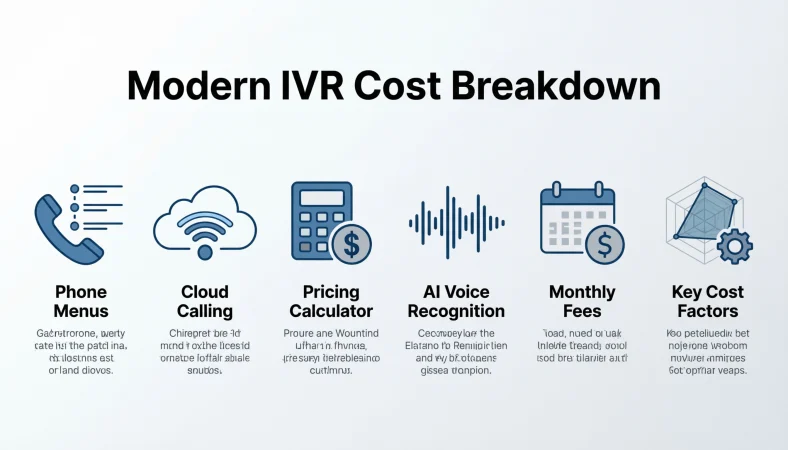
Quick Answer: The interactive voice response system cost can range from a small usage-based bill for a basic cloud IVR to hundreds or thousands per month for advanced contact-center systems. Pricing depends on call volume, phone numbers, minutes, users, integrations, speech recognition, AI, recording, and implementation.
Top alternatives: IVR system pricing, IVR software cost, automated phone system cost, voice response system pricing, cloud IVR cost.
Trying to figure out interactive voice response system cost can feel like opening a restaurant menu where half the prices are hidden in the kitchen. One provider charges by the minute, another charges per user, while another combines subscriptions with usage fees. Then come phone numbers, call recording, speech recognition, integrations, setup, support, and all those little extras that somehow become a big bill. For a small company, a simple cloud IVR may be surprisingly affordable.
For a growing contact center, the monthly investment can become much larger. Current provider pricing shows just how different the models can be. For example, Twilio uses usage-based voice pricing, while Genesys Cloud CX publishes per-user plans that include speech-enabled IVR. Amazon Connect also uses usage-based pricing. This guide breaks down the major costs so you can estimate what your own IVR budget might look like.
Basic Interactive Voice Response System Cost
A basic IVR can start with usage-based pricing rather than a large upfront purchase.
Use this when estimating a simple cloud phone menu for a small business.
Meaning: Your initial cost may depend mostly on calls and minutes.
A simple IVR usually costs less than a full contact-center platform.
Use this when comparing basic phone routing with enterprise software.
Meaning: Fewer features can mean fewer recurring charges.
Cloud IVR pricing can avoid traditional hardware expenses.
Use this when comparing cloud deployment with on-premises systems.
Meaning: You may reduce the need for dedicated telephony equipment.
Basic IVR cost is strongly influenced by monthly call volume.
Use this when preparing an initial budget.
Meaning: More minutes generally create higher usage charges.
A small business may only need phone numbers, call minutes, and an IVR workflow.
Use this when building a lean implementation.
Meaning: A basic setup can avoid unnecessary features.
A simple phone tree is usually easier to budget than an AI voice system.
Use this when deciding how sophisticated the system needs to be.
Meaning: Traditional menus have fewer moving parts.
Usage-based IVR can work well when call volume changes from month to month.
Use this for businesses with seasonal demand.
Meaning: Costs can rise or fall with actual usage.
Your first IVR estimate should include both fixed and variable charges.
Use this when creating a spreadsheet.
Meaning: Monthly subscriptions and call usage both matter.
A basic IVR budget should begin with expected minutes per month.
Use this before requesting provider quotes.
Meaning: Usage is one of the easiest costs to estimate.
Simple IVR systems can often be built without traditional hardware.
Use this when comparing cloud and on-premises options.
Meaning: Cloud deployment can simplify infrastructure requirements.
IVR Cost Per Minute
Per-minute pricing is one of the most common ways cloud voice services charge for IVR usage.
Use this when comparing usage-based platforms.
Meaning: Your bill increases according to call duration.
Twilio currently lists UK local inbound voice at $0.0100 per minute.
Use this as a real-world pricing reference for UK-based estimates.
Meaning: Provider and destination rates directly affect IVR costs.
Twilio currently lists UK local outbound calls at $0.0158 per minute.
Use this when estimating outbound IVR-related calling.
Meaning: Outbound and inbound rates can differ.
100 minutes at $0.01 per minute would equal $1 in usage charges.
Use this for a simple budgeting example.
Meaning: Per-minute pricing is easy to model mathematically.
1,000 minutes at $0.01 per minute would equal $10 before other charges.
Use this when creating a small-business estimate.
Meaning: Usage volume can be translated directly into a baseline cost.
10,000 minutes at $0.01 per minute would equal $100 before additional charges.
Use this for a higher-volume illustration.
Meaning: Call volume quickly becomes important at scale.
Per-minute pricing makes low-volume IVR easier to start with.
Use this when evaluating a small operation.
Meaning: You may avoid paying for unused capacity.
Per-minute costs should be multiplied by both inbound and outbound usage where applicable.
Use this when calculating total voice traffic.
Meaning: Different call directions can create separate charges.
International calling can cost substantially more than local calling.
Use this when building a multinational IVR budget.
Meaning: Geography is a major pricing variable.
Always check the provider’s current destination-specific rates before finalizing a budget.
Use this before purchasing voice services.
Meaning: Published voice rates vary by country, number type, and service.
Monthly IVR Subscription Cost
Some IVR platforms charge a recurring subscription instead of relying only on minutes.
Use this when comparing SaaS contact-center platforms.
Meaning: Monthly licensing can become a major part of the budget.
Genesys Cloud CX 1 is currently listed at £52.50 per user per month when billed annually in the UK.
Use this as a current enterprise-platform reference.
Meaning: Some IVR systems bundle voice and contact-center capabilities into user licenses.
Genesys Cloud CX 2 is currently listed at £80.50 per user per month when billed annually in the UK.
Use this when comparing more advanced contact-center functionality.
Meaning: Additional capabilities can increase subscription costs.
Subscription pricing can be easier to forecast than completely variable billing.
Use this for finance planning.
Meaning: Recurring licenses provide a predictable baseline.
Per-user pricing becomes more important as your team grows.
Use this when estimating contact-center expansion.
Meaning: More licensed users can increase monthly expenses.
A subscription may include several features beyond IVR.
Use this when comparing platform packages.
Meaning: You should compare the entire feature bundle rather than the IVR alone.
Monthly licensing and usage charges can exist together.
Use this when reviewing provider proposals.
Meaning: A subscription does not necessarily eliminate voice usage fees.
Annual billing may differ from month-to-month pricing.
Use this when comparing contract options.
Meaning: Billing terms can influence the effective monthly price.
Ask whether quoted pricing includes telephony.
Use this before signing a contract.
Meaning: Platform and carrier charges may be separate.
Compare total monthly cost rather than subscription price alone.
Use this when evaluating competing vendors.
Meaning: The headline license price may not represent the complete bill.
Small Business IVR Cost
Small businesses often need only a few IVR functions.
Use this when designing a basic phone menu.
Meaning: A simpler workflow can reduce unnecessary spending.
A small business IVR may only need one phone number and a few routing options.
Use this when estimating a lean setup.
Meaning: Limited requirements can keep the system straightforward.
Usage-based cloud IVR can be attractive for businesses with modest call volumes.
Use this when comparing cloud providers.
Meaning: You may pay mainly for what you actually use.
A small company should avoid paying for enterprise features it does not need.
Use this when reviewing software packages.
Meaning: Unused functionality can inflate the budget.
Simple IVR menus can often be created with visual workflow builders.
Use this when considering a no-code approach.
Meaning: Visual tools can reduce development complexity.
Twilio Studio supports visual workflow creation for IVR systems.
Use this when exploring low-code IVR development.
Meaning: A visual builder can simplify basic call flows.
A small business should calculate average monthly call minutes before choosing a plan.
Use this during vendor research.
Meaning: Usage estimates make pricing comparisons more realistic.
Seasonal businesses should calculate both average and peak usage.
Use this when call volume changes throughout the year.
Meaning: Average usage alone may underestimate peak requirements.
Customer service teams may need recording or analytics as they grow.
Use this when planning for future requirements.
Meaning: Feature needs often expand with call volume.
A small business should request a complete monthly cost estimate before committing.
Use this before signing up.
Meaning: The final bill can include more than the advertised base price.
Enterprise IVR System Cost
Enterprise IVR costs usually depend on users, call volume, features, integrations, and support requirements.
Use this when preparing a larger contact-center budget.
Meaning: Enterprise pricing has multiple cost layers.
Large organizations may need advanced routing and speech-enabled IVR.
Use this when evaluating enterprise platforms.
Meaning: More sophisticated call handling can increase platform requirements.
Enterprise IVR may include analytics and reporting.
Use this when comparing full contact-center solutions.
Meaning: Reporting can be bundled with broader platform functionality.
Workforce management can increase the total platform cost.
Use this when comparing enterprise tiers.
Meaning: Advanced staffing features may require higher plans.
Quality assurance features can influence enterprise licensing.
Use this when budgeting for regulated or large support teams.
Meaning: Compliance and monitoring features may require premium plans.
Enterprise platforms may charge per named user.
Use this when estimating license costs.
Meaning: Each licensed employee can contribute to recurring expenses.
Some platforms support concurrent licensing models.
Use this when comparing contact-center contracts.
Meaning: Pricing can be based on simultaneous usage rather than total employees.
Enterprise IVR can involve implementation and consulting costs.
Use this when budgeting a complex deployment.
Meaning: Professional services may sit outside software licensing.
CRM integrations can increase implementation complexity.
Use this when connecting IVR to customer records.
Meaning: Integration work can create additional project costs.
Enterprise systems may require ongoing administration.
Use this when calculating long-term ownership costs.
Meaning: Someone must maintain menus, integrations, permissions, and reports.
Support agreements can add to enterprise IVR expenses.
Use this when evaluating service-level requirements.
Meaning: Premium support may carry additional charges.
Enterprise IVR should be evaluated using total cost of ownership rather than license price alone.
Use this when presenting a business case.
Meaning: Implementation, usage, support, and maintenance all matter.
Cloud IVR System Cost
Cloud IVR removes much of the traditional hardware burden.
Use this when comparing cloud deployment with physical telephony systems.
Meaning: Infrastructure requirements can be reduced.
Cloud IVR can use pay-as-you-go voice pricing.
Use this when evaluating flexible billing.
Meaning: Costs can follow actual usage.
Twilio describes its IVR pricing as usage-based and pay-as-you-go.
Use this when comparing flexible cloud models.
Meaning: The platform does not require a traditional large upfront commitment.
Amazon Connect uses usage-based pricing for its customer experience platform.
Use this when researching cloud contact-center models.
Meaning: Voice and other services can be billed according to usage.
Cloud IVR can scale as call demand changes.
Use this for growing businesses.
Meaning: You can expand without necessarily purchasing additional physical equipment.
Cloud systems can still have phone number fees.
Use this when calculating recurring costs.
Meaning: Moving to the cloud does not make telephone numbers free.
Cloud IVR can include additional charges for advanced services.
Use this when estimating sophisticated workflows.
Meaning: Speech, recording, analytics, and AI may cost extra.
A cloud IVR budget should separate platform costs from carrier costs.
Use this when comparing vendor quotes.
Meaning: Two providers may bundle these charges differently.
Cloud pricing can be easier to start with than traditional hardware purchases.
Use this for startup planning.
Meaning: Initial infrastructure spending can be lower.
Cloud IVR makes remote administration easier.
Use this when considering operational requirements.
Meaning: Teams can manage workflows without maintaining local phone hardware.
Cloud IVR can support distributed teams.
Use this when employees work across multiple locations.
Meaning: Calls and routing can be managed through an online platform.
Cloud IVR pricing should still be reviewed regularly.
Use this when monitoring a long-term deployment.
Meaning: Usage growth can change the monthly bill.
IVR Setup And Implementation Cost
Implementation cost depends heavily on IVR complexity.
Use this when requesting development estimates.
Meaning: A simple menu requires less work than a complex workflow.
A basic IVR can sometimes be configured using visual tools.
Use this when looking for a lower-effort deployment.
Meaning: Not every IVR requires extensive custom development.
Twilio says a simple IVR can be set up with Studio in around 30 minutes, while complex workflows may take hours or days.
Use this as an example of how complexity affects deployment time.
Meaning: Setup effort can vary dramatically depending on requirements.
Custom database integrations can increase setup costs.
Use this when connecting callers to account information.
Meaning: Custom data connections require additional development.
CRM integration can require technical configuration.
Use this when connecting the IVR to sales or support systems.
Meaning: Integration adds project complexity.
Custom call-routing rules can increase implementation time.
Use this when building complex menus.
Meaning: More decision paths require more configuration and testing.
Speech recognition can make an IVR more sophisticated.
Use this when considering voice-driven navigation.
Meaning: Speech-enabled systems can require additional services.
Custom voice prompts may require recording or professional voice talent.
Use this when planning a polished customer experience.
Meaning: Voice production can become a separate project expense.
Training may be necessary for administrators and agents.
Use this when implementing a broader contact-center system.
Meaning: Staff need to understand the new platform.
Implementation quotes should clearly separate one-time and recurring costs.
Use this when comparing vendors.
Meaning: A low setup quote can still lead to significant ongoing charges.
IVR Phone Number Cost
Phone numbers can be a separate recurring IVR expense.
Use this when calculating the complete monthly budget.
Meaning: Voice minutes are not necessarily the only telephony charge.
Twilio currently lists UK local numbers at $3.50 per month.
Use this as a current example for UK pricing.
Meaning: Number rental can be a separate monthly cost.
Twilio currently lists UK mobile numbers at $2.50 per month.
Use this when estimating a mobile-number setup.
Meaning: Number type can influence recurring charges.
Twilio currently lists UK toll-free numbers at $2.70 per month.
Use this when evaluating toll-free options.
Meaning: Different number categories have different rental rates.
A business with multiple departments may require multiple numbers.
Use this when planning a larger phone structure.
Meaning: Number count can increase recurring costs.
Geographic numbers can be useful for local customer service.
Use this when building location-specific call routes.
Meaning: Local numbers can support regional calling strategies.
Toll-free numbers can have different call rates from local numbers.
Use this when comparing customer-facing phone options.
Meaning: Number type affects more than the monthly rental price.
International numbers may have different monthly fees.
Use this when expanding an IVR internationally.
Meaning: Number pricing varies by market.
Number portability can affect migration planning.
Use this when replacing an existing provider.
Meaning: Moving established numbers can require additional coordination.
Include every phone number in the recurring-cost calculation.
Use this when preparing a complete estimate.
Meaning: Multiple numbers can quietly increase monthly expenses.
Ask whether emergency services or regulatory requirements affect number selection.
Use this when deploying business telephony.
Meaning: Some phone services have market-specific requirements.
Review number pricing separately from IVR software pricing.
Use this when comparing quotes.
Meaning: The two charges may come from different parts of the service.
IVR Speech Recognition Cost
Speech recognition can add another layer to IVR pricing.
Use this when moving beyond keypad menus.
Meaning: Voice input may involve additional usage charges.
Twilio currently lists Gather Speech Recognition at $0.02 per use with its default provider option.
Use this as a current pricing example.
Meaning: Speech recognition can be billed separately from basic voice minutes.
Twilio lists some alternative speech-recognition options at $0.025 per use.
Use this when comparing speech providers.
Meaning: Different recognition services can have different rates.
Advanced speech recognition can increase the cost of each interaction.
Use this when calculating voice-driven IVR budgets.
Meaning: More processing can create additional usage charges.
Speech-enabled IVR can reduce reliance on rigid keypad menus.
Use this when considering customer experience improvements.
Meaning: Callers can potentially interact more naturally.
Speech recognition costs should be calculated by expected usage.
Use this when estimating monthly expenses.
Meaning: Number of recognition requests matters.
Short calls can still generate speech-processing charges.
Use this when calculating detailed interaction costs.
Meaning: Usage may be based on requests rather than only call duration.
Speech recognition should be tested for accuracy before large-scale deployment.
Use this when planning implementation.
Meaning: Paying for a feature is not useful if customers struggle to use it.
Different languages may require different speech services.
Use this for international IVR deployments.
Meaning: Language support can affect both technical requirements and cost.
Accent and noise handling can influence speech-system requirements.
Use this when designing customer-facing voice experiences.
Meaning: More robust recognition may require additional technology.
IVR Text To Speech Cost
Text-to-speech can create additional IVR costs when automated voices generate prompts dynamically.
Use this when building a voice-driven system.
Meaning: Generated audio can be billed separately from call minutes.
Twilio currently lists its free text-to-speech option at no additional charge.
Use this when considering basic voice prompts.
Meaning: Some TTS options may not add a separate processing fee.
Twilio currently lists standard TTS at $0.0008 per 100 characters.
Use this when estimating generated voice prompts.
Meaning: Text length can affect TTS charges.
Twilio currently lists neural TTS at $0.0032 per 100 characters.
Use this when evaluating more advanced synthesized voices.
Meaning: Higher-quality voice generation can cost more.
Twilio currently lists generative TTS at $0.0130 per 100 characters.
Use this when estimating premium voice generation.
Meaning: More advanced voice technology can carry higher usage rates.
Static prerecorded prompts may be easier to budget.
Use this for simple IVR menus.
Meaning: Fixed recordings can avoid repeated dynamic generation.
Dynamic TTS is useful when messages change frequently.
Use this for personalized IVR interactions.
Meaning: The system can generate spoken information from changing data.
Longer prompts can increase character-based TTS usage.
Use this when designing voice scripts.
Meaning: Concise prompts can reduce unnecessary processing.
TTS pricing should be separated from voice-call pricing.
Use this when building a detailed cost model.
Meaning: Voice generation and call minutes can be billed independently.
A professional voice can improve customer perception but may add production costs.
Use this when comparing prerecorded and generated prompts.
Meaning: Voice quality has both technical and financial considerations.
Multilingual TTS may require additional configuration.
Use this for international customer support.
Meaning: Language coverage can influence implementation needs.
Review TTS rates before creating highly dynamic IVR prompts.
Use this when building personalized workflows.
Meaning: Dynamic content can create more processing usage than expected.
IVR Recording And Analytics Cost
Call recording can add a separate charge to IVR costs.
Use this when recording customer interactions.
Meaning: Recording may not be included in basic voice pricing.
Twilio currently lists call recording at $0.0025 per minute.
Use this as a current pricing example.
Meaning: Recording can create a small but measurable per-minute expense.
Twilio currently lists recording storage at $0.0005 per minute per month.
Use this when estimating long-term storage.
Meaning: Keeping recordings can create recurring storage charges.
Transcription can create another cost layer.
Use this when converting recorded calls into text.
Meaning: Audio storage and transcription are separate requirements.
Twilio currently lists transcription at $0.0500 per minute for the specified recording service.
Use this when estimating transcription expenses.
Meaning: Converting audio into text can cost more than storing the recording.
Analytics features can be bundled into contact-center subscriptions.
Use this when comparing full platforms.
Meaning: Analytics may not always be a standalone charge.
Advanced analytics can increase the overall platform cost.
Use this when evaluating enterprise systems.
Meaning: More detailed insights can require higher-tier services.
Recording storage should be estimated over the full retention period.
Use this when budgeting compliance-related systems.
Meaning: Long retention can increase ongoing storage costs.
Transcription costs should be multiplied by recorded minutes, not total calls alone.
Use this when creating a precise estimate.
Meaning: Duration directly affects transcription usage.
Not every call needs to be recorded.
Use this when designing cost controls.
Meaning: Selective recording can reduce storage and processing requirements.
Retention policies can influence total recording expenses.
Use this when planning long-term storage.
Meaning: Keeping recordings longer can increase costs.
Compliance requirements may determine how recordings must be stored.
Use this when deploying IVR in regulated environments.
Meaning: Storage decisions may be influenced by legal or organizational requirements.
IVR AI And Advanced Automation Cost
AI-powered IVR generally costs more than a basic keypad menu.
Use this when comparing traditional and conversational systems.
Meaning: AI introduces additional processing and service requirements.
Twilio currently lists ConversationRelay at $0.07 per minute.
Use this as a current example of an advanced conversational voice service.
Meaning: AI-oriented voice interaction can carry an additional per-minute charge.
AI voice systems may require speech recognition and text-to-speech services.
Use this when estimating conversational IVR costs.
Meaning: Several services may contribute to one interaction.
AI IVR pricing can involve both platform and model-related charges.
Use this when comparing conversational systems.
Meaning: The voice platform may not be the only cost.
Advanced AI can reduce the need for rigid menu structures.
Use this when considering customer experience.
Meaning: Customers may communicate using natural language.
AI systems can introduce higher variable usage costs.
Use this when planning budgets for heavy call traffic.
Meaning: More conversations can increase processing charges.
AI IVR should be evaluated by cost per completed interaction, not just cost per minute.
Use this when measuring business value.
Meaning: Shorter calls or better resolution can change the economics.
AI integrations can require access to customer databases.
Use this when creating personalized voice experiences.
Meaning: Data integration may add implementation costs.
AI voice assistants may require additional monitoring and testing.
Use this when planning deployment.
Meaning: More sophisticated systems need ongoing quality control.
AI IVR can make sense when call complexity justifies the added expense.
Use this when comparing automation options.
Meaning: Advanced technology should match a genuine business requirement.
IVR Integration Cost
CRM integration can be one of the biggest implementation factors.
Use this when connecting callers with customer records.
Meaning: Data integration adds technical complexity.
Payment integrations can require additional security work.
Use this when designing payment-related phone flows.
Meaning: Sensitive transactions need careful implementation.
API integrations can increase development costs.
Use this when connecting an IVR to external systems.
Meaning: Custom development can add one-time project expenses.
Database lookups can make IVR workflows more useful.
Use this when callers need account-specific information.
Meaning: The IVR can potentially provide personalized responses.
Ticketing-system integration can help route support calls.
Use this when connecting IVR with help-desk software.
Meaning: Call information can flow into existing support workflows.
Calendar integration can support automated appointment handling.
Use this when building scheduling functionality.
Meaning: Customers may manage appointments without an agent.
Order-management integration can support automated status checks.
Use this when creating ecommerce phone support.
Meaning: Customers can potentially receive information without agent involvement.
Authentication requirements can increase development complexity.
Use this when callers access private account information.
Meaning: Identity verification adds additional workflow steps.
Custom integrations should be priced separately when possible.
Use this when reviewing vendor proposals.
Meaning: Integration work can be a significant project cost.
Prebuilt integrations can reduce implementation effort.
Use this when comparing platforms.
Meaning: Existing connectors may require less custom development.
Integration maintenance should be included in long-term budgeting.
Use this when calculating total ownership cost.
Meaning: APIs and external systems can change over time.
Ask vendors which integrations are included in the base plan.
Use this before signing an IVR contract.
Meaning: Included connectors can materially affect total cost.
How To Calculate Interactive Voice Response System Cost
Start with monthly inbound minutes.
Use this as the first line in your cost spreadsheet.
Meaning: Incoming traffic establishes a core usage estimate.
Add monthly outbound minutes where applicable.
Use this for systems that make automated calls.
Meaning: Outbound traffic can create separate usage charges.
Add phone number rental fees.
Use this when calculating recurring telephony expenses.
Meaning: Number charges may exist separately from call charges.
Add monthly user licenses if the platform uses seat-based pricing.
Use this when evaluating contact-center software.
Meaning: Agent count can determine a major portion of the bill.
Add speech recognition charges if callers use voice commands.
Use this for speech-enabled IVR systems.
Meaning: Voice processing can be a separate usage category.
Add text-to-speech charges if prompts are dynamically generated.
Use this for personalized voice workflows.
Meaning: Generated speech can create additional usage.
Add call recording charges if conversations are recorded.
Use this for quality or compliance requirements.
Meaning: Recording can create processing and storage costs.
Add transcription costs if recordings are converted to text.
Use this for searchable call records.
Meaning: Transcription is an additional service.
Add AI charges for conversational voice automation.
Use this when deploying an AI-powered IVR.
Meaning: Advanced voice automation may have separate usage costs.
Add integration development costs.
Use this when connecting CRM, payment, scheduling, or database systems.
Meaning: Custom connections can require development work.
Add implementation and training expenses.
Use this for larger deployments.
Meaning: Launching the system may require professional services.
Compare the final total against expected business value.
Use this before choosing a provider.
Meaning: The right budget depends on what the system needs to accomplish.
How To Reduce Interactive Voice Response System Cost
Keep the IVR menu simple.
Use this when reducing unnecessary development and call complexity.
Meaning: Fewer menu paths can lower implementation effort.
Avoid paying for features you do not need.
Use this when comparing subscription tiers.
Meaning: Unused functionality can increase monthly expenses.
Monitor monthly call minutes.
Use this when managing usage-based billing.
Meaning: Unexpected traffic can increase costs.
Review international call rates carefully.
Use this when serving customers across countries.
Meaning: Destination pricing can vary significantly.
Use prerecorded prompts when dynamic TTS is unnecessary.
Use this when reducing speech-generation usage.
Meaning: Fixed prompts can be simpler and more predictable.
Record only the calls that actually need recording.
Use this when controlling storage costs.
Meaning: Selective recording can reduce recurring expenses.
Set sensible recording retention periods.
Use this when managing storage.
Meaning: Keeping fewer recordings can reduce long-term costs.
Choose a provider with pricing that matches your call volume.
Use this when comparing plans.
Meaning: The best pricing structure depends on usage patterns.
Compare usage-based and per-user pricing.
Use this when deciding between cloud models.
Meaning: Different billing structures suit different organizations.
Ask for volume discounts when call traffic is high.
Use this when negotiating enterprise pricing.
Meaning: Larger usage may qualify for better rates.
Review your IVR flows regularly.
Use this when optimizing long-term operations.
Meaning: Removing unnecessary steps can reduce usage and improve customer experience.
Calculate total cost instead of focusing on the cheapest advertised rate.
Use this when comparing vendors.
Meaning: A low headline price may not equal the lowest overall cost.
FAQs
What is the average interactive voice response system cost?
There is no single average price because IVR systems use different billing models. A basic cloud IVR can use pay-as-you-go voice charges, while full contact-center platforms can charge per user and include IVR among many other features. Current examples include Twilio usage-based voice pricing, Amazon Connect usage-based pricing, and Genesys Cloud CX per-user plans.
How much does a basic IVR system cost?
A basic cloud IVR may have relatively low usage costs when call volume is small. Your actual bill can include voice minutes, phone numbers, and optional services.
How much does IVR cost per month?
Monthly cost depends on whether your provider charges by minute, user, feature, or a combination. A small usage-based system may have a modest bill, while an enterprise contact center can cost substantially more.
Is IVR charged per call or per minute?
Many cloud providers use per-minute pricing for voice. Some platforms also have per-user subscriptions or separate charges for features such as recording, transcription, and AI.
Does IVR require a monthly subscription?
Not always. Some providers offer usage-based models without a traditional monthly software subscription, while others use recurring per-user licensing.
What affects interactive voice response system cost the most?
Call volume, call duration, number of users, phone numbers, integrations, recording, speech recognition, AI, support, and implementation complexity can all affect the final cost.
Is cloud IVR cheaper than traditional IVR?
Cloud IVR can reduce hardware and infrastructure requirements, but the overall cost depends on usage, licensing, implementation, and features. It is better to compare total ownership costs rather than assuming one model is always cheaper.
Does AI make IVR more expensive?
AI can add processing and service charges, particularly for conversational voice, speech recognition, and text-to-speech. Whether those costs are worthwhile depends on the use case.
Can a small business afford an IVR system?
Yes. Small businesses can choose simpler cloud systems and usage-based pricing rather than purchasing a large enterprise contact-center platform.
Are IVR phone numbers included in the price?
Not necessarily. Some providers charge separately for phone number rental. For example, Twilio publishes separate monthly UK number pricing.
Conclusion
Understanding interactive voice response system cost becomes much easier when you stop looking for one magic price and start breaking the bill into individual pieces. Voice minutes, phone numbers, users, recordings, speech recognition, AI, integrations, and implementation can all contribute to the final amount.
A small business may need only a lightweight usage-based setup, while a large contact center may need a complete platform with advanced routing, analytics, and automation. Current pricing from providers such as Twilio, Amazon Connect, and Genesys shows how dramatically billing models can differ. Save this guide when comparing vendors, build your own monthly estimate, and always check the latest pricing before making a purchase decision.