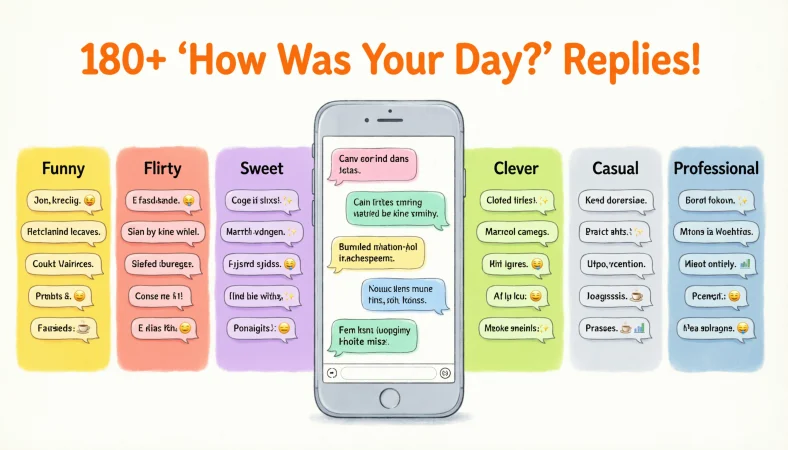
Quick Answer: A great how was your day response can be funny, sweet, flirty, casual, or professional depending on who is asking and the mood you want to create. Try: “Pretty good, how about yours?”, “Better now that you asked,” “A little chaotic, honestly,” “It was a roller coaster,” “Not bad, just happy it’s over.”
Someone asks, “How was your day?” and suddenly your brain forgets every interesting thing that happened since breakfast. Relatable? Whether it comes through a text from your crush, a DM from a friend, a check-in from your partner, or a polite question from a coworker, your how was your day response can say more than you think.
A simple answer can keep a conversation moving, show genuine interest, create a little flirtatious tension, or make someone laugh after a long day. You do not always need a dramatic life update either. Sometimes “Honestly, I survived” says everything. The right response depends on your relationship, mood, and how much you actually want to share. From playful one-liners to thoughtful replies, these responses give you plenty of ways to answer without sounding repetitive, awkward, or like you copied your response from a customer service manual.
Funny Responses
“I survived, so I’m calling it a win.”
Use this when your day was exhausting but you want to keep things light.
Meaning: You are joking about making it through a difficult day.
“My day and I are no longer on speaking terms.”
Use this after a frustrating or chaotic day.
Meaning: You are humorously saying the day did not go well.
“Somewhere between productive and completely confused.”
Use this when your day was a mixture of accomplishments and chaos.
Meaning: You had some success but also plenty of uncertainty.
“Honestly, my coffee did most of the work.”
Use this when caffeine carried you through the day.
Meaning: You are playfully crediting coffee for your productivity.
“It had plot twists.”
Use this when unexpected things happened throughout the day.
Meaning: Your day was unpredictable and entertaining in its own way.
“Ten out of ten would not repeat.”
Use this when your day was particularly stressful.
Meaning: You are jokingly giving the day a terrible review.
“I clocked in, clocked out, and emotionally logged off.”
Use this after a long workday.
Meaning: You are mentally exhausted and ready to relax.
“My day needs a refund.”
Use this when everything seemed to go wrong.
Meaning: You are humorously saying the day was not worth the effort.
“Busy enough to forget what day it is.”
Use this when your schedule has been packed.
Meaning: You have been so busy that time feels confusing.
“It was giving Monday, even though it wasn’t Monday.”
Use this when the day feels unnecessarily difficult.
Meaning: You are comparing the mood to an exhausting Monday.
“I deserve a snack and absolutely no follow-up questions.”
Use this when you want to joke about being tired.
Meaning: You need comfort and downtime more than conversation.
“Let’s just say my bed is getting promoted tonight.”
Use this when you cannot wait to sleep.
Meaning: You are extremely ready to rest.
Flirty Responses
“Better now that you’re asking.”
Use this when you want a subtle romantic hint.
Meaning: Their attention has improved your mood.
“It was good, but talking to you might make it better.”
Use this when you want to gently flirt without going overboard.
Meaning: You enjoy their company and want more conversation.
“Pretty good, but I was hoping you’d text.”
Use this when you want to admit you were thinking about them.
Meaning: You were looking forward to hearing from them.
“Busy day, cute ending so far.”
Use this when you want to turn the conversation playful.
Meaning: Their message is becoming the highlight of your evening.
“It was missing one thing, you.”
Use this when you want a confident romantic reply.
Meaning: You are saying their presence would have made the day better.
“Good enough, but I’d rather hear about yours.”
Use this when you want to keep the conversation focused on them.
Meaning: You are showing interest while keeping a flirtatious tone.
“It got better when your name popped up.”
Use this when texting someone you like.
Meaning: Seeing their message genuinely made you happy.
“I could tell you, but it sounds better over a date.”
Use this when you want to turn casual chatting into an invitation.
Meaning: You are playfully suggesting spending time together.
“A little tiring, but you’re a nice distraction.”
Use this when the conversation already has playful chemistry.
Meaning: You enjoy talking with them despite being tired.
“Honestly? I was waiting for this question.”
Use this when you want to make the other person feel special.
Meaning: You were hoping they would check in.
“It was fine until you made me smile.”
Use this for a cute and teasing response.
Meaning: Their message unexpectedly lifted your mood.
“Long story. I think you should hear it in person.”
Use this when you want to create an opportunity to meet.
Meaning: You are turning a simple question into a subtle invitation.
Polite Responses
“It was good, thank you for asking. How was yours?”
Use this in friendly everyday conversations.
Meaning: You are being courteous while returning the question.
“It was pretty productive, thank you.”
Use this when someone asks about your day casually.
Meaning: You had a useful and successful day.
“It went well overall. I hope yours did too.”
Use this when you want a warm but simple answer.
Meaning: You are positive and considerate.
“It was a little busy, but everything worked out.”
Use this when your schedule was demanding.
Meaning: The day was hectic but ultimately manageable.
“Not too bad, thank you for checking in.”
Use this when someone makes a thoughtful inquiry.
Meaning: You appreciate their concern.
“It was nice, actually. How about you?”
Use this when the day was generally pleasant.
Meaning: You are keeping the conversation open.
“A bit tiring, but I’m doing well.”
Use this when you want to be honest without complaining.
Meaning: You are acknowledging fatigue while staying positive.
“It went smoothly, thankfully.”
Use this after a relatively easy day.
Meaning: You experienced few major problems.
“Pretty good, and I hope your day was good too.”
Use this with friends, relatives, or acquaintances.
Meaning: You are responding warmly and showing mutual interest.
“It was busy, but I got everything done.”
Use this when discussing a productive day.
Meaning: You handled your responsibilities successfully.
“It was pleasant, thanks for asking.”
Use this when you prefer a calm and respectful reply.
Meaning: You are offering a positive but reserved answer.
“I’m doing well, thank you. How has your day been?”
Use this in more formal or respectful conversations.
Meaning: You are politely continuing the exchange.
Professional Responses
“It was productive, thank you. How was yours?”
Use this when a coworker checks in.
Meaning: You are professional while keeping the conversation friendly.
“Busy, but I made good progress.”
Use this when discussing a demanding workday.
Meaning: You had a full schedule but accomplished meaningful tasks.
“It went well overall.”
Use this when you want a concise workplace response.
Meaning: Nothing significant went wrong.
“It was a productive day with a few challenges.”
Use this when the day included obstacles.
Meaning: You faced difficulties but continued making progress.
“Quite busy, but everything stayed on track.”
Use this when talking to a manager or colleague.
Meaning: Your workload was heavy but controlled.
“It went smoothly, thanks for asking.”
Use this when the workday was uncomplicated.
Meaning: You had a positive professional experience.
“A full day, but I accomplished what I needed to.”
Use this when summarizing a demanding schedule.
Meaning: You completed your important responsibilities.
“It was productive and fairly straightforward.”
Use this when you want a polished workplace answer.
Meaning: The day went efficiently without major complications.
“There were a few challenges, but we worked through them.”
Use this when discussing teamwork.
Meaning: Problems occurred but were handled constructively.
“It was a good day for making progress.”
Use this when your work moved forward.
Meaning: You achieved useful results.
“Busy as usual, but nothing I couldn’t handle.”
Use this when you want professional confidence.
Meaning: Your workload was demanding but manageable.
“Overall, it was successful. I appreciate you asking.”
Use this in a polished professional exchange.
Meaning: You are positive, courteous, and composed.
Creative Responses
“A three-act story with coffee in the opening scene.”
Use this when you want an imaginative answer.
Meaning: Your day had a beginning, middle, and plenty of caffeine.
“Somewhere between sunshine and thunderclouds.”
Use this when your emotions were mixed.
Meaning: Your day included both positive and difficult moments.
“A playlist of wins, problems, and one very dramatic chorus.”
Use this when the day had many emotional shifts.
Meaning: Your day was varied and slightly chaotic.
“A little messy, surprisingly memorable.”
Use this when something unusual happened.
Meaning: The day was imperfect but interesting.
“Today had character development.”
Use this after learning something or overcoming a challenge.
Meaning: The day changed you in some meaningful way.
“Like opening one email and accidentally starting a side quest.”
Use this for a surprisingly busy day.
Meaning: One small task turned into many unexpected responsibilities.
“A mixed bag with a decent ending.”
Use this when the day had ups and downs.
Meaning: The overall experience ended positively.
“Part productivity, part comedy, part survival documentary.”
Use this when your day was unusually hectic.
Meaning: Several different moods defined your day.
“It deserves its own episode.”
Use this when something memorable happened.
Meaning: Your day was eventful enough to tell a story about.
“A little chaotic, but the storyline improved.”
Use this when things got better as the day continued.
Meaning: The day started poorly but ended on a positive note.
“A collection of tiny wins.”
Use this when small successes made the day worthwhile.
Meaning: Several little accomplishments added up.
“Unexpected, imperfect, and somehow worth remembering.”
Use this when you want a thoughtful creative answer.
Meaning: The day had flaws but still mattered to you.
Sarcastic Responses
“Absolutely magical, if you enjoy unnecessary problems.”
Use this after an especially frustrating day.
Meaning: You are sarcastically saying the day was difficult.
“Wonderful. My patience has left the chat.”
Use this when people or situations tested you.
Meaning: You are humorously admitting you are out of patience.
“Fantastic. I especially loved the stress.”
Use this when your day was packed with pressure.
Meaning: You are using sarcasm to describe an unpleasant experience.
“Five stars for effort, two stars for execution.”
Use this when the day had mixed results.
Meaning: Things were attempted but did not go perfectly.
“Beautiful. Nothing went according to plan.”
Use this when everything became unpredictable.
Meaning: Your plans were disrupted.
“Perfect, if the goal was to test my limits.”
Use this when you felt pushed all day.
Meaning: You experienced several challenging moments.
“Living the dream, unfortunately.”
Use this when reality is far less glamorous than expected.
Meaning: You are joking about a disappointing day.
“It was a masterpiece of poor timing.”
Use this when everything happened at inconvenient moments.
Meaning: Timing made the day more frustrating.
“Could’ve been worse, but I’m not giving anyone ideas.”
Use this when you want dry humor.
Meaning: The day was difficult enough without inviting more problems.
“My day apparently chose violence.”
Use this when several annoying things happened.
Meaning: You are humorously describing relentless trouble.
“Just another episode of me figuring things out.”
Use this when the day was confusing.
Meaning: You are laughing at your own uncertainty.
“I’d rate it, but I don’t want to get sued.”
Use this when your day was hilariously bad.
Meaning: You are exaggerating how poorly things went.
Cute Responses
“It was good, but talking to you made it sweeter.”
Use this when replying to someone you care about.
Meaning: Their attention made your day more enjoyable.
“A little tiring, but I’m smiling now.”
Use this when their message lifts your mood.
Meaning: You were tired but happy to hear from them.
“Pretty good, especially now.”
Use this for a short affectionate reply.
Meaning: Their presence improved your mood.
“It was okay, but I missed having someone to talk to.”
Use this when you want to invite a deeper conversation.
Meaning: You wanted companionship during the day.
“Busy, but I found a few reasons to smile.”
Use this when you had a positive day.
Meaning: Small moments made the day special.
“Honestly, better than expected.”
Use this when your day surprised you positively.
Meaning: Things turned out better than you anticipated.
“It was sweet in little ways.”
Use this when small moments mattered.
Meaning: Simple experiences made you happy.
“A little chaotic, but cute somehow.”
Use this when the day was messy but enjoyable.
Meaning: Imperfections did not stop you from enjoying it.
“It was fine, but I’m happy you asked.”
Use this when you appreciate the person’s attention.
Meaning: Their concern means something to you.
“Pretty peaceful, actually.”
Use this when your day was calm.
Meaning: You enjoyed a relaxed and comfortable day.
“It had its moments, and most were pretty nice.”
Use this when you want a gentle positive answer.
Meaning: You remember the day fondly overall.
“Honestly, I’m just happy to be talking to you.”
Use this when you want to sound warm and sincere.
Meaning: The conversation itself is making you feel good.
Dramatic Responses
“Where do I even begin?”
Use this when your day was packed with stories.
Meaning: So much happened that a short answer will not cover it.
“Today was a journey.”
Use this when the day had many ups and downs.
Meaning: The day felt longer or more eventful than usual.
“I have survived another chapter.”
Use this after a stressful day.
Meaning: You are playfully treating the day like an epic challenge.
“It was an emotional roller coaster with no seatbelt.”
Use this when your mood changed repeatedly.
Meaning: The day was emotionally intense.
“Today tested every ounce of my patience.”
Use this after multiple frustrations.
Meaning: You found the day especially challenging.
“I need a full documentary to explain it.”
Use this when too much happened to summarize quickly.
Meaning: Your day was unusually eventful.
“There were victories, defeats, and unnecessary plot twists.”
Use this when the day was unpredictable.
Meaning: You experienced several highs and lows.
“I emerged, somehow.”
Use this after an exhausting day.
Meaning: You are jokingly proud of surviving it.
“Today had absolutely no respect for my plans.”
Use this when unexpected events disrupted your schedule.
Meaning: Your plans repeatedly went wrong.
“I feel like I lived three different days.”
Use this when the day felt extremely long.
Meaning: So much happened that it seemed endless.
“My emotional support blanket has been informed.”
Use this when you need comfort after a difficult day.
Meaning: You are ready to relax and recover.
“Let’s just say tomorrow has a lot to live up to.”
Use this when today was particularly memorable.
Meaning: The day was unusually eventful.
Chill And Casual Responses
“Pretty good, how about you?”
Use this when you want the easiest everyday answer.
Meaning: You are positive and interested in their day.
“Not bad at all.”
Use this when the day was decent.
Meaning: You had a generally okay experience.
“It was alright.”
Use this when you want to keep things simple.
Meaning: Nothing particularly exciting or terrible happened.
“Busy, but I’m good.”
Use this when your schedule was full.
Meaning: You were occupied but are doing fine.
“Honestly, pretty chill.”
Use this when your day was relaxed.
Meaning: You had a calm experience.
“Same old, same old.”
Use this when nothing unusual happened.
Meaning: Your day was ordinary.
“Can’t complain.”
Use this when things went reasonably well.
Meaning: You have no major problems to report.
“Long day, but I’m finally relaxing.”
Use this when you are winding down.
Meaning: Your responsibilities are over and you are resting.
“It was decent.”
Use this when you want a neutral response.
Meaning: The day was neither especially good nor bad.
“Pretty normal, honestly.”
Use this when nothing memorable happened.
Meaning: Your day followed a typical routine.
“Good enough to make it to tomorrow.”
Use this when you want understated humor.
Meaning: You made it through the day without major issues.
“All good over here.”
Use this when you want a relaxed, upbeat answer.
Meaning: Everything is generally fine.
Confident Responses
“Productive, focused, and handled.”
Use this when you want to sound self-assured.
Meaning: You managed your responsibilities successfully.
“I got a lot done today.”
Use this when you are proud of your progress.
Meaning: You had a productive day.
“Busy, but I stayed on top of everything.”
Use this when your schedule was demanding.
Meaning: You remained organized under pressure.
“Honestly, I had a good one.”
Use this when you feel positive about your day.
Meaning: You genuinely enjoyed the experience.
“I made progress, and that’s what matters.”
Use this after a day of meaningful effort.
Meaning: You value progress over perfection.
“A strong day overall.”
Use this when you want a polished confident answer.
Meaning: The day produced positive results.
“I handled what needed handling.”
Use this when you want a calm, capable tone.
Meaning: You took care of your responsibilities.
“Pretty successful, if I’m being honest.”
Use this when you accomplished important goals.
Meaning: You are comfortable recognizing your achievements.
“I kept things moving.”
Use this when your day involved steady progress.
Meaning: You continued making progress despite obstacles.
“I stayed focused and got results.”
Use this in work or personal conversations.
Meaning: Your effort produced tangible progress.
“Definitely a day worth being proud of.”
Use this after achieving something meaningful.
Meaning: You recognize your own accomplishment.
Emotional Responses
“It was a lot, honestly.”
Use this when you do not want to hide that you struggled.
Meaning: The day felt emotionally or mentally demanding.
“A little overwhelming, but I’m okay.”
Use this when you want to be honest without worrying someone.
Meaning: You experienced stress but are managing it.
“It had some really good moments.”
Use this when you want to focus on the positives.
Meaning: Certain parts of the day made you happy.
“Not my easiest day, but I got through it.”
Use this after a difficult experience.
Meaning: The day was challenging but you persevered.
“Honestly, I needed someone to ask.”
Use this when you have been waiting to talk.
Meaning: You appreciate having an opportunity to share.
“It was emotional in ways I didn’t expect.”
Use this after an unexpectedly intense day.
Meaning: Events affected you more deeply than anticipated.
“I’m still processing it.”
Use this when something significant happened.
Meaning: You need time to understand your feelings.
“Some good, some difficult.”
Use this when your emotions are mixed.
Meaning: The day contained both positive and negative moments.
“I’m okay now, but today was tough.”
Use this when you want to acknowledge difficulty.
Meaning: You experienced hardship but feel more stable now.
“It reminded me to slow down a little.”
Use this after an exhausting or reflective day.
Meaning: The experience encouraged you to reconsider your pace.
“I learned a few things about myself today.”
Use this after a meaningful experience.
Meaning: The day gave you personal insight.
“I’m glad the day is over, but I’m grateful for what it taught me.”
Use this when the day was difficult but meaningful.
Meaning: You recognize the value in a challenging experience.
Sweet Responses
“It was good, and I’m grateful you asked.”
Use this when you want to show appreciation.
Meaning: Their concern made you feel valued.
“A little busy, but there were some beautiful moments.”
Use this when you want a warm reflective answer.
Meaning: Small positive experiences stood out.
“Pretty good. I hope yours was kind to you too.”
Use this when you want to sound thoughtful.
Meaning: You genuinely care about their experience.
“It got better toward the end.”
Use this when something positive happened later.
Meaning: The day finished on a better note.
“It was tiring, but I’m thankful for it.”
Use this when your day was busy but meaningful.
Meaning: You appreciate what the day brought you.
“A little hectic, but there were plenty of reasons to smile.”
Use this when your day had both pressure and joy.
Meaning: Positive moments outweighed the stress.
“It was nice, especially because I had something to look forward to.”
Use this when an upcoming event lifted your mood.
Meaning: Anticipation made the day feel better.
“Today reminded me to appreciate the little things.”
Use this after a reflective day.
Meaning: Small moments had a meaningful impact.
“It was okay, but I’m ending it on a happy note.”
Use this when your mood improved by evening.
Meaning: You are choosing to focus on positivity.
“Honestly, I’m grateful for today.”
Use this when you feel genuinely appreciative.
Meaning: You see value in the day’s experiences.
“It had challenges, but I’m thankful for the good parts.”
Use this when the day was mixed.
Meaning: You recognize both difficulty and gratitude.
“I’m tired, but my heart feels pretty full.”
Use this after a meaningful day.
Meaning: You are physically tired but emotionally satisfied.
Clever Responses
“Depends, are we reviewing the highlights or the bloopers?”
Use this when your day had both wins and mistakes.
Meaning: You are playfully acknowledging the good and bad moments.
“Ask me after my second snack.”
Use this when hunger is affecting your mood.
Meaning: Food is currently your top priority.
“Efficient enough to impress my calendar.”
Use this when you had a highly organized day.
Meaning: You managed your schedule impressively.
“It passed the ‘would I repeat it?’ test.”
Use this when the day was enjoyable.
Meaning: You would willingly experience a similar day again.
“My productivity and I had a complicated relationship.”
Use this when you struggled to stay focused.
Meaning: You had mixed success getting things done.
“It was better than my expectations, which were suspiciously low.”
Use this when the day surprised you.
Meaning: Things went better than anticipated.
“A decent chapter in the ongoing novel.”
Use this when you want a thoughtful but playful reply.
Meaning: Today was one part of your larger life story.
“My calendar says productive, my brain says otherwise.”
Use this after a busy day.
Meaning: You completed tasks but still feel mentally exhausted.
“I’d call it a soft launch into tomorrow.”
Use this when the day felt like preparation for what comes next.
Meaning: Today set you up for the following day.
“The statistics are still being reviewed.”
Use this when you want a mysterious humorous response.
Meaning: You are playfully refusing to give a simple rating.
“Results were mixed, vibes were acceptable.”
Use this when your day was neither great nor terrible.
Meaning: Your experience was average but manageable.
“Ask me again when I’ve emotionally recovered.”
Use this after a stressful day.
Meaning: You need some downtime before fully discussing it.
Playful Responses
“Take a guess.”
Use this when you want to tease the person asking.
Meaning: You are inviting them to playfully figure out your mood.
“You get three guesses.”
Use this when you want to make a basic question more entertaining.
Meaning: You are turning the conversation into a game.
“Better than yesterday, worse than vacation.”
Use this when your day was somewhere in the middle.
Meaning: You are comparing it with two very different experiences.
“It had snacks, so it wasn’t a total loss.”
Use this when food was one of the day’s highlights.
Meaning: Small comforts helped you get through it.
“Ask my face. It knows everything.”
Use this when your expression clearly reveals your mood.
Meaning: Your appearance probably tells the story better than words.
“I have notes.”
Use this when something interesting happened.
Meaning: You have plenty to say if they want the details.
“That depends on whether we count the morning.”
Use this when the day improved later.
Meaning: Different parts of the day had very different moods.
“Currently accepting compliments and snacks.”
Use this when you want playful attention.
Meaning: You are jokingly asking for comfort or praise.
“Surprisingly functional.”
Use this when you managed to get through a tiring day.
Meaning: You are proud that you remained productive despite everything.
“Ask me before I start exaggerating.”
Use this when you want to tell a funny story.
Meaning: You are teasing that the story may become dramatic.
“It deserves a rating, but I need time to process the evidence.”
Use this when the day was unpredictable.
Meaning: You are playfully treating your experience like a review.
“Let’s just say I earned my evening.”
Use this when you worked hard all day.
Meaning: You feel entitled to rest and enjoy yourself.
Short And Direct Responses
“Pretty good.”
Use this when you want a quick positive reply.
Meaning: Your day went well.
“Not bad.”
Use this when you want a neutral answer.
Meaning: The day was acceptable.
“Really good!”
Use this when you had an especially positive day.
Meaning: You genuinely enjoyed it.
“A little hectic.”
Use this when you were busy.
Meaning: Your day was demanding.
“Long, honestly.”
Use this when the day felt exhausting.
Meaning: You experienced a tiring stretch of time.
“Pretty chill.”
Use this when the day was relaxed.
Meaning: Nothing caused much stress.
“Busy but productive.”
Use this when you accomplished a lot.
Meaning: Your schedule was full but worthwhile.
“Could’ve been better.”
Use this when the day disappointed you.
Meaning: You experienced some problems.
“Much better than expected.”
Use this when the day pleasantly surprised you.
Meaning: Your experience exceeded your expectations.
“A mixed bag.”
Use this when the day had ups and downs.
Meaning: Some things went well while others did not.
“Actually, pretty great.”
Use this when you want an enthusiastic response.
Meaning: You had a genuinely enjoyable day.
“I’m glad it’s over.”
Use this when you are exhausted or frustrated.
Meaning: You are ready to leave the day behind and rest.
FAQs
What does “How was your day?” mean?
It is usually a simple way of asking about someone’s experiences, mood, or activities throughout the day. It can also show genuine care and interest.
What is a good response to “How was your day?”
A natural answer is “Pretty good, how was yours?” You can make it funny, flirty, detailed, or professional depending on who is asking.
What does “How was your day?” mean when a crush asks?
It can simply be friendly conversation, but it may also show that the person wants to know more about your life. The tone and context matter.
How do you give a flirty response to “How was your day?”
Try something like “Better now that you’re asking” or “It was missing one thing, you.” These keep the tone playful without being too intense.
What should you say if you had a bad day?
You can be honest with “Honestly, it was a rough one, but I’m okay now.” You do not have to pretend everything was perfect.
What is a professional response to “How was your day?”
Try “It was productive, thank you. How was yours?” It is polite, concise, and appropriate for workplace conversations.
What if you do not actually want to talk about your day?
Keep it simple with “It was okay, thanks for asking.” You can then redirect the conversation by asking about their day.
Is humor appropriate when answering “How was your day?”
Yes, especially with friends, family, or someone you already have a playful relationship with. Keep professional settings more measured.
How can you keep the conversation going after answering?
Return the question, mention one interesting detail, or ask something specific about their day. A small detail can turn a basic exchange into a real conversation.
What is a sweet response to “How was your day?”
“Pretty good, and I’m glad you asked” is warm without being overly sentimental. For someone special, “Better now that I’m talking to you” adds a little affection.
Conclusion
A simple “How was your day?” can become a surprisingly fun conversation starter when you choose the right reply. Whether you want to be funny, flirty, professional, sweet, clever, or completely casual, the best response sounds like something you would actually say. You do not need a perfect line every time.
Sometimes a short “Pretty good, how about you?” works beautifully, while other moments call for a little personality. Use these responses as inspiration, mix them with your own style, and keep the conversation natural. Save this list for your next text, DM, or late-night chat, share it with a friend who always says “fine,” and come back whenever you need a fresh reply.