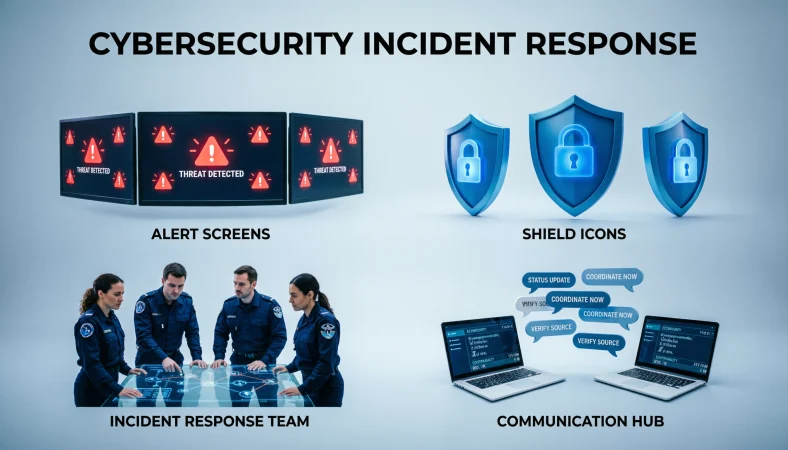
Quick Answer: A cyber attack response is the way a person, team, or organization communicates and reacts when a cyber incident is suspected or confirmed. The best response stays calm, avoids speculation, preserves important information, and focuses on clear next steps.
“Stay calm and follow the incident plan”, “We’re investigating the issue”, “Contain first, communicate clearly”, “Security is reviewing the incident”, “Let’s focus on facts and next steps”
Nothing turns a normal workday into a full-blown group-chat situation faster than discovering something suspicious on a company system. One minute everyone is answering emails, and the next someone is asking whether the strange login, locked account, or unexpected file activity is a cyber attack. A good cyber attack response is not about panicking, pointing fingers, or sending a dramatic message before the facts are known. It is about responding clearly, calmly, and responsibly.
Whether you are communicating with coworkers, customers, managers, IT teams, or leadership, the words you choose can shape how people understand the situation. A strong response acknowledges the issue without spreading rumors, explains what is known, and directs people toward appropriate action. Basically, when technology decides to cause chaos, your communication should be the calmest thing in the room.
Professional Cyber Attack Responses
“We are investigating the reported security issue.”
Use this when notifying colleagues that a potential incident is being reviewed.
Meaning: The issue is receiving formal attention without jumping to conclusions.
“Our security team is reviewing the activity.”
Use this when suspicious system activity has been reported.
Meaning: The appropriate team is assessing what happened.
“We are following the established incident response process.”
Use this when reassuring stakeholders that a procedure is already in place.
Meaning: The organization is responding according to its planned framework.
“We are currently assessing the scope of the incident.”
Use this when the full impact is not yet known.
Meaning: The team is determining which systems or information may be affected.
“Please avoid making assumptions while the investigation continues.”
Use this when speculation is spreading internally.
Meaning: You want communication to remain evidence-based.
“The incident has been escalated to the appropriate security personnel.”
Use this when a potential cyber event requires specialist attention.
Meaning: The issue has reached the people responsible for handling it.
“We are prioritizing containment and system security.”
Use this when explaining immediate response priorities.
Meaning: Reducing further risk is currently a major focus.
“We will provide verified updates as information becomes available.”
Use this when stakeholders want immediate answers.
Meaning: Updates will be based on confirmed information.
“The reported activity is being treated as a potential security incident.”
Use this when an event has not yet been confirmed as an attack.
Meaning: The organization is taking the report seriously while maintaining appropriate uncertainty.
“Please direct security-related questions to the designated response team.”
Use this when multiple people are communicating about an incident.
Meaning: Centralized communication can reduce confusion.
“We are documenting the incident and response actions.”
Use this when explaining how the response is being managed.
Meaning: Important events and decisions are being recorded.
“We will communicate confirmed findings through the appropriate channels.”
Use this when people are requesting unofficial updates.
Meaning: Reliable information will come through controlled communication.
Calm And Reassuring Responses
“Let’s stay calm and focus on the facts.”
Use this when people begin reacting emotionally to a suspected attack.
Meaning: You are encouraging a measured response.
“We have a process for situations like this.”
Use this when colleagues are becoming anxious.
Meaning: The organization has established procedures for handling incidents.
“We are looking into it now.”
Use this when someone wants immediate reassurance.
Meaning: The issue is actively being investigated.
“Let’s avoid speculation until we know more.”
Use this when rumors begin circulating.
Meaning: You want people to wait for verified information.
“One step at a time.”
Use this when an incident feels overwhelming.
Meaning: The response should focus on manageable priorities.
“We’ll share confirmed information when we have it.”
Use this when people are asking for details that are not yet available.
Meaning: You prefer accurate updates over guesses.
“The important thing is that the issue has been identified.”
Use this when reassuring a team after suspicious activity is noticed.
Meaning: Detection gives the response team an opportunity to investigate and act.
“Let’s focus on what we can control.”
Use this when employees are becoming distracted by speculation.
Meaning: Attention should remain on useful response actions.
“We’re taking the report seriously.”
Use this when someone worries their security concern will be ignored.
Meaning: The concern has been acknowledged.
“We’re working through the situation carefully.”
Use this when providing a calm internal update.
Meaning: The response is being handled deliberately.
“No need to guess what happened yet.”
Use this when people are trying to identify the attacker prematurely.
Meaning: Conclusions should wait for evidence.
“Calm communication helps everyone respond better.”
Use this when an incident creates workplace tension.
Meaning: Clear communication supports an organized response.
Short Cyber Attack Responses
“Security is investigating.”
Use this when you need a brief professional update.
Meaning: The relevant team is reviewing the situation.
“Incident reported.”
Use this for a concise internal status message.
Meaning: A potential security event has been formally raised.
“Investigation underway.”
Use this when there is limited confirmed information.
Meaning: Assessment is currently taking place.
“Response process activated.”
Use this when an established response procedure has begun.
Meaning: The organization has moved into incident handling.
“The issue is being assessed.”
Use this when the scope remains unclear.
Meaning: The team is determining what happened.
“Containment is being prioritized.”
Use this when communicating an immediate response focus.
Meaning: The team is working to limit further impact.
“Updates will follow.”
Use this when more information is expected later.
Meaning: Additional verified information will be communicated.
“Please follow security guidance.”
Use this when employees need to follow official instructions.
Meaning: Staff should rely on approved response directions.
“The alert has been escalated.”
Use this when suspicious activity has reached the relevant team.
Meaning: The matter is receiving additional attention.
“We’re reviewing the activity.”
Use this when the event is still being assessed.
Meaning: The reported activity is under investigation.
“Facts first, speculation later.”
Use this when people are discussing an uncertain incident.
Meaning: Evidence should guide communication.
“Security has it from here.”
Use this when a specialist team has taken ownership of the investigation.
Meaning: The appropriate responders are now handling the matter.
Incident Response Team Messages
“Team, we have a security event to assess.”
Use this when alerting responders to a potential incident.
Meaning: The team needs to begin structured assessment.
“Let’s establish what we know and what we do not know.”
Use this when beginning an incident discussion.
Meaning: The team should separate confirmed facts from unknowns.
“Please document relevant observations and timestamps.”
Use this when coordinating incident information.
Meaning: Accurate records can support the investigation.
“Keep communication within the designated incident channel.”
Use this when multiple conversations are developing.
Meaning: Centralized communication helps maintain clarity.
“Let’s confirm the affected systems before drawing conclusions.”
Use this when the scope is uncertain.
Meaning: The team should verify impact before making broad claims.
“Escalate anything that could materially affect the incident.”
Use this when coordinating responders.
Meaning: Significant developments should reach the appropriate decision-makers.
“Preserve relevant information according to our procedures.”
Use this when an investigation may require supporting evidence.
Meaning: Important information should be handled according to established processes.
“Let’s keep the timeline updated.”
Use this during an ongoing investigation.
Meaning: The team should maintain an accurate sequence of events.
“Assign clear owners for each response task.”
Use this when many people are involved.
Meaning: Defined responsibilities reduce duplicated or missed work.
“Confirm each major action before communicating it externally.”
Use this when coordinating public or customer-facing updates.
Meaning: External messages should reflect verified information.
“Let’s separate confirmed indicators from working theories.”
Use this during technical incident analysis.
Meaning: Hypotheses should not be presented as established facts.
“Keep the response focused and documented.”
Use this when an incident becomes complicated.
Meaning: Organized action and records should remain priorities.
Cyber Attack Responses For Management
“The incident is being actively assessed by the security team.”
Use this when updating managers about a potential attack.
Meaning: Specialist responders are handling the technical assessment.
“We are determining the current scope and business impact.”
Use this when leadership needs a status update.
Meaning: The investigation is considering both technical and operational effects.
“We will provide a verified update at the next agreed checkpoint.”
Use this when leadership wants structured communication.
Meaning: Updates will follow a defined schedule.
“The immediate priority is reducing further risk.”
Use this when explaining response priorities to management.
Meaning: The team is focused on limiting additional impact.
“We are coordinating the response across the relevant teams.”
Use this when multiple departments are involved.
Meaning: Security, technology, legal, communications, or other functions may need coordinated action.
“The current findings remain preliminary.”
Use this when early information could change.
Meaning: Initial conclusions should not be treated as final.
“We are separating confirmed facts from unresolved questions.”
Use this when providing an executive update.
Meaning: The status report distinguishes evidence from uncertainty.
“Further information is required before determining the full impact.”
Use this when the investigation is incomplete.
Meaning: A reliable impact assessment is not yet available.
“The response is being managed through the established escalation process.”
Use this when leadership asks how the incident is being controlled.
Meaning: The organization is using its predefined escalation structure.
“We are documenting decisions and significant developments.”
Use this when discussing incident governance.
Meaning: Important response activity is being formally recorded.
“We will avoid communicating unverified conclusions.”
Use this when discussing external or internal messaging.
Meaning: Accuracy is being prioritized.
“The situation remains under active review.”
Use this when there is no final conclusion yet.
Meaning: Monitoring and investigation are continuing.
Customer-Facing Cyber Attack Responses
“We are investigating a security issue affecting some services.”
Use this when customers need a clear but measured notification.
Meaning: You acknowledge the issue without overstating unconfirmed details.
“We are actively working to understand the situation.”
Use this when an investigation is ongoing.
Meaning: The organization is taking action to determine what happened.
“We understand the concern this may cause.”
Use this when communicating with affected customers.
Meaning: You are acknowledging the emotional and practical impact.
“We will provide verified updates through our official communication channels.”
Use this when customers need reliable information.
Meaning: Future updates will come from an authoritative source.
“We are taking appropriate steps to protect our systems.”
Use this when reassuring customers during an incident.
Meaning: Security measures are being actively addressed.
“We are working to restore normal service safely.”
Use this when an incident affects service availability.
Meaning: Recovery is being pursued while security remains important.
“We appreciate your patience while the investigation continues.”
Use this when customers are waiting for more information.
Meaning: You recognize that uncertainty can be frustrating.
“We will communicate confirmed findings when appropriate.”
Use this when details are still being established.
Meaning: Information will be shared once sufficiently verified.
“Customer security remains a key priority.”
Use this when reassuring customers about the response.
Meaning: Protecting customers is central to the organization’s handling of the incident.
“We are coordinating with the relevant security specialists.”
Use this when explaining that the incident is receiving specialist attention.
Meaning: Qualified personnel are involved in the response.
“We recommend following any security instructions we provide.”
Use this when customers may need to take protective steps.
Meaning: Customers should rely on official guidance rather than rumors.
“We regret the disruption and are working through the issue.”
Use this when a security event affects normal service.
Meaning: You acknowledge the inconvenience while communicating active response efforts.
Employee Cyber Attack Responses
“Please report suspicious activity through the approved security channel.”
Use this when reminding employees how to raise concerns.
Meaning: Employees should use the organization’s designated reporting process.
“Do not forward suspicious messages to coworkers.”
Use this when addressing a potentially malicious email or message.
Meaning: Sharing suspicious content can create additional exposure.
“Please follow the security team’s instructions.”
Use this when employees have received official response guidance.
Meaning: Staff should rely on authorized directions.
“If something looks unusual, report it rather than ignoring it.”
Use this when encouraging employees to raise concerns.
Meaning: Early reporting can help security teams investigate potential issues.
“Avoid discussing unconfirmed incident details publicly.”
Use this when reminding employees about responsible communication.
Meaning: Sensitive or uncertain information should not be casually shared.
“Use the official incident channel for updates.”
Use this when employees are receiving information from multiple sources.
Meaning: One trusted channel should remain the reference point.
“Please do not attempt your own investigation.”
Use this when employees discover suspicious activity.
Meaning: Specialist teams should handle technical investigation according to organizational procedures.
“Report the alert and let the security team assess it.”
Use this when someone notices something suspicious.
Meaning: Employees should escalate concerns instead of trying to determine the cause themselves.
“Keep your communication factual.”
Use this when an incident creates uncertainty.
Meaning: Employees should share what they observed without adding speculation.
“Follow the temporary access instructions provided by security.”
Use this when account or system access changes during an incident.
Meaning: Employees should comply with official response measures.
“If you receive new information, report it promptly.”
Use this when an investigation is active.
Meaning: Relevant observations should reach responders quickly.
“When in doubt, escalate it.”
Use this as a memorable security reminder.
Meaning: Uncertainty should lead to appropriate reporting rather than silence.
Technical Cyber Attack Responses
“The alert requires further validation.”
Use this when an automated security alert needs investigation.
Meaning: The alert should be assessed before conclusions are reached.
“We are correlating the available security data.”
Use this when analyzing information from multiple security sources.
Meaning: Responders are comparing relevant observations to understand the event.
“The activity requires additional investigation.”
Use this when suspicious behavior has been detected.
Meaning: More analysis is needed before determining what occurred.
“The current evidence does not establish the full scope.”
Use this when the investigation remains incomplete.
Meaning: The available information is not sufficient for a complete assessment.
“We are validating the affected assets.”
Use this when determining which systems may be involved.
Meaning: The team is confirming the systems connected to the incident.
“The event remains under technical review.”
Use this when an alert has not been fully analyzed.
Meaning: Security specialists are continuing their assessment.
“We are reviewing relevant logs and telemetry.”
Use this when describing an investigation to a technical audience.
Meaning: Available technical records are being examined.
“The incident timeline is being reconstructed.”
Use this when responders are establishing the sequence of activity.
Meaning: The team is working to understand when relevant events occurred.
“We are validating the indicators before escalation.”
Use this when suspicious technical indicators require confirmation.
Meaning: The information is being checked for reliability.
“The affected environment is being assessed.”
Use this when determining potential technical impact.
Meaning: Responders are examining systems that may be involved.
“Further evidence is needed before attribution.”
Use this when someone asks who caused the incident.
Meaning: Identifying a responsible party requires sufficient supporting evidence.
“Technical findings remain preliminary.”
Use this when communicating early investigation results.
Meaning: The assessment may change as more evidence becomes available.
Executive Cyber Attack Responses
“The incident is being handled through the established response structure.”
Use this when giving senior leadership a concise status update.
Meaning: The organization has activated its planned response process.
“The current assessment is still developing.”
Use this when the situation changes rapidly.
Meaning: The available information is not yet final.
“Our immediate focus is containment, assessment, and safe recovery.”
Use this when summarizing broad response priorities.
Meaning: The response is focused on limiting impact and restoring operations appropriately.
“We are coordinating technical and business stakeholders.”
Use this when several organizational functions are involved.
Meaning: The response requires cross-functional coordination.
“We are maintaining a documented incident timeline.”
Use this when leadership asks how progress is being tracked.
Meaning: Key events and decisions are being recorded.
“The business impact is still being evaluated.”
Use this when operational consequences are unclear.
Meaning: The organization has not yet completed its impact assessment.
“We are communicating confirmed information only.”
Use this when leadership wants reliable messaging.
Meaning: Unverified claims are being excluded from official updates.
“The response remains under active management.”
Use this when providing a high-level status.
Meaning: Responsible teams continue to oversee the situation.
“Additional escalation will occur if the situation meets the relevant criteria.”
Use this when explaining escalation decisions.
Meaning: Further action will follow established thresholds or procedures.
“Recovery decisions are being made with security considerations in mind.”
Use this when discussing restoration activities.
Meaning: Returning systems to service should account for security risks.
“We will provide the next update when material information is confirmed.”
Use this when avoiding unnecessary status messages.
Meaning: Updates will focus on meaningful developments.
“The investigation and response activities are continuing.”
Use this when the incident remains unresolved.
Meaning: Teams are still actively working through the event.
Honest And Transparent Responses
“We do not know the full impact yet.”
Use this when stakeholders ask a question the investigation cannot answer yet.
Meaning: You are being transparent about uncertainty.
“We are still verifying what happened.”
Use this when early information is incomplete.
Meaning: The facts are still being established.
“We do not want to speculate.”
Use this when someone asks for an unsupported explanation.
Meaning: You prefer evidence over assumptions.
“That detail has not been confirmed.”
Use this when correcting an unverified claim.
Meaning: The information should not yet be treated as fact.
“We will say what we know and be clear about what we do not.”
Use this when communicating during an uncertain incident.
Meaning: Transparency includes acknowledging knowledge gaps.
“The investigation may change our current understanding.”
Use this when initial findings are still developing.
Meaning: Early conclusions should remain flexible.
“We are not ready to draw that conclusion.”
Use this when someone wants a definitive answer too early.
Meaning: More evidence is needed.
“We are checking the information before sharing it.”
Use this when someone requests an immediate update.
Meaning: Accuracy is being prioritized.
“The current information is preliminary.”
Use this when presenting early findings.
Meaning: The situation may become clearer as the investigation continues.
“We will correct the record if new facts change our understanding.”
Use this when communicating evolving information.
Meaning: Accuracy remains important even as circumstances change.
“We would rather provide an accurate update than a rushed one.”
Use this when people demand immediate answers.
Meaning: Reliable communication is more valuable than speculation.
“We are keeping stakeholders informed as facts are confirmed.”
Use this when explaining the communication approach.
Meaning: Updates will follow verified developments.
Serious Cyber Attack Responses
“This requires immediate attention.”
Use this when a reported security event appears significant.
Meaning: The issue should be addressed promptly.
“We are treating the incident as a priority.”
Use this when communicating the seriousness of a potential attack.
Meaning: Appropriate resources and attention are being directed toward it.
“The situation has been escalated for urgent assessment.”
Use this when specialist review is needed quickly.
Meaning: The incident has moved to a higher level of response.
“We need to focus on containment and verified information.”
Use this when an incident is developing quickly.
Meaning: Limiting further impact and maintaining accurate communication are priorities.
“Please follow the response instructions carefully.”
Use this when employees need to take official action.
Meaning: Consistent execution matters during a serious incident.
“Do not speculate or share unverified information.”
Use this when rumors could complicate the response.
Meaning: Communication should remain controlled and factual.
“All relevant developments should be escalated promptly.”
Use this when coordinating a serious incident.
Meaning: Significant changes should reach responders quickly.
“We are treating the reported activity with appropriate urgency.”
Use this when the incident has not yet been fully confirmed.
Meaning: The organization is taking the concern seriously without overstating what is known.
“The response team is actively coordinating next steps.”
Use this when stakeholders want reassurance about ongoing action.
Meaning: Responders are organizing the appropriate actions.
“We are prioritizing the protection of critical services.”
Use this when discussing operational priorities.
Meaning: Important business functions receive focused attention.
“Further information will be shared through approved channels.”
Use this when the incident requires controlled communication.
Meaning: Official channels should remain the trusted source.
“The incident remains a high-priority investigation.”
Use this when communicating an ongoing serious investigation.
Meaning: The issue continues to receive significant attention.
Post-Incident Responses
“The immediate response has concluded, and follow-up work continues.”
Use this when transitioning from active response to review.
Meaning: The urgent phase has ended but important work remains.
“We are reviewing what happened and what can be improved.”
Use this during a post-incident discussion.
Meaning: The organization is learning from the event.
“The incident timeline is being finalized.”
Use this when completing post-incident documentation.
Meaning: The sequence of events is being formally reviewed.
“We are documenting lessons from the incident.”
Use this when discussing improvements after an event.
Meaning: Experience from the incident will inform future response efforts.
“Follow-up actions have been identified.”
Use this when summarizing post-incident findings.
Meaning: Specific improvements or corrective tasks have been recognized.
“We are reviewing our response procedures.”
Use this after a security event.
Meaning: Existing processes are being examined for potential improvements.
“The incident has highlighted areas for additional attention.”
Use this when discussing weaknesses without assigning blame.
Meaning: The event identified areas that may need improvement.
“We are tracking the agreed corrective actions.”
Use this when following up on incident recommendations.
Meaning: Improvement tasks are being monitored.
“The response will inform future security planning.”
Use this when discussing long-term improvements.
Meaning: Experience from the incident can influence future preparation.
“We are capturing the key decisions and outcomes.”
Use this during a formal post-incident review.
Meaning: Important response information is being preserved.
“The focus now is recovery and improvement.”
Use this when the immediate incident has stabilized.
Meaning: Attention has shifted toward restoring normal operations and strengthening future readiness.
“We are turning the incident into practical lessons.”
Use this when encouraging constructive post-incident discussion.
Meaning: The experience should contribute to meaningful improvements.
Friendly Cybersecurity Responses
“Good catch. Let’s get security to take a look.”
Use this when a coworker spots something unusual.
Meaning: You appreciate the report and want the right team to assess it.
“Thanks for flagging that.”
Use this when someone reports suspicious activity.
Meaning: You acknowledge their helpful action.
“Better to report it than ignore it.”
Use this when encouraging security-conscious behavior.
Meaning: Reporting uncertainty is preferable to overlooking a potential issue.
“Let’s get the right people on it.”
Use this when a security concern appears outside your expertise.
Meaning: The appropriate specialists should handle the situation.
“Nice spot. We’ll escalate it properly.”
Use this when someone notices something suspicious.
Meaning: Their observation is being taken seriously.
“Good call raising it.”
Use this when thanking someone for reporting a concern.
Meaning: You support proactive security awareness.
“No panic, just follow the process.”
Use this when colleagues are becoming nervous.
Meaning: The response should remain calm and organized.
“Thanks for speaking up.”
Use this when someone reports an unusual event.
Meaning: You appreciate their willingness to raise a concern.
“Let’s leave the detective work to security.”
Use this when coworkers want to investigate suspicious activity themselves.
Meaning: Specialist responders should handle the technical investigation.
“Flag it, document it, escalate it.”
Use this as a memorable workplace security reminder.
Meaning: Potential incidents should be reported and routed appropriately.
“Security first, detective stories later.”
Use this when someone starts speculating about an incident.
Meaning: Immediate safety and evidence-based response matter more than theories.
“Good spot. Let’s keep the facts coming.”
Use this when a colleague provides useful information.
Meaning: You encourage accurate reporting without speculation.
Creative Cyber Attack Responses
“Facts first, drama never.”
Use this as a memorable incident communication reminder.
Meaning: Evidence should guide the response instead of panic.
“When systems get noisy, communication gets clearer.”
Use this when encouraging disciplined incident updates.
Meaning: Clear communication becomes more valuable during technical disruption.
“Keep calm, keep records, keep moving.”
Use this as a simple incident-response slogan.
Meaning: Calm action and documentation support an organized response.
“Security chaos needs communication clarity.”
Use this when explaining why controlled updates matter.
Meaning: Clear communication can reduce confusion during an incident.
“No guesses, just verified updates.”
Use this when discouraging speculation.
Meaning: Communication should be based on confirmed information.
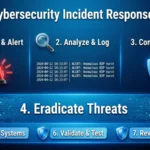
“Detect, assess, respond, recover.”
Use this as a memorable summary of incident-handling stages.
Meaning: Security incidents require a structured progression from identification through recovery.
“The keyboard can wait. The incident cannot.”
Use this when encouraging people to prioritize a security alert.
Meaning: A potentially serious security event deserves prompt attention.
“Turn the noise into a timeline.”
Use this during an investigation with many observations.
Meaning: Organizing events chronologically can make the situation easier to understand.
“Clear facts beat loud theories.”
Use this when a team is overwhelmed by speculation.
Meaning: Evidence is more useful than confident guesses.
“Every alert deserves the right level of attention.”
Use this when discussing security notifications.
Meaning: Alerts should be assessed appropriately rather than automatically dismissed or exaggerated.
“Good response starts with good information.”
Use this when explaining why accurate reporting matters.
Meaning: Reliable information supports better decisions.
“Make the response boring and the recovery successful.”
Use this as a lighthearted security motto.
Meaning: A calm, disciplined response is preferable to unnecessary drama.
Clever Cyber Attack Responses
“Assume nothing, verify everything.”
Use this when reminding a team to validate incident information.
Meaning: Security decisions should rely on evidence.
“The alert is a clue, not a conclusion.”
Use this when discussing an unverified security alert.
Meaning: An alert requires investigation before it becomes a confirmed finding.
“Evidence gets the final word.”
Use this when people are debating what caused an incident.
Meaning: Conclusions should be based on supporting information.
“Contain the risk, not the conversation.”
Use this when encouraging transparent but controlled communication.
Meaning: Security measures should limit exposure without creating unnecessary secrecy.
“A calm response is a powerful security control.”
Use this when discussing incident communication.
Meaning: Clear thinking can improve decision-making during stressful events.
“The timeline tells the story.”
Use this when reviewing incident events.
Meaning: Chronological evidence can help clarify what happened.
“Do not confuse confidence with confirmation.”
Use this when someone makes a strong claim without evidence.
Meaning: Certainty in someone’s tone does not prove their conclusion.
“Unknown does not mean harmless.”
Use this when discussing an unresolved security event.
Meaning: Lack of information should not automatically be interpreted as lack of risk.
“Fast does not have to mean careless.”
Use this when a team needs to respond quickly.
Meaning: Speed and careful decision-making can coexist.
“Good incident communication leaves room for new facts.”
Use this when writing status updates during an evolving event.
Meaning: Early statements should allow for later discoveries.
“The smartest response is sometimes ‘we’re still checking.’”
Use this when someone expects an immediate conclusion.
Meaning: Admitting uncertainty can be more responsible than guessing.
“Secure the facts before securing the narrative.”
Use this when discussing incident communications.
Meaning: Understanding what happened should come before constructing a confident explanation.
Cyber Attack Responses For Social Media And Public Updates
“We are aware of a security issue and are investigating.”
Use this for a concise public status update.
Meaning: The organization acknowledges the issue without making unsupported claims.
“Our team is actively assessing the situation.”
Use this when an investigation is ongoing.
Meaning: The incident is receiving active attention.
“We will share verified updates as they become available.”
Use this when followers want more information.
Meaning: Future communication will focus on confirmed details.
“We understand that customers may have questions.”
Use this when acknowledging public concern.
Meaning: You recognize that the situation affects people beyond the technical team.
“Please rely on our official updates for confirmed information.”
Use this when rumors are circulating online.
Meaning: Followers should avoid relying on unverified posts.
“We are working to understand the scope of the issue.”
Use this when the impact is still being assessed.
Meaning: The investigation has not yet established the full picture.
“Security remains a priority while we investigate.”
Use this when communicating during an active incident.
Meaning: Protecting systems and users remains central to the response.
“We appreciate your patience as we work through the issue.”
Use this when an incident causes disruption.
Meaning: You recognize that the situation may be frustrating.
“We will communicate material developments through official channels.”
Use this when managing public updates.
Meaning: Significant information will be shared through trusted sources.
“We are coordinating the appropriate response.”
Use this when providing a short public statement.
Meaning: Relevant teams are working together on the issue.
“At this stage, our investigation is ongoing.”
Use this when the facts remain incomplete.
Meaning: A final assessment has not yet been reached.
“Thank you for your patience while we verify the details.”
Use this when the public expects immediate answers.
Meaning: You are emphasizing accuracy before further communication.
Cyber Attack Responses For Difficult Questions
“We cannot confirm that at this time.”
Use this when someone asks about an unverified claim.
Meaning: The available evidence does not currently support confirmation.
“That is still being investigated.”
Use this when a question concerns an unresolved issue.
Meaning: The investigation has not reached a final answer.
“We do not want to speculate.”
Use this when someone asks you to guess about the cause.
Meaning: You are choosing evidence over assumptions.
“We will share more once the information has been verified.”
Use this when someone wants immediate details.
Meaning: Additional communication will follow confirmation.
“The investigation is not complete yet.”
Use this when early findings are being treated as final.
Meaning: The current picture may change.
“That conclusion would be premature.”
Use this when someone makes a definitive claim too soon.
Meaning: More evidence is needed before reaching that conclusion.
“We are focusing on confirmed facts.”
Use this when conversation becomes speculative.
Meaning: Reliable information is guiding the response.
“We are assessing whether that information is relevant.”
Use this when someone provides a possible incident detail.
Meaning: The team is determining its significance.
“We need more evidence before answering that.”
Use this when a question cannot yet be answered responsibly.
Meaning: The investigation needs additional information.
“The situation is still developing.”
Use this when circumstances are changing.
Meaning: Current information may not represent the final picture.
“We will not guess about the cause.”
Use this when discussing potential attribution.
Meaning: The response will avoid unsupported claims.
“Let’s separate what happened from what we think happened.”
Use this when reviewing conflicting incident accounts.
Meaning: Confirmed observations should remain distinct from interpretations.
FAQs
What does cyber attack response mean?
Cyber attack response refers to the actions and communication used to handle a suspected or confirmed cyber security incident. It can include identifying the issue, assessing its scope, containing risk, coordinating teams, communicating appropriately, and supporting recovery.
What should you say during a cyber attack?
Keep communication calm, factual, and concise. Useful wording includes “We are investigating the issue,” “Please follow the security team’s guidance,” and “We will provide verified updates.”
What is a professional cyber attack response?
A professional response acknowledges the issue without exaggeration, avoids unsupported claims, identifies the appropriate response team, and explains what will happen next. Clear communication is particularly important when information is still developing.
Can a cyber attack response be emotional?
It can acknowledge concern or disruption, but official incident communication generally benefits from a calm and measured tone. Showing empathy is useful, while panic and speculation can create unnecessary confusion.
Can humor be used in cyber attack responses?
Light humor can work in informal internal conversations after the immediate concern has been addressed. It is generally better to keep customer-facing, executive, or serious incident communications professional and focused on facts.
What should you say if you do not know what happened?
Be honest about the uncertainty. Phrases such as “We are still investigating,” “That has not been confirmed,” and “We need more information before reaching a conclusion” are clearer than guessing.
How should employees respond to suspicious activity?
Employees should use their organization’s approved reporting process and follow security guidance. They should avoid conducting their own technical investigation or spreading unverified information.
What makes a good cyber attack response message?
A strong message is clear, factual, appropriately cautious, and directed at the right audience. It should avoid unnecessary speculation while making the next appropriate action understandable.
Conclusion
A good cyber attack response is about much more than finding the perfect words. During a security incident, communication can help keep teams focused, reduce confusion, and make sure important information reaches the right people. Whether you need a professional update, a customer-facing statement, an employee reminder, an executive message, or a quick internal response, the tone should match the situation.
Keep your wording clear, avoid unsupported claims, and remember that saying “we are still investigating” is far better than confidently guessing. Save this list for your next security communication, share it with your team, and adapt the responses to fit your organization’s procedures. Stay calm, stay clear, and keep the response moving.