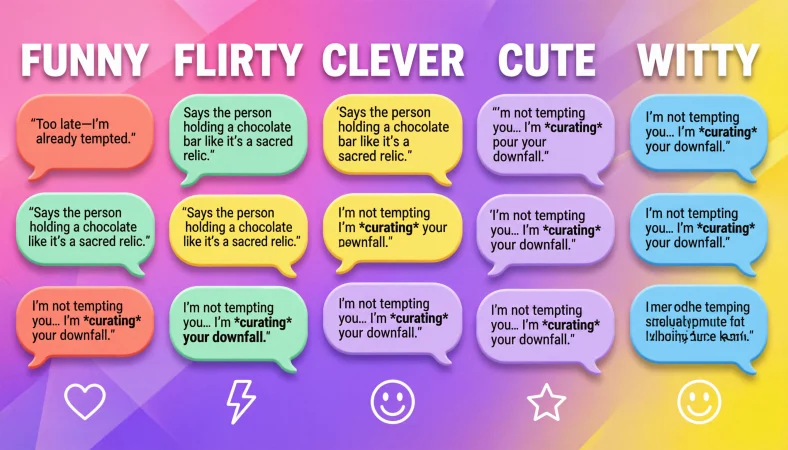
Quick Answer: “Don’t tempt me” usually means someone is seriously considering whatever you just suggested, often with a playful, flirty, or teasing tone. Your best response depends on whether you want to flirt back, joke around, stay mysterious, or shut things down.
Try these: “Who says I’m tempting you?”, “Too late 😏”, “I thought you liked a challenge.”, “Should I stop or keep going?”, “You’re making this way too easy.”
There are certain texts that instantly turn a normal conversation into a whole situation. “Don’t tempt me” is definitely one of them. You might see it in a late-night text, a playful DM, a conversation with your crush, or even a ridiculous group chat challenge. Sometimes it means “I really want to,” sometimes it means “Keep talking,” and sometimes it is simply someone being dramatic for fun.
That is exactly why knowing how to respond matters. The right comeback can make you sound effortlessly funny, confidently flirty, adorably innocent, or just chaotic enough to keep things interesting. The wrong one can kill the vibe faster than a phone battery at 1%.
This list of the best replies to “don’t tempt me” gives you plenty of options for almost every mood, personality, and situation. Pick your favorite and send it with confidence.
Funny Responses
“I wasn’t tempting you, I was informing you.”
Use this when you want to pretend your suggestion was completely innocent.
Meaning: You are playfully denying responsibility for their temptation.
“Oops, my bad. I forgot your self-control was on vacation.”
Use this when a friend is obviously tempted by your suggestion.
Meaning: You are teasing them about their lack of restraint.
“Temptation has entered the chat.”
Use this when the conversation suddenly gets mischievous.
Meaning: You are jokingly announcing that things are getting interesting.
“No promises.”
Use this when you want a short, cheeky response.
Meaning: You are deliberately refusing to behave responsibly.
“I’m just doing my community service.”
Use this when your suggestion is clearly causing trouble.
Meaning: You are humorously acting like your chaos is charitable.
“Too late, the temptation has been delivered.”
Use this when you have already made the offer.
Meaning: You are joking that there is no going back now.
“And here I thought you were strong.”
Use this when someone admits they are tempted.
Meaning: You are playfully challenging their self-control.
“I accept no liability for your decisions.”
Use this when you want a mock-serious comeback.
Meaning: You are humorously distancing yourself from whatever happens next.
“Sounds like a you problem.”
Use this when you want maximum casual sass.
Meaning: You are teasing them while refusing responsibility.
“Should I call for backup?”
Use this when their temptation seems dramatically serious.
Meaning: You are exaggerating the situation for comedic effect.
“Stay strong, soldier.”
Use this when a friend is trying not to give in.
Meaning: You are jokingly treating their temptation like a heroic battle.
“I knew you couldn’t resist.”
Use this when they finally admit they are interested.
Meaning: You are playfully celebrating your prediction.
Brutal Responses
“Then don’t.”
Use this when you want a brutally simple comeback.
Meaning: You are putting the decision entirely back on them.
“Nobody’s forcing you.”
Use this when someone is being overly dramatic.
Meaning: You are reminding them that they have control.
“Your weakness is showing.”
Use this when they clearly want to say yes.
Meaning: You are confidently calling out their lack of resistance.
“Self-control is free, by the way.”
Use this when you want to tease them mercilessly.
Meaning: You are joking that resisting is entirely possible.
“You say that like you’re going to resist.”
Use this when their words clearly do not match their intentions.
Meaning: You are calling out their obvious interest.
“You’re doing a terrible job resisting.”
Use this when they are pretending not to be tempted.
Meaning: You are pointing out that their act is not convincing.
“That sounded more like a yes.”
Use this when their “don’t tempt me” is clearly enthusiastic.
Meaning: You are interpreting their hesitation as interest.
“I can see the struggle from here.”
Use this when someone is visibly tempted.
Meaning: You are playfully exposing their internal battle.
“You folded pretty quickly.”
Use this after someone gives in almost immediately.
Meaning: You are teasing them for having weak resistance.
“That confidence disappeared fast.”
Use this when someone suddenly becomes tempted.
Meaning: You are highlighting their change in attitude.
“You were never going to say no.”
Use this when their decision seems obvious.
Meaning: You are confidently predicting their behavior.
“At least pretend you have boundaries.”
Use this with a close friend who enjoys sarcastic banter.
Meaning: You are playfully calling out their enthusiasm.
Flirty Responses
“Who said I was trying to tempt you? 😏”
Use this when you want to turn the teasing into flirting.
Meaning: You are creating playful ambiguity.
“Maybe I want you tempted.”
Use this when the conversation already has romantic chemistry.
Meaning: You are openly encouraging the flirtation.
“Too late, you’re already tempted.”
Use this when they have clearly shown interest.
Meaning: You are confidently teasing them about their attraction.
“Should I stop, or are you enjoying this?”
Use this when you want to playfully test the vibe.
Meaning: You are inviting them to admit they like the attention.
“I could make it harder to resist.”
Use this when you want a bold flirtatious comeback.
Meaning: You are intentionally raising the playful tension.
“You make tempting you way too easy.”
Use this when the flirting is mutual.
Meaning: You are saying their reaction encourages you.
“I have a feeling you secretly want me to.”
Use this when you want to tease their hidden interest.
Meaning: You are suggesting they are enjoying the temptation.
“Careful, I might take that as encouragement.”
Use this when they are flirting without fully admitting it.
Meaning: You are playfully treating their words as permission to continue teasing.
“Maybe being tempted is the fun part.”
Use this when you want something flirty but not overly direct.
Meaning: You are keeping the tension playful and mysterious.
“Then maybe you should stay away from me.”
Use this when you want a confident, teasing vibe.
Meaning: You are joking that your presence is irresistible.
“I’m starting to think you like trouble.”
Use this when the conversation is getting playful.
Meaning: You are teasing them about enjoying the flirtation.
“And yet you’re still here.”
Use this when they keep engaging despite pretending to resist.
Meaning: You are confidently pointing out their interest.
Polite Responses
“Haha, I’ll take that as a compliment.”
Use this when you want to keep the conversation friendly.
Meaning: You are acknowledging their playful reaction positively.
“Fair enough, I won’t push it.”
Use this when you want to respect their hesitation.
Meaning: You are showing that you can read the situation.
“No pressure at all.”
Use this when you want to keep things comfortable.
Meaning: You are making it clear they can choose freely.
“I’ll behave.”
Use this when you want a lighthearted response.
Meaning: You are playfully promising to stop teasing.
“Point taken.”
Use this when you want something short and mature.
Meaning: You understand their message without making things awkward.
“I’ll let you decide.”
Use this when you want to give them control.
Meaning: You are avoiding pressure while keeping the conversation open.
“Haha, understood.”
Use this when their message is clearly playful.
Meaning: You are acknowledging their tone casually.
“I respect the hesitation.”
Use this when someone is unsure about your suggestion.
Meaning: You are showing patience and understanding.
“No worries, I was only joking.”
Use this when you want to remove any pressure.
Meaning: You are clarifying that there are no expectations.
“We can keep it simple.”
Use this when you want to calm the situation.
Meaning: You are suggesting an easygoing alternative.
“Totally fair.”
Use this when you want to sound relaxed and respectful.
Meaning: You accept their response without arguing.
“I’ll leave that one up to you.”
Use this when you want to keep the decision in their hands.
Meaning: You are respecting their choice.
Professional Responses
“Understood, I’ll leave that option on the table.”
Use this when joking with a coworker in an appropriate setting.
Meaning: You acknowledge their hesitation professionally.
“Fair enough, no pressure.”
Use this when discussing an optional workplace idea.
Meaning: You are keeping the exchange respectful and relaxed.
“Noted.”
Use this when you need a very concise response.
Meaning: You acknowledge their comment without adding unnecessary energy.
“I’ll take that as a maybe.”
Use this when discussing a casual work event or idea.
Meaning: You are leaving the decision open.
“Completely understandable.”
Use this when you want a polished response.
Meaning: You are showing that their hesitation is acceptable.
“We can revisit it later.”
Use this when the suggestion can wait.
Meaning: You are giving them space to decide.
“No worries, the choice is yours.”
Use this when you want to sound supportive.
Meaning: You are respecting their autonomy.
“I won’t twist your arm.”
Use this with a colleague when the tone is already casual.
Meaning: You are joking lightly while removing pressure.
“Consider the invitation open.”
Use this when offering an optional opportunity.
Meaning: You are leaving the possibility available.
“I’ll respect the hesitation.”
Use this when someone is unsure about participating.
Meaning: You are showing professional courtesy.
“We can keep it completely optional.”
Use this when making sure there is no obligation.
Meaning: You are emphasizing freedom of choice.
“Sounds good, we’ll leave it there.”
Use this when you want to end the topic smoothly.
Meaning: You are closing the conversation without awkwardness.
Creative Responses
“Temptation has entered its main-character era.”
Use this when you want a dramatic internet-style joke.
Meaning: You are turning the moment into playful storytelling.
“The universe heard you and raised the stakes.”
Use this when the situation keeps getting more tempting.
Meaning: You are humorously exaggerating the circumstances.
“Your curiosity has officially betrayed you.”
Use this when someone is clearly interested.
Meaning: You are blaming their curiosity for their temptation.
“Welcome to the danger zone.”
Use this when things are becoming mischievous.
Meaning: You are joking that they are entering risky territory.
“Plot twist: you actually want to.”
Use this when their reaction gives away their interest.
Meaning: You are playfully exposing their hidden intention.
“The temptation department is currently accepting applications.”
Use this when you want a bizarre, creative comeback.
Meaning: You are turning the situation into absurd comedy.
“Your willpower just left the group chat.”
Use this when they admit they are tempted.
Meaning: You are joking that their self-control has disappeared.
“Temptation level: unlocked.”
Use this when the conversation suddenly gets playful.
Meaning: You are signaling that the situation has escalated.
“I fear the plot is thickening.”
Use this when you want an intentionally dramatic response.
Meaning: You are making a simple moment sound like a movie plot.
“And thus begins the questionable decision arc.”
Use this when someone is about to make a mischievous choice.
Meaning: You are joking about the consequences.
“The temptation storyline writes itself.”
Use this when the situation feels too perfectly timed.
Meaning: You are turning the moment into a playful narrative.
“I brought chaos, apparently.”
Use this when your suggestion has unexpectedly caused excitement.
Meaning: You are jokingly accepting responsibility for the chaos.
Sarcastic Responses
“Oh no, whatever will we do?”
Use this when someone is being dramatically tempted.
Meaning: You are mocking their exaggerated hesitation.
“Thoughts and prayers for your self-control.”
Use this when they are struggling to resist.
Meaning: You are humorously pretending their situation is tragic.
“Such a difficult life you lead.”
Use this when their temptation is obviously enjoyable.
Meaning: You are sarcastically exaggerating their problem.
“Alert the authorities immediately.”
Use this when the temptation is harmless but dramatic.
Meaning: You are turning their reaction into absurd comedy.
“Stay strong, your dignity depends on it.”
Use this when a friend is about to give in.
Meaning: You are sarcastically presenting the choice as extremely serious.
“Wow, thoughts and feelings. Scandalous.”
Use this when someone acts shocked by their own temptation.
Meaning: You are teasing them for overreacting.
“Clearly this is a national emergency.”
Use this when someone is being theatrical.
Meaning: You are mocking the seriousness of the situation.
“I’ll notify the temptation committee.”
Use this when you want an intentionally ridiculous comeback.
Meaning: You are making fun of their dramatic warning.
“How brave of you to admit that.”
Use this when they finally confess they are tempted.
Meaning: You are playfully praising their honesty.
“We may never recover from this.”
Use this when the situation is hilariously minor.
Meaning: You are exaggerating the consequences for comedic effect.
“Your struggle has been noted.”
Use this when they are pretending to resist.
Meaning: You are sarcastically acknowledging their fake suffering.
“I’ll give you a moment to compose yourself.”
Use this when someone is clearly flustered.
Meaning: You are teasing them about losing their composure.
Cute Responses
“Aww, are you tempted? 🥹”
Use this when you want to make the exchange softer.
Meaning: You are playfully showing affection.
“You’re adorable when you try to resist.”
Use this when someone is pretending to be strong.
Meaning: You find their reaction cute.
“Okay okay, I’ll behave.”
Use this when you want to tease without pushing too far.
Meaning: You are affectionately backing off.
“I promise I’m mostly harmless.”
Use this when you want a cute joke.
Meaning: You are reassuring them while keeping things playful.
“Maybe just a tiny bit tempted?”
Use this when you want to gently tease them.
Meaning: You are encouraging a playful confession.
“You’re making this too cute.”
Use this when their reaction is unexpectedly adorable.
Meaning: You are expressing affectionate amusement.
“Fine, I’ll save the trouble for later.”
Use this when you want a playful but sweet response.
Meaning: You are keeping the teasing alive without pressure.
“I’ll take that little warning seriously.”
Use this when you want to acknowledge their playful boundary.
Meaning: You are being considerate while staying warm.
“You make resisting sound adorable.”
Use this when their hesitation feels charming.
Meaning: You are complimenting their playful reaction.
“Okay, you win this round.”
Use this when you want to surrender playfully.
Meaning: You are keeping the interaction light and affectionate.
“I’m smiling way too much right now.”
Use this when their message genuinely makes you happy.
Meaning: You are revealing that their reaction affected you.
“You’re too easy to tease.”
Use this when playful banter is already comfortable.
Meaning: You enjoy getting a cute reaction from them.
Dramatic Responses
“This is where everything changes.”
Use this when you want to make the moment ridiculously dramatic.
Meaning: You are pretending the situation is life-changing.
“We have reached the point of no return.”
Use this when someone is clearly tempted.
Meaning: You are exaggerating the situation for fun.
“The consequences will be legendary.”
Use this when a harmless decision feels exciting.
Meaning: You are adding cinematic drama to the moment.
“I knew this day would come.”
Use this when their temptation finally becomes obvious.
Meaning: You are joking that this was somehow inevitable.
“The prophecy has been fulfilled.”
Use this when the conversation takes an unexpected turn.
Meaning: You are treating the moment like destiny.
“There is no going back now.”
Use this when you want to heighten the playful tension.
Meaning: You are pretending the choice is irreversible.
“Our story has officially become complicated.”
Use this when the banter gets intense.
Meaning: You are playfully framing the moment as romantic drama.
“This chapter is getting dangerous.”
Use this when someone is tempted by your suggestion.
Meaning: You are adding playful suspense.
“I fear we have awakened something.”
Use this when the conversation becomes unexpectedly chaotic.
Meaning: You are joking that something dramatic has begun.
“Someone cue the dramatic music.”
Use this when the situation is obviously being exaggerated.
Meaning: You are making fun of the drama.
“And suddenly, the stakes are impossibly high.”
Use this when a tiny decision becomes hilarious.
Meaning: You are humorously exaggerating its importance.
“I shall remember this moment forever.”
Use this when you want maximum theatrical energy.
Meaning: You are playfully pretending the moment is unforgettable.
Chill And Casual Responses
“Haha, your call.”
Use this when you want to keep things relaxed.
Meaning: You are letting them decide without pressure.
“Fair enough 😂.”
Use this when their response is clearly playful.
Meaning: You are acknowledging the joke casually.
“I hear you.”
Use this when you want a simple, low-key reply.
Meaning: You understand their point.
“No stress.”
Use this when you want to remove pressure.
Meaning: You are keeping everything easygoing.
“All good.”
Use this when you want a quick response.
Meaning: You are showing there is no issue.
“Haha, noted.”
Use this when you want to acknowledge their warning playfully.
Meaning: You are taking their message lightly.
“Do what feels right.”
Use this when you want to leave the choice with them.
Meaning: You are encouraging them to decide comfortably.
“You know where I stand.”
Use this when your position is already obvious.
Meaning: You are keeping the response confident but relaxed.
“No pressure either way.”
Use this when you want to be reassuring.
Meaning: You are making their choice feel safe.
“We’ll see.”
Use this when you want to stay mysterious.
Meaning: You are intentionally leaving the outcome open.
“Haha, we’ll behave.”
Use this when the conversation is playful but harmless.
Meaning: You are agreeing to keep things under control.
“Your move.”
Use this when you want to put the decision back on them.
Meaning: You are confidently letting them choose what happens next.
Confident Responses
“I knew you’d be tempted.”
Use this when you want to sound self-assured.
Meaning: You are confidently predicting their reaction.
“I have that effect.”
Use this when the exchange is flirtatious.
Meaning: You are playfully claiming you are irresistible.
“You can admit you want to.”
Use this when they are clearly avoiding a confession.
Meaning: You are encouraging honesty.
“I’m not even trying that hard.”
Use this when you want a confident tease.
Meaning: You are suggesting their reaction comes easily.
“You’re welcome.”
Use this when they seem delighted by your suggestion.
Meaning: You are confidently owning the effect you had.
“I make temptation look good.”
Use this when you want a bold, playful comeback.
Meaning: You are leaning into your confidence.
“You knew exactly what you were getting into.”
Use this when they willingly joined the playful situation.
Meaning: You are reminding them that their interest was voluntary.
“I’m rarely ignored for long.”
Use this when the conversation has obvious chemistry.
Meaning: You are teasing them about your appeal.
“Resistance was never your strong suit.”
Use this when they repeatedly give in to temptation.
Meaning: You are confidently teasing their predictable behavior.
“You’re making my case for me.”
Use this when their reaction proves your point.
Meaning: You are highlighting their obvious interest.
“I like your honesty.”
Use this when they admit they are tempted.
Meaning: You are positively rewarding their openness.
“At least we know where your priorities are.”
Use this when you want a confident joke.
Meaning: You are playfully suggesting their priorities are obvious.
Emotional Responses
“I know, it’s hard to resist sometimes.”
Use this when the conversation has a sincere undertone.
Meaning: You are showing understanding instead of teasing.
“You don’t have to decide right now.”
Use this when they genuinely seem uncertain.
Meaning: You are giving them emotional space.
“I’d rather you do what feels comfortable.”
Use this when you want to prioritize their feelings.
Meaning: You are making comfort more important than the outcome.
“I get where you’re coming from.”
Use this when their hesitation has an emotional reason.
Meaning: You are validating their perspective.
“There’s no need to rush anything.”
Use this when emotions are involved.
Meaning: You are encouraging patience.
“I appreciate you being honest.”
Use this when they reveal uncertainty.
Meaning: You value their openness.
“Whatever you choose, I’ll respect it.”
Use this when the decision matters emotionally.
Meaning: You are showing genuine respect for their choice.
“Sometimes wanting something can be complicated.”
Use this when the conversation is deeper than simple teasing.
Meaning: You acknowledge mixed feelings.
“Take your time.”
Use this when someone needs space.
Meaning: You are offering patience and reassurance.
“I don’t want you to feel pressured.”
Use this when you want to make your intentions clear.
Meaning: You are prioritizing emotional safety.
“We can talk about it whenever you’re ready.”
Use this when the subject has become personal.
Meaning: You are keeping communication open.
“Your feelings matter more than the answer.”
Use this when you want to respond with genuine care.
Meaning: You are showing that their comfort comes first.
Sweet Responses
“Then maybe I should stop being so tempting.”
Use this when you want to sound sweet and playful.
Meaning: You are gently acknowledging their attraction.
“I’ll take that as a very cute compliment.”
Use this when their message makes you smile.
Meaning: You are interpreting their words positively.
“You’re making it hard for me not to smile.”
Use this when the exchange feels affectionate.
Meaning: Their reaction genuinely makes you happy.
“I like knowing you’re interested.”
Use this when you want to be honest without overdoing it.
Meaning: You appreciate their interest.
“That’s actually kind of adorable.”
Use this when their resistance seems charming.
Meaning: You find their reaction endearing.
“You’re sweet when you get flustered.”
Use this when they seem shy or embarrassed.
Meaning: You are turning their nervousness into a compliment.
“I won’t make it harder for you.”
Use this when you want to be considerate.
Meaning: You are playfully promising not to push.
“I’m glad you told me.”
Use this when they admit they are tempted.
Meaning: You appreciate their honesty.
“Maybe we’re both a little guilty.”
Use this when the attraction or excitement is mutual.
Meaning: You are sharing responsibility in a playful way.
“You make this too easy.”
Use this when their reaction is especially cute.
Meaning: You enjoy the playful chemistry.
“I’m taking that as a tiny confession.”
Use this when they almost admit they are interested.
Meaning: You are gently teasing them about their feelings.
“Okay, that made my day.”
Use this when their message genuinely brightens your mood.
Meaning: You are showing sincere appreciation.
Clever Responses
“Temptation only works if you’re willing to listen.”
Use this when you want a smart, playful comeback.
Meaning: You are pointing out that they still control their choice.
“Interesting choice of words.”
Use this when their message sounds more interested than resistant.
Meaning: You are subtly calling attention to the hidden meaning.
“Your warning sounds suspiciously like an invitation.”
Use this when the context is flirtatious.
Meaning: You are cleverly interpreting their hesitation as interest.
“I’ll let your curiosity do the talking.”
Use this when you want to stay mysterious.
Meaning: You are suggesting their interest will reveal itself.
“That depends on what you consider temptation.”
Use this when you want a witty, ambiguous answer.
Meaning: You are keeping the conversation open-ended.
“Self-control is such an interesting concept.”
Use this when you want intellectual-sounding sarcasm.
Meaning: You are joking about their struggle to resist.
“I’m sensing a conflict between logic and desire.”
Use this when someone is clearly torn.
Meaning: You are humorously describing their internal debate.
“Your hesitation is saying more than your words.”
Use this when their reaction is obvious.
Meaning: You are suggesting their behavior reveals their feelings.
“Noted. The temptation has been acknowledged.”
Use this when you want something dry and clever.
Meaning: You are playfully treating the exchange like official business.
“I’ll leave that thought right there.”
Use this when you want to maintain mystery.
Meaning: You are intentionally avoiding giving everything away.
“Curiosity has a funny way of winning.”
Use this when someone is trying not to give in.
Meaning: You are suggesting their curiosity may overcome their resistance.
“I’ll let you connect the dots.”
Use this when you want a subtle, confident tease.
Meaning: You are encouraging them to interpret the situation themselves.
Playful Responses
“Should I take that as a challenge?”
Use this when you want to turn their warning into banter.
Meaning: You are playfully challenging them to continue.
“Challenge accepted.”
Use this when their message feels competitive or teasing.
Meaning: You are confidently matching their energy.
“Oh, now I’m interested.”
Use this when their reaction makes you curious.
Meaning: You are showing playful interest.
“You just made this more fun.”
Use this when the conversation suddenly becomes exciting.
Meaning: You enjoy the playful tension.
“Careful what you wish for.”
Use this when you want a mysterious comeback.
Meaning: You are teasing them about the possible consequences.
“You really know how to make things interesting.”
Use this when their message changes the mood.
Meaning: You appreciate their playful energy.
“I see we’re choosing chaos today.”
Use this when the conversation becomes mischievous.
Meaning: You are embracing the fun.
“Well, now I have ideas.”
Use this when you want to be playful without explaining yourself.
Meaning: You are deliberately leaving the possibilities vague.
“And here I was trying to behave.”
Use this when they make the conversation tempting.
Meaning: You are joking that they are encouraging your mischief.
“You started this.”
Use this when you want to jokingly blame them.
Meaning: You are pretending they caused the playful situation.
“I’m choosing to interpret that positively.”
Use this when their response is ambiguous.
Meaning: You are humorously assuming they are interested.
“Okay, this just got interesting.”
Use this when the conversation suddenly shifts.
Meaning: You are signaling that you are enjoying the new energy.
Mysterious Responses
“Maybe you should find out.”
Use this when you want to leave them curious.
Meaning: You are deliberately avoiding a direct answer.
“I could tell you, but where’s the fun in that?”
Use this when you want playful mystery.
Meaning: You are keeping some information to yourself.
“You’ll have to wait and see.”
Use this when you want to build anticipation.
Meaning: You are intentionally delaying the answer.
“That’s for you to decide.”
Use this when you want to keep the power in their hands.
Meaning: You are letting them choose how to interpret the moment.
“Maybe I already know your answer.”
Use this when you think their interest is obvious.
Meaning: You are teasing them without directly saying what you think.
“I’ll keep that thought to myself.”
Use this when you want to sound mysterious.
Meaning: You are deliberately keeping them guessing.
“Wouldn’t you like to know?”
Use this when playful curiosity is already established.
Meaning: You are teasing them by refusing to reveal everything.
“There’s more than one way to interpret that.”
Use this when their message has a double meaning.
Meaning: You are highlighting the ambiguity.
“I’ll let you wonder.”
Use this when you want to leave the conversation hanging.
Meaning: You are creating curiosity.
“Maybe the answer is closer than you think.”
Use this when you want an intriguing response.
Meaning: You are hinting without revealing your intentions.
“Some things are better discovered naturally.”
Use this when you want a calm mysterious vibe.
Meaning: You prefer letting the situation unfold.
“You’re asking dangerous questions.”
Use this when their curiosity is becoming flirtatious.
Meaning: You are teasing them about where the conversation could go.
Confident And Sassy Responses
“You can handle it.”
Use this when you want to sound boldly playful.
Meaning: You are confidently challenging them.
“I know you can resist. I just don’t think you want to.”
Use this when their interest is obvious.
Meaning: You are teasing them about secretly wanting to give in.
“I’m not responsible for your lack of willpower.”
Use this when they blame you for tempting them.
Meaning: You are confidently refusing responsibility.
“You’re welcome for the opportunity.”
Use this when you want a cheeky, self-assured response.
Meaning: You are joking that they should appreciate the temptation.
“I know exactly what I’m doing.”
Use this when you want a bold flirtatious comeback.
Meaning: You are confidently owning your effect.
“You’re giving me way too much credit.”
Use this when you want playful modesty with attitude.
Meaning: You are teasing them while keeping the confidence.
“Don’t blame me for being convincing.”
Use this when they claim you are tempting them.
Meaning: You are proudly accepting that your argument is effective.
“I’m simply making excellent suggestions.”
Use this when you want a polished but sassy comeback.
Meaning: You are reframing temptation as good advice.
“You know you want to.”
Use this when the conversation is clearly playful and mutual.
Meaning: You are confidently calling out their interest.
“I’m hard to resist, apparently.”
Use this when their reaction suggests attraction.
Meaning: You are playfully complimenting yourself.
“I’ll consider that a compliment.”
Use this when they say you are tempting them.
Meaning: You are turning their warning into praise.
“Then try not to make it obvious.”
Use this when they are clearly giving themselves away.
Meaning: You are teasing them about how transparent they are.
FAQs
What Does “Don’t Tempt Me” Mean?
It usually means “I might actually do it if you keep encouraging me.” It can be serious, playful, sarcastic, or flirty depending on the context.
Can “Don’t Tempt Me” Be Flirty?
Absolutely. If it comes with teasing, emojis, late-night texting, or obvious chemistry, it can be a playful way of saying someone is interested.
What Is A Flirty Reply To “Don’t Tempt Me”?
Try “Who says I’m trying to tempt you? 😏”, “Maybe I want you tempted”, or “And yet you’re still here.”
Can I Use Humor When Replying To “Don’t Tempt Me”?
Yes. Humor works especially well when the original message is clearly playful. A funny comeback can keep the conversation relaxed without making it overly serious.
Is “Don’t Tempt Me” Professional?
It can appear in casual workplace banter, but it is usually better to avoid flirtatious interpretations at work. Keep professional replies light and respectful.
What If I Don’t Actually Mean To Tempt Them?
Make your intention clear with something like “Haha, I was only joking” or “No pressure, seriously.” That keeps the situation comfortable.
Is “Don’t Tempt Me” Always Romantic?
No. Friends use it all the time when talking about food, shopping, travel plans, skipping responsibilities, funny challenges, or questionable decisions.
What Is A Cute Reply To “Don’t Tempt Me”?
Try “You’re adorable when you try to resist” or “Okay okay, I’ll behave.”
What Is A Clever Reply To “Don’t Tempt Me”?
Try “Your warning sounds suspiciously like an invitation.” It is witty while leaving room for playful interpretation.
What If Someone Says “Don’t Tempt Me” Seriously?
Respect the message and avoid pushing. A simple “Fair enough, no pressure” is a safe and considerate response.
Conclusion
“Don’t tempt me” can be a tiny sentence with a surprisingly huge personality. It can be funny, flirty, sarcastic, dramatic, sweet, or completely innocent depending on who says it and what came before it. That is why your response should match the vibe instead of forcing one mood into every conversation. Whether you want to tease your crush, make your friends laugh, keep things professional, or simply sound effortlessly clever, there is a comeback here for you. Save your favorites, screenshot the ones that match your personality, and keep them ready for your next chaotic conversation. After all, sometimes the perfect reply is the difference between an ordinary text and a legendary one. Go forth and choose your comeback wisely!