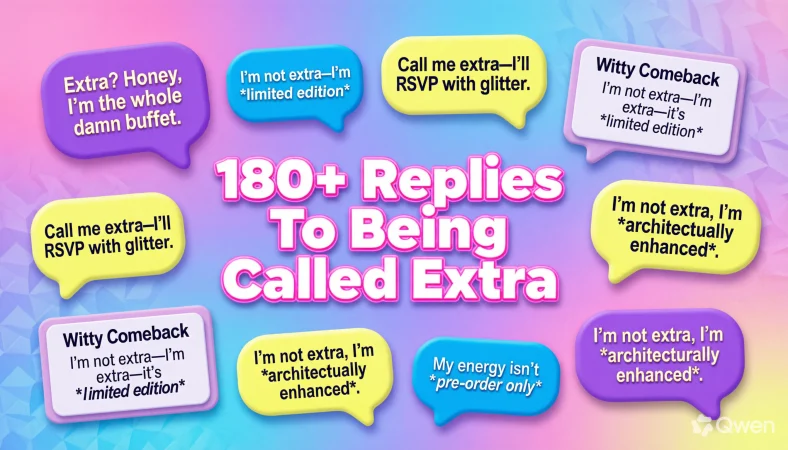
Quick Answer: Being called “extra” can be playful, teasing, complimentary, or slightly critical depending on the situation. The best replies to being called extra match the energy while letting your personality shine.
Top alternatives: “Extra? I call it memorable.”, “Someone has to keep things interesting.”, “And I’m not apologizing for it.”, “Extra is my default setting.”, “You noticed, though.”
Someone calling you “extra” can mean a lot of things and maybe you sent your friend a five-minute voice note about a two-minute problem and maybe your crush noticed your perfectly planned outfit. Maybe a coworker is teasing you because you turned a simple presentation into a full production. Or perhaps someone dropped “you’re so extra” into your DMs and left you wondering whether to laugh, flirt, or clap back.
That is exactly why having the right replies to being called extra matters. The phrase can be affectionate, funny, sarcastic, or mildly judgmental depending on the tone. Your response can instantly change the mood. You can own it, joke about it, keep things classy, or turn the comment into a playful moment. Whether you are texting friends, replying to a crush, chatting at work, or posting online, the right comeback lets your personality do the talking.
Funny Responses
“Extra? I prefer enthusiastically committed.”
Use this when you want to turn the teasing into a joke.
Meaning: You are humorously reframing “extra” as enthusiasm.
“Someone has to keep the plot interesting.”
Use this when your behavior has clearly added some entertainment.
Meaning: You are proudly admitting that you bring excitement.
“Extra is literally my love language.”
Use this when you naturally do everything with maximum effort.
Meaning: You are playfully embracing your dramatic side.
“I came with bonus features.”
Use this when someone points out how much personality you have.
Meaning: You are joking that being extra is part of your package.
“And somehow you’re still watching.”
Use this when someone keeps teasing you about your behavior.
Meaning: You are playfully pointing out their interest.
“I prefer the deluxe version of life.”
Use this when you want a lighthearted and confident comeback.
Meaning: You believe ordinary is simply not your style.
“Extra? Babe, this is the standard package.”
Use this when you want a cheeky response among friends.
Meaning: You are joking that your personality naturally comes this way.
“Wait until you see the extended edition.”
Use this when you want to exaggerate the joke.
Meaning: You are teasing that you can become even more dramatic.
“I tried being normal once. Zero stars.”
Use this when someone jokes about your unusual behavior.
Meaning: You are humorously rejecting the idea of acting ordinary.
“I bring seasoning to bland situations.”
Use this when someone thinks you are doing too much.
Meaning: You see your personality as something that makes life more fun.
“Extra today, iconic tomorrow.”
Use this when you want a short social-media-friendly comeback.
Meaning: You are confidently turning the criticism into a compliment.
“At least nobody can call me boring.”
Use this when you want to laugh off the comment.
Meaning: You are choosing to see being extra as entertaining rather than negative.
Brutal Responses
“And yet you seem very invested.”
Use this when someone keeps paying attention while criticizing you.
Meaning: Their interest makes their complaint less convincing.
“Better extra than forgettable.”
Use this when you want a confident response with some bite.
Meaning: You would rather stand out than blend into the background.
“You say extra like it’s an insult.”
Use this when someone clearly intends the word negatively.
Meaning: You are challenging their assumption that being extra is bad.
“I can tone it down, but where’s the fun in that?”
Use this when you want to dismiss the criticism playfully.
Meaning: You are choosing personality over approval.
“My personality just has more settings.”
Use this when someone thinks you are too expressive.
Meaning: You are saying your personality is naturally layered and energetic.
“Not everyone can handle premium energy.”
Use this when you want a bold and cheeky comeback.
Meaning: You are joking that your presence may be too much for some people.
“If I wanted to be forgettable, I would have tried harder.”
Use this when you want a confident punchline.
Meaning: You are proud of making an impression.
“Sounds like a you problem.”
Use this when you want to shut down unnecessary criticism.
Meaning: Their discomfort with your personality is not your responsibility.
“You noticed. Mission accomplished.”
Use this when someone comments on your attention-grabbing behavior.
Meaning: You are turning their observation into a victory.
“I am not taking personality notes today.”
Use this when someone is trying to tell you how to act.
Meaning: You are confidently refusing unsolicited criticism.
“Maybe your scale for fun needs recalibrating.”
Use this when someone calls ordinary enthusiasm excessive.
Meaning: You are suggesting that their standards are too restrictive.
“Thanks for confirming I made an impression.”
Use this when you want a polished but pointed response.
Meaning: You are treating their criticism as proof that you were memorable.
Flirty Responses
“Extra for you, maybe.”
Use this when someone you like calls you extra while flirting.
Meaning: You are suggesting they bring out your playful side.
“You like it, though.”
Use this when the other person seems amused by your personality.
Meaning: You are confidently teasing them about their interest.
“Careful, you might become my favorite audience.”
Use this when you want to make the teasing romantic.
Meaning: You are implying that you enjoy having their attention.
“I only turn the extra up around cute people.”
Use this when you want a playful compliment.
Meaning: You are connecting your behavior to attraction.
“If I’m extra, you must be enjoying the show.”
Use this when the conversation already has flirty energy.
Meaning: You are playfully suggesting they like watching you.
“Maybe you bring out my dramatic side.”
Use this when someone you like notices your expressive personality.
Meaning: You are hinting that they affect you.
“You say extra like you’re complaining.”
Use this when their teasing sounds secretly affectionate.
Meaning: You are inviting them to admit they like your energy.
“I can be less extra, but you might miss it.”
Use this when you want a teasing challenge.
Meaning: You are suggesting your personality has become part of their enjoyment.
“Extra looks good on me, right?”
Use this when you want to turn criticism into playful flirting.
Meaning: You are confidently asking for their approval.
“Maybe I’m just trying to impress you.”
Use this when you want to make your intentions obvious.
Meaning: You are turning the teasing into a romantic hint.
“Wait until I’m comfortable around you.”
Use this when you want to tease them about your personality.
Meaning: You are joking that they have only seen the beginning.
“You haven’t unlocked my full personality yet.”
Use this when the conversation is playful and flirtatious.
Meaning: You are hinting that there is more of your fun side to discover.
Polite Responses
“Haha, maybe I just get enthusiastic.”
Use this when someone calls you extra without intending to be rude.
Meaning: You are accepting the comment without taking offense.
“I guess I like making things memorable.”
Use this when you want a warm and positive answer.
Meaning: You see your enthusiasm as a good quality.
“Fair enough, I can be a little expressive.”
Use this when you recognize some truth in the comment.
Meaning: You are acknowledging your personality without being defensive.
“I’ll take that as a compliment.”
Use this when you want to keep the interaction friendly.
Meaning: You are choosing to interpret the phrase positively.
“Maybe I just have a little more energy.”
Use this when you want to soften the label.
Meaning: You are explaining your behavior in a positive way.
“I like putting effort into things.”
Use this when someone comments on your attention to detail.
Meaning: You are confidently explaining why you may seem extra.
“That is fair, I can see how it looks that way.”
Use this when you want to respond maturely.
Meaning: You are recognizing their perspective without agreeing completely.
“I promise the enthusiasm is harmless.”
Use this when the situation is lighthearted.
Meaning: You are reassuring them that your energy is positive.
“I guess that is part of my charm.”
Use this when you want a friendly and confident answer.
Meaning: You view your expressive personality as something lovable.
“I’ll consider that feedback.”
Use this when someone is being slightly serious.
Meaning: You are acknowledging their comment respectfully.
“I may be extra, but I mean well.”
Use this when your enthusiasm may have been misunderstood.
Meaning: Your intentions are positive even if your approach is big.
“That is one way to describe me.”
Use this when you want a calm, neutral response.
Meaning: You are accepting the description without making it a big deal.
Professional Responses
“I prefer to call it attention to detail.”
Use this when a coworker calls your thorough approach extra.
Meaning: You are professionally reframing your effort as diligence.
“I like making sure everything is covered.”
Use this when your preparation seems excessive to someone else.
Meaning: You value being prepared and organized.
“I understand, I just wanted to make sure it was done properly.”
Use this when someone questions your level of effort.
Meaning: Your intention is quality rather than unnecessary complexity.
“I can simplify it if that would be more effective.”
Use this when the comment is constructive rather than personal.
Meaning: You are showing flexibility and professionalism.
“I tend to be thorough.”
Use this when someone describes your work style as extra.
Meaning: You are presenting your detail-oriented nature positively.
“I like adding a little polish.”
Use this when someone notices extra effort in your work.
Meaning: You care about presentation and quality.
“I wanted the final result to stand out.”
Use this when your work goes beyond the basic requirements.
Meaning: Your extra effort was intentional.
“I appreciate the feedback.”
Use this when you want to keep the workplace conversation professional.
Meaning: You are responding respectfully without becoming defensive.
“I can adjust the approach if needed.”
Use this when someone wants a simpler method.
Meaning: You are demonstrating adaptability.
“My goal was to make it as clear as possible.”
Use this when your detailed approach is questioned.
Meaning: You were prioritizing clarity and usefulness.
“I tend to give projects my full attention.”
Use this when your commitment is being described as excessive.
Meaning: You are framing your effort as dedication.
“Noted. I’ll keep the audience in mind next time.”
Use this when the comment contains useful professional feedback.
Meaning: You are showing maturity while keeping the response concise.
Creative Responses
“Extra is just creativity wearing comfortable shoes.”
Use this when you want a memorable response.
Meaning: You are connecting your expressive behavior with creativity.
“I don’t do basic when I can do memorable.”
Use this when someone questions your elaborate choices.
Meaning: You prefer originality over simplicity.
“My imagination refused to stay in its lane.”
Use this when your idea becomes bigger than expected.
Meaning: Your creativity naturally expanded the situation.
“I added a little plot development.”
Use this when your actions make a simple situation more interesting.
Meaning: You are joking that your creativity created a storyline.
“The ordinary version was already taken.”
Use this when you want a witty answer.
Meaning: You intentionally chose a more original approach.
“I believe in giving life a little sparkle.”
Use this when someone calls your enthusiasm extra.
Meaning: You enjoy making ordinary moments special.
“My brain said, ‘Why stop there?’”
Use this when your idea became elaborate.
Meaning: Your curiosity naturally pushed the idea further.
“I accidentally entered director mode.”
Use this when you take control of a small project or event.
Meaning: You are joking about becoming overly involved.
“I call it creative overachievement.”
Use this when you put unusual effort into something.
Meaning: You are proudly owning your creative intensity.
“Basic was never part of the brief.”
Use this when you want a stylish comeback.
Meaning: You intentionally chose something distinctive.
“I gave the moment a little main-character treatment.”
Use this when your behavior feels theatrical.
Meaning: You are playfully embracing your dramatic creativity.
“Somebody had to make it interesting.”
Use this when your idea adds personality to an ordinary situation.
Meaning: You believe your extra effort improved the moment.
Sarcastic Responses
“Oh no, how will I recover from being interesting?”
Use this when someone teases you about being expressive.
Meaning: You are sarcastically pretending their comment is devastating.
“Thank you for your extremely important observation.”
Use this when you want dry humor.
Meaning: You are playfully exaggerating the importance of their comment.
“Alert the authorities, I did too much.”
Use this when the situation is obviously harmless.
Meaning: You are mocking how seriously they are taking your behavior.
“I’ll try to survive this feedback.”
Use this when someone is lightly criticizing you.
Meaning: You are jokingly acting overly affected.
“Breaking news: I have personality.”
Use this when someone acts surprised by your energy.
Meaning: You are sarcastically celebrating your individuality.
“Thank goodness you were here to regulate my enthusiasm.”
Use this when someone tries to tone you down.
Meaning: You are teasing them for taking your energy too seriously.
“I’ll alert my personality department.”
Use this when someone tells you that you are doing too much.
Meaning: You are joking that your personality has its own management team.
“My apologies for the unbearable amount of fun.”
Use this when someone complains about your playful behavior.
Meaning: You are sarcastically suggesting that your fun is hardly a problem.
“How dare I make an effort?”
Use this when someone calls your preparation excessive.
Meaning: You are mocking the idea that effort is something negative.
“I’ll submit a formal request to become boring.”
Use this when someone wants you to tone yourself down.
Meaning: You are sarcastically rejecting the suggestion.
“Thanks, I’ll file that under unsolicited opinions.”
Use this when someone is being unnecessarily critical.
Meaning: You are making it clear that you did not ask for the judgment.
“I’ll be sure to disappoint you by staying exactly like this.”
Use this when you want a stronger sarcastic comeback.
Meaning: You are confidently refusing to change for their approval.
Cute Responses
“Maybe I’m just excited.”
Use this when someone affectionately calls you extra.
Meaning: You are giving your enthusiasm a sweet explanation.
“I can’t help being a little dramatic.”
Use this when you want a soft and playful response.
Meaning: You are admitting your expressive side without embarrassment.
“It’s part of my charm.”
Use this when someone teases you affectionately.
Meaning: You are presenting your extra personality as something lovable.
“Oops, my enthusiasm escaped again.”
Use this when you get overly excited about something.
Meaning: You are playfully acknowledging your energy.
“I just care a lot, okay?”
Use this when your enthusiasm comes from genuine feelings.
Meaning: You are explaining that your intensity comes from caring.
“A little extra never hurt anybody.”
Use this when you want a sweet, relaxed answer.
Meaning: You believe a little enthusiasm can make life better.
“I’m just adding a little sparkle.”
Use this when you want to keep the mood warm.
Meaning: You see your behavior as a positive addition.
“That’s my tiny bit of drama for today.”
Use this when you want to laugh at yourself.
Meaning: You are acknowledging your dramatic moment in a cute way.
“You say extra, I say adorable.”
Use this when you want to turn the label into a compliment.
Meaning: You are playfully redefining the word.
“I’ll try to behave… no promises.”
Use this when someone affectionately calls you extra.
Meaning: You are joking that your personality is not going anywhere.
“Maybe I’m just passionate about the little things.”
Use this when your excitement seems disproportionate.
Meaning: You appreciate small moments deeply.
“Okay, but admit it’s cute.”
Use this when you want a playful and affectionate response.
Meaning: You are teasing the other person into appreciating your personality.
Dramatic Responses
“Extra? I prefer emotionally cinematic.”
Use this when you want an intentionally dramatic comeback.
Meaning: You are joking that your reactions deserve movie-level production.
“This moment required a full performance.”
Use this when your reaction is bigger than necessary.
Meaning: You are proudly exaggerating your behavior for humor.
“I was simply honoring the drama.”
Use this when a situation becomes unnecessarily theatrical.
Meaning: You are pretending your dramatic response was completely justified.
“My life does not come with a minimalist setting.”
Use this when someone wants you to tone things down.
Meaning: You are joking that moderation is not your specialty.
“The situation demanded a grand entrance.”
Use this when you make an ordinary arrival feel important.
Meaning: You are playfully exaggerating your sense of occasion.
“I refuse to underreact.”
Use this when someone calls your reaction excessive.
Meaning: You are humorously committing to your dramatic personality.
“Every minor inconvenience deserves a soundtrack.”
Use this when joking about overreacting.
Meaning: You are exaggerating ordinary problems for comedic effect.
“I brought the full emotional production.”
Use this when your reaction has several layers.
Meaning: You are joking that your feelings come with theatrical presentation.
“I believe in giving every moment its moment.”
Use this when you want a clever dramatic line.
Meaning: You think ordinary situations deserve memorable reactions.
“Was I extra? Yes. Was it entertaining? Also yes.”
Use this when you want to own your behavior.
Meaning: You admit the exaggeration while celebrating the fun.
“I simply refused to let the moment be boring.”
Use this when your behavior attracts attention.
Meaning: You are framing your dramatic energy as entertainment.
“Some moments deserve a standing ovation.”
Use this when you want a theatrical punchline.
Meaning: You are humorously treating an ordinary moment like a major event.
Chill And Casual Responses
“Haha, maybe a little.”
Use this when you want to acknowledge the comment without making it serious.
Meaning: You are casually admitting some truth.
“That’s just how I am.”
Use this when you do not feel like explaining yourself.
Meaning: You are comfortably owning your personality.
“Guilty.”
Use this when you want a short, playful response.
Meaning: You are admitting that being extra is part of your nature.
“Fair point.”
Use this when the teasing is harmless.
Meaning: You are taking the comment casually.
“You know me too well.”
Use this when someone accurately describes your behavior.
Meaning: You are acknowledging that they understand your personality.
“What can I say?”
Use this when you want a relaxed response.
Meaning: You are treating your extra behavior as normal for you.
“It happens.”
Use this when you want to brush off the comment.
Meaning: You are refusing to make the situation bigger than it is.
“I was feeling myself.”
Use this when confidence caused you to go a little overboard.
Meaning: You are casually admitting you were enjoying your moment.
“Just adding some flavor.”
Use this when someone teases your expressive behavior.
Meaning: You are saying your personality makes things more enjoyable.
“I’ll take it.”
Use this when you want to accept the label positively.
Meaning: You are not bothered by being called extra.
“That’s one of my settings.”
Use this when you want a quick modern response.
Meaning: You are saying your personality naturally has an energetic mode.
“Nothing wrong with a little extra.”
Use this when you want to end the teasing positively.
Meaning: You believe being expressive is harmless.
Confident Responses
“I’m not too much. I’m just fully myself.”
Use this when someone suggests your personality is excessive.
Meaning: You are confidently refusing to shrink yourself.
“I like showing up as myself.”
Use this when someone comments on your expressive nature.
Meaning: Authenticity matters more to you than fitting expectations.
“I’d rather be memorable than invisible.”
Use this when you want a confident statement.
Meaning: You value having a distinctive personality.
“I know I’m extra, and I like it.”
Use this when you want to own the label completely.
Meaning: You are comfortable with your personality.
“My energy is not a problem to solve.”
Use this when someone repeatedly criticizes your enthusiasm.
Meaning: You do not believe your personality needs fixing.
“I’m allowed to take up a little space.”
Use this when someone implies you should tone yourself down.
Meaning: You are asserting confidence and self-expression.
“I bring what I bring.”
Use this when you want a concise and composed answer.
Meaning: You are comfortable with your natural personality.
“I’m not changing my personality for a room.”
Use this when someone wants you to behave differently for approval.
Meaning: You prioritize authenticity over fitting in.
“Extra is better than pretending.”
Use this when you want to make your confidence clear.
Meaning: You would rather be genuine than perform a fake version of yourself.
“I like my personality at full volume.”
Use this when your expressive nature is being discussed.
Meaning: You enjoy being open and energetic.
“I know exactly what I bring to the table.”
Use this when you want a polished, confident comeback.
Meaning: You understand your value and personality.
“I’m comfortable being a lot.”
Use this when someone describes you as intense or extra.
Meaning: You are confident enough not to apologize for your presence.
Emotional Responses
“Maybe I just feel things deeply.”
Use this when your reactions come from genuine emotion.
Meaning: Your intensity is connected to how strongly you experience feelings.
“I care more than I probably should.”
Use this when someone notices your strong reactions.
Meaning: Your extra behavior may come from genuine concern.
“Sometimes I just get carried away.”
Use this when you want to acknowledge emotional enthusiasm.
Meaning: You recognize that your feelings can become intense.
“I guess I’m expressive like that.”
Use this when you want a vulnerable but simple answer.
Meaning: You naturally show your emotions openly.
“I don’t always know how to do things halfway.”
Use this when someone notices your intensity.
Meaning: You tend to commit strongly to things you care about.
“It probably means I care.”
Use this when your behavior seems unusually passionate.
Meaning: Your extra energy is coming from genuine investment.
“I feel things with my whole heart.”
Use this when you want a sincere response.
Meaning: You experience emotions deeply and openly.
“I know I can be intense sometimes.”
Use this when you want to acknowledge the truth without shame.
Meaning: You are self-aware about your emotional personality.
“I just wanted it to feel special.”
Use this when your effort was connected to an important moment.
Meaning: Your extra behavior came from wanting to create meaning.
“Maybe ordinary just doesn’t express how I feel.”
Use this when emotions motivate your big gestures.
Meaning: You feel that simple actions may not fully communicate your feelings.
“I get excited about things that matter to me.”
Use this when someone comments on your enthusiasm.
Meaning: Your intensity reflects genuine interest.
“I’d rather care too much than not care at all.”
Use this when you want a heartfelt response.
Meaning: You see emotional investment as more valuable than indifference.
Sweet Responses
“I just like making people feel special.”
Use this when someone calls your thoughtful behavior extra.
Meaning: Your effort comes from kindness and consideration.
“Maybe I’m a little generous with the effort.”
Use this when someone notices how much you do for others.
Meaning: You naturally put extra care into your relationships.
“I guess I like going the extra mile.”
Use this when your actions involve thoughtful effort.
Meaning: You enjoy doing more than the minimum.
“It’s hard not to when I care.”
Use this when someone notices your attention to detail.
Meaning: Caring naturally makes you more expressive.
“I just wanted to make it nice.”
Use this when someone thinks your effort was unnecessary.
Meaning: Your intention was simply to create a pleasant experience.
“That’s my way of showing I care.”
Use this when your behavior seems unusually thoughtful.
Meaning: Extra effort is one of your ways of expressing affection.
“I like making ordinary days feel special.”
Use this when someone notices your little gestures.
Meaning: You enjoy creating memorable moments.
“A little effort can mean a lot.”
Use this when defending a thoughtful action.
Meaning: You believe small acts of care have emotional value.
“I’m just generous with my energy.”
Use this when someone comments on your involvement.
Meaning: You enjoy giving attention and enthusiasm to others.
“Maybe I’m just a thoughtful person.”
Use this when you want a gentle response.
Meaning: You see your extra effort as a form of consideration.
“I like making people smile.”
Use this when your behavior was intended to entertain or help.
Meaning: Your extra energy comes from wanting positive reactions.
“If caring is extra, then I’ll take it.”
Use this when you want a sweet and confident answer.
Meaning: You refuse to feel embarrassed about being caring.
Clever Responses
“Extra is subjective.”
Use this when you want a short, intelligent comeback.
Meaning: What seems excessive to one person may seem perfectly normal to another.
“I call it strategic enthusiasm.”
Use this when you want to make your extra behavior sound intentional.
Meaning: You are humorously presenting your energy as calculated.
“There’s a fine line between extra and unforgettable.”
Use this when you want a polished comeback.
Meaning: Being noticeable can be a positive quality.
“Maybe your normal is just too quiet.”
Use this when you want a playful intellectual jab.
Meaning: You are suggesting their expectations are unusually restrained.
“I operate beyond the basic settings.”
Use this when you want a modern witty response.
Meaning: Your personality naturally goes beyond ordinary behavior.
“Consider it personality with added features.”
Use this when someone calls you extra.
Meaning: You are presenting your individuality as an upgrade.
“The difference between extra and memorable is perspective.”
Use this when you want a thoughtful response.
Meaning: Interpretation determines whether your behavior seems excessive or impressive.
“I simply have a higher enthusiasm threshold.”
Use this when someone comments on your excitement.
Meaning: You naturally express more energy than they do.
“I’m not excessive, I’m highly detailed.”
Use this when your effort is being questioned.
Meaning: You are cleverly reframing intensity as attention to detail.
“Maybe I’m just operating in a different font.”
Use this when you want a quirky internet-style response.
Meaning: You are saying your personality has a distinct presentation.
“I prefer expanded edition energy.”
Use this when someone thinks you are doing too much.
Meaning: You are humorously embracing a more elaborate personality.
“If personality had a volume button, mine would be adjustable.”
Use this when you want a clever metaphor.
Meaning: You can be expressive while recognizing that intensity varies by situation.
Witty Responses
“Extra? Absolutely. Optional? Never.”
Use this when you want a punchy comeback.
Meaning: You are proudly treating your personality as essential.
“I’m just giving the moment some personality.”
Use this when your actions attract attention.
Meaning: You believe your energy improves the situation.
“I came prepared to make an impression.”
Use this when someone notices your effort or appearance.
Meaning: You intentionally wanted to stand out.
“You say extra, I hear memorable.”
Use this when you want to flip the criticism.
Meaning: You interpret being noticeable as a positive thing.
“My personality has a strong Wi-Fi signal.”
Use this when you want an absurd internet-style joke.
Meaning: You are joking that your presence is impossible to miss.
“I blame the main-character settings.”
Use this when your behavior feels theatrical.
Meaning: You are playfully blaming your confidence for the extra energy.
“I don’t make entrances, I make events.”
Use this when someone comments on your dramatic arrival.
Meaning: You exaggerate your presence for comedic effect.
“The assignment said stand out, so I listened.”
Use this when someone questions your bold choices.
Meaning: You are joking that your extra behavior was intentional.
“I’m just allergic to boring.”
Use this when you want a short and funny comeback.
Meaning: You naturally avoid dull situations.
“Extra is what happens when effort meets personality.”
Use this when someone calls your effort excessive.
Meaning: Your distinctive style comes from caring and being expressive.
“I accidentally made it a whole production.”
Use this when a simple task becomes elaborate.
Meaning: You are humorously acknowledging that things escalated.
“Honestly, I support my own brand.”
Use this when you want a confident social-media-style response.
Meaning: You enjoy expressing and promoting your personality.
Classy Responses
“I’m comfortable with being expressive.”
Use this when you want to answer criticism without hostility.
Meaning: You calmly stand behind your personality.
“I understand that everyone has a different style.”
Use this when someone views your behavior differently.
Meaning: You respect differences without changing yourself.
“It may be more than you would do, but it works for me.”
Use this when someone compares your behavior to theirs.
Meaning: You recognize the difference while maintaining your preference.
“I like putting thought into the things I do.”
Use this when your effort is questioned.
Meaning: You value intentionality and care.
“I don’t mind standing out a little.”
Use this when someone calls you extra because you are noticeable.
Meaning: You are comfortable being distinctive.
“I’d rather be genuine than overly concerned with appearances.”
Use this when someone pressures you to tone yourself down.
Meaning: Authenticity matters more than judgment.
“That’s simply my personality.”
Use this when you want a calm boundary.
Meaning: You are not interested in defending every aspect of yourself.
“I can appreciate the observation.”
Use this when you want a mature response.
Meaning: You can hear criticism without becoming defensive.
“I enjoy doing things with intention.”
Use this when your effort seems excessive to others.
Meaning: You prefer thoughtful actions over doing the bare minimum.
“I’m happy with the way I express myself.”
Use this when someone questions your style.
Meaning: You have confidence in your personal expression.
“We simply have different ideas of what is enough.”
Use this when you want to acknowledge a difference in perspective.
Meaning: You recognize that people have different standards.
“I’ll stay true to my style.”
Use this when someone wants you to be less expressive.
Meaning: You politely prioritize authenticity.
Playful Responses
“Extra? You noticed!”
Use this when you want to turn the comment into a joke.
Meaning: You are playfully celebrating being noticed.
“That was the goal.”
Use this when your behavior was intentionally attention-grabbing.
Meaning: You are admitting that standing out was deliberate.
“Oops, I did it again.”
Use this when you have once again gone overboard.
Meaning: You are joking about a recurring personality trait.
“I fear I may have added seasoning.”
Use this when you make something more elaborate than necessary.
Meaning: You are humorously acknowledging the extra effort.
“You love my little episodes.”
Use this when a friend regularly teases you.
Meaning: You are joking that they secretly enjoy your antics.
“Don’t encourage me.”
Use this when someone calls you extra after you have already started joking.
Meaning: You are teasing that you could become even more energetic.
“I was just getting started.”
Use this when someone thinks your behavior has already gone far enough.
Meaning: You are joking that there is even more personality coming.
“My bad, the drama button got pressed.”
Use this when you react theatrically.
Meaning: You are humorously blaming your dramatic instincts.
“I added a little sparkle. Sue me.”
Use this when someone thinks you did too much.
Meaning: You are playfully defending your enthusiasm.
“You knew what you signed up for.”
Use this when a close friend complains about your personality.
Meaning: You are joking that your personality was never a secret.
“I’m just keeping everyone entertained.”
Use this when your behavior makes people laugh.
Meaning: You see your extra personality as a source of fun.
“Okay, but boring was not an option.”
Use this when you want a playful final word.
Meaning: You would rather be energetic than dull.
Short And Punchy Responses
“Guilty.”
Use this when you want the quickest possible playful response.
Meaning: You happily admit to being extra.
“And proud.”
Use this when you want to reinforce confidence.
Meaning: You have no embarrassment about your personality.
“Obviously.”
Use this when the teasing is obvious and friendly.
Meaning: You are humorously confirming the accusation.
“That’s me.”
Use this when you want a casual answer.
Meaning: You are comfortable owning your personality.
“Always have been.”
Use this when someone points out a long-standing trait.
Meaning: Being extra is nothing new for you.
“You already knew.”
Use this when a close person calls you extra.
Meaning: Your personality should not be surprising to them.
“I contain multitudes.”
Use this when you want a clever internet-style answer.
Meaning: You are joking that your personality has many layers.
“Could be worse.”
Use this when you want to brush off the comment.
Meaning: You do not consider being extra a serious problem.
“Worth it.”
Use this when your extra effort produced a fun result.
Meaning: You believe the effort was justified.
“No regrets.”
Use this when someone questions your choices.
Meaning: You stand behind what you did.
“That tracks.”
Use this when someone accurately describes you.
Meaning: You agree that the label fits your personality.
“I’ll own that.”
Use this when you want a confident one-line answer.
Meaning: You accept the label without embarrassment.
FAQs
What Does It Mean When Someone Calls You “Extra”?
Calling someone “extra” usually means they are being unusually dramatic, expressive, enthusiastic, elaborate, or attention-grabbing. Depending on the tone, it can be affectionate teasing or mild criticism.
Is Being Called Extra A Compliment?
It can be. Among friends or people who like your personality, “extra” may mean fun, memorable, energetic, or entertaining. The surrounding tone and situation usually reveal the intended meaning.
What Does “Extra” Mean In A Flirty Context?
In a flirty conversation, being called extra can be playful teasing. It may mean the person finds your confidence, energy, dramatic reactions, or personality entertaining and attractive.
What Is A Good Flirty Reply To Being Called Extra?
Try something like, “Maybe you bring out my extra side.” It keeps the tone playful while subtly suggesting attraction.
What Is A Professional Response To Being Called Extra?
A calm response such as “I tend to be thorough” works well at work. It reframes the comment as attention to detail without making the situation awkward.
How Do You Respond If You Do Not Mean To Be Extra?
You can say, “I didn’t mean for it to come across that way.” This acknowledges the other person’s perspective while keeping the conversation respectful.
Should You Use Humor When Someone Calls You Extra?
Yes, if the situation feels friendly or playful. If the person sounds genuinely annoyed, a calm response is usually better than turning the moment into a joke.
Is “Extra” Always An Insult?
No. “Extra” can describe someone who is dramatic, enthusiastic, stylish, expressive, or simply more energetic than expected. Context determines whether it feels positive or negative.
How Can You Turn “Extra” Into A Compliment?
Say something like “I prefer memorable.” This shifts the focus from excess to individuality and confidence.
What Is A Good Response To “You’re So Extra”?
A simple “Someone has to keep things interesting” works in casual conversations, while “I like putting effort into things” is better for a more serious situation.
Conclusion
Being called extra does not have to leave you searching for the perfect comeback three hours later. Whether you respond with humor, confidence, flirtation, sweetness, sarcasm, or a classy one-liner, your answer can completely change the energy of the conversation. The best replies to being called extra are the ones that sound like you. Own your personality when you want to, laugh it off when the moment calls for it, and set a boundary when someone crosses one. Save your favorites, send them to your funniest friend, and keep this list handy for your next text, DM, workplace moment, or playful debate. After all, a little personality never hurt anybody. Pick your favorite response and make the conversation memorable.