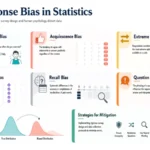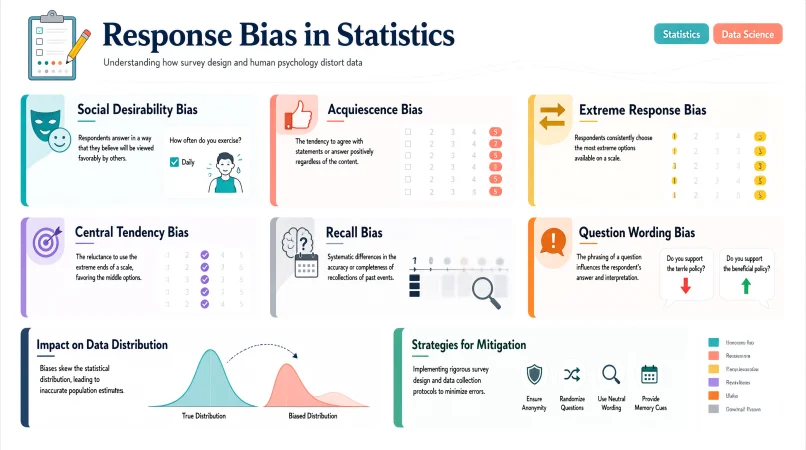
Response bias in statistics occurs when people provide inaccurate, misleading, or systematically influenced answers in surveys, questionnaires, or research studies. It can affect research findings, distort data, and lead to incorrect conclusions.
5 Related Terms: Survey bias, social desirability bias, acquiescence bias, nonresponse bias, measurement bias.
Ever answered a survey with what sounded like the right answer instead of what you actually thought? Or selected an option just to finish a questionnaire faster? These little moments can create a surprisingly big problem in research. This is where response bias in statistics comes into play. It happens when people give answers that do not accurately reflect their real opinions, experiences, or behaviors.
Whether you’re completing an online poll, answering workplace questions, participating in academic research, or filling out a customer feedback form, response bias can influence the results. The tricky part? It isn’t always intentional. Sometimes the wording of a question, social pressure, memory, or even the available answer choices can influence responses. Understanding these patterns helps researchers collect more reliable information and avoid misleading conclusions.
1. Honest and Direct Responses
Honest responses reflect what participants genuinely think, feel, or experience. They help researchers collect more accurate information.
- I would answer based on my actual experience.
Example: When completing a customer satisfaction survey.
Meaning: It expresses a commitment to truthful reporting. - My answer would reflect what really happened.
Example: When describing a recent workplace experience.
Meaning: It prioritizes factual information over assumptions. - I would choose the option that best represents my opinion.
Example: When answering a multiple-choice questionnaire.
Meaning: It encourages authentic self-expression. - I prefer giving an accurate answer rather than a convenient one.
Example: When completing a lengthy research survey.
Meaning: It emphasizes accuracy over convenience. - I would report both positive and negative experiences.
Example: When reviewing a product after using it.
Meaning: It demonstrates balanced reporting. - I would not change my answer to impress anyone.
Example: When participating in an employee feedback study.
Meaning: It rejects social pressure. - My response should match my real behavior.
Example: When reporting daily exercise habits.
Meaning: It separates actual behavior from ideal behavior. - I would provide details when necessary.
Example: When answering an open-ended research question.
Meaning: It supports clearer interpretation. - I would admit when I am unsure.
Example: When answering a question about an unfamiliar subject.
Meaning: It avoids misleading certainty. - I would rather skip a question than invent an answer.
Example: When asked about an experience that never happened.
Meaning: It discourages fabricated information. - I would consider every option carefully.
Example: When completing a public opinion poll.
Meaning: It reduces careless selections. - I would answer without trying to please the researcher.
Example: When participating in an academic survey.
Meaning: It encourages independent opinions.
2. Socially Desirable Responses
Social desirability bias happens when respondents provide answers they believe will make them look good or acceptable to others.
- I always follow a healthy lifestyle.
Example: When answering questions about eating habits.
Meaning: It may exaggerate healthy behavior. - I never lose my temper.
Example: When completing an emotional behavior questionnaire.
Meaning: It presents an unrealistically positive personality. - I always arrive on time.
Example: When answering an employee punctuality survey.
Meaning: It may hide occasional lateness. - I never tell lies.
Example: When participating in a personal ethics study.
Meaning: It reflects a socially approved image. - I always help people in need.
Example: When answering questions about charitable behavior.
Meaning: It may overstate helpfulness. - I never waste money.
Example: When completing a financial habits questionnaire.
Meaning: It presents an ideal financial image. - I always respect everyone’s opinions.
Example: When participating in a workplace culture survey.
Meaning: It may hide disagreements. - I never procrastinate.
Example: When answering questions about productivity.
Meaning: It exaggerates personal discipline. - I always make responsible decisions.
Example: When completing a lifestyle survey.
Meaning: It reflects a socially acceptable self-image. - I never break workplace rules.
Example: When answering an employee compliance questionnaire.
Meaning: It may discourage honest admissions. - I always treat everyone equally.
Example: When participating in a diversity survey.
Meaning: It may conceal unconscious preferences. - I never make unhealthy choices.
Example: When reporting dietary habits.
Meaning: It can produce overly positive research data.
3. Acquiescence Bias Responses
Acquiescence bias occurs when respondents tend to agree with statements regardless of their actual beliefs.
- Yes, I completely agree.
Example: When responding to a series of opinion statements.
Meaning: It demonstrates automatic agreement. - Absolutely, that sounds right.
Example: When completing a workplace questionnaire.
Meaning: It may indicate agreement without careful consideration. - I agree with most of these statements.
Example: When answering a long personality survey.
Meaning: It suggests a general tendency to agree. - Yes, I think so.
Example: When responding to an unfamiliar research question.
Meaning: It may reflect uncertainty-driven agreement. - That statement makes sense to me.
Example: When evaluating an opinion-based questionnaire.
Meaning: It shows agreement without necessarily verifying the statement. - I would probably say yes.
Example: When answering questions about personal preferences.
Meaning: It indicates a tendency toward positive responses. - I agree with the researcher’s point.
Example: When answering questions in an interview.
Meaning: It may reflect perceived authority pressure. - Yes, that is probably true.
Example: When responding to a general behavioral statement.
Meaning: It may indicate uncritical agreement. - I don’t see why I would disagree.
Example: When completing a survey with leading statements.
Meaning: It reveals a possible agreement tendency. - Most of the statements seem correct.
Example: When reviewing a long list of survey questions.
Meaning: It may hide differences in individual opinions. - I would choose agree rather than disagree.
Example: When answering a Likert-scale questionnaire.
Meaning: It reflects a preference for agreement. - Yes, I feel the same way.
Example: When responding to questions about social attitudes.
Meaning: It may indicate automatic alignment with the statement.
4. Extreme Response Bias Examples
Extreme response bias occurs when participants frequently select the strongest available response options, such as strongly agree or strongly disagree.
- Strongly agree with everything.
Example: When completing a satisfaction questionnaire.
Meaning: It demonstrates repeated selection of the highest agreement option. - Strongly disagree with every negative statement.
Example: When answering a workplace attitude survey.
Meaning: It shows a tendency toward extreme selections. - I am completely satisfied.
Example: When reviewing a recently purchased service.
Meaning: It may exaggerate satisfaction. - I am absolutely dissatisfied.
Example: When rating a disappointing customer experience.
Meaning: It reflects an extreme negative evaluation. - Everything was perfect.
Example: When evaluating a hotel stay.
Meaning: It may overlook minor problems. - Nothing about the experience was acceptable.
Example: When rating a service after one bad interaction.
Meaning: It communicates an absolute negative judgment. - I always choose the highest rating.
Example: When completing online feedback forms.
Meaning: It suggests a preference for extreme positive answers. - I never select the middle option.
Example: When responding to attitude questions.
Meaning: It shows avoidance of neutral responses. - This is the worst possible experience.
Example: When completing a complaint survey.
Meaning: It uses an extreme negative evaluation. - I would rate everything a ten.
Example: When evaluating a product or service.
Meaning: It may create artificially high scores. - I have no doubts whatsoever.
Example: When responding to questions about personal beliefs.
Meaning: It communicates unusually strong certainty. - My opinion is completely different from everyone else’s.
Example: When answering a social attitudes survey.
Meaning: It may reflect a tendency toward extreme positioning.
5. Neutral and Middle-Option Responses
Central tendency bias happens when respondents avoid extreme options and repeatedly choose the middle or neutral response.
- Neither agree nor disagree.
Example: When answering a five-point Likert-scale question.
Meaning: It represents a neutral selection. - I feel somewhere in the middle.
Example: When evaluating two competing opinions.
Meaning: It avoids taking a strong position. - My experience was average.
Example: When rating a customer service interaction.
Meaning: It communicates a moderate evaluation. - I have mixed feelings about this.
Example: When answering a workplace satisfaction survey.
Meaning: It reflects conflicting opinions. - I cannot say that I fully agree.
Example: When responding to an attitude statement.
Meaning: It avoids complete agreement. - The situation was neither good nor bad.
Example: When reviewing a product experience.
Meaning: It communicates a middle-ground judgment. - I would choose the neutral option.
Example: When answering an unfamiliar survey question.
Meaning: It indicates a preference for the center response. - Both sides have reasonable points.
Example: When answering questions about public policies.
Meaning: It avoids choosing an extreme position. - I do not have a strong preference.
Example: When selecting between two services.
Meaning: It reflects limited personal preference. - The experience was acceptable overall.
Example: When completing a customer feedback form.
Meaning: It expresses moderate satisfaction. - I am not particularly satisfied or dissatisfied.
Example: When rating a workplace environment.
Meaning: It indicates neutrality. - I would rather remain undecided.
Example: When answering a complicated opinion question.
Meaning: It avoids expressing an uncertain position.
6. Careless and Random Responses
Careless responding occurs when participants do not give questions enough attention. Random responding is one possible form of careless answering.
- I will just select the first option.
Example: When rushing through an online questionnaire.
Meaning: It shows a lack of attention. - Any answer will do.
Example: When completing a survey without interest.
Meaning: It demonstrates low response effort. - I did not really read the question.
Example: When answering a long online form.
Meaning: It reveals inattentive participation. - I will choose the same option every time.
Example: When completing a lengthy rating scale.
Meaning: It can create straight-line response patterns. - Let me finish this survey quickly.
Example: When completing a questionnaire during a busy day.
Meaning: It prioritizes speed over accuracy. - I will guess the answer.
Example: When responding to an unfamiliar factual question.
Meaning: It introduces unsupported information. - I do not care which option I select.
Example: When completing an uninteresting research survey.
Meaning: It reflects disengagement. - I will click through without checking.
Example: When answering a lengthy online poll.
Meaning: It suggests careless participation. - The middle option is always easiest.
Example: When completing a repetitive questionnaire.
Meaning: It may create artificial neutral responses. - I selected the answers randomly.
Example: When participating in an online survey without motivation.
Meaning: It directly indicates random responding. - I just want to submit the form.
Example: When completing a mandatory employee questionnaire.
Meaning: It reveals completion-focused behavior. - I did not think much about my choices.
Example: When answering a personality assessment.
Meaning: It suggests unreliable response patterns.
7. Memory-Based Response Bias Examples
Recall bias happens when participants inaccurately remember past events or experiences while answering research questions.
- I think I exercised every day last week.
Example: When reporting weekly physical activity.
Meaning: It may reflect inaccurate memory. - I cannot remember exactly what I ate.
Example: When completing a dietary questionnaire.
Meaning: It highlights limitations in recalling past behavior. - That happened much more often than I remember.
Example: When estimating previous workplace conflicts.
Meaning: It shows how memory can distort frequency. - I probably spent less money than I actually did.
Example: When reporting monthly expenses.
Meaning: It may underestimate past spending. - I remember the positive parts more clearly.
Example: When evaluating an old customer experience.
Meaning: It indicates selective memory. - I only remember the worst part.
Example: When describing a previous disagreement.
Meaning: It may overemphasize negative events. - I cannot recall the exact date.
Example: When reporting when an incident occurred.
Meaning: It shows uncertainty about timing. - I think it happened several times.
Example: When estimating past product usage.
Meaning: It may produce inaccurate frequency estimates. - I remember things differently now.
Example: When describing a past personal experience.
Meaning: It reflects changes in memory over time. - I may be confusing two different events.
Example: When answering questions about previous appointments.
Meaning: It reveals possible memory interference. - I cannot remember how often I did that.
Example: When reporting previous shopping habits.
Meaning: It indicates recall difficulty. - My estimate is based on what I remember.
Example: When completing a retrospective survey.
Meaning: It acknowledges possible memory errors.
8. Question-Wording Influenced Responses
Question wording bias occurs when the phrasing of a survey question influences how participants interpret or answer it.
- I agree that this excellent service was helpful.
Example: When answering a question containing positive descriptive language.
Meaning: It may encourage favorable responses. - I think the question is leading me toward an answer.
Example: When completing a customer satisfaction survey.
Meaning: It identifies potentially biased wording. - The question makes one option sound better.
Example: When comparing two political opinions.
Meaning: It reveals unequal framing. - I am unsure what the question actually means.
Example: When answering an ambiguous questionnaire item.
Meaning: It highlights unclear wording. - The wording seems emotionally loaded.
Example: When participating in a public opinion poll.
Meaning: It identifies language that may influence emotions. - I would answer differently if the question were neutral.
Example: When responding to a leading research question.
Meaning: It recognizes the influence of phrasing. - The question assumes something I do not believe.
Example: When answering a survey about social attitudes.
Meaning: It identifies an unsupported assumption. - I do not understand the terms being used.
Example: When completing a technical questionnaire.
Meaning: It highlights confusing terminology. - The question sounds more positive than the situation really is.
Example: When reviewing a service using promotional language.
Meaning: It reveals positive framing. - I would prefer a simpler question.
Example: When completing a complicated academic survey.
Meaning: It emphasizes clarity. - The question seems to expect a particular answer.
Example: When participating in a workplace survey.
Meaning: It suggests possible leading-question effects. - I need more context before answering.
Example: When responding to a vague research question.
Meaning: It highlights missing information.
9. Sensitive and Personal Question Responses
Sensitive question bias can occur when participants feel uncomfortable revealing private information, leading them to hide or modify their answers.
- I would rather not answer that.
Example: When asked about personal financial information.
Meaning: It reflects discomfort with disclosure. - That information is private.
Example: When answering questions about personal relationships.
Meaning: It demonstrates privacy concerns. - I am not comfortable discussing this topic.
Example: When completing a sensitive health behavior survey.
Meaning: It indicates reluctance to disclose. - I would prefer to keep that confidential.
Example: When answering questions about personal circumstances.
Meaning: It expresses a need for confidentiality. - I do not want anyone judging my answer.
Example: When participating in a survey about sensitive behavior.
Meaning: It highlights fear of social judgment. - I might give a different answer in private.
Example: When responding to a sensitive interview question.
Meaning: It suggests that the interview setting influences honesty. - I would only answer if my identity remained anonymous.
Example: When completing an employee feedback questionnaire.
Meaning: It emphasizes anonymity. - I am worried about how this information will be used.
Example: When answering a personal data survey.
Meaning: It identifies concerns about data privacy. - I would skip this question.
Example: When asked about a difficult personal experience.
Meaning: It shows discomfort or unwillingness to disclose. - I do not want to share exact details.
Example: When reporting personal income.
Meaning: It reflects limited disclosure. - I would feel more comfortable answering anonymously.
Example: When participating in a sensitive research study.
Meaning: It shows how anonymity can encourage honest reporting. - I would answer only if the information stayed confidential.
Example: When participating in a private research interview.
Meaning: It reflects concerns about confidentiality.
10. Agreeable and People-Pleasing Responses
People-pleasing responses may occur when respondents want to satisfy researchers, interviewers, employers, or other people rather than express their true opinions.
- Whatever you think is best.
Example: When responding to a supervisor’s workplace questionnaire.
Meaning: It avoids expressing an independent opinion. - I completely support your suggestion.
Example: When answering a survey conducted by a manager.
Meaning: It may reflect authority pressure. - I do not want to disagree with anyone.
Example: When participating in a group interview.
Meaning: It shows reluctance to express disagreement. - Your approach sounds perfect.
Example: When reviewing a proposed workplace policy.
Meaning: It may prioritize approval over accuracy. - I think everyone else is probably right.
Example: When answering a group opinion poll.
Meaning: It suggests conformity. - I would choose whatever makes the team happy.
Example: When completing an employee satisfaction survey.
Meaning: It prioritizes group approval. - I do not have any objections.
Example: When evaluating a supervisor’s decision.
Meaning: It may hide genuine concerns. - I agree because I trust your judgment.
Example: When answering a questionnaire administered by an authority figure.
Meaning: It shows potential authority-related influence. - I would rather not create disagreement.
Example: When discussing workplace changes.
Meaning: It reflects conflict avoidance. - That sounds good to everyone, I suppose.
Example: When participating in a group discussion.
Meaning: It may reflect pressure to conform. - I would support the popular choice.
Example: When answering a public opinion survey.
Meaning: It suggests following the perceived majority. - I just want everyone to be satisfied.
Example: When responding to a team feedback questionnaire.
Meaning: It prioritizes harmony over individual honesty.
11. Professional and Workplace Survey Responses
Workplace response bias can arise when employees worry that their answers may affect their reputation, relationships, or employment.
- I am completely satisfied with my manager.
Example: When completing an employer-administered survey.
Meaning: It may reflect fear of criticizing management. - Everything is going smoothly at work.
Example: When reporting workplace conditions.
Meaning: It may conceal organizational problems. - I have no concerns about company policies.
Example: When completing an internal employee questionnaire.
Meaning: It may reflect reluctance to criticize policies. - My workload is always manageable.
Example: When answering questions about job responsibilities.
Meaning: It may hide workplace stress. - I would not change anything about the organization.
Example: When completing an employee engagement survey.
Meaning: It may present an unrealistically positive opinion. - I feel comfortable sharing my feedback.
Example: When answering questions about workplace communication.
Meaning: It reflects perceived psychological safety. - I do not have any problems with my colleagues.
Example: When completing a workplace relationship survey.
Meaning: It may conceal interpersonal difficulties. - I always meet every performance target.
Example: When answering a performance assessment questionnaire.
Meaning: It may exaggerate work achievements. - I would prefer not to criticize management.
Example: When responding to an internal feedback form.
Meaning: It indicates possible authority-related pressure. - I feel that my opinions are valued.
Example: When participating in an employee engagement study.
Meaning: It communicates perceived inclusion. - I would give more honest feedback if responses were anonymous.
Example: When completing an organizational survey.
Meaning: It highlights confidentiality concerns. - I want my feedback to remain confidential.
Example: When answering questions about workplace problems.
Meaning: It emphasizes protection from possible consequences.
12. Positive and Negative Framing Responses
Framing bias occurs when information is presented in a way that influences how people interpret a situation or make decisions.
- The product has a 90% success rate.
Example: When evaluating a product’s performance.
Meaning: It presents information using a positive frame. - The product has a 10% failure rate.
Example: When reviewing the same product statistics.
Meaning: It presents identical information using a negative frame. - Most customers are satisfied.
Example: When answering a survey about service quality.
Meaning: It emphasizes favorable outcomes. - Some customers are still dissatisfied.
Example: When evaluating customer satisfaction.
Meaning: It emphasizes unfavorable outcomes. - The treatment helped many patients.
Example: When answering questions about medical research.
Meaning: It highlights positive results. - Some patients did not benefit from the treatment.
Example: When reviewing a medical study.
Meaning: It highlights negative outcomes. - The company improved its performance.
Example: When answering a business evaluation survey.
Meaning: It frames progress positively. - The company still has several problems.
Example: When reviewing organizational performance.
Meaning: It focuses on remaining weaknesses. - This plan offers many advantages.
Example: When evaluating a proposed policy.
Meaning: It emphasizes potential benefits. - This plan comes with several risks.
Example: When assessing a new business strategy.
Meaning: It emphasizes potential disadvantages. - The results were better than expected.
Example: When reporting research outcomes.
Meaning: It encourages a favorable interpretation. - The results did not meet expectations.
Example: When discussing the same research findings.
Meaning: It encourages a less favorable interpretation.
13. Cultural and Language-Related Responses
Cultural response bias occurs when cultural expectations, communication styles, or language differences influence how participants answer questions.
- I prefer not to disagree openly.
Example: When answering a survey in a culture that values group harmony.
Meaning: It may reflect cultural communication norms. - I would choose the most respectful option.
Example: When responding to a questionnaire involving authority figures.
Meaning: It shows the influence of respect expectations. - I do not understand the translated question.
Example: When completing a survey in a second language.
Meaning: It highlights translation difficulties. - I would answer according to my community’s expectations.
Example: When participating in a cultural attitudes study.
Meaning: It may reflect community influence. - I prefer indirect answers.
Example: When discussing sensitive subjects in an interview.
Meaning: It reflects an indirect communication style. - I would choose the option that shows respect.
Example: When answering questions about family relationships.
Meaning: It may prioritize cultural expectations. - The wording does not make sense in my language.
Example: When responding to a translated questionnaire.
Meaning: It indicates possible language-related measurement problems. - I interpret this question differently.
Example: When participating in cross-cultural research.
Meaning: It highlights differences in interpretation. - I would rather avoid an answer that sounds disrespectful.
Example: When completing a survey about traditional beliefs.
Meaning: It may affect the honesty of responses. - I prefer a response that maintains social harmony.
Example: When answering questions about group relationships.
Meaning: It reflects the influence of social expectations. - The available choices do not represent my culture.
Example: When completing an international survey.
Meaning: It identifies culturally unsuitable answer options. - I need a culturally appropriate explanation.
Example: When answering an unfamiliar questionnaire.
Meaning: It emphasizes the importance of cultural understanding.
14. Online Survey and Digital Response Bias
Online response bias occurs when digital survey design, internet access, user behavior, or platform features influence the answers collected.
- I would select the first visible option.
Example: When completing a survey on a mobile phone.
Meaning: It may reflect interface-related selection behavior. - I would skip questions that take too long.
Example: When completing an online questionnaire.
Meaning: It indicates survey fatigue. - I would answer only the questions marked as required.
Example: When filling out a digital feedback form.
Meaning: It may lead to incomplete information. - I clicked the wrong option by mistake.
Example: When answering a survey on a small screen.
Meaning: It highlights possible interface errors. - I would abandon a survey that takes too much time.
Example: When participating in a lengthy online study.
Meaning: It demonstrates completion-related nonresponse. - I prefer short and simple questions.
Example: When completing a mobile survey.
Meaning: It highlights the importance of accessible design. - I would respond differently depending on the platform.
Example: When comparing social media polls with private questionnaires.
Meaning: It suggests that survey settings influence answers. - I would not trust a survey from an unfamiliar website.
Example: When receiving an unexpected online questionnaire.
Meaning: It reflects digital trust concerns. - I might rush through questions to finish quickly.
Example: When completing a survey during a busy day.
Meaning: It indicates possible satisficing behavior. - I would avoid sharing personal information online.
Example: When completing a digital customer survey.
Meaning: It reflects privacy-related response limitations. - I would prefer a survey that works on my phone.
Example: When participating in a mobile research study.
Meaning: It emphasizes accessibility. - I may misunderstand an option displayed without context.
Example: When answering a digital multiple-choice question.
Meaning: It highlights possible interface-related confusion.
15. Accurate and Balanced Research Responses
Balanced responses help researchers distinguish genuine opinions from misleading answers and improve the quality of collected data.
- I would consider both sides before answering.
Example: When evaluating competing research statements.
Meaning: It encourages balanced judgment. - I would choose the answer supported by my experience.
Example: When completing a behavioral study.
Meaning: It promotes evidence-based responses. - I would not guess when I lack information.
Example: When answering a technical questionnaire.
Meaning: It reduces inaccurate reporting. - I would explain my uncertainty honestly.
Example: When participating in an academic interview.
Meaning: It supports transparent communication. - I would evaluate every option fairly.
Example: When completing a public opinion survey.
Meaning: It discourages automatic choices. - I would separate facts from personal opinions.
Example: When answering a research question about social issues.
Meaning: It improves response clarity. - I would avoid changing my answer to fit expectations.
Example: When participating in an employee feedback study.
Meaning: It reduces social influence. - I would report my actual behavior.
Example: When completing a lifestyle questionnaire.
Meaning: It supports accurate measurement. - I would ask for clarification when necessary.
Example: When answering an ambiguous survey question.
Meaning: It reduces misunderstanding. - I would use the neutral option only when appropriate.
Example: When completing a five-point rating scale.
Meaning: It avoids unnecessary central tendency bias. - I would take enough time to answer thoughtfully.
Example: When completing a detailed research questionnaire.
Meaning: It reduces careless responding. - I would provide an answer that reflects my true opinion.
Example: When participating in a confidential academic study.
Meaning: It encourages reliable research data.
FAQs
What does response bias in statistics mean?
Response bias occurs when survey answers systematically differ from participants’ true opinions or experiences.
What is an emotional or personal interpretation of response bias?
It can reflect fear, embarrassment, social pressure, or the desire to give acceptable answers.
How is response bias used in professional research?
Researchers identify and reduce response bias to improve survey accuracy and the reliability of findings.
What should you say if you do not know an answer?
Choose an available unsure option or explain that you do not have enough information.
Is humor appropriate when discussing response bias?
Yes, light humor can explain careless survey answers, but research findings should remain accurate.
What is an example of response bias?
A person exaggerating healthy habits because they want to appear healthier is an example.
Is response bias the same as nonresponse bias?
No. Response bias involves inaccurate answers, while nonresponse bias occurs when certain people do not participate.
What causes response bias?
Question wording, social pressure, memory errors, survey design, and personal discomfort can contribute.
How does response bias affect research?
It can distort collected data, reduce accuracy, and lead researchers to incorrect conclusions.
Can response bias be completely eliminated?
Not always, but careful survey design, anonymity, and neutral questions can reduce it.
Conclusion
Understanding response bias in statistics is essential for anyone who wants to collect meaningful and reliable research data. From social desirability and acquiescence bias to memory errors and careless responses, these patterns can influence how people answer even the simplest questions. The important thing is to recognize that not every survey response represents someone’s actual thoughts or behavior.
Researchers can improve accuracy by using neutral wording, protecting participant privacy, offering balanced answer choices, and encouraging honest participation. Whether you’re studying statistics, conducting academic research, or analyzing customer feedback, keep these examples handy. Save this guide, share it with fellow students, and remember that better questions lead to better answers.