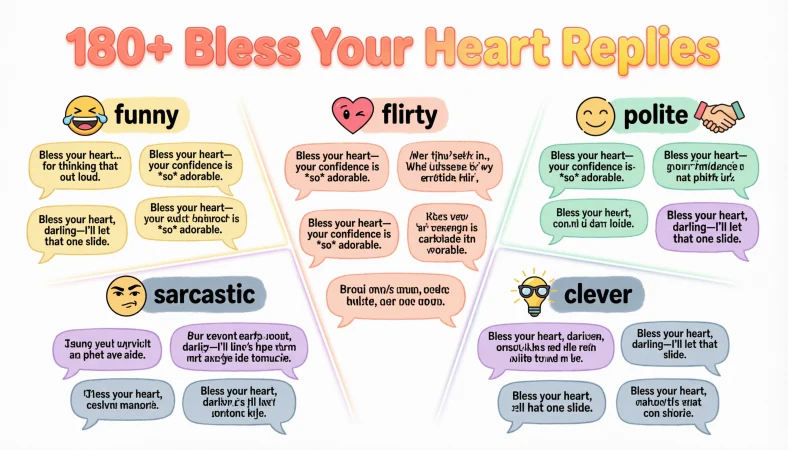
Quick Answer: “Bless your heart” can sound sweet, supportive, sarcastic, or subtly shady depending on the situation and tone. The best Bless your heart replies match the energy without making things awkward.
Top alternatives: “Aww, thank you!”, “Right back at you!”, “I’ll take that as a compliment!”, “Well, bless yours too!”, “I appreciate that!”
If someone says “bless your heart,” your response can be playful, polite, flirty, confident, or wonderfully sarcastic.
Sometimes it is genuine kindness. Sometimes it means, “Oh honey, you really thought that was a good idea?” And sometimes you genuinely cannot tell which one you just received.
You might hear it in a text, DM, workplace conversation, family gathering, friendship, or even from a crush testing your sense of humor. That is exactly why knowing the right response matters. A sweet reply can keep things warm, while a clever comeback can turn a slightly shady moment into a hilarious one.
The best Bless your heart replies do more than answer the phrase. They show personality. Whether you want to flirt, laugh it off, stay professional, or gently return the sass, there is a response for almost every mood.
Funny Responses
“I’ll accept that as a compliment.”
Use this when you want to turn a possibly shady comment into something positive.
Meaning: You are playfully refusing to take offense.
“Well, bless your Wi-Fi connection.”
Use this when texting with someone who appreciates ridiculous humor.
Meaning: You are returning the phrase with an intentionally random twist.
“Thank you, I’ll frame that.”
Use this when someone says it dramatically after your questionable decision.
Meaning: You are pretending their comment was an award.
“A blessing? I knew I was special.”
Use this when you want a lighthearted confidence boost.
Meaning: You are jokingly treating their words as praise.
“I feel spiritually supported now.”
Use this when the conversation has a goofy, playful vibe.
Meaning: You are exaggerating the meaning for comedic effect.
“Adding that to my résumé.”
Use this after someone says it in a teasing way.
Meaning: You are joking that being blessed is an impressive qualification.
“Finally, some recognition.”
Use this when you want a quick humorous comeback.
Meaning: You are acting like you just received an important honor.
“I accept blessings in cash too.”
Use this with friends who enjoy money jokes.
Meaning: You are turning the blessing into a playful request.
“That sounds expensive.”
Use this when someone says it with dramatic seriousness.
Meaning: You are humorously pretending blessings come with a price tag.
“Do I get a certificate?”
Use this when you want to keep the exchange silly.
Meaning: You are exaggerating the idea of being blessed.
“Look at me collecting blessings.”
Use this when someone gives you a playful compliment.
Meaning: You are celebrating the moment with cheerful humor.
“Noted, blessed, and slightly confused.”
Use this when you cannot tell whether they were sincere or sarcastic.
Meaning: You are joking about the phrase’s double meaning.
Brutal Responses
“Bless yours, especially your intentions.”
Use this when their tone feels noticeably patronizing.
Meaning: You are calmly calling attention to their attitude.
“I’ll survive the blessing.”
Use this when someone delivers the phrase with obvious sarcasm.
Meaning: You are showing that their comment does not bother you.
“Thanks for the concern I didn’t request.”
Use this when someone is being unnecessarily judgmental.
Meaning: You are setting a clear boundary with confidence.
“Your kindness is almost convincing.”
Use this when the sarcasm is impossible to miss.
Meaning: You are pointing out that their sweetness feels fake.
“That sounded nicer in your head, didn’t it?”
Use this when their delivery is more insulting than caring.
Meaning: You are politely exposing the awkwardness.
“I’ll treasure that passive-aggressive blessing.”
Use this when they clearly meant more than the words suggested.
Meaning: You are naming the hidden attitude directly.
“Keep the blessing. I’m good.”
Use this when you want a short, firm response.
Meaning: You are declining their condescending energy.
“Cute. Was that supposed to hurt?”
Use this when someone is clearly trying to provoke you.
Meaning: You are showing that their words had little impact.
“I’m touched by your carefully disguised concern.”
Use this when you want sophisticated sarcasm.
Meaning: You are highlighting the difference between their words and intent.
“Bless your confidence in that opinion.”
Use this when someone is overly certain about something.
Meaning: You are questioning their confidence without directly arguing.
“That was almost subtle.”
Use this when their shade is obvious.
Meaning: You are letting them know you caught the implication.
“I’ll be okay, but thanks for the performance.”
Use this when someone is being dramatically patronizing.
Meaning: You are refusing to participate in their act.
Flirty Responses
“Only if you’re the one doing the blessing.”
Use this when a crush says it playfully.
Meaning: You are turning the phrase into a flirtatious invitation.
“Careful, I might start liking you.”
Use this when you want playful romantic tension.
Meaning: You are teasing them while showing interest.
“Bless me again, that sounded cute.”
Use this when their message makes you smile.
Meaning: You are encouraging them to keep flirting.
“Is that your way of flirting with me?”
Use this when their tone feels suspiciously sweet.
Meaning: You are playfully calling out possible romantic interest.
“Well, aren’t you adorable?”
Use this when you want a soft, charming comeback.
Meaning: You are returning their sweetness with affection.
“I’ll take that blessing and your attention.”
Use this when the conversation already feels flirty.
Meaning: You are confidently asking for more of their attention.
“Keep talking like that and I’ll blush.”
Use this when you want to sound cute without being too intense.
Meaning: Their words are making you feel pleasantly shy.
“That sounded dangerously sweet.”
Use this when their message has romantic undertones.
Meaning: You are teasing them for being unusually charming.
“Bless your heart right back, cutie.”
Use this when you want a warm, direct flirt.
Meaning: You are matching their affectionate energy.
“You make blessings sound attractive.”
Use this when you want something witty and romantic.
Meaning: You are playfully complimenting their charm.
“Are you always this sweet?”
Use this when you want to keep the flirting going.
Meaning: You are inviting them to continue the affectionate tone.
“If that’s flirting, it’s working.”
Use this when you want to be confidently obvious.
Meaning: You are admitting that their attention is getting to you.
Polite Responses
“Thank you, I appreciate that.”
Use this when you want a simple and respectful answer.
Meaning: You are accepting the sentiment graciously.
“That’s very kind of you.”
Use this when someone says it sincerely.
Meaning: You are responding with genuine appreciation.
“Bless you too.”
Use this when you want to return the warmth.
Meaning: You are politely sending the kindness back.
“I appreciate the thought.”
Use this when you want to acknowledge their intention.
Meaning: You are recognizing their gesture without overexplaining.
“That means a lot.”
Use this when their words feel genuinely supportive.
Meaning: You are showing that their kindness mattered.
“Thank you for saying that.”
Use this when the phrase comes during an emotional moment.
Meaning: You are acknowledging their support sincerely.
“That’s sweet of you.”
Use this when the phrase feels affectionate.
Meaning: You are responding warmly and naturally.
“I’ll take that kindly.”
Use this when you are unsure of their exact tone.
Meaning: You are choosing the positive interpretation.
“Much appreciated.”
Use this when you want to keep things brief.
Meaning: You are expressing polite gratitude.
“That’s thoughtful.”
Use this when someone is trying to comfort you.
Meaning: You are recognizing their caring intention.
“Thank you, that’s nice to hear.”
Use this when you want a warm but neutral response.
Meaning: You are accepting the comment without overdoing it.
“Wishing you the same kindness.”
Use this when you want an elegant response.
Meaning: You are returning goodwill respectfully.
Professional Responses
“Thank you, I appreciate your kind words.”
Use this when a workplace conversation has a friendly tone.
Meaning: You are acknowledging the sentiment professionally.
“That’s very thoughtful, thank you.”
Use this when a colleague offers encouragement.
Meaning: You are keeping your response courteous.
“I appreciate that.”
Use this when you need a short workplace-friendly answer.
Meaning: You are politely accepting the comment.
“Thank you for the encouragement.”
Use this when the phrase follows a challenging situation.
Meaning: You are focusing on the supportive interpretation.
“That’s kind of you to say.”
Use this when someone expresses concern or sympathy.
Meaning: You are responding respectfully without becoming overly personal.
“Thank you, I’m grateful for that.”
Use this when the comment is genuinely meaningful.
Meaning: You are showing sincere appreciation.
“I appreciate the sentiment.”
Use this when you want a polished professional tone.
Meaning: You are recognizing the intention behind their words.
“Thank you for your support.”
Use this when the phrase accompanies encouragement.
Meaning: You are acknowledging their helpful attitude.
“That’s appreciated.”
Use this when you want an efficient professional response.
Meaning: You are accepting the gesture politely.
“Thank you, that’s reassuring.”
Use this when someone is trying to make you feel better.
Meaning: Their words have provided some comfort.
“I’ll keep that in mind, thank you.”
Use this when the phrase accompanies advice.
Meaning: You are acknowledging their input respectfully.
“Thank you for the kindness.”
Use this when you want to sound warm but composed.
Meaning: You are appreciating their goodwill.
Creative Responses
“May your coffee always be perfectly brewed.”
Use this when you want an imaginative blessing in return.
Meaning: You are responding with playful goodwill.
“Bless your heart, your snacks, and your screen time.”
Use this when chatting with someone who loves internet humor.
Meaning: You are creating an exaggerated modern blessing.
“May your notifications be pleasant today.”
Use this in a casual text exchange.
Meaning: You are giving them a funny digital-age blessing.
“Your blessing has been received and logged.”
Use this when you want something quirky and unexpected.
Meaning: You are pretending the blessing is official paperwork.
“May your charger work from every angle.”
Use this when you want relatable humor.
Meaning: You are offering a highly practical modern blessing.
“Blessings accepted. Terms and conditions apply.”
Use this when you want a clever internet-style comeback.
Meaning: You are joking that even blessings have fine print.
“May your group chats remain peaceful.”
Use this when your friend group is always full of drama.
Meaning: You are offering an amusing wish for social harmony.
“I shall carry this blessing into the weekend.”
Use this when you want to sound dramatically playful.
Meaning: You are exaggerating the importance of their words.
“May your fries always come with extra sauce.”
Use this when food humor fits the conversation.
Meaning: You are returning the sentiment with a fun wish.
“Your blessing has unlocked a new achievement.”
Use this when you enjoy gaming-style humor.
Meaning: You are treating their words like a reward.
“May your next selfie need zero retakes.”
Use this when talking with a selfie-loving friend.
Meaning: You are giving them a playful social-media blessing.
“Consider that blessing officially upgraded.”
Use this when you want to make the phrase sound grander.
Meaning: You are turning a simple exchange into playful nonsense.
Sarcastic Responses
“Oh good, I was waiting for the blessing.”
Use this when someone delivers the phrase with obvious sarcasm.
Meaning: You are sarcastically pretending you needed their approval.
“How generous of you.”
Use this when their kindness sounds slightly patronizing.
Meaning: You are subtly pointing out the attitude behind their words.
“I’ll try to recover from all that sweetness.”
Use this when their tone is clearly sarcastic.
Meaning: You are joking that their comment was almost too sweet to handle.
“Blessings from the peanut gallery. Lovely.”
Use this when someone is commenting from the sidelines.
Meaning: You are teasing them for offering unwanted commentary.
“What would I do without your approval?”
Use this when someone acts superior.
Meaning: You are sarcastically emphasizing that you do not need their validation.
“Truly, what an honor.”
Use this when the phrase sounds condescending.
Meaning: You are pretending their comment is a prestigious award.
“I’ll alert the press.”
Use this when you want a quick sarcastic response.
Meaning: You are exaggerating the importance of their comment.
“That blessing almost convinced me.”
Use this when their sincerity is questionable.
Meaning: You are playfully calling out their fake sweetness.
“Your concern has been noted.”
Use this when you want controlled sarcasm.
Meaning: You are acknowledging them without encouraging more commentary.
“I’ll add that to today’s compliments.”
Use this when the phrase feels more like shade than praise.
Meaning: You are pretending their sarcasm is a compliment.
“So touching. Almost emotional.”
Use this when their dramatic delivery makes you laugh.
Meaning: You are mocking the exaggerated sentiment lightly.
“Blessings really are coming from everywhere today.”
Use this when several people are teasing you.
Meaning: You are turning the situation into a joke.
Cute Responses
“Aww, bless you too.”
Use this when the phrase is clearly affectionate.
Meaning: You are returning the sweetness warmly.
“That’s actually adorable.”
Use this when someone says it in a caring way.
Meaning: You find their kindness charming.
“You’re too sweet.”
Use this when their message makes you smile.
Meaning: You are showing genuine appreciation.
“Sending a little blessing right back.”
Use this when you want a wholesome response.
Meaning: You are returning their positive energy.
“Aww, my heart needed that.”
Use this when their words cheer you up.
Meaning: Their kindness made you feel emotionally supported.
“You just made me smile.”
Use this when the phrase arrives unexpectedly.
Meaning: Their message had a positive emotional effect.
“Bless your sweet little heart too.”
Use this when chatting with someone you know well.
Meaning: You are affectionately mirroring their language.
“That was precious.”
Use this when someone is being unexpectedly kind.
Meaning: You found their gesture genuinely sweet.
“Sending good vibes your way too.”
Use this for a modern, casual response.
Meaning: You are returning their positive energy.
“You’re a sweetheart.”
Use this when you want a simple affectionate reply.
Meaning: You are complimenting their kindness.
“Well, aren’t you lovely?”
Use this when someone says it warmly.
Meaning: You are responding with gentle affection.
“Okay, that was cute.”
Use this when you want playful understatement.
Meaning: Their comment genuinely charmed you.
Dramatic Responses
“I shall never recover from this blessing.”
Use this when you want an exaggerated theatrical response.
Meaning: You are jokingly treating the moment as monumental.
“At last, my destiny has been fulfilled.”
Use this when the conversation is already playful.
Meaning: You are dramatically exaggerating the importance of their words.
“Tell my story when I’m gone.”
Use this when you want absurd dramatic humor.
Meaning: You are pretending their comment was life-changing.
“I have been chosen.”
Use this when someone compliments or blesses you.
Meaning: You are jokingly acting as though you received a divine mission.
“This moment will be remembered.”
Use this when you want to make a tiny interaction sound historic.
Meaning: You are playfully exaggerating the situation.
“I’m putting this in my memoir.”
Use this when you want an over-the-top response.
Meaning: You are pretending their words deserve permanent documentation.
“My journey has finally reached this moment.”
Use this when you want theatrical humor.
Meaning: You are exaggerating the significance of the exchange.
“The prophecy has spoken.”
Use this when someone says something unexpectedly fitting.
Meaning: You are turning their comment into a dramatic prediction.
“I feel spiritually promoted.”
Use this when the phrase makes you laugh.
Meaning: You are pretending the blessing gave you a higher status.
“Cue the emotional soundtrack.”
Use this when you want a cinematic joke.
Meaning: You are acting as though the conversation deserves movie-level drama.
“Someone notify my ancestors.”
Use this when the moment feels hilariously important.
Meaning: You are exaggerating the blessing for comic effect.
“I need a moment to process this honor.”
Use this when someone gives you playful praise.
Meaning: You are dramatically pretending to be overwhelmed.
Chill And Casual Responses
“Haha, thanks.”
Use this when you want the easiest relaxed response.
Meaning: You are accepting the phrase without making it a big deal.
“Right back at you.”
Use this when you want to return the same energy.
Meaning: You are casually sending the sentiment back.
“Appreciate you.”
Use this when the person is being supportive.
Meaning: You are expressing simple gratitude.
“Haha, I’ll take it.”
Use this when you are unsure whether they are joking.
Meaning: You are choosing to interpret the phrase positively.
“You’re good.”
Use this when someone says it after apologizing or teasing.
Meaning: You are keeping the situation relaxed.
“Fair enough.”
Use this when the phrase follows playful disagreement.
Meaning: You are acknowledging their perspective casually.
“Haha, noted.”
Use this when you want a quick text-ready reply.
Meaning: You are acknowledging their comment without overthinking it.
“Blessings all around.”
Use this when you want to keep things upbeat.
Meaning: You are turning the exchange into mutual positivity.
“I hear you.”
Use this when the phrase comes with advice or concern.
Meaning: You are acknowledging what they said calmly.
“Haha, much love.”
Use this when you want a warm but relaxed response.
Meaning: You are returning friendly affection.
“We’ll call it a win.”
Use this when the conversation is playful.
Meaning: You are ending the moment on a positive note.
“All good over here.”
Use this when someone sounds concerned about you.
Meaning: You are reassuring them that everything is fine.
Confident Responses
“I know, I’m pretty blessed.”
Use this when someone says it after complimenting you.
Meaning: You are confidently accepting the positive energy.
“I’ll take the blessing and keep moving.”
Use this when you do not want unnecessary drama.
Meaning: You are showing that you can accept a comment without dwelling on it.
“Blessed and unbothered.”
Use this when someone is trying to tease you.
Meaning: You are showing that their opinion does not affect you.
“I’m comfortable with that.”
Use this when you want a calm, confident response.
Meaning: You are secure enough not to overreact.
“I’ll take that energy.”
Use this when the phrase feels supportive.
Meaning: You are confidently accepting the positivity.
“Good vibes received.”
Use this when you want something modern and concise.
Meaning: You are acknowledging their positive intention.
“I know who I am.”
Use this when someone is being subtly judgmental.
Meaning: You are showing that outside opinions do not define you.
“Blessed enough to know better.”
Use this when you want a clever confident comeback.
Meaning: You are suggesting that you trust your own judgment.
“I’ll be just fine.”
Use this when someone seems concerned about your choices.
Meaning: You are reassuring them while standing by yourself.
“Thanks, but I’ve got this.”
Use this when someone is offering unnecessary advice.
Meaning: You are politely asserting independence.
“Confidence looks good on me, apparently.”
Use this when the phrase follows a bold choice.
Meaning: You are proudly owning your decision.
“I’m keeping the blessing and the attitude.”
Use this when you want playful confidence.
Meaning: You are accepting the good part while matching their energy.
Emotional Responses
“Thank you, I really needed that.”
Use this when someone offers comfort during a difficult moment.
Meaning: Their words provided genuine emotional support.
“That means more than you know.”
Use this when the phrase arrives at an important time.
Meaning: Their kindness has deeper emotional significance for you.
“I appreciate you being there.”
Use this when someone has supported you consistently.
Meaning: You are recognizing their emotional presence.
“That touched my heart.”
Use this when their words feel deeply sincere.
Meaning: Their kindness affected you emotionally.
“I’m grateful for you.”
Use this when you want to make the moment personal.
Meaning: You are expressing sincere appreciation for them.
“You have no idea how much that helped.”
Use this when their words genuinely lifted your mood.
Meaning: Their support made a meaningful difference.
“Sending that love right back.”
Use this when the phrase feels affectionate and sincere.
Meaning: You are returning their emotional warmth.
“Thank you for understanding.”
Use this when someone offers empathy.
Meaning: You appreciate feeling seen and understood.
“That was exactly what I needed to hear.”
Use this when their timing was perfect.
Meaning: Their words gave you reassurance at the right moment.
“I’m holding onto that kindness.”
Use this when you want a heartfelt response.
Meaning: Their gesture will stay with you emotionally.
“You’re genuinely appreciated.”
Use this when you want to express sincere gratitude.
Meaning: You want them to know their presence matters.
“That made my day a little brighter.”
Use this when their message improves your mood.
Meaning: Their kindness brought you genuine happiness.
Sweet Responses
“Bless your heart right back.”
Use this when you want a warm and universally friendly response.
Meaning: You are returning the kindness sincerely.
“Thank you, sweetheart.”
Use this when speaking with someone you are close to.
Meaning: You are responding with affection and gratitude.
“You’re such a kind soul.”
Use this when the phrase is genuinely supportive.
Meaning: You are complimenting their compassionate nature.
“Sending you love too.”
Use this when you want a heartfelt but simple response.
Meaning: You are returning their warmth.
“That’s so sweet of you.”
Use this when their words make you feel appreciated.
Meaning: You are recognizing their kindness.
“You just made my heart smile.”
Use this when their message feels especially thoughtful.
Meaning: Their kindness brought you emotional happiness.
“May good things find you too.”
Use this when you want a thoughtful response.
Meaning: You are wishing them positive experiences in return.
“You deserve a blessing too.”
Use this when you want to make the exchange reciprocal.
Meaning: You believe they deserve the same kindness.
“Thank you for the beautiful energy.”
Use this when the conversation has a positive vibe.
Meaning: You appreciate the uplifting feeling they created.
“Keeping that kindness close.”
Use this when someone says something meaningful.
Meaning: You intend to remember their supportive words.
“You’re a bright spot today.”
Use this when their message lifts your spirits.
Meaning: You are telling them they improved your day.
“Wishing you twice the goodness.”
Use this when you want a cheerful blessing in return.
Meaning: You are wishing them even more positivity.
Clever Responses
“Context is doing a lot of work here.”
Use this when you cannot tell whether they are sincere or sarcastic.
Meaning: You recognize that tone determines the phrase’s meaning.
“That depends on which version of ‘bless’ you mean.”
Use this when someone’s tone is ambiguous.
Meaning: You are cleverly acknowledging the phrase’s double meaning.
“I detect a blessing with subtitles.”
Use this when their words have an obvious hidden message.
Meaning: You are joking that their real meaning is easy to decode.
“Interesting choice of words.”
Use this when someone says it with noticeable attitude.
Meaning: You are subtly signaling that you noticed their tone.
“I’m choosing the wholesome interpretation.”
Use this when you want to avoid unnecessary tension.
Meaning: You are deliberately taking their words positively.
“Was that kindness or commentary?”
Use this when the phrase could be interpreted either way.
Meaning: You are playfully asking what they really meant.
“That phrase has layers.”
Use this when their tone makes the meaning complicated.
Meaning: You recognize that “bless your heart” can carry different intentions.
“I’ll let the tone speak for itself.”
Use this when the delivery is telling.
Meaning: You are implying that their attitude revealed their true meaning.
“A blessing with a plot twist.”
Use this when a sweet phrase has a suspicious edge.
Meaning: You are joking about the unexpected undertone.
“I’ll file that under ‘interesting.’”
Use this when you want a subtle clever comeback.
Meaning: You are acknowledging the remark without giving it much power.
“That sounded suspiciously polite.”
Use this when you detect hidden sarcasm.
Meaning: You are teasing them about their indirect wording.
“Message received, subtext included.”
Use this when their hidden meaning is obvious.
Meaning: You are showing that you understood both the words and the implication.
Playful Responses
“Bless your heart too, you little menace.”
Use this with a close friend who loves playful teasing.
Meaning: You are returning affection with a humorous insult.
“Okay, Southern royalty.”
Use this when someone says the phrase with dramatic charm.
Meaning: You are playfully teasing them about their expression.
“That sounded suspiciously wholesome.”
Use this when they are usually sarcastic.
Meaning: You are joking that their kindness seems unusual.
“Look at you being all sweet.”
Use this when someone unexpectedly says something nice.
Meaning: You are teasing them affectionately.
“I’m blushing, obviously.”
Use this when the phrase feels like playful praise.
Meaning: You are pretending their words made you shy.
“You really came prepared with the blessings.”
Use this when someone keeps using the phrase.
Meaning: You are joking about their repeated kindness.
“Well, someone woke up charming.”
Use this when their message is unusually sweet.
Meaning: You are playfully complimenting their mood.
“I’ll allow it.”
Use this when you want a confident playful response.
Meaning: You are jokingly pretending to approve their blessing.
“Blessings? In this economy?”
Use this when you want a modern meme-style reply.
Meaning: You are joking about the unexpected luxury of receiving blessings.
“Okay, that was smooth.”
Use this when their wording impresses you.
Meaning: You are admitting that their comment landed well.
“You’re getting dangerously good at this.”
Use this when someone keeps making clever comments.
Meaning: You are teasing them for becoming too charming.
“I see what you did there.”
Use this when their blessing has an obvious playful undertone.
Meaning: You understood the joke or hidden meaning.
Respectful And Warm Responses
“Thank you, that’s very kind.”
Use this when you want warmth without overcomplicating the moment.
Meaning: You genuinely appreciate their kindness.
“I’m grateful for that.”
Use this when their words offer encouragement.
Meaning: You are sincerely thankful for their support.
“Wishing you the same.”
Use this when you want a simple reciprocal response.
Meaning: You are returning the positive sentiment.
“That’s a lovely thing to say.”
Use this when someone speaks warmly to you.
Meaning: You appreciate the sincerity behind their words.
“Thank you for thinking of me.”
Use this when their comment shows concern.
Meaning: You are grateful that they cared enough to reach out.
“I appreciate your kindness.”
Use this when you want to sound sincere and composed.
Meaning: You are directly acknowledging their goodwill.
“May kindness come back to you.”
Use this when you want a thoughtful response.
Meaning: You are wishing them the same goodness they offered you.
“Thank you, truly.”
Use this when you want a short but heartfelt reply.
Meaning: Your gratitude is genuine.
“That was thoughtful of you.”
Use this when someone makes an effort to comfort you.
Meaning: You are recognizing their consideration.
“I’m sending good wishes your way too.”
Use this when you want a warm reciprocal message.
Meaning: You are returning their positivity.
“Your kindness is appreciated.”
Use this when you want a calm, mature response.
Meaning: You value the positive intention behind their words.
“Thank you for the warm sentiment.”
Use this when you want a polished but friendly answer.
Meaning: You are respectfully acknowledging their goodwill.
Witty And Internet-Friendly Responses
“Blessed, booked, and buffering.”
Use this when you want a meme-ready response.
Meaning: You are jokingly describing yourself as thriving while barely functioning.
“Blessed with zero context.”
Use this when the conversation is hilariously confusing.
Meaning: You are embracing the randomness of the moment.
“Screenshotting this for emotional support.”
Use this when someone unexpectedly says something nice.
Meaning: You are joking that their message is comforting enough to save.
“That’s going straight into the group chat.”
Use this when your friends would laugh at the exchange.
Meaning: You are joking that the message is too funny not to share.
“Blessed behavior detected.”
Use this when someone says something unexpectedly kind.
Meaning: You are playfully labeling their behavior as wholesome.
“The algorithm approves.”
Use this when you want a social-media-style comeback.
Meaning: You are joking that the interaction deserves internet approval.
“Main character blessing unlocked.”
Use this when someone gives you an especially nice compliment.
Meaning: You are humorously treating their words as a personal achievement.
“10/10 blessing, would receive again.”
Use this when you want an exaggerated internet-style response.
Meaning: You are jokingly giving their blessing a perfect rating.
“Adding this to my emotional support folder.”
Use this when their message genuinely cheers you up.
Meaning: You are joking that their words are worth keeping.
“Blessings are officially trending.”
Use this when the phrase keeps appearing in your conversation.
Meaning: You are making a playful social-media reference.
“Certified wholesome moment.”
Use this when the phrase is clearly sincere.
Meaning: You are labeling the exchange as genuinely sweet.
“This interaction gets pinned.”
Use this when someone says something particularly funny or kind.
Meaning: You are joking that the moment deserves to be saved forever.
FAQs
What Does “Bless Your Heart” Mean?
It depends heavily on context and tone. It can be a sincere expression of sympathy or affection, but it can also be a polite-sounding way to express disbelief, pity, or mild criticism.
Can “Bless Your Heart” Be Flirty?
Yes. When said warmly by someone interested in you, it can feel affectionate, teasing, or charming. Your reply can match that playful energy.
Is “Bless Your Heart” Professional?
It can be, but context matters. In a workplace, a straightforward response such as “Thank you, I appreciate that” is usually safer than a sarcastic comeback.
What If I Don’t Actually Mean “Bless Your Heart”?
You can keep your response neutral with phrases like “I appreciate that,” “Thank you,” or “That’s kind of you.” You do not need to match the phrase word for word.
Is Humor Appropriate When Responding?
Absolutely, when the relationship and situation allow it. With close friends, humor can make the exchange memorable, while sensitive or professional situations call for more restraint.
How Do I Know If It Was Sarcastic?
Pay attention to their tone, facial expression, previous comments, and the situation. If the phrase follows an obviously questionable decision or a teasing remark, there may be a playful or sarcastic undertone.
What Is A Good Reply To “Bless Your Heart”?
“Right back at you,” “I’ll take that as a compliment,” and “Thank you, that’s sweet” are easy choices depending on the mood.
Can I Say “Bless Your Heart” Back?
Yes. Saying “Bless your heart right back” can be warm, funny, or teasing depending on how you deliver it.
What Is A Funny Reply To “Bless Your Heart”?
Try “I accept blessings in cash too,” “Do I get a certificate?” or “Blessings accepted. Terms and conditions apply.”
What Is A Polite Reply To “Bless Your Heart”?
“Thank you, I appreciate that” is one of the safest and most natural choices.
What Is A Flirty Reply To “Bless Your Heart”?
Try “Is that your way of flirting with me?” if the situation already has romantic energy.
What Is A Clever Reply To A Sarcastic “Bless Your Heart”?
“Message received, subtext included” is a witty way to show that you understood the hidden meaning.
Conclusion
The right response to “bless your heart” can turn an ordinary exchange into a moment people actually remember. Whether you choose something funny, flirty, polite, clever, warm, or confidently playful, your reply says a lot about your personality. The trick is simple: read the room, match the energy, and do not overthink it.
Keep your favorite Bless your heart replies saved for those moments when someone drops the phrase into a text, DM, group chat, or face-to-face conversation. Try different styles depending on the person and situation. If this list gave you the perfect comeback, save it, share it, and send it to the friend who always needs a quick reply.